Health
Are allergies actually common in Bichon Frises?
Yes. Skin allergies are one of the five health problems most associated with the breed, so a plan is worth building before symptoms arrive.

Quick answer
Are allergies actually common in Bichon Frises?
Yes. Skin allergies are one of the five health problems most associated with the breed, so a plan is worth building before symptoms arrive.
Allergies in a Bichon Frise are managed, not cured, and owners who accept that early get far better results than owners who keep hunting for the one product that ends it.
The owners who find this hardest are usually doing everything right. They have changed food three times, tried four shampoos, and their dog still licks its paws raw by August. This page is for people who need a plan they can run for years rather than another product to try.
This guide is not medical advice. If your dog shows pain, sudden behavior change, or worsening symptoms, consult a licensed veterinarian.
Some links may be affiliate links. We may earn a commission at no extra cost to you. We only suggest products we believe are helpful for dog owners.
We research and check what we publish, but we do not warrant that any figure, date, price, or statement is accurate, complete, or current, and we accept no liability for any loss, cost, injury, or other harm arising from the use of this site. Use it as one reference among several. You remain responsible for your own decisions and for your dog's care - confirm anything that matters with a licensed veterinarian or another qualified professional before you act on it. Full disclaimer.
Allergic skin disease in the Bichon Frise means an immune system that treats ordinary proteins from pollen, dust mites, mould or food as threats. The result is inflamed, itchy skin, most often on paws, ears, belly and face, with bacterial and yeast infections arriving on top. It is a lifelong condition in most dogs that develop it, and the goal is control rather than cure.
Common enough to be listed among the breed's defining health concerns. Not every Bichon Frise will develop it, but enough do that prospective owners should treat the possibility as part of the deal rather than as an unlucky exception. Most cases begin in young adulthood rather than in puppyhood.
Atopic dogs are born with a skin barrier that leaks. Instead of forming a sealed layer, the outer skin lets water out and lets allergens in, so the immune system meets proteins it should never have contacted and learns to fight them. Bichon Frises carry this tendency often enough that skin allergies rank among their documented breed problems. The very low shedding curly double coat then compounds it by holding those proteins against leaky skin for hours rather than letting them drop away, and by trapping moisture that supports yeast.
Where and how a Bichon lives changes the picture substantially. Ground-level flats with grass immediately outside deliver more pollen contact per day than a third-floor apartment. Carpeted homes with soft furnishings hold more dust mite allergen than hard floors. Damp buildings raise mould exposure. Households that skip parasite control in winter leave the single most treatable trigger in play. Bathing technique matters too, since a coat rinsed but not dried to the skin creates the warm damp layer yeast needs.
Book an appointment once itching disrupts sleep, once you see raw or broken skin, or once the same ear needs treating twice in a season. Go sooner if the skin is oozing, crusted, foul-smelling or painful to touch, if your Bichon is losing hair in patches, or if a previously effective plan suddenly stops working. Treat sudden facial swelling, hives that spread, or any breathing difficulty as an emergency rather than an allergy flare. Ear pain with a head tilt, loss of balance or apparent deafness needs a same-day appointment, because deep ear disease can affect hearing and balance permanently.
See all Bichon Frise health problems, which breeds are prone to allergies, or the full Bichon Frise breed guide for temperament, exercise needs and ownership costs.
Expect four to eight weeks before you can judge any single change, and a full year before the seasonal shape of your dog's disease is clear. Elimination diets need eight to twelve strict weeks. Secondary infections clear faster, often in two to three weeks, but they return if the underlying allergy is left alone. Owners who change three things at once and reassess after a fortnight learn nothing and lose months.
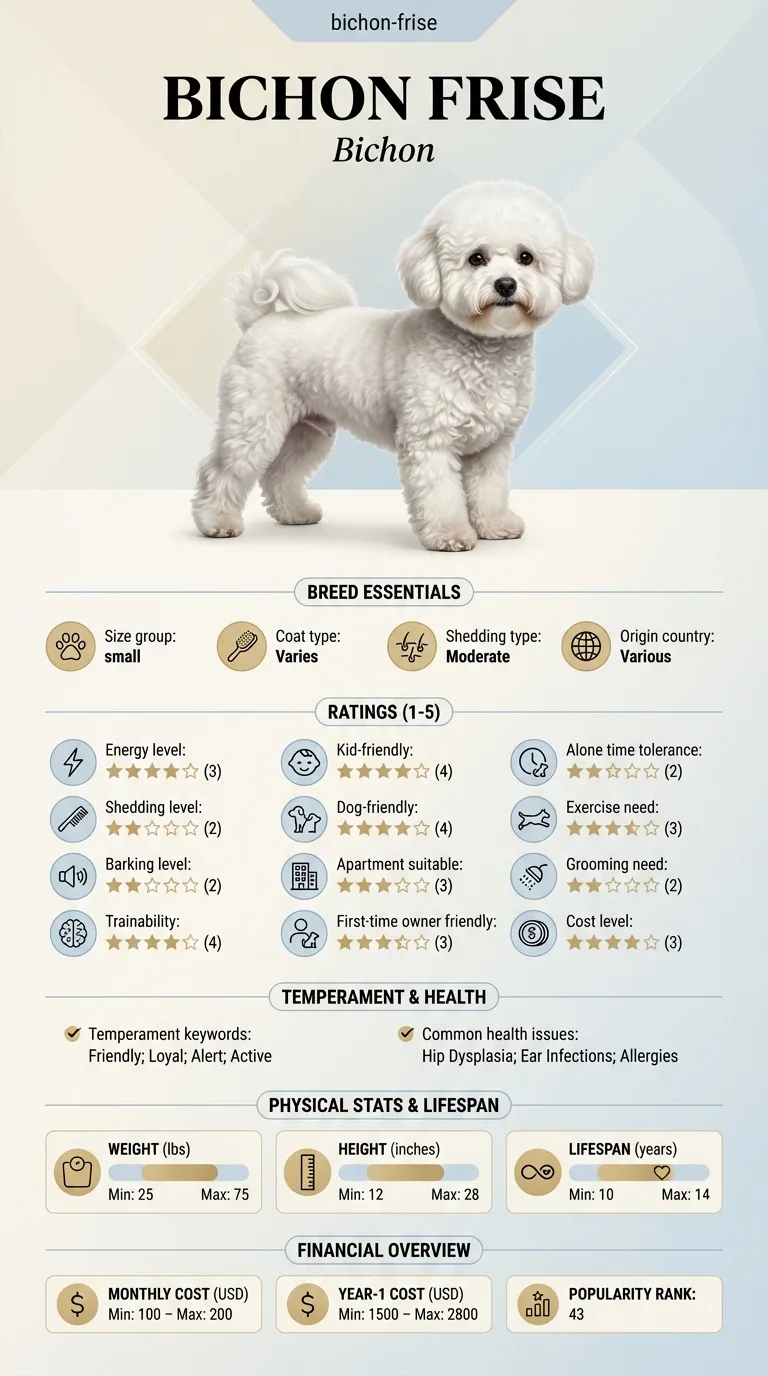
A well-managed allergic Bichon is not an itch-free dog. It is a dog who sleeps through the night, keeps a full coat with no raw patches, has two or three mild flares a year instead of continuous misery, and needs ear treatment occasionally rather than monthly. Reaching that point usually takes a year of methodical work, and holding it takes ongoing routine for the rest of a fourteen to fifteen year life.
Allergic skin disease is not evenly distributed. In this breed it concentrates in predictable spots, and knowing them lets you catch a flare in week one instead of week four.
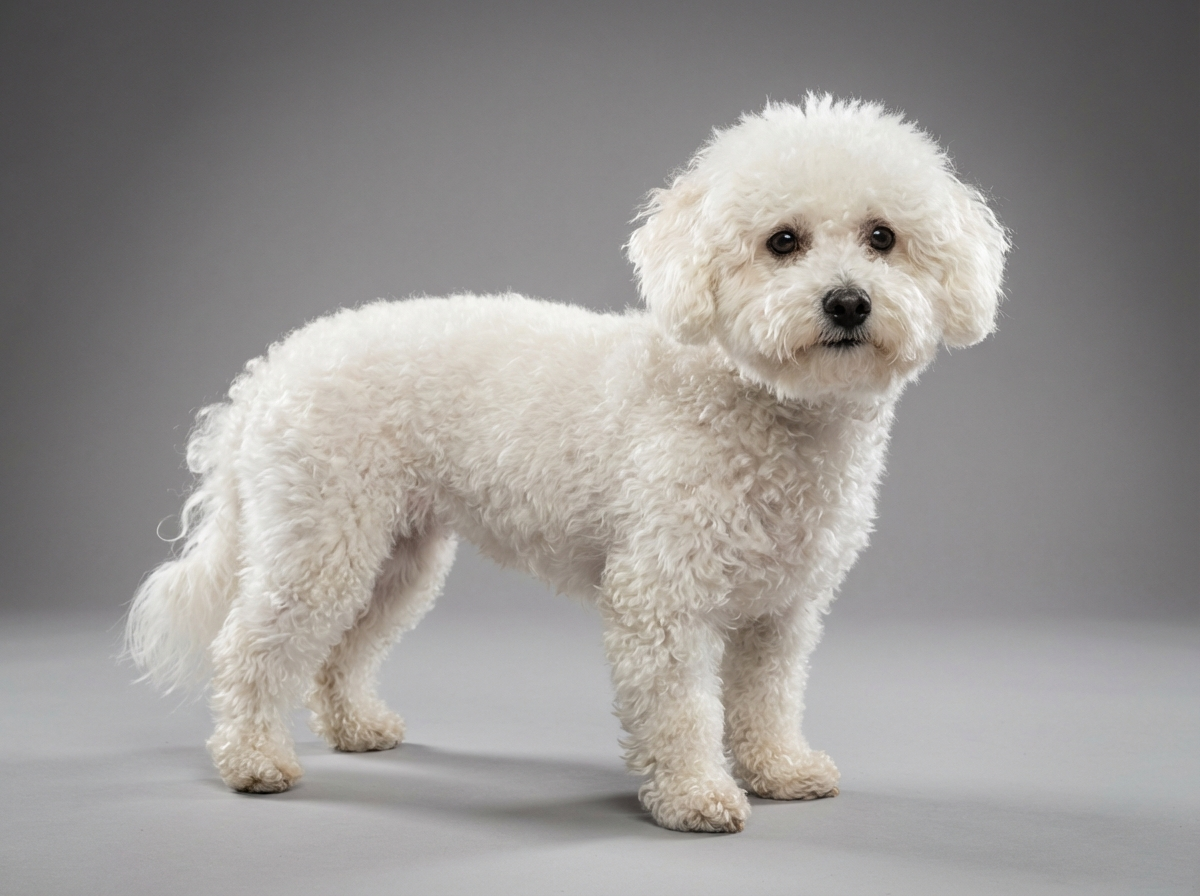
The Bichon Frise carries a curly, dense double coat that sheds very little. Owners choose the breed for that. The trade-off is that shed hair and dander do not fall out onto the floor. They stay in the coat, and so does everything else the dog walks through.
Pollen that would blow off a smooth-coated dog by lunchtime stays pressed against Bichon skin for hours. Moisture from wet grass sits in the undercoat instead of evaporating. Grooming need for this breed rates at the very top of the scale, and the reason is not only appearance.
This cuts both ways, and it is the most useful thing an owner can act on. Because the coat holds allergens, rinsing and drying properly removes a real share of the trigger load. A plain lukewarm rinse after a walk through flowering grass is not a gimmick. It physically takes the pollen off the dog.
The part owners underestimate is drying. A dense curly coat left damp at the skin is a yeast incubator, and yeast overgrowth is what turns manageable itching into a dog who cannot sleep.

Mabel came to her vet at three years old having already been through five diets. Her owner, Tom, was convinced it was food. Her paws were rust-stained to the wrist and her left ear had been treated four times in eighteen months. The vet asked for one thing before any new diet: a nightly itch score out of five, plus the weather and where they had walked. Tom kept it for eleven months. The chart was unmistakable. Mabel's scores climbed every year from late May, peaked in July and fell away in October, and her worst days followed walks along a particular hedgerow. Food had never been the driver. The plan that followed was unglamorous: a shorter summer trim, a rinse and thorough dry after every summer walk, a different route in June and July, strict flea control, and a treatment plan agreed with the vet for peak weeks. Mabel still itches in high summer. She no longer chews herself awake at three in the morning.
Key takeaway: One year of honest daily records beats five years of guessing, because allergies in this breed follow a pattern, and the pattern is what you actually treat.
Sometimes, but environmental allergy is far more common than food allergy in dogs overall. A properly run elimination trial takes eight to twelve weeks of one novel or hydrolysed diet and absolutely nothing else, no treats and no flavoured chews. Casual food swaps every few weeks tell you nothing.
In most cases the infection is a symptom, not the disease. Allergic inflammation thickens the canal lining and changes the local environment, and yeast or bacteria take advantage. Treating each infection without addressing the underlying allergy means treating it again in six weeks.
Atopic disease usually begins between one and three years old and tends to broaden over time, picking up more triggers rather than fewer. With a fourteen to fifteen year lifespan, most affected Bichons need a management plan for over a decade. Good control is realistic; outgrowing it is not.
Far more often than owners expect, and your vet should set the frequency. Weekly is common during flare seasons. The mechanical removal of allergens matters as much as the shampoo itself, and the drying afterwards matters as much as the bath.
It could, and flea allergy dermatitis is severe out of all proportion to the number of fleas involved. A single bite can set off weeks of itching in a sensitised dog. Year-round parasite control on every pet in the house is step one, not an afterthought.
It often helps a great deal with management, because a shorter trim rinses faster, dries far faster, and lets you see and treat skin directly. It does not reduce the immune response. Discuss the trim length with your groomer with the skin in mind rather than the show ring.
It varies widely with severity. Add the extra grooming, medicated products, repeat ear treatments and specialist visits and an allergic Bichon can sit well above the 80 to 150 dollars a month a typical dog of this breed costs. Budget for it as an ongoing line, not a one-off.
Yes. Skin allergies are one of the five health problems most associated with the breed, so a plan is worth building before symptoms arrive.
Rinse after outdoor exposure in pollen season and dry the coat right down to the skin. Removing allergens mechanically beats every spray on the shelf.
Eight to twelve weeks of strict feeding with no extras. Anything shorter or looser produces a result you cannot trust.
No. A Bichon still needs its daily outing and its mental stimulation. Change the route and the timing rather than cancelling the walk.
Usually yes. Medicated bathing schedules and shorter trims mean more frequent appointments or more time doing it yourself.
A one-page prep sheet for this condition: the signs, the questions to ask, what to get priced. Unlocks here.
You get: Vet visit prep sheet
No spam. One-click unsubscribe. See our privacy policy.
Preview page 1 before you decide.
Early access list
The free prep sheet covers the same-day warning signs, a symptom log and the questions to ask. We are considering a fuller kit that adds a cost worksheet for the usual tests and treatments (US price ranges with their sources) and a plain-English guide to ways of covering the bill. It is not built yet; this list tells us whether it is worth building.
One email, no spam, unsubscribe anytime. Information only, not veterinary advice.