DogBreedCompass
← Back to breed profile

Purebred vs Mixed Breed Health Risk: What It Means for a Welsh Springer Spaniel

Quick answer

Why do purebred dogs have documented genetic health risks?

A limited founding population and controlled breeding for a consistent standard concentrate whatever genetic health issues existed originally, since there's less genetic diversity to dilute them.

A breed standard is also, quietly, a genetic bottleneck, and understanding that trade-off is what turns a documented health list from a scary warning into a usable piece of information.

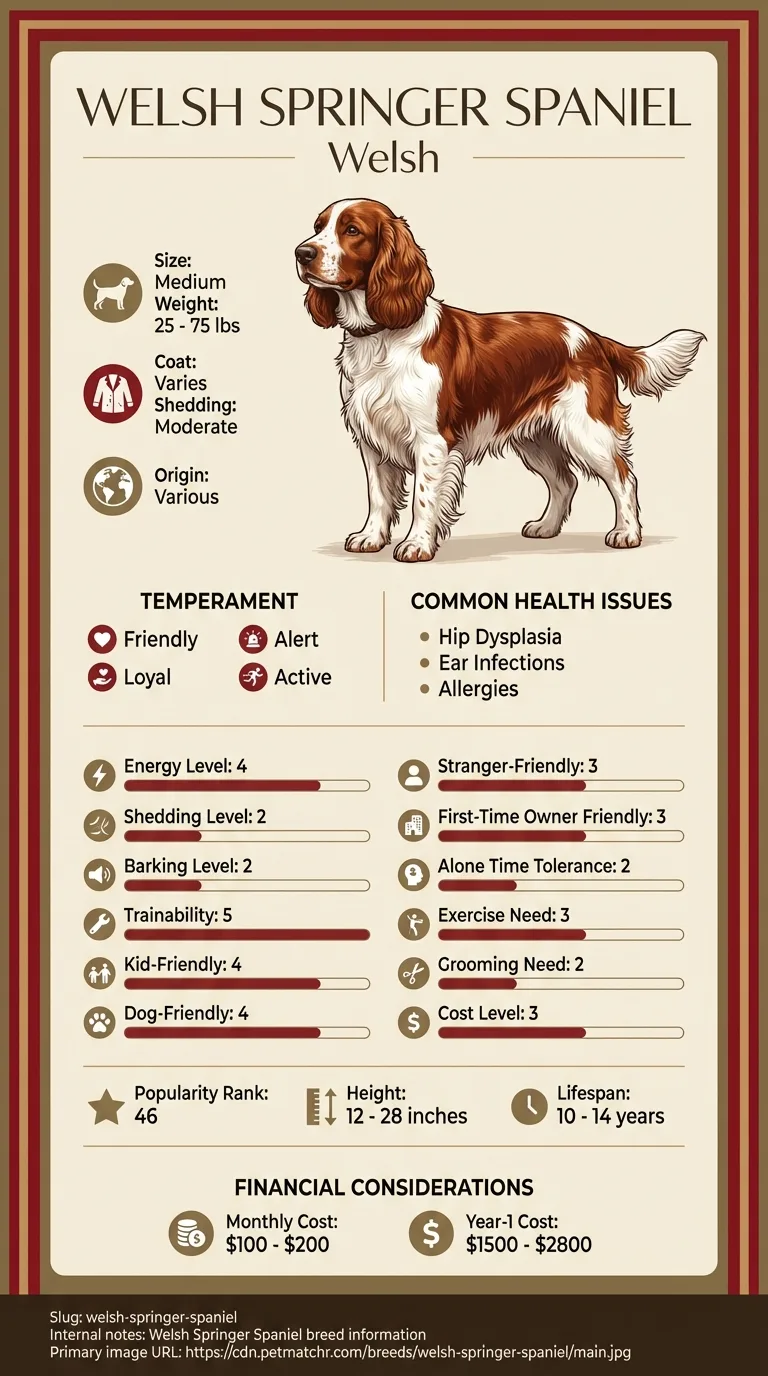
Purebred vs Mixed Breed Health Risk: What It Means for a Welsh Springer Spaniel infographic

Prospective buyers weighing a purebred Welsh Springer Spaniel against a mixed-breed option, and current owners wanting to understand why their dog's documented health list looks the way it does, are the primary audience here.

Important reminder

This guide is not medical advice. If your dog shows pain, sudden behavior change, or worsening symptoms, consult a licensed veterinarian.

Some links may be affiliate links. We may earn a commission at no extra cost to you. We only suggest products we believe are helpful for dog owners.

What this problem looks like

Welsh Springer Spaniels, like all purebred dogs, descend from a genetically narrower population than mixed breeds, which concentrates certain inherited health conditions enough to be documented breed concerns, in this case hip dysplasia, epilepsy, glaucoma, and hypothyroidism. Understanding this genetic bottleneck helps buyers and owners interpret documented health risk accurately rather than treating it as either a dealbreaker or something to ignore.

Common triggers

  • A genetically narrow founding population common to all purebred dog breeds
  • Breeding practices historically prioritizing standard appearance over genetic diversity
  • Limited use of formal health screening in some breeding lines
  • Assuming population-level statistics apply equally to every individual dog
  • Overlooking that mixed breed dogs can still inherit purebred-linked conditions

This genetic risk framework applies to every purebred dog breed, including Welsh Springer Spaniels, making documented conditions like hip dysplasia, epilepsy, glaucoma, and hypothyroidism a predictable, well-understood consequence of the breed's genetic history rather than an unusual or breed-specific mystery.

Why this happens

Breed factors

The Welsh Springer Spaniel's documented health conditions, hip dysplasia, epilepsy, glaucoma, and hypothyroidism, trace back to this same genetic bottleneck common to all purebred dogs: a historically limited founding population and controlled breeding for a consistent standard, which concentrated these specific inherited traits enough to become statistically notable within the breed.

Environment factors

How thoroughly a specific breeding line has been health screened, rather than the broader purebred versus mixed breed distinction alone, is what most influences an individual dog's real-world risk for any of these documented conditions.

What you can do at home (once it is not an emergency)

When to talk to your vet

Talk to your vet about which of this breed's documented conditions are most worth proactive screening for based on your specific dog's history and age. This topic is background context rather than a medical concern itself, but any actual symptoms your dog shows should always be evaluated on their own merits.

At home, alongside your vet's plan

  • Ask breeders for documented health testing results on hip screening, eye exams, and thyroid health.
  • Request as many generations of health history as a breeder can reasonably provide.
  • Research a specific kennel or line's reputation rather than relying on general breed statistics alone.
  • Budget for potential genetic health conditions regardless of whether you choose a purebred or mixed breed dog.
  • Consider genetic testing for your own dog if breeding history is unclear or unavailable.

See all Welsh Springer Spaniel health problems, which breeds are prone to purebred vs mixed breeds, or the full Welsh Springer Spaniel breed guide for temperament, exercise needs and ownership costs.

What to expect, and how you know it is working

This is a framework for understanding lifelong risk rather than a time-limited concern; it informs decisions made once, at the point of choosing a dog, and periodically, at each health screening throughout that dog's life.

Success looks like making a genuinely informed choice, whether purebred or mixed breed, based on actual health testing and documentation rather than assumptions about either path being automatically safer.

Why a Breed Standard Creates a Genetic Bottleneck

Purebred dogs descend from a relatively limited number of founding individuals, with breeding subsequently controlled to maintain a consistent standard: size, coat, temperament, and appearance. This consistency is exactly what makes a Welsh Springer Spaniel predictably a Welsh Springer Spaniel, but the same closed gene pool that creates that consistency also concentrates whatever genetic health issues existed in the founding population, since there's a limited well of genetic diversity to dilute them.

Mixed breed dogs, drawing from a wider genetic pool, benefit from what's sometimes called hybrid vigor, a greater likelihood that a harmful recessive gene inherited from one parent's lineage is balanced out by a healthier gene from an unrelated lineage on the other side. This is part of why mixed breeds as a population show somewhat lower rates of many specific inherited conditions, though they are not immune to genetic health issues altogether, and can still inherit problems present in either parent breed.

For a Welsh Springer Spaniel specifically, this framework explains why hip dysplasia, epilepsy, glaucoma, and hypothyroidism appear on this breed's documented list: these are conditions that became concentrated enough within the breed's genetic history to be statistically notable, not conditions unique to this breed's biology in some special way. This is also exactly why responsible breeding, through health screening and thoughtful pairing, matters so much for purebred dogs specifically.

Understanding Purebred Health Risk in Welsh Springer Spaniels - Why a Breed Standard Creates a Genetic Bottleneck

Making an Informed Choice With This Framework in Mind

Understanding the genetics behind a documented health list turns a vague sense of risk into specific, actionable questions for any breeder or rescue you're considering.

  • If choosing a purebred Welsh Springer Spaniel, prioritize breeders who health test for the documented conditions, hip dysplasia, epilepsy risk factors where testable, glaucoma, and thyroid health, rather than those who don't.
  • Understand that a mixed breed with Welsh Springer Spaniel ancestry can still inherit any of this breed's documented conditions, just with somewhat lower average odds across a population.
  • Ask for as many generations of health history as a breeder can provide, since a longer documented clean history is more informative than a single generation.
  • Recognize that individual genetics matter more than population averages; a well-screened purebred line can carry lower real-world risk than an unscreened mixed breed.
  • Factor documented breed health risks into your insurance and budgeting decisions regardless of which path you choose, since both purebred and mixed breed dogs can develop costly conditions.

What to do next about purebred vs. mixed breeds in Welshs

If you think your Welsh has purebred vs. mixed breeds, the plan is three steps: write down what you have seen and when it started, book a veterinary appointment rather than waiting for the next flare, and take video of the behaviour or symptom before you go — the thing you are worried about rarely happens in the consulting room. Screening in the parents covers hip dysplasia, ear infections, epilepsy.

What the vet visit should produce is a diagnosis and a written plan, not just reassurance: what is being ruled out, what the monitoring interval is, and which signs mean you come back sooner. Ask what the treatment costs across a year rather than per visit, because that is the number that decides whether you are managing this condition or reacting to it.

Between appointments, keep a short log — dates, what you saw, what changed. It is the single most useful thing an owner brings to a follow-up, and for purebred vs. mixed breeds it is often what separates a clear pattern from a guess.

Two Options, One Informed Decision

While deciding between a purebred Welsh Springer Spaniel puppy and a spaniel-mix rescue, Tobias researched both options seriously rather than assuming one was automatically the safer choice. The purebred breeder provided full hip, eye, and thyroid screening results for both parents going back two generations, while the rescue had an unknown genetic background but had lived four healthy years already. Tobias ultimately chose the purebred puppy, reasoning that the documented, multi-generational health screening gave him more concrete information than the rescue's unknown history, even though rescues carry generally lower average genetic risk as a population. His Welsh Springer, now three years old, has had no health issues so far, and Tobias credits the decision to reading past the purebred-versus-mixed-breed generalization and focusing on the actual documentation in front of him.

Key takeaway: Population-level statistics about purebred and mixed breed risk are useful background, but the actual documentation behind an individual dog, health testing, generational history, or lack thereof, matters more than which general category that dog falls into.

Frequently asked questions

Why do purebred dogs have documented health risks at all?

Purebred dogs descend from a limited founding population with breeding controlled to maintain a consistent standard, which concentrates whatever genetic health issues existed in that founding population rather than diluting them across a wider gene pool.

Why does hip dysplasia, epilepsy, glaucoma, and hypothyroidism specifically show up for this breed?

Because these specific conditions became concentrated enough within the breed's genetic history to be statistically notable, not because they reflect something uniquely wrong with this breed's biology compared to any other purebred dog.

Are mixed breed dogs actually statistically healthier than purebreds?

Generally, yes, as a population, due to a wider gene pool creating a greater chance that harmful recessive genes are balanced out by healthier ones from an unrelated lineage, sometimes called hybrid vigor.

Does having some purebred ancestry mean a mixed breed dog is safe from breed-specific conditions?

No. A mixed breed dog with Welsh Springer Spaniel ancestry can still inherit any of this breed's documented conditions from that side of its lineage, just with somewhat lower average odds across a broader population.

What should I actually ask a breeder given this genetic risk framework?

Ask for documented health testing on the specific conditions known for this breed, hip screening, eye exams, and thyroid testing, and request as many generations of clean or well-documented history as possible.

Can a well-bred purebred be healthier than an average mixed breed dog?

Yes. Individual genetics matter more than population averages, so a well-screened purebred line can carry meaningfully lower real-world risk than an unscreened or unknown mixed breed dog.

Quick answers

View more answers
Health

Why do purebred dogs have documented genetic health risks?

A limited founding population and controlled breeding for a consistent standard concentrate whatever genetic health issues existed originally, since there's less genetic diversity to dilute them.

Health

Are mixed breed dogs statistically healthier than purebreds?

Generally yes, as a population, due to a wider gene pool balancing out harmful recessive genes, though mixed breeds are not immune to inherited conditions.

Health

Does mixed ancestry guarantee protection from breed-specific conditions?

No, a mixed breed dog can still inherit any documented condition from its purebred ancestry, just with somewhat lower average population-wide odds.

Behavior

What should I ask a breeder about genetic health risk?

Ask for documented health testing on hip screening, eye exams, and thyroid testing, plus as many generations of health history as the breeder can provide.

Costs

Does genetic risk affect how much I should budget for veterinary care?

Both purebred and mixed breed dogs can develop costly conditions, so factoring documented breed health risks into insurance and budgeting decisions matters regardless of which path you choose.

Related DogBreedCompass guides

Bring the right questions to the vet

A one-page prep sheet for this condition: the signs, the questions to ask, what to get priced. Unlocks here.

You get: Vet visit prep sheet

No spam. One-click unsubscribe. See our privacy policy.

Preview page 1 before you decide.

Related guides