Training
What are quick tips for training a Labradoodle?
Use positive reinforcement, practice regularly, and start with basic commands. Gradually increase the difficulty of tasks as they improve.

Quick answer
What are quick tips for training a Labradoodle?
Use positive reinforcement, practice regularly, and start with basic commands. Gradually increase the difficulty of tasks as they improve.
Choosing between a Labradoodle purebred and a mixed breed can be tough. This decision impacts their health, temperament, and your lifestyle.
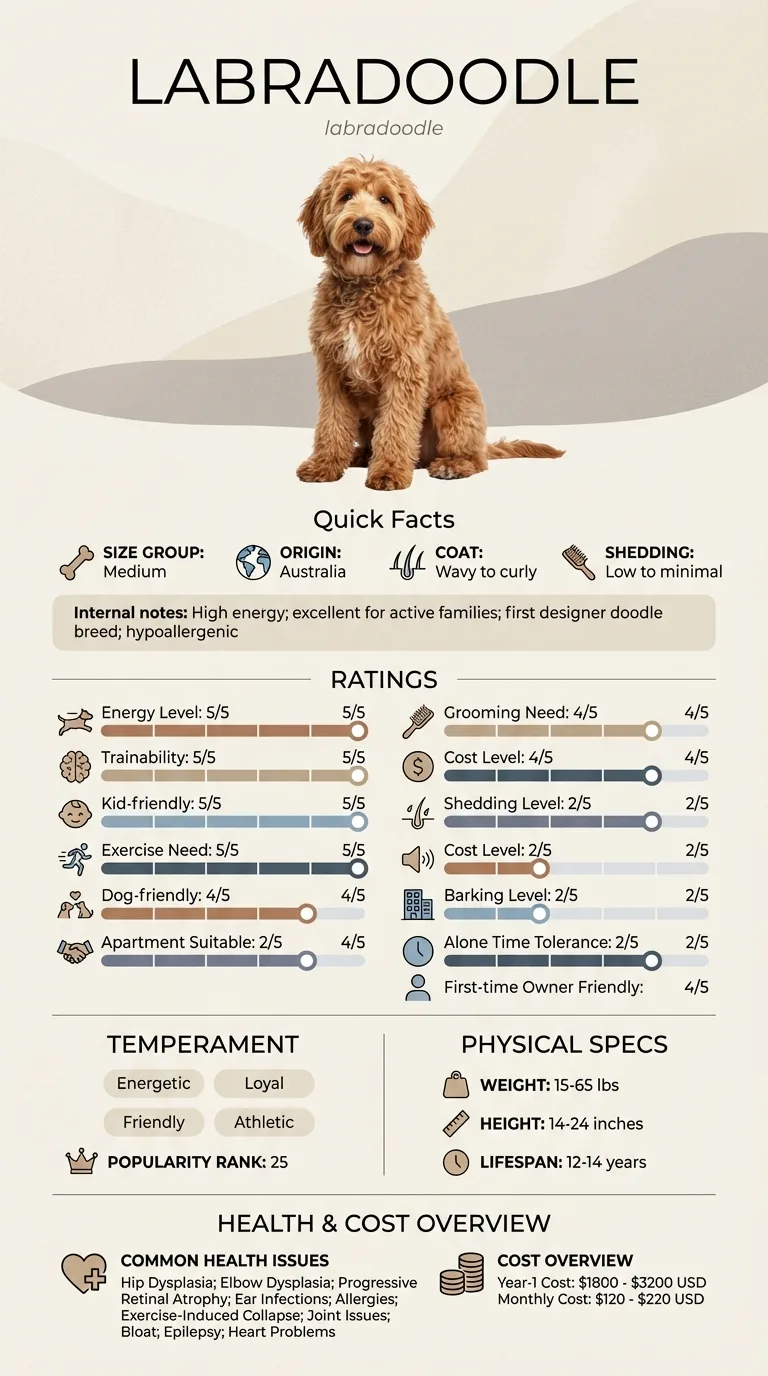
First-time dog owners, families with kids, and busy professionals often wrestle with this dilemma. They want a loyal companion but may be unsure about the long-term implications of their choice.
This guide is not medical advice. If your dog shows pain, sudden behavior change, or worsening symptoms, consult a licensed veterinarian.
Some links may be affiliate links. We may earn a commission at no extra cost to you. We only suggest products we believe are helpful for dog owners.
We research and check what we publish, but we do not warrant that any figure, date, price, or statement is accurate, complete, or current, and we accept no liability for any loss, cost, injury, or other harm arising from the use of this site. Use it as one reference among several. You remain responsible for your own decisions and for your dog's care - confirm anything that matters with a licensed veterinarian or another qualified professional before you act on it. Full disclaimer.
Check this first
If your Labradoodle is showing severe symptoms like difficulty breathing, excessive vomiting, or unresponsiveness, it's time to act fast. Other emergencies include signs of bloat, which can be fatal, or if your dog has ingested something toxic. Call your vet immediately if you notice any of these signs.
On the other hand, if your Labradoodle is simply acting a bit off, like being less playful or having mild diarrhea, you can watch and wait. Monitor their behavior and ensure they are drinking water and eating normally. If symptoms persist for more than a day, consult your vet for guidance. It's always better to be cautious when it comes to your furry friend!
Remember, if you’re ever in doubt about your Labradoodle’s health, don't hesitate to reach out to a veterinarian. They can help you determine whether it’s an emergency or something you can manage at home.
If any of these apply, call your vet or an emergency clinic now. The rest of this page is for the cases that are not an emergency.
The Labradoodle purebred vs. mixed breeds issue often manifests in differences in health, temperament, and behavior. Many owners notice their Labradoodle's purebred qualities can lead to specific challenges, like increased anxiety or health problems. Understanding these differences is key to ensuring a happy life for your dog.
This issue is relatively common among Labradoodles, especially those that are purebred. Studies suggest that purebred dogs are 1.9 times more likely to develop certain health issues, making it crucial for owners to recognize and address these challenges early.
Labradoodles are a designer breed resulting from crossing a Labrador Retriever with a Poodle. This mix can lead to different traits based on which parent breed's genetics are more dominant. Some Labradoodles may inherit health issues from either parent breed, making them more prone to certain conditions, which can affect their behavior.
The environment plays a significant role in a Labradoodle's behavior. Factors such as lack of socialization, insufficient exercise, or inconsistent training can lead to anxiety and behavioral issues. A busy household or a chaotic living situation can also impact their overall well-being.
If your Labradoodle's anxiety leads to destructive behavior, excessive barking, or changes in eating habits, consult your vet. They can rule out any medical issues and discuss potential treatments.
Many owners want the best for their Labradoodles, but certain behaviors can unintentionally worsen the issue of purebred versus mixed breeds. Here are some common mistakes to avoid.
Start here: Labradoodle Most Common Genetic Disorders: Screening
See all Labradoodle health problems, which breeds are prone to purebred vs mixed breeds, or the full Labradoodle breed guide for temperament, exercise needs and ownership costs.
Expect noticeable improvements in your Labradoodle's behavior within 3 to 6 months of consistent care and a steady routine efforts.
Success means your Labradoodle can interact positively with other dogs and people, and you can confidently manage any behavioral issues that arise.
Sarah, a busy nurse in Seattle, adopted a Labradoodle named Max. Initially, Max struggled with anxiety when meeting new dogs. After consulting a trainer and committing to regular training sessions, Sarah learned to use positive reinforcement techniques. Within months, Max became more relaxed and friendly during outings, allowing Sarah to enjoy walks without worry.
Key takeaway: With patience and the right training approach, you can help your Labradoodle thrive, regardless of whether they're purebred or mixed.
Labradoodles are often bred from a mix of Labrador Retrievers and Poodles, making them a designer breed. If your Labradoodle seems to show traits from both purebred parents, it’s likely due to their mixed genetics. Each pup can inherit different characteristics, leading to variations in appearance and behavior.
Training your Labradoodle involves consistency and positive reinforcement. Start with basic commands and gradually introduce more complex tasks. Regular practice and socialization with other dogs can also help improve their behavior.
Purebred Labradoodles may come with predictable traits and health issues, while mixed breeds can offer more genetic diversity. This diversity may lead to better overall health but also less predictability in behavior and appearance. Weighing these factors can help you decide what’s best for your lifestyle.
Labradoodles can face health concerns like hip dysplasia, allergies, and ear infections. Regular vet check-ups and a healthy diet are essential to catch any issues early. Being proactive can help ensure your dog stays happy and healthy.
To help a Labradoodle with separation anxiety, gradually get them used to being alone. Start with short periods and reward calm behavior. Consider using a crate and providing engaging toys to keep them occupied during your absence.
Labradoodle purebreds usually have more predictable temperaments because their traits are consistent across generations. In contrast, mixed breeds can exhibit a wider range of behaviors and personalities, depending on their parent breeds. This variability might be a plus for some owners who enjoy surprises, but it could also lead to challenges in training.
You can often determine if your Labradoodle is purebred by looking at its lineage and registration papers if available. Additionally, physical traits like coat type and size might give hints. If you're unsure, a DNA test can confirm its breed status.
Yes, Labradoodle mixed breeds can inherit health issues from either parent breed. Common concerns include hip dysplasia and allergies. Regular vet check-ups and a healthy diet can help catch any potential issues early.
Training needs might vary based on the individual dog's temperament rather than being strictly defined by whether they're purebred or mixed. However, purebreds may respond better to certain training methods due to their predictability. Mixed breeds might require more patience and flexibility in training.
If your Labradoodle shows signs of discomfort, unusual behavior, or has a family history of health issues, it's time to consult a vet. Purebreds may be more prone to specific conditions, while mixed breeds could face varied health challenges. Regular check-ups can help address concerns early.
Use positive reinforcement, practice regularly, and start with basic commands. Gradually increase the difficulty of tasks as they improve.
Expect to spend between $120 to $220 monthly on a Labradoodle, including food, grooming, and vet visits.
Labradoodles are generally friendly and loyal but can have high energy levels. Regular exercise and socialization are key to a well-behaved dog.
Labradoodles are known for low to minimal shedding, making them a popular choice for allergy sufferers. Regular grooming helps maintain their coat.
A one-page prep sheet for this condition: the signs, the questions to ask, what to get priced. Unlocks here.
You get: Vet visit prep sheet
No spam. One-click unsubscribe. See our privacy policy.
Preview page 1 before you decide.