DogBreedCompass
← Back to breed profile

Understanding Poodle (Miniature) Purebred vs. Mixed Breeds

Deciding between a Poodle (Miniature) purebred and mixed breed can be challenging. This choice impacts training, health, and behavior. (Poodle (Miniature) purebred vs. mixed breeds)

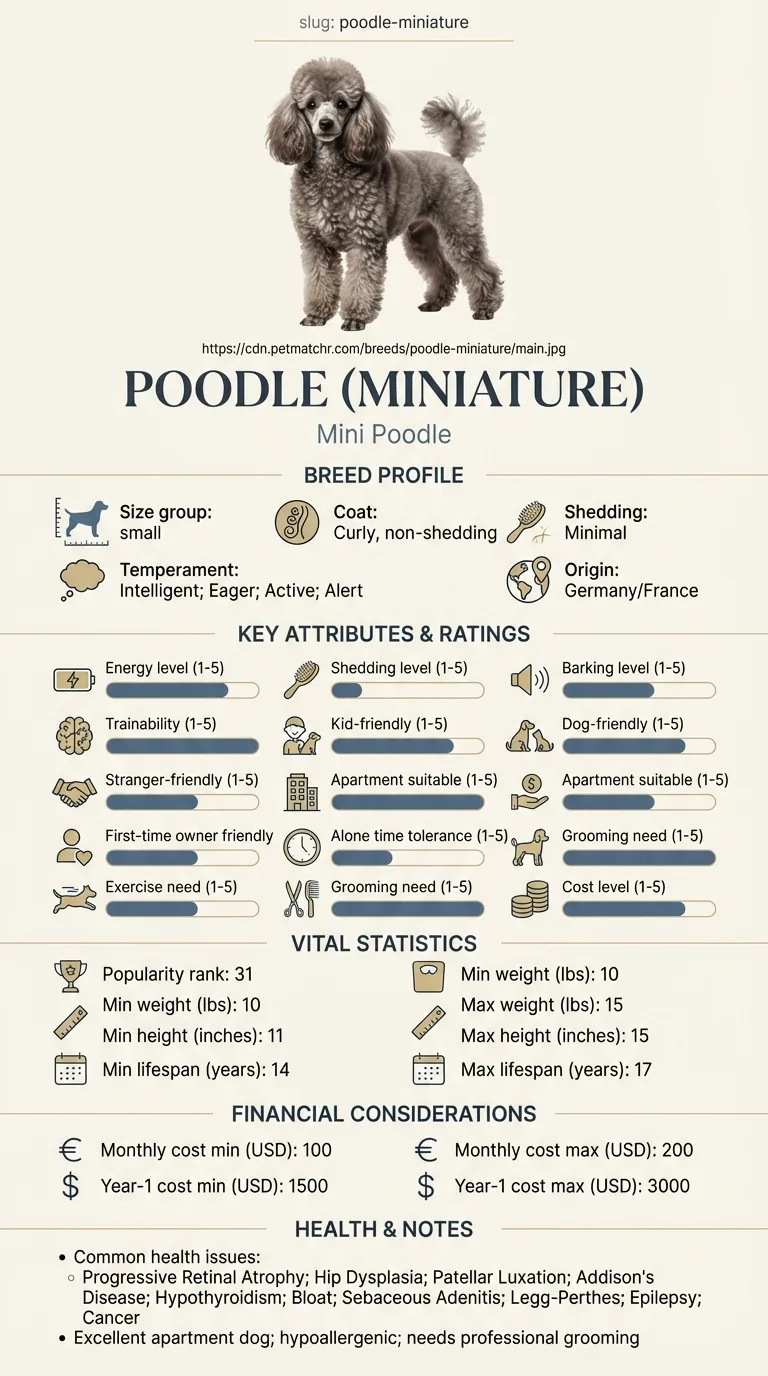
Understanding Poodle (Miniature) Purebred vs. Mixed Breeds infographic

First-time dog owners, busy families, and anyone considering a Poodle (Miniature) often struggle with this decision. They may feel overwhelmed by the differences in training needs, health risks, and how each type can fit into their lives.

Important reminder

This guide is not medical advice. If your dog shows pain, sudden behavior change, or worsening symptoms, consult a licensed veterinarian.

Some links may be affiliate links. We may earn a commission at no extra cost to you. We only suggest products we believe are helpful for dog owners.

What this problem looks like

The debate around Poodle (Miniature) purebred vs. mixed breeds often revolves around health, temperament, and behavior. Owners of purebred Mini Poodles may notice specific health issues, especially as these dogs can be more prone to certain conditions like cancer. On a day-to-day basis, this can mean frequent vet visits and higher medical costs, making it crucial for owners to understand the implications of their choice.

Common triggers

  • Genetic predisposition to health issues
  • Lack of proper socialization
  • Inconsistent training methods

This issue is fairly common, especially among purebred Mini Poodles. Research suggests that purebred dogs, including Mini Poodles, are more likely to encounter breed-specific health challenges compared to their mixed-breed counterparts.

Why this happens

Breed factors

Poodles, including Miniatures, are known for their intelligence and energy. They may display behavioral issues when not mentally stimulated or trained properly. Their strong desire to learn can also lead to frustration if they are not challenged appropriately.

Environment factors

The environment where your Mini Poodle lives can significantly affect their behavior. Factors such as lack of exercise, inconsistent training, or a chaotic home can contribute to anxiety and behavioral problems. Additionally, changes in routine or surroundings may cause stress.

What you can try

At-home strategies

  • Establish a consistent routine for feeding, walks, and playtime. This predictability helps your Mini Poodle feel secure.
  • Engage in daily mental stimulation activities, such as puzzle toys or training sessions. Aim for at least 15-30 minutes of these activities each day.
  • Practice positive reinforcement training to encourage good behavior. Reward your Mini Poodle with treats or praise when they exhibit desired behaviors.

When to consider a trainer

If your Poodle (Miniature) shows persistent behavior issues despite your efforts, consider hiring a professional trainer. A trainer can provide tailored strategies and support that can address specific problems effectively.

When to talk to your vet

If your Mini Poodle continues to display anxiety or aggression, it’s essential to consult a veterinarian. They can rule out any underlying health issues or recommend behavioral specialists if needed.

Realistic expectations

You can expect to see improvements in your Mini Poodle's behavior within 4 to 6 months of consistent training and socialization. Progress may vary based on the individual dog's temperament and background.

Success would mean your Mini Poodle shows reduced anxiety and improved interaction with other dogs and people. A well-adjusted Mini Poodle will feel comfortable in various environments and display fewer behavioral issues.

Mistakes that make this worse – Poodle (Miniature) purebred vs. mixed breeds

Avoiding these common pitfalls can help improve your Poodle (Miniature)'s behavior or health. Here are some mistakes to steer clear of and safer alternatives.

  • Ignoring breed-specific traits: Many owners overlook the unique characteristics of Poodles. Understanding their energy levels, grooming needs, and temperament is crucial. Research these traits to provide proper care.
  • Overlooking socialization: Poodles can be wary of strangers. Not socializing them early can lead to anxiety. Instead, introduce your Mini Poodle to various people and environments gradually for better adjustment.
  • Inconsistent training: Mixed signals confuse dogs and can reinforce unwanted behaviors. Establish a consistent training routine with clear commands and rules to help your Poodle learn effectively.
  • Neglecting exercise: Poodles need regular physical activity to stay healthy and happy. Skipping walks or playtime can increase anxiety. Commit to daily exercise to meet their needs.
  • Using harsh discipline: Negative reinforcement can harm your bond with your Poodle. Instead, focus on positive reinforcement techniques, rewarding good behavior with treats and praise.
  • Failing to address health concerns: Ignoring symptoms of potential health issues can worsen conditions like hip dysplasia or epilepsy. Regular vet check-ups are vital for early detection and care.
  • Not considering breed-specific health issues: Poodles are prone to certain conditions like Progressive Retinal Atrophy. Familiarize yourself with these risks to manage their health proactively.

When to Call Your Vet

Emergency signs include sudden lethargy, difficulty breathing, or severe vomiting. If your Poodle (Miniature) shows any of these symptoms, call your vet immediately. Other red flags are signs of pain, such as whining, excessive panting, or refusal to eat or drink.

On the other hand, mild cases like occasional coughing, minor digestive issues, or a little anxiety can often be monitored. Keep a close watch on your dog and note any changes in behavior or appetite. If symptoms persist or worsen, it’s best to consult your vet for guidance.

Remember, don't hesitate to reach out to your vet if you're unsure. When it comes to your dog's health, it's always better to be safe than sorry.

Understanding Poodle (Miniature) Purebred vs. Mixed Breeds - When to Call Your Vet

Finding Balance with Bella: A Mini Poodle's Journey

Lisa, a first-time dog owner in a bustling city, adopted Bella, a Mini Poodle. Initially, Bella struggled with anxiety, barking excessively at strangers and other dogs. Lisa felt overwhelmed and unsure how to help Bella adjust. She enrolled Bella in a training class focused on socialization and anxiety management, attending weekly sessions and practicing at home. Over time, Bella became more confident, learning to greet strangers calmly and play with other dogs at the park. Lisa was relieved to see Bella thriving and felt more empowered as an owner.

Key takeaway: With patience, training, and socialization, even a nervous Mini Poodle can become a well-adjusted companion.

Frequently asked questions

What are the differences between Poodle (Miniature) purebred and mixed breeds?

Poodle (Miniature) purebreds often come with predictable traits like size, coat type, and temperament. Mixed breeds can be more varied in these aspects, making it harder to anticipate their behavior and health. Consider your lifestyle needs when deciding between the two. This answer relates to Poodle (Miniature) purebred vs. mixed breeds.

How can I address behavioral issues in my Poodle (Miniature) purebred?

To address behavioral problems, start with consistent training using positive reinforcement. Socialization is key; expose your Poodle (Miniature) to different environments and people. If issues persist, consult a professional trainer for tailored strategies.

Why does my Poodle (Miniature) have purebred vs. mixed breed traits?

Your Poodle (Miniature) may show mixed breed traits if it has a mixed ancestry or if it was bred with other breeds. This can lead to variations in behavior, coat type, and health issues. Understanding your dog's lineage can help clarify these differences.

What health issues are common in Poodle (Miniature) purebreds compared to mixed breeds?

Poodle (Miniature) purebreds are more prone to certain health issues like hip dysplasia and cancer. Mixed breeds tend to be healthier overall due to greater genetic diversity. Regular vet check-ups and a healthy diet can help mitigate these risks.

How do I train a Poodle (Miniature) to behave well?

Training a Poodle (Miniature) requires patience and consistency. Use positive reinforcement techniques, focusing on commands and socialization. Start with basic obedience training and gradually introduce more complex behaviors.

What are common behavioral issues in Poodle (Miniature) mixed breeds?

Poodle (Miniature) mixed breeds can face various behavioral challenges. Common issues include separation anxiety, excessive barking, and difficulties in training. It's important to understand the specific traits of the mixed breed to address these problems effectively.

How can I tell if my Poodle (Miniature) is experiencing anxiety?

Signs of anxiety in Poodle (Miniature) can include excessive barking, destructive behavior, and clinginess. If your dog shows these signs, consider consulting a vet or a trainer for tailored strategies to help them cope.

Are purebred Poodle (Miniature) more prone to health issues than mixed breeds?

Yes, purebred Poodle (Miniature) are often more susceptible to certain health issues, such as cancer and hip dysplasia. Mixed breeds may benefit from hybrid vigor, which can lead to a lower risk of inherited health problems.

Can I train a Poodle (Miniature) mixed breed differently than a purebred?

While training principles generally remain the same, Poodle (Miniature) mixed breeds may have unique traits that affect their learning style. It's crucial to adapt your training methods to suit their specific temperament and energy level.

When should I be concerned about my Poodle (Miniature) health?

You should consult a vet if your Poodle (Miniature) shows signs of lethargy, changes in appetite, or unusual behavior. Early intervention can help address potential health issues before they become serious.

Quick answers

View more answers
Behavior

What are quick tips for Poodle (Miniature) purebred vs. mixed breeds?

Choose a purebred for predictable traits, but consider a mixed breed for potential health benefits. Always prioritize socialization and training, regardless of breed. Regular vet visits are essential for early detection of health issues.

Training

How can I reduce barking in my Poodle (Miniature)?

To reduce barking, identify the triggers and address them through training. Consistent commands and distractions can help curb excessive barking. Training sessions should be positive and reward-based.

Living

What is the ideal exercise routine for a Poodle (Miniature)?

A daily routine of 30–60 minutes of exercise is ideal for a Poodle (Miniature). This can include walks, playtime, and mental stimulation activities. Regular exercise helps manage their energy levels and promotes good behavior.

Related DogBreedCompass guides

  • Poodle (Miniature) separation anxiety guideLearn more about how to address separation anxiety in Mini Poodles.
  • Poodle (Miniature) behavior problemsExplore common behavior problems in Mini Poodles and how to solve them.
  • Poodle (Miniature) cost breakdownFind a detailed cost breakdown for owning a Mini Poodle.
  • Purebred vs. mixed breed dogs comparisonDiscover the pros and cons of purebred versus mixed breed dogs.
  • Poodle (Miniature) training tipsGet tips on training your Mini Poodle effectively.

Related guides