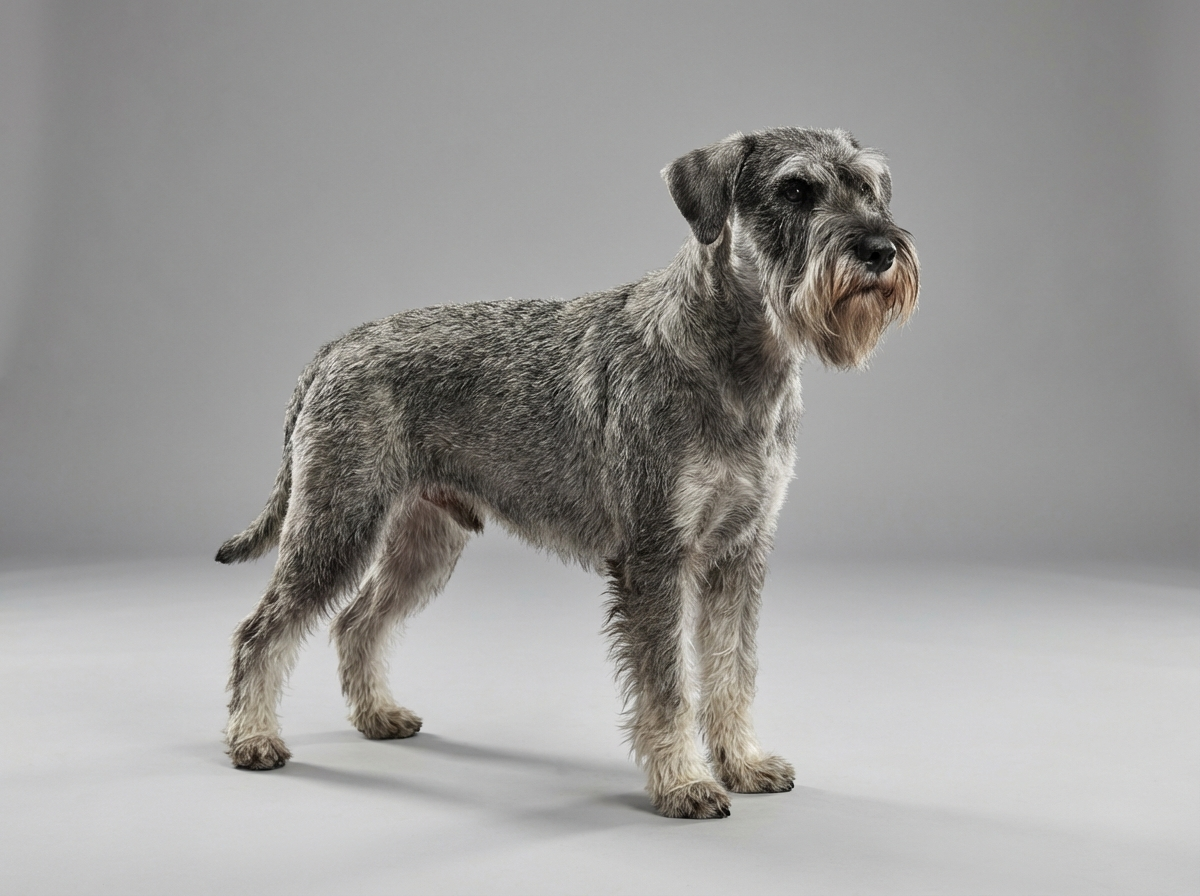
Behavior
What are some quick tips for Schnauzers (Standard) with behavior issues?
Establish a consistent routine, provide plenty of exercise, and use positive reinforcement for training. Regular grooming can also help reduce stress.

Quick answer
What are some quick tips for Schnauzers (Standard) with behavior issues?
Establish a consistent routine, provide plenty of exercise, and use positive reinforcement for training. Regular grooming can also help reduce stress.
Choosing between a Schnauzer (Standard) purebred and a mixed breed can be tough. Both options come with their own unique challenges and benefits. (Schnauzer (Standard) purebred vs. mixed breeds)
First-time dog owners, busy families, and those living in apartments often struggle with these decisions. They want a loyal companion that fits their lifestyle while considering the health implications of purebred versus mixed breeds.
This guide is not medical advice. If your dog shows pain, sudden behavior change, or worsening symptoms, consult a licensed veterinarian.
Some links may be affiliate links. We may earn a commission at no extra cost to you. We only suggest products we believe are helpful for dog owners.
We research and check what we publish, but we do not warrant that any figure, date, price, or statement is accurate, complete, or current, and we accept no liability for any loss, cost, injury, or other harm arising from the use of this site. Use it as one reference among several. You remain responsible for your own decisions and for your dog's care - confirm anything that matters with a licensed veterinarian or another qualified professional before you act on it. Full disclaimer.
Check this first
Understanding when your Schnauzer (Standard) needs urgent care is crucial. If you notice any of these red-flag signs, don't hesitate to call your vet immediately. These include difficulty breathing, severe vomiting or diarrhea, seizures, excessive bleeding, or any signs of severe pain. These symptoms can indicate serious conditions that require swift action.
On the other hand, there are situations that can be monitored at home with a plan. If your Schnauzer is showing mild signs of distress, like a slight cough, occasional vomiting without blood, or minor changes in appetite, these may not require immediate vet intervention. Instead, keep an eye on their behavior and adjust their diet or routine as needed. However, always trust your instincts; if you're ever in doubt, it's better to consult your vet.
Additionally, if your Schnauzer (Standard) is exhibiting behavioral changes, consider if they might be experiencing stress or anxiety. For instance, if they're barking excessively or hiding, this could indicate discomfort. Monitor these behaviors and, if they persist, seek advice from a professional on how to address them effectively.
If any of these apply, call your vet or an emergency clinic now. The rest of this page is for the cases that are not an emergency.
The debate of Schnauzer (Standard) purebred vs. mixed breeds often leads to confusion for potential owners. Purebred Schnauzers typically exhibit predictable traits, while mixed breeds may offer a blend of characteristics. This can affect behavior, health, and training challenges in everyday life.
This issue is fairly common among Schnauzer (Standard) owners, as many are unaware of the unique challenges presented by both purebred and mixed breed options. Understanding these differences can help inform decisions and improve ownership experiences.
Schnauzers (Standard) are known for their spirited and intelligent nature. However, purebred dogs can sometimes have inherited health issues, which may lead to anxiety or behavioral problems. Their strong protective instincts can also result in excessive barking if they feel threatened or bored.
The environment plays a significant role in a Schnauzer's behavior. Factors like lack of socialization, insufficient exercise, or changes in routine can lead to anxiety. Additionally, living in a noisy or chaotic household may increase their stress levels.
If you notice sudden changes in your Schnauzer's behavior, such as excessive barking or aggression, consult your vet. They can help rule out any underlying health issues that may be contributing to the problem.
Understanding the common mistakes that can worsen issues between Schnauzer (Standard) purebreds and mixed breeds is crucial. Here are some pitfalls to avoid:
Start here: Standard Schnauzer Most Common Genetic Disorders: Screening
See all Schnauzer Standard health problems, which breeds are prone to purebred vs mixed breeds, or the full Schnauzer Standard breed guide for temperament, exercise needs and ownership costs.
It typically takes several weeks to months to notice significant changes in your Schnauzer's behavior when addressing issues related to purebred vs. mixed breeds. Consistent care and a steady routine are key.
Success looks like a Schnauzer that is well-adjusted, showing signs of improved behavior and social skills. You'll notice reduced anxiety or undesirable behaviors, allowing for a happier home.
Jessica, a nurse in a bustling city, adopted Bella, a Standard Schnauzer, expecting a loyal companion. However, Bella's anxiety and barking became overwhelming, especially when left alone. After researching the differences between purebred and mixed breeds, Jessica realized Bella needed more structured training and socialization. With the help of a local trainer and consistent routines, Bella slowly adapted, learning to feel secure in her environment. Now, they enjoy peaceful evenings together, and Bella even gets along with other dogs at the park.
Key takeaway: Understanding your Schnauzer's needs and focusing on consistent training can lead to a happier, more balanced pet.
Schnauzers (Standard) can face various challenges stemming from their breeding background. Purebreds may have specific genetic health issues, while mixed breeds can inherit a mix of traits, sometimes leading to unexpected behavior. Understanding their background can help tailor training and care. This answer relates to Schnauzer (Standard) purebred vs. mixed breeds.
To address behavioral issues, consistency is key. Start with positive reinforcement training, establish a routine, and ensure regular exercise to keep your Schnauzer mentally stimulated. If problems persist, consider consulting a professional trainer.
Positive reinforcement techniques work well for Schnauzers (Standard). Use treats and praise to reward good behavior, and ensure training sessions are short and engaging. Early socialization is also crucial to help them adapt to various situations.
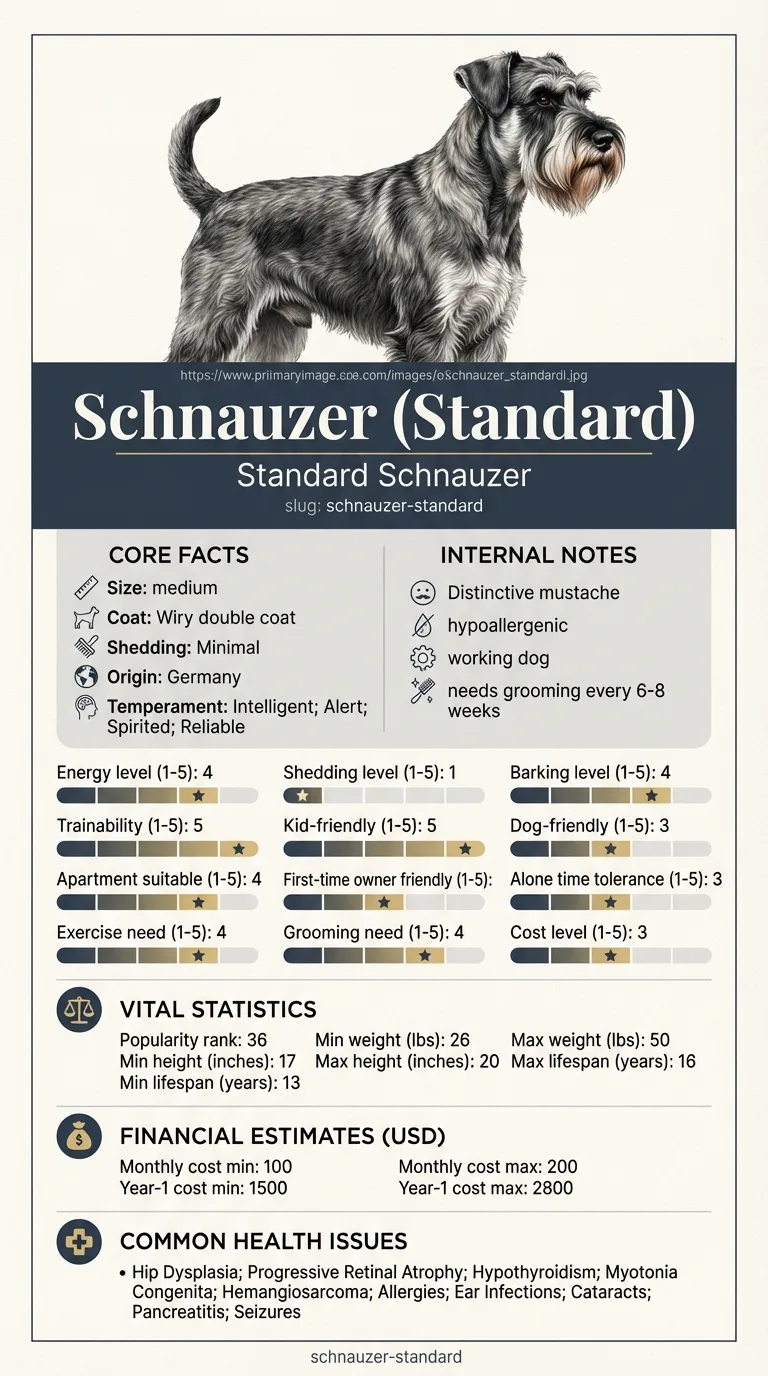
Yes, Schnauzers (Standard) can face health issues like hip dysplasia and progressive retinal atrophy, which may influence their behavior. Regular vet check-ups and a healthy diet can help mitigate some of these risks and keep them happy.
Common issues include separation anxiety, excessive barking, and stubbornness. Understanding these tendencies can help you manage them effectively through training and structured environments.
Common signs of anxiety in a Schnauzer (Standard) include excessive barking, destructive behavior, and clinginess. They may also show signs of distress when left alone, such as pacing or whining. If these behaviors persist, it might be time to consult a trainer or veterinarian.
Helping an older Schnauzer (Standard) adjust to new surroundings requires patience and gradual exposure. Create a safe space for them and introduce changes slowly, allowing them to explore at their own pace. Consistent routines and positive reinforcement can also ease their transition.
Yes, mixed breed Schnauzers may have different health concerns compared to purebreds. While they can inherit health issues from either parent, they often benefit from hybrid vigor, which may reduce the likelihood of certain genetic conditions. Regular vet check-ups are essential to monitor their health.
If your Schnauzer (Standard) shows sudden behavioral changes, it could indicate underlying health issues or stress. It's important to consult your veterinarian to rule out medical problems. Once health issues are addressed, working with a trainer can help modify any unwanted behaviors.
The temperament of a mixed breed Schnauzer can vary widely depending on the traits inherited from its parents. While purebred Schnauzers are known for being intelligent and spirited, mixed breeds might show a blend of these traits. Spending time with the dog can help you understand its unique personality.
Establish a consistent routine, provide plenty of exercise, and use positive reinforcement for training. Regular grooming can also help reduce stress.
Expect to spend between $100 and $200 monthly on food, grooming, and vet visits for a Schnauzer (Standard). Yearly costs can range from $1,500 to $2,800.
Schnauzers (Standard) benefit from obedience training, socialization, and mental stimulation activities. Consistent training helps address their stubbornness.
Yes, Schnauzers (Standard) are generally kid-friendly, making them a great choice for families. Supervision is important to ensure safe interactions.
A one-page prep sheet for this condition: the signs, the questions to ask, what to get priced. Unlocks here.
You get: Vet visit prep sheet
No spam. One-click unsubscribe. See our privacy policy.
Preview page 1 before you decide.