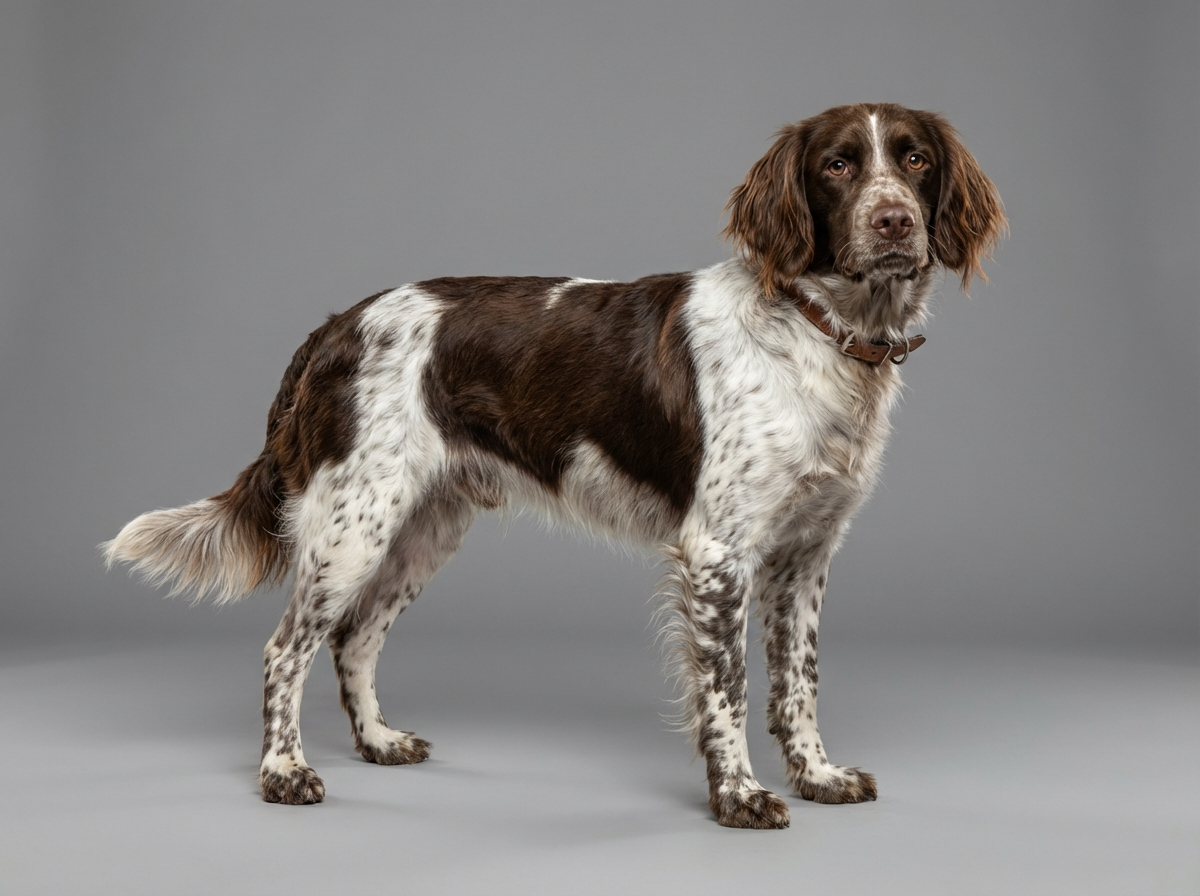
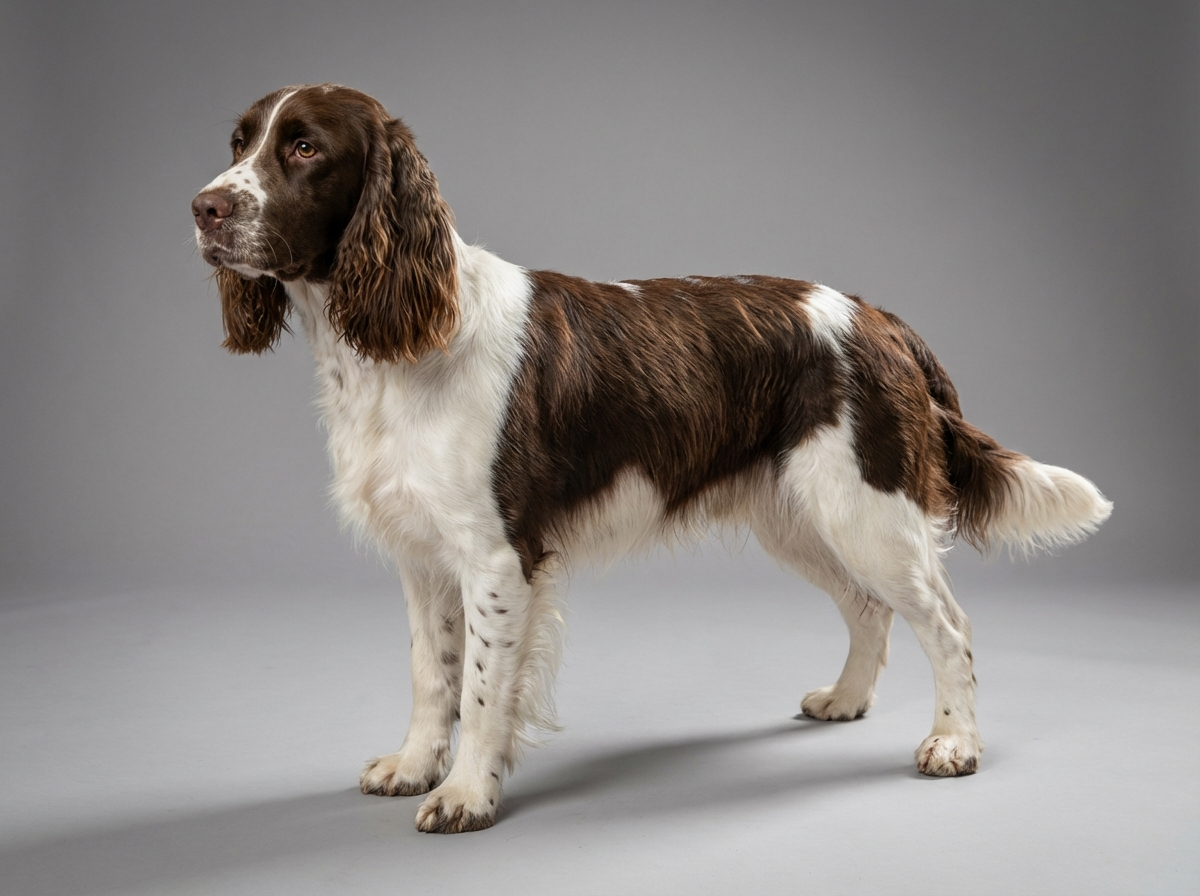
Health
Are Welsh Springer Spaniels prone to sudden disc disease like a Dachshund?
No, this breed's normal body proportions put it outside the classic high-risk group; what can occur instead is gradual, age-related disc wear later in life.

Quick answer
Are Welsh Springer Spaniels prone to sudden disc disease like a Dachshund?
No, this breed's normal body proportions put it outside the classic high-risk group; what can occur instead is gradual, age-related disc wear later in life.
A normal spine can still wear down over a decade of jumping, running, and retrieving; it just happens on a much longer timeline than in a breed built with vulnerable discs from birth.
Owners of middle-aged and senior Welsh Springer Spaniels who have led an active, athletic life are most likely to see this gradual pattern show up.
This guide is not medical advice. If your dog shows pain, sudden behavior change, or worsening symptoms, consult a licensed veterinarian.
Some links may be affiliate links. We may earn a commission at no extra cost to you. We only suggest products we believe are helpful for dog owners.
Welsh Springer Spaniels do not have the long-backed, short-legged build most associated with early-onset disc disease, so their disc risk instead follows a slower, age-related wear pattern built up over years of normal activity. Symptoms tend to develop gradually, giving owners more time to notice changes than the sudden-onset pattern seen in high-risk breeds.
Gradual, age-related disc wear can occur in almost any breed with a normally proportioned spine given enough years of activity, and it appears often enough in senior dogs generally that it is worth watching for even though this breed is not in IVDD's classic high-risk category.
Because the Welsh Springer Spaniel has a normally proportioned spine rather than the long-backed, short-legged build linked to early disc calcification, its disc disease risk is driven mainly by cumulative wear from an active life rather than an inherited structural vulnerability present from birth.
Years of jumping, running on uneven terrain, carrying extra body weight, and minor repeated trauma like slipping on hard floors all add up over a dog's lifetime to compress and dehydrate the discs that cushion the spine.
Talk to your vet if you notice gradual stiffness, a hunched back, reluctance to jump, or subtle back-leg weakness, so imaging can determine whether disc changes are contributing. A dog that suddenly cannot walk, cries out in pain, or loses control of its bladder or bowels needs emergency veterinary care immediately, since this can indicate a disc pressing seriously on the spinal cord.
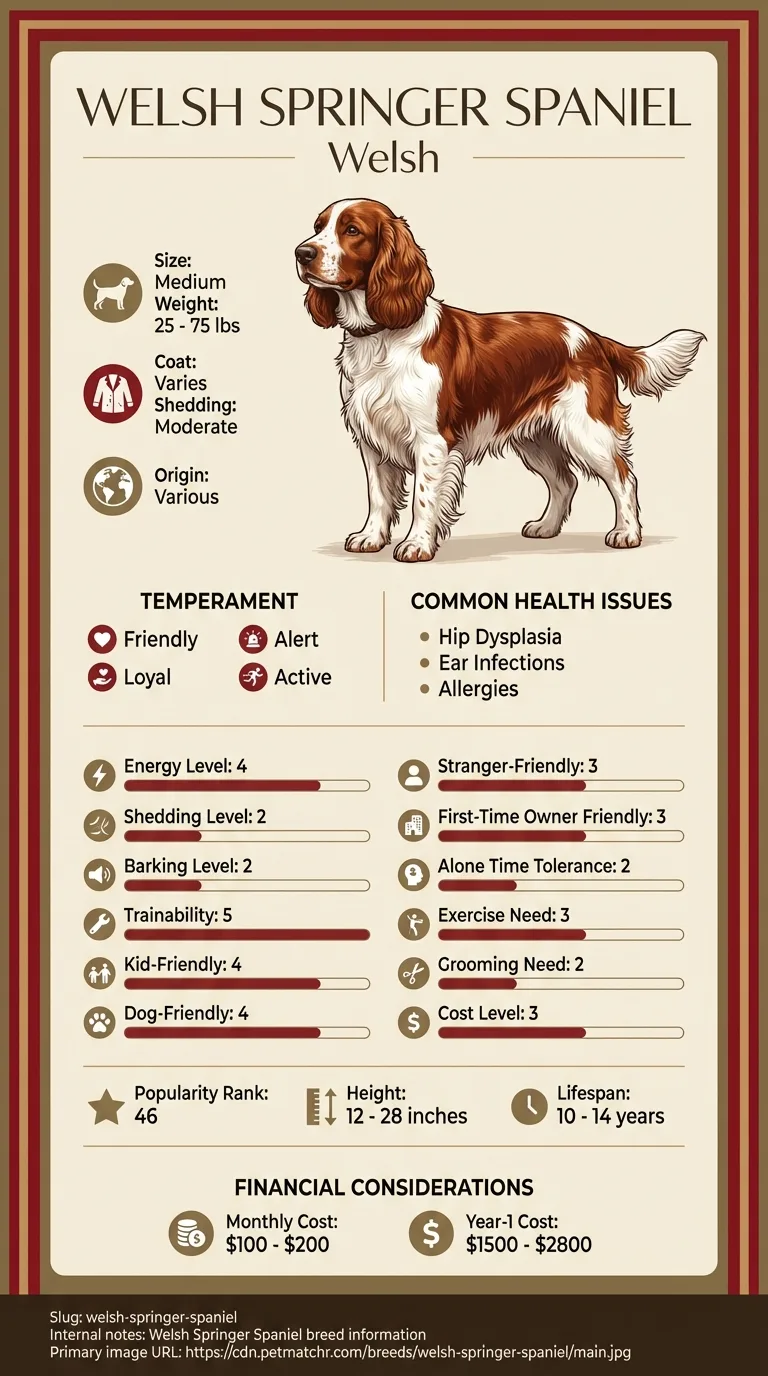
See all Welsh Springer Spaniel health problems, which breeds are prone to intervertebral disc disease ivdd, or the full Welsh Springer Spaniel breed guide for temperament, exercise needs and ownership costs.
This gradual pattern typically develops over years rather than months, with most dogs not showing noticeable symptoms until well into middle age or their senior years.
Success looks like a spine that stays comfortable and functional well into old age through consistent weight management and moderate exercise, with any symptoms caught and addressed early rather than allowed to progress unnoticed.
The disc disease most people picture, sudden paralysis in a Dachshund after jumping off a couch, happens because chondrodystrophic breeds are born with discs that calcify early and become brittle well before old age. The Welsh Springer Spaniel does not have that body type, so this dramatic, early-onset pattern is uncommon here.
What can still happen is the slower, wear-and-tear version seen in normally built, active dogs as they age. Years of jumping into vehicles, running on uneven ground, and general athletic activity gradually compress and dehydrate the cushioning discs between vertebrae, and by a dog's senior years this can lead to disc bulging that presses on the spinal cord or nearby nerves.
The symptoms tend to build gradually rather than appear instantly: mild back stiffness after rest, growing reluctance to jump, and eventually subtle weakness or incoordination in the back legs. This slow-building pattern is a very different disease course than the sudden crisis seen in a chondrodystrophic breed, and it usually gives owners a longer window to notice something is wrong before a true emergency develops.

Because this breed's disc risk builds gradually rather than being present from birth, most of the useful prevention happens through ordinary lifestyle choices maintained consistently over years.
If you think your Welsh has intervertebral disc disease (ivdd), the plan is three steps: write down what you have seen and when it started, book a veterinary appointment rather than waiting for the next flare, and take video of the behaviour or symptom before you go — the thing you are worried about rarely happens in the consulting room. Screening in the parents covers hip dysplasia, ear infections, epilepsy.
What the vet visit should produce is a diagnosis and a written plan, not just reassurance: what is being ruled out, what the monitoring interval is, and which signs mean you come back sooner. Ask what the treatment costs across a year rather than per visit, because that is the number that decides whether you are managing this condition or reacting to it.
Between appointments, keep a short log — dates, what you saw, what changed. It is the single most useful thing an owner brings to a follow-up, and for intervertebral disc disease (ivdd) it is often what separates a clear pattern from a guess.
Walter's Welsh Springer, Scout, had spent a decade happily jumping in and out of the truck bed for hunting trips. Around age nine, Walter noticed Scout hesitating slightly before jumping, then eventually refusing altogether, opting to wait for Walter to lift him down instead. A vet exam and imaging showed mild disc bulging in Scout's lower back, consistent with years of gradual wear rather than any single injury. There was no nerve damage, so Walter's vet recommended a ramp, a leaner target weight, and moderate daily walks instead of the occasional long, hard hikes Scout used to do. Two years later, Scout still moves comfortably on his daily routine, just without the truck-bed leaps that had quietly been adding up all along.
Key takeaway: A normally built spine can still wear down from a decade of ordinary athletic activity, which is why gradual signs like jump reluctance deserve attention even in a breed without a classic disc disease reputation.
No. IVDD is most strongly linked to chondrodystrophic breeds with early disc calcification, and this breed's normal body proportions put it outside that highest-risk group. What can still occur is gradual, age-related disc wear.
Years of ordinary activity, jumping, running, and general wear compress and dehydrate the discs cushioning the vertebrae, and this can eventually cause bulging that presses on the spinal cord, usually later in life.
Mild back stiffness after rest, growing reluctance to jump, a slightly hunched posture, or subtle weakness or incoordination in the back legs are the earliest signs of gradual disc wear.
Yes, this pattern is typically seen in middle-aged and senior dogs, since it results from years of cumulative wear rather than a congenital vulnerability present from puppyhood.
Yes, though usually more gradually. If a bulging disc suddenly presses harder on the spinal cord, a dog can experience a rapid worsening of pain or weakness even with this slower underlying pattern.
Using a ramp for car access, keeping a lean body weight, maintaining steady moderate exercise, and providing good traction on slick floors all reduce cumulative spinal stress over a dog's lifetime.
No, this breed's normal body proportions put it outside the classic high-risk group; what can occur instead is gradual, age-related disc wear later in life.
Mild stiffness after rest, growing reluctance to jump, and subtle back-leg weakness are the earliest signs of gradual, age-related disc wear.
Using a ramp for vehicle access, keeping a lean body weight, and maintaining steady exercise all help protect the spine over a long, active life.
Yes, even a gradually developing disc bulge can suddenly worsen, so any rapid onset of pain, weakness, or difficulty walking should be treated urgently.
Middle-aged and senior dogs are the most likely to show this pattern, since it results from years of cumulative wear rather than a condition present from birth.
A one-page prep sheet for this condition: the signs, the questions to ask, what to get priced. Unlocks here.
You get: Vet visit prep sheet
No spam. One-click unsubscribe. See our privacy policy.
Preview page 1 before you decide.