Health
Is this breed at documented high risk for GDV?
No, it isn't among the classic high-risk breeds, so feeding behavior is the more relevant, controllable factor here.

Quick answer
Is this breed at documented high risk for GDV?
No, it isn't among the classic high-risk breeds, so feeding behavior is the more relevant, controllable factor here.
Two dogs can share the exact same breed and body type and end up with very different lifetime risk simply based on how they're fed and exercised day to day.
Owners of fast, competitive, or anxious eaters face the most controllable risk here, since eating speed and air-gulping are among the most consistently identified contributing factors across studies of this disease.
This guide is not medical advice. If your dog shows pain, sudden behavior change, or worsening symptoms, consult a licensed veterinarian.
Some links may be affiliate links. We may earn a commission at no extra cost to you. We only suggest products we believe are helpful for dog owners.
We research and check what we publish, but we do not warrant that any figure, date, price, or statement is accurate, complete, or current, and we accept no liability for any loss, cost, injury, or other harm arising from the use of this site. Use it as one reference among several. You remain responsible for your own decisions and for your dog's care - confirm anything that matters with a licensed veterinarian or another qualified professional before you act on it. Full disclaimer.
Gastric dilatation-volvulus is a life-threatening emergency in which the stomach fills with gas and can twist, cutting off blood supply. This breed isn't documented as being at classic high risk given its medium size, so feeding behavior, eating speed, meal size, and exercise timing, represents the most relevant, controllable piece of risk for most owners of this breed.
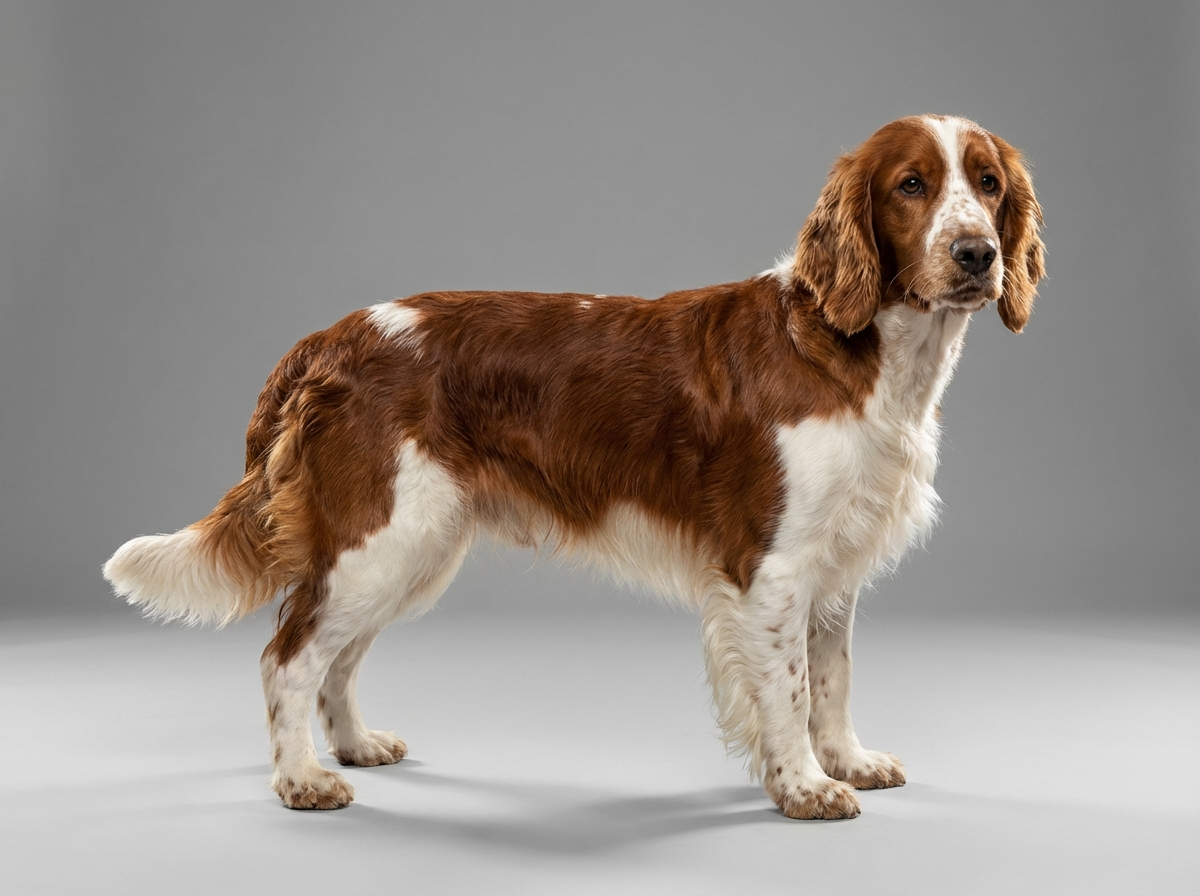
GDV isn't among the Welsh Springer Spaniel's documented health issues, and the classic high-risk breeds are large, giant, deep-chested dogs rather than medium sporting breeds like this one. It's included here to focus specifically on the feeding and routine factors that are within an owner's control, regardless of a dog's underlying breed-level risk.
There's no documented breed-specific predisposition to GDV for this breed in breeds.json. As a medium breed rather than a large, deep-chested one, the anatomical risk factor most associated with classic high-risk breeds is present to a lesser degree here, which shifts more of the practical risk picture toward feeding behavior.
Feeding speed, meal size and frequency, and exercise timing around meals are the most significant, modifiable environmental factors. These apply across all breeds and are the primary levers available to an owner regardless of their dog's underlying anatomical risk level.
Treat any suspected bloat, a swollen or tight abdomen combined with unproductive retching, restlessness, or weakness, as an emergency regardless of how carefully feeding habits have been managed. Go to an emergency vet immediately rather than waiting to see if symptoms pass.
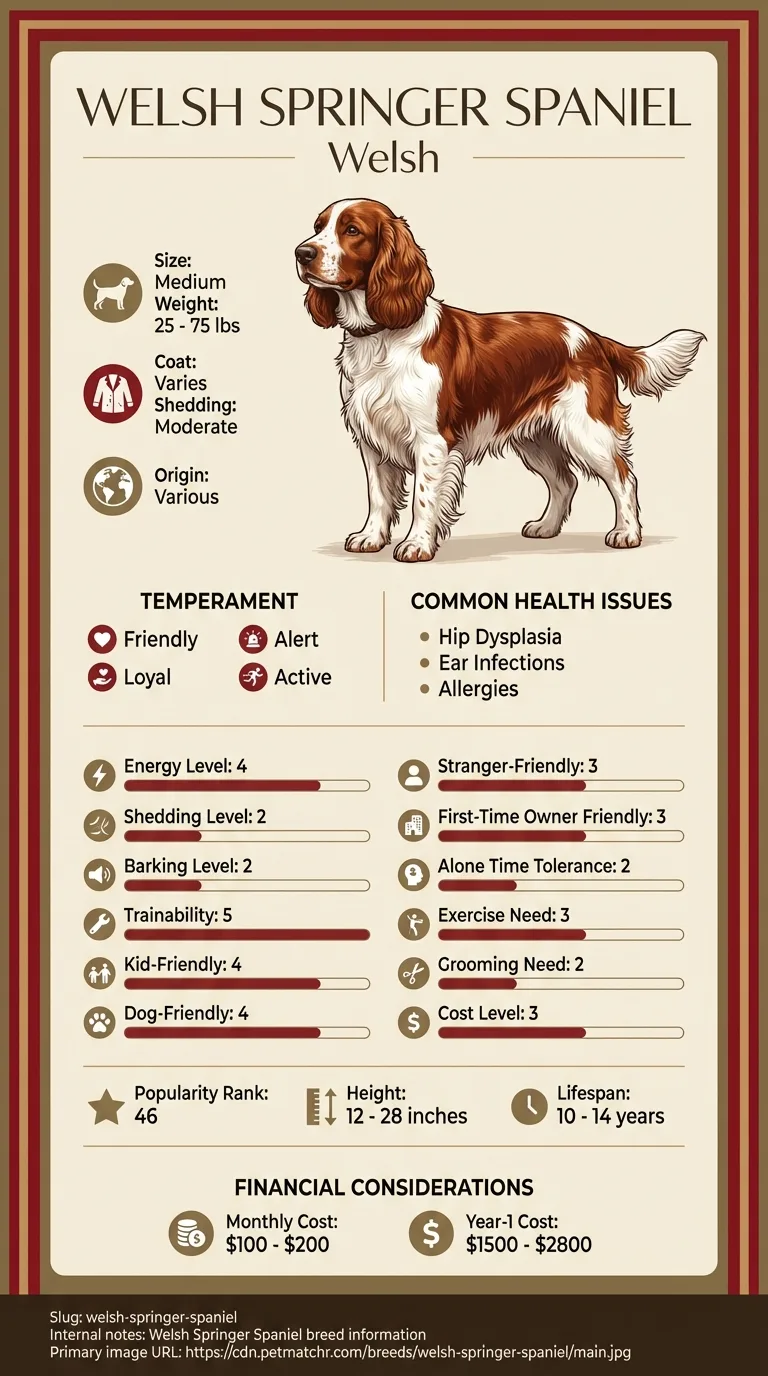
See all Welsh Springer Spaniel health problems, which breeds are prone to gastric dilatation volvulus gdvbloat, or the full Welsh Springer Spaniel breed guide for temperament, exercise needs and ownership costs.
Feeding and routine changes can be implemented immediately and typically show a visible change in eating speed within days. These changes reduce known contributing risk factors but don't eliminate the possibility of GDV entirely, since it can have multiple causes.
Success looks like a consistent, calm feeding routine that addresses the specific, well-documented contributing factors within your control, paired with knowing the emergency signs well enough to act immediately if GDV does occur despite those precautions.
GDV isn't formally documented as a breed-specific risk for the Welsh Springer Spaniel, and it's a medium breed rather than one of the classic large, deep-chested breeds most associated with the condition. That makes feeding behavior, rather than anatomy alone, the more relevant, actionable piece of this picture for most owners of this breed.
Dogs that eat quickly tend to swallow more air along with their food, which contributes to the gas buildup at the center of GDV. A dog eating from a single large bowl in under a minute is behaving very differently, physiologically, than one taking five or ten minutes to work through the same amount of food from a slow-feeder design.
Exercise timing around meals is the other major controllable factor. Vigorous activity, running, jumping, excited play, soon after a large meal is a recognized contributing factor, likely because it increases movement and pressure within an already food-filled stomach. Spacing meals away from intense activity is a simple, low-cost habit that addresses this directly.
These aren't guarantees against GDV, but each addresses one of the specific, well-documented contributing factors identified across breeds generally.

If you think your Welsh has gastric dilatation-volvulus (gdv/bloat), the plan is three steps: write down what you have seen and when it started, book a veterinary appointment rather than waiting for the next flare, and take video of the behaviour or symptom before you go — the thing you are worried about rarely happens in the consulting room. Screening in the parents covers hip dysplasia, ear infections, epilepsy.
What the vet visit should produce is a diagnosis and a written plan, not just reassurance: what is being ruled out, what the monitoring interval is, and which signs mean you come back sooner. Ask what the treatment costs across a year rather than per visit, because that is the number that decides whether you are managing this condition or reacting to it.
Between appointments, keep a short log — dates, what you saw, what changed. It is the single most useful thing an owner brings to a follow-up, and for gastric dilatation-volvulus (gdv/bloat) it is often what separates a clear pattern from a guess.
Mari's two dogs, including her Welsh Springer Spaniel, Bedwyr, had always eaten side by side, and Bedwyr, the faster and more food-motivated of the two, routinely finished his bowl in under a minute, often trying to steal from his housemate afterward. After reading about the feeding-related risk factors for bloat, Mari decided to make changes even though her vet noted Bedwyr wasn't in a classic high-risk category. She started feeding the two dogs in separate rooms, switched Bedwyr to a slow-feeder bowl, and split his food into three smaller meals. Within two weeks, his eating time had stretched from under a minute to several minutes per meal. Mari also began keeping walks and play sessions at least an hour away from mealtimes, a habit that's simply become part of the household routine.
Key takeaway: Even for a breed without a documented high risk, addressing well-known controllable factors, eating speed, meal timing, competition, costs little and directly targets the mechanisms behind this serious emergency.
No, this breed isn't among the classic high-risk breeds, which tend to be large, giant, deep-chested dogs. Feeding behavior and general risk factors that apply across all breeds are the more relevant focus here.
It directly addresses one well-documented contributing factor, fast eating and air-gulping, though it's not a guarantee against GDV occurring, since the condition can have multiple contributing factors.
A commonly recommended guideline is waiting at least an hour after a meal before vigorous exercise, and similarly avoiding a large meal immediately after intense activity.
Yes, splitting food into two or three smaller meals rather than one large daily meal is a widely recommended practice that reduces the volume of food and air in the stomach at any one time.
This has actually been studied with mixed results, and some research has suggested elevated bowls may not help and could even be associated with increased risk in certain studies, so it's worth discussing with your vet rather than assuming it's protective.
Treat any suspected bloat as an emergency regardless of how carefully you've managed feeding habits. A swollen abdomen with unproductive retching needs immediate emergency veterinary care, not a wait-and-see approach.
No, it isn't among the classic high-risk breeds, so feeding behavior is the more relevant, controllable factor here.
Yes, fast eating and air-gulping are among the most consistently identified contributing factors across studies.
Splitting food into two or three smaller meals rather than one large one is a widely recommended precaution.
Yes, waiting at least an hour after eating before vigorous activity is a commonly recommended precaution.
Yes, for a fast eater, it directly addresses one of the most well-documented contributing risk factors.
A one-page prep sheet for this condition: the signs, the questions to ask, what to get priced. Unlocks here.
You get: Vet visit prep sheet
No spam. One-click unsubscribe. See our privacy policy.
Preview page 1 before you decide.