Health
What does documented hip dysplasia prevalence mean for this breed?
It means the condition shows up often enough in health surveys and screening programs to be flagged as a real concern, not a rare or one-off finding.

Quick answer
What does documented hip dysplasia prevalence mean for this breed?
It means the condition shows up often enough in health surveys and screening programs to be flagged as a real concern, not a rare or one-off finding.
A breed being flagged for hip dysplasia in health records is a starting point for research, not a verdict on any individual dog.
Prospective buyers comparing breeders, and current owners trying to understand whether their dog's diagnosis is typical or unusual for the breed, are the two groups who most need this context.
This guide is not medical advice. If your dog shows pain, sudden behavior change, or worsening symptoms, consult a licensed veterinarian.
Some links may be affiliate links. We may earn a commission at no extra cost to you. We only suggest products we believe are helpful for dog owners.
Hip dysplasia's documented status in this breed comes from formal screening data, breed health surveys, and veterinary case records showing it appears often enough to be a real, ongoing concern. Understanding how that data is gathered, through OFA and PennHIP evaluation, turns a vague 'this breed can get hip dysplasia' warning into something a buyer or owner can actually act on.
Hip dysplasia is consistently listed among this breed's most documented health conditions, meaning it appears often enough across screening programs and veterinary records to warrant real attention from buyers and owners, even though most individual cases are manageable rather than severe.
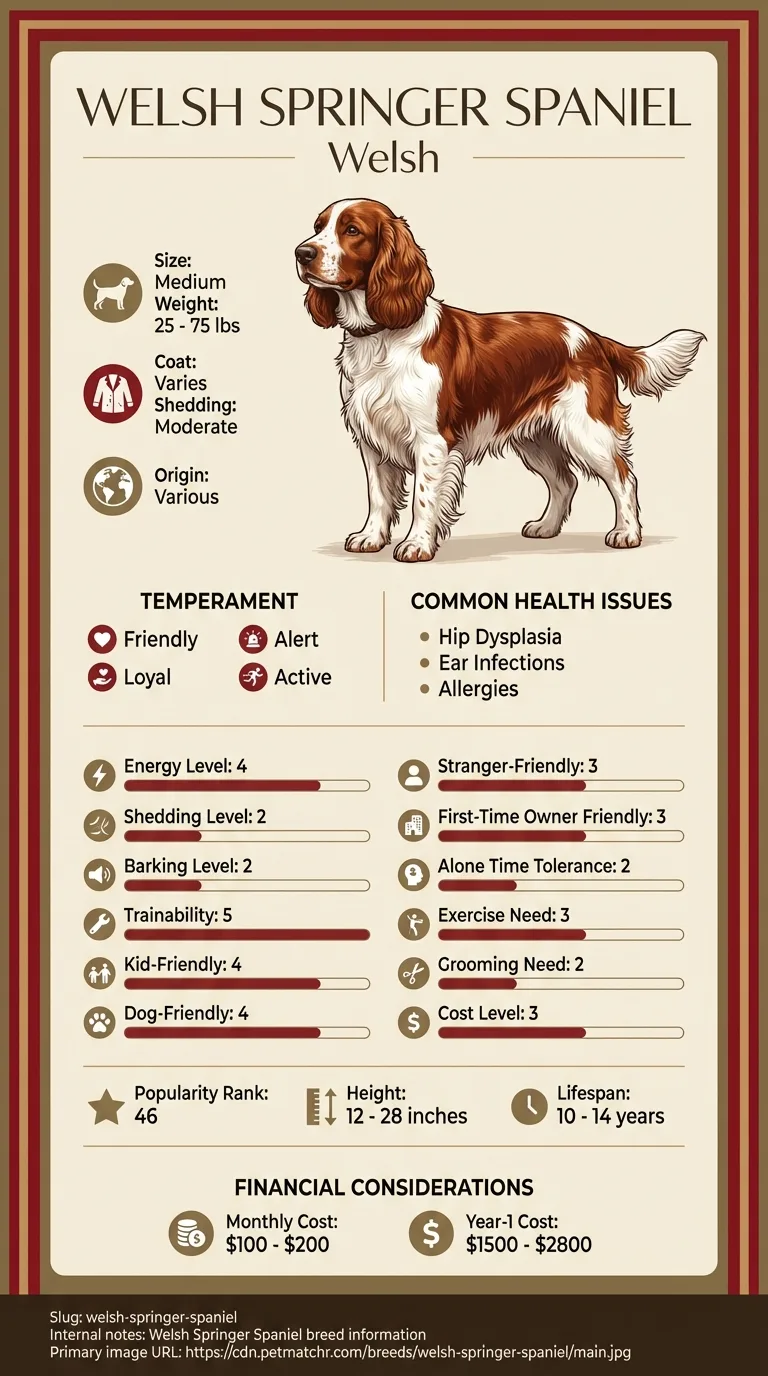
As a medium, moderately fast-growing breed with real working drive, Welsh Springer Spaniels carry enough documented genetic hip laxity across the population that formal registries track it, which is exactly why breed-specific screening programs exist and why prevalence numbers are worth understanding rather than dismissing.
Prevalence figures reflect population-wide patterns; how any individual case unfolds still depends heavily on a specific dog's weight, exercise history, and growth rate, which is why screening data and personal management both matter.
Talk to your vet about formal hip screening timing for your specific dog, and ask them to interpret any scores you receive from a breeder in plain terms. If your adult dog shows a gait change, discuss whether screening or imaging is warranted regardless of the parents' documented history.
See all Welsh Springer Spaniel health problems, which breeds are prone to hip dysplasia prevalence, or the full Welsh Springer Spaniel breed guide for temperament, exercise needs and ownership costs.
Formal hip scoring for a young dog is typically available starting around one year with PennHIP or two years with OFA, giving buyers and owners a data point well before symptoms would naturally appear.
Success looks like making an informed decision, whether that is choosing a well-screened puppy or managing an existing dog's risk proactively, rather than being surprised by a diagnosis with no prior context.
When a condition is listed as documented for a breed, it usually means the condition appears in orthopedic registries, breed club health surveys, or veterinary case data at a rate worth flagging, not that every dog will develop it or that every case will be severe. For a medium, moderately active breed like the Welsh Springer Spaniel, hip dysplasia sits in this documented category based on how often it turns up in hip screening programs and veterinary records over time.
The most useful numbers come from formal screening, not anecdote. Two systems dominate: OFA evaluation, which grades hip conformation on x-rays taken after two years of age into categories from excellent to severe, and PennHIP, which measures joint laxity directly and can be done earlier. Breed-wide averages from these programs give a real baseline, but they describe a population, not the dog in front of you.
This is why prevalence data is most useful as a screening tool rather than a prediction. A breeder who submits both parents' hips to OFA or PennHIP and shares fair-to-good or better scores is working with the same data this article is describing, in the most concrete way available.

Prevalence numbers become genuinely useful the moment they turn into specific questions you ask a breeder before committing to a puppy.
Before choosing her Welsh Springer puppy, Renata compared two breeders. The first offered assurances that 'the line has always been healthy' but had no paperwork to show. The second handed her copies of both parents' OFA certificates, rated fair and good, along with hip scores for the grandparents going back two generations. Renata chose the second breeder, understanding that good scores lowered risk but did not eliminate it entirely. She still had her puppy, Ruby, screened again through PennHIP at fourteen months as a personal baseline. Ruby's results came back solidly within normal range, giving Renata real data rather than hope to build her long-term exercise and weight plan around.
Key takeaway: Documented prevalence becomes genuinely useful the moment it turns into a specific paper trail you can request and verify, rather than a general breed reputation you have to take on faith.
It means the condition appears often enough in health surveys, orthopedic registries, and veterinary case data to be flagged as a genuine breed concern, not that most individual dogs will develop severe symptoms.
OFA grades hip conformation on x-rays taken after two years old, using categories from excellent to severe. PennHIP measures joint laxity directly using a specialized technique and can often be done earlier in a dog's life.
Ask to see both parents' formal hip scores, not just a verbal assurance. Reputable breeders working to reduce dysplasia in their lines will have this documentation readily available and be glad to share it.
No. Good scores meaningfully lower the odds because hip conformation is heritable, but they do not guarantee an individual puppy will never develop dysplasia, since multiple genes and environment both play a role.
This breed's medium size and moderate activity level put it in a middle tier of risk, well below the largest, fastest-growing giant breeds but still high enough to be worth formal screening before breeding.
Yes, particularly for a specific breeding line or kennel, since individual genetics matter more than breed averages. Ask the breeder directly rather than relying only on general breed statistics.
It means the condition shows up often enough in health surveys and screening programs to be flagged as a real concern, not a rare or one-off finding.
OFA grades hip x-rays after two years old into categories from excellent to severe; PennHIP measures joint laxity directly and can often be done earlier.
Ask for both parents' formal hip scores in writing, and be cautious of any breeder who cannot or will not provide them.
Screening itself typically costs a few hundred dollars per dog; the larger cost consideration is what you avoid down the line by choosing well-screened breeding stock.
No. Good parent scores lower the odds meaningfully but cannot eliminate risk entirely, since hip conformation involves multiple genes and environmental factors.
A one-page prep sheet for this condition: the signs, the questions to ask, what to get priced. Unlocks here.
You get: Vet visit prep sheet
No spam. One-click unsubscribe. See our privacy policy.
Preview page 1 before you decide.