Health
Are Welsh Springer Spaniels genetically prone to sudden disc rupture?
No, this breed is not chondrodystrophic; a sudden disc rupture here is usually driven by trauma from a hard fall rather than inherited disc fragility.

Quick answer
Are Welsh Springer Spaniels genetically prone to sudden disc rupture?
No, this breed is not chondrodystrophic; a sudden disc rupture here is usually driven by trauma from a hard fall rather than inherited disc fragility.
A disc does not need a chondrodystrophic body type to rupture suddenly; it just needs the wrong kind of hard landing.
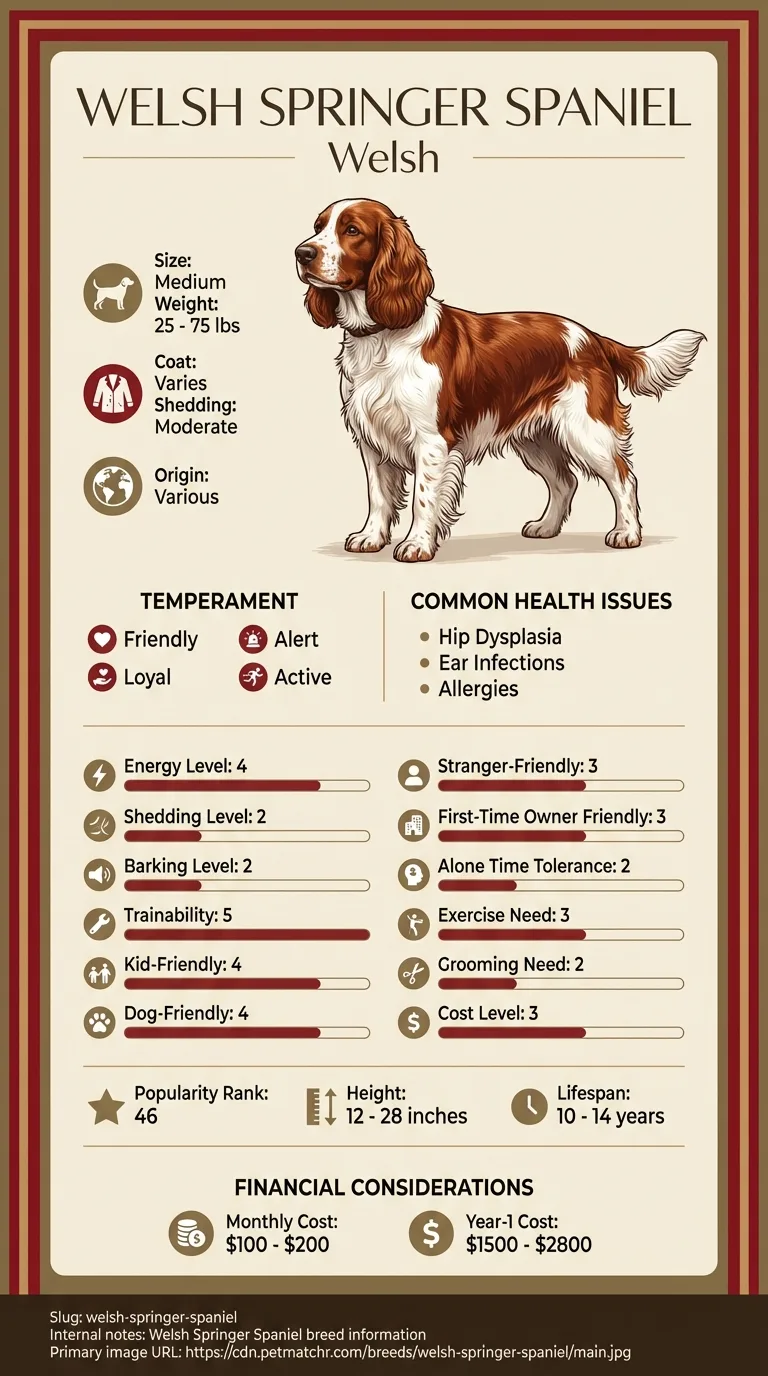
Owners of highly active, field-working Welsh Springer Spaniels who regularly jump from vehicles, over obstacles, or off elevated surfaces are the ones most likely to encounter this, even though it remains uncommon in the breed overall.
This guide is not medical advice. If your dog shows pain, sudden behavior change, or worsening symptoms, consult a licensed veterinarian.
Some links may be affiliate links. We may earn a commission at no extra cost to you. We only suggest products we believe are helpful for dog owners.
Type I disc extrusion, a sudden rather than gradual disc rupture, is not a genetic risk for Welsh Springer Spaniels the way it is for chondrodystrophic breeds. When it does occur here, it is almost always trauma driven, triggered by a hard fall, an awkward jump landing, or a forceful twist during high-speed activity, which this breed's active, field-driven lifestyle makes more likely than in a sedentary dog.
Type I disc extrusion is uncommon in this breed compared to chondrodystrophic breeds, but it is not impossible given enough force, and the breed's active, jumping, field-driven lifestyle creates more opportunities for the kind of trauma that can trigger it than a less active breed would face.
The Welsh Springer Spaniel's normal, non-chondrodystrophic body structure means its discs are not inherently prone to early rupture, but its working drive and energy level push it into jumping, sprinting, and high-impact play more often than a low-activity breed, creating more chances for a trauma-triggered rupture even without an inherited vulnerability.
Hard landings off elevated surfaces, sudden twisting falls, and forceful collisions during play are the main environmental triggers, and their likelihood increases with an owner's willingness to let the dog jump freely from height without assistance.
Any sudden yelp of pain followed by reluctance to move, an arched or hunched back, or weakness or paralysis in the back legs after a fall or hard landing is an emergency. Get to a vet immediately, since the window for effective treatment, which can include surgery, is time sensitive and outcomes are generally better the sooner treatment begins.
See all Welsh Springer Spaniel health problems, which breeds are prone to intervertebral disc disease ivdd type i, or the full Welsh Springer Spaniel breed guide for temperament, exercise needs and ownership costs.
When this does occur, treatment and recovery time varies widely by severity, from a few weeks of strict rest for a mild case to months of recovery, sometimes including surgery and rehabilitation, for a more severe one.
Success looks like recognizing sudden onset symptoms immediately and getting emergency care right away, since this is a case where speed of response has a real impact on the eventual outcome.
In a chondrodystrophic breed, Type I disc extrusion often happens with minimal provocation because the disc material itself has degenerated early and become brittle enough to rupture during ordinary movement. That is not the typical mechanism in a Welsh Springer Spaniel, whose discs generally age at a normal rate.
What changes the picture is force. A hard landing after jumping off a tailgate, a sharp twisting fall while sprinting after a flushed bird, or a collision during energetic play can put enough sudden pressure on a normal disc to cause it to rupture and push material into the spinal canal. Because this breed's working drive means it regularly puts itself in exactly these high-impact situations, its actual exposure to Type I triggering events is higher than its underlying genetic risk alone would suggest.
When this happens, the presentation is sudden rather than gradual: a yelp of pain at the moment of injury, immediate reluctance to move, or in more severe cases, sudden weakness or paralysis in the back legs. This sudden, dramatic onset is the key difference from the slow-building wear pattern seen more typically in this breed, and it changes the response required from an owner from watchful monitoring to an immediate emergency vet visit.

Because trauma, not inherited disc fragility, is the main trigger here, most of the useful prevention is about managing the physical situations that create high-impact falls.
If you think your Welsh has intervertebral disc disease (ivdd) type i, the plan is three steps: write down what you have seen and when it started, book a veterinary appointment rather than waiting for the next flare, and take video of the behaviour or symptom before you go — the thing you are worried about rarely happens in the consulting room. Screening in the parents covers hip dysplasia, ear infections, epilepsy.
What the vet visit should produce is a diagnosis and a written plan, not just reassurance: what is being ruled out, what the monitoring interval is, and which signs mean you come back sooner. Ask what the treatment costs across a year rather than per visit, because that is the number that decides whether you are managing this condition or reacting to it.
Between appointments, keep a short log — dates, what you saw, what changed. It is the single most useful thing an owner brings to a follow-up, and for intervertebral disc disease (ivdd) type i it is often what separates a clear pattern from a guess.
Diego's Welsh Springer, Hazel, had jumped off the truck tailgate hundreds of times without incident, so he never thought twice about it. One frosty morning, Hazel landed awkwardly on the icy ground, yelped sharply, and immediately refused to move her back legs normally. Recognizing this as different from Hazel's usual energetic self, Diego got her to an emergency vet within the hour. Imaging confirmed a Type I disc extrusion, and given the degree of spinal cord compression, the vet recommended surgery rather than conservative management. Hazel spent several weeks in strict rest and rehabilitation afterward, and while she regained full mobility, Diego now uses a ramp for every tailgate exit, rain or shine.
Key takeaway: A single hard landing can rupture a perfectly normal disc, which is why sudden, dramatic symptoms after a fall call for an emergency vet visit rather than a wait-and-see approach, even in a breed without a classic disc disease reputation.
Not primarily. This breed is not chondrodystrophic, so its discs do not calcify early the way a Dachshund's do. A sudden Type I rupture here is usually driven by trauma from a hard fall or awkward landing rather than inherited disc fragility.
Jumping off truck tailgates, sharp twisting falls during a fast sprint, and hard collisions during energetic play are the most common triggers for a sudden disc rupture in an active breed like this one.
A sudden yelp of pain at the moment of injury, immediate reluctance to move, and in more severe cases sudden weakness or paralysis in the back legs are the hallmark signs, distinct from the slow-building stiffness seen in gradual disc wear.
Yes, always. Sudden onset of pain, weakness, or paralysis after a fall or hard landing is a true emergency, since the window for effective treatment, sometimes including surgery, is time sensitive.
Using a ramp or lifting your dog down from elevated surfaces, avoiding hard-surface jumps during play, and keeping a lean body weight all reduce the force involved in any given fall.
Treatment depends on severity and can range from strict rest and medication for mild cases to emergency surgery for more severe spinal cord compression, decided based on imaging and neurological exam findings.
No, this breed is not chondrodystrophic; a sudden disc rupture here is usually driven by trauma from a hard fall rather than inherited disc fragility.
A sudden yelp of pain, immediate reluctance to move, and possible back-leg weakness following a fall or hard landing are the key warning signs.
Yes, always. Sudden pain or weakness after a fall is time sensitive and needs immediate veterinary evaluation.
Using a ramp for vehicle access, avoiding hard-surface jumps during play, and keeping a lean body weight all reduce the impact force involved in falls.
Costs vary widely by severity, from exam and medication for a mild case to emergency imaging and surgery for a severe one, so pet insurance enrolled early can meaningfully offset this risk.
A one-page prep sheet for this condition: the signs, the questions to ask, what to get priced. Unlocks here.
You get: Vet visit prep sheet
No spam. One-click unsubscribe. See our privacy policy.
Preview page 1 before you decide.