Behavior
What are quick tips for managing Rottweiler anxiety?
Provide a consistent routine, ensure plenty of exercise, and engage in regular training to help manage anxiety. Consider using calming products or consulting a vet for more serious cases.

Quick answer
What are quick tips for managing Rottweiler anxiety?
Provide a consistent routine, ensure plenty of exercise, and engage in regular training to help manage anxiety. Consider using calming products or consulting a vet for more serious cases.
Choosing between a Rottweiler purebred and a mixed breed can be tough. Each option comes with unique traits and potential challenges.
First-time dog owners or families with young children often struggle with this decision. They may find it challenging to weigh the pros and cons of adopting a purebred versus a mixed breed Rottweiler.
This guide is not medical advice. If your dog shows pain, sudden behavior change, or worsening symptoms, consult a licensed veterinarian.
Some links may be affiliate links. We may earn a commission at no extra cost to you. We only suggest products we believe are helpful for dog owners.
We research and check what we publish, but we do not warrant that any figure, date, price, or statement is accurate, complete, or current, and we accept no liability for any loss, cost, injury, or other harm arising from the use of this site. Use it as one reference among several. You remain responsible for your own decisions and for your dog's care - confirm anything that matters with a licensed veterinarian or another qualified professional before you act on it. Full disclaimer.
Check this first
Understanding when a situation is an emergency is crucial for your Rottweiler's health. For issues related to Rottweiler purebred vs. mixed breeds, certain signs indicate that immediate veterinary care is necessary.
If your Rottweiler shows severe distress, difficulty breathing, or sudden lethargy, these are red flags that require you to call your vet right away. Other emergencies include signs of bloat, persistent vomiting, or any form of uncontrolled bleeding.
If any of these apply, call your vet or an emergency clinic now. The rest of this page is for the cases that are not an emergency.
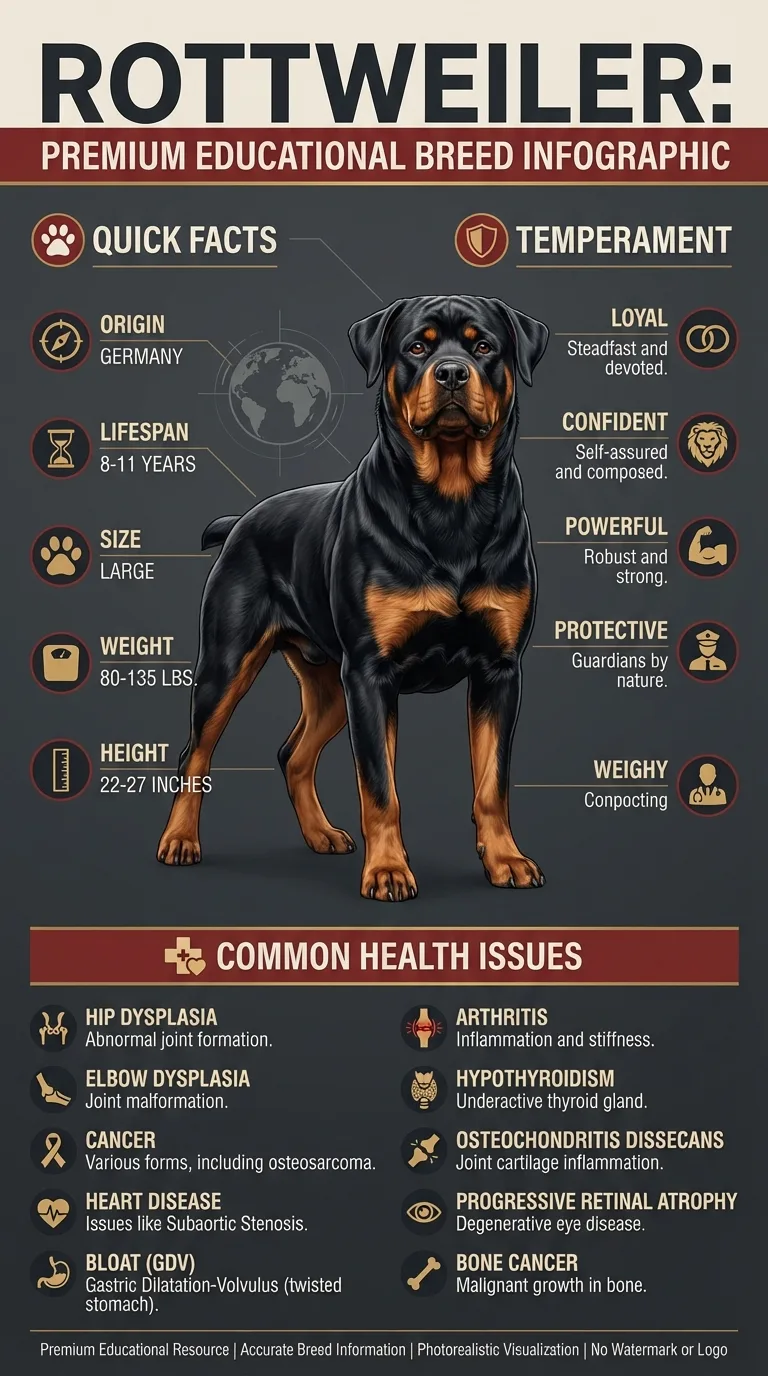
Rottweilers, whether purebred or mixed, can face unique challenges. One common issue is the difference in health risks, especially since purebred Rottweilers are nearly twice as likely to develop certain health conditions, like cancer. These health concerns can manifest in various ways, impacting not only the dog's well-being but also the owner's peace of mind.
This problem is quite common among Rottweilers, particularly purebreds. Owners often notice these health and behavior concerns as the dog ages or when faced with new situations, highlighting the significance of understanding whether to choose a purebred or a mixed breed.
Rottweilers, especially purebreds, can inherit specific genetic traits that make them more prone to certain health problems, like hip dysplasia or heart disease. These health issues can lead to behavioral changes, such as anxiety or aggression. Additionally, purebred Rottweilers may have a more intense temperament due to their breeding for specific traits.
The environment plays a crucial role in a Rottweiler's behavior. Factors like lack of socialization, inconsistent training, or insufficient exercise can lead to anxiety and behavior problems. Stressful situations, such as loud noises or frequent changes in their surroundings, can also exacerbate these issues.
If your Rottweiler exhibits sudden or severe behavioral changes, it's essential to consult a vet. Health issues like pain or illness can manifest as anxiety or aggression. A vet can rule out medical problems and suggest treatment options for your dog's mental well-being.
Here are some common mistakes owners make that can worsen behavior issues related to Rottweiler purebred vs. mixed breeds. Avoiding these can help improve your dog's behavior.
See all Rottweiler health problems, which breeds are prone to purebred vs mixed breeds, or the full Rottweiler breed guide for temperament, exercise needs and ownership costs.
You can expect noticeable improvements in behavior within 4 to 6 months of consistent care under your vet's plan. However, some issues may take longer to fully resolve.
Success means your Rottweiler, whether purebred or mixed, exhibits better social behavior, reduced anxiety, and a stronger bond with you. You should see them responding to commands and becoming more relaxed around new people and situations.
In less severe cases, you can monitor your Rottweiler and create a plan. If your dog exhibits mild behavioral changes, such as increased barking or slight anxiety, it’s usually safe to observe and document these changes. You might consider adjusting their environment or routine, such as increasing exercise or introducing calming products.
However, keep an eye out for any worsening symptoms that could indicate a more serious issue.

Megan, a first-time dog owner, adopted Max, a Rottweiler mix, from a shelter. She quickly noticed that Max displayed anxiety around visitors and would bark excessively when he heard the doorbell. Feeling overwhelmed, Megan turned to a local trainer who suggested a structured training program. Through consistent practice and positive reinforcement, Megan helped Max become calmer and more sociable. After several months, he was not only better with visitors but also more relaxed at home.
Key takeaway: With patience and the right training approach, mixed-breed Rottweilers like Max can thrive and overcome behavioral challenges.
Rottweiler purebreds often have predictable traits, like size and temperament, while mixed breeds can vary significantly. Purebreds may be more prone to genetic health issues, including certain cancers. Mixed breeds might have a healthier genetic diversity, which can reduce some health risks.
Your Rottweiler might experience anxiety due to its breeding background, especially if it's a purebred. Purebreds may have specific behavioral traits that can lead to anxiety if not properly managed. Consider consulting a trainer experienced with Rottweilers for tailored strategies.
Training a Rottweiler, whether purebred or mixed, requires consistency and positive reinforcement. Start with basic commands like sit and stay, gradually introducing more advanced skills. Regular socialization and mental stimulation can also help reduce behavioral issues.
Rottweiler purebreds are more susceptible to health issues like hip dysplasia and certain types of cancer. Mixed breeds may have a lower risk of these genetic diseases due to their varied lineage. Regular vet check-ups can help identify and manage any health concerns early.
Yes, many mixed breed Rottweilers can exhibit similar traits to purebreds, like loyalty and protectiveness. However, each dog's personality will vary. Meeting the dog and observing its behavior is the best way to gauge if it fits your needs.
When deciding between a Rottweiler purebred vs. mixed breeds, consider factors like health, temperament, and adaptability. Purebreds may have specific traits but can be prone to certain health issues. Mixed breeds often have a wider genetic diversity, which can lead to better overall health.
Training a mixed breed Rottweiler involves understanding their unique temperament and characteristics. Focus on positive reinforcement techniques, consistency, and patience. Tailoring your training approach to their mixed heritage can lead to better results.
While mixed breeds can benefit from genetic diversity, they can still inherit health issues common to Rottweilers, like hip dysplasia or heart disease. Regular vet check-ups and a healthy diet are essential to monitor and manage these risks.
Rottweiler purebreds may display more predictable traits based on breed standards, while mixed breeds can have varied behaviors influenced by their other parent breeds. Observing your dog's personality and training them accordingly can help address any behavioral challenges.
If your Rottweiler mix shows signs of anxiety, focus on creating a calm environment and establish a routine. Training techniques, like desensitization and counter-conditioning, can also help. Consulting with a vet or dog behaviorist can provide additional support tailored to your dog's needs.
Provide a consistent routine, ensure plenty of exercise, and engage in regular training to help manage anxiety. Consider using calming products or consulting a vet for more serious cases.
Monthly costs for a Rottweiler can range from $125 to $250, depending on food, grooming, and healthcare. The first-year expenses may total between $2,000 and $3,500.
Start socializing your Rottweiler early with various people, environments, and other animals. Gradual exposure will help them become well-adjusted adults.
A one-page prep sheet for this condition: the signs, the questions to ask, what to get priced. Unlocks here.
You get: Vet visit prep sheet
No spam. One-click unsubscribe. See our privacy policy.
Preview page 1 before you decide.