Health
Is this a documented breed risk?
Not a genetic one; it's a physical risk tied to this breed's documented high exercise need and its history of field and brush work.

Quick answer
Is this a documented breed risk?
Not a genetic one; it's a physical risk tied to this breed's documented high exercise need and its history of field and brush work.
This isn't about disease developing slowly from the inside, it's about physical exposure during exactly the kind of activity this breed was built for and often still does.
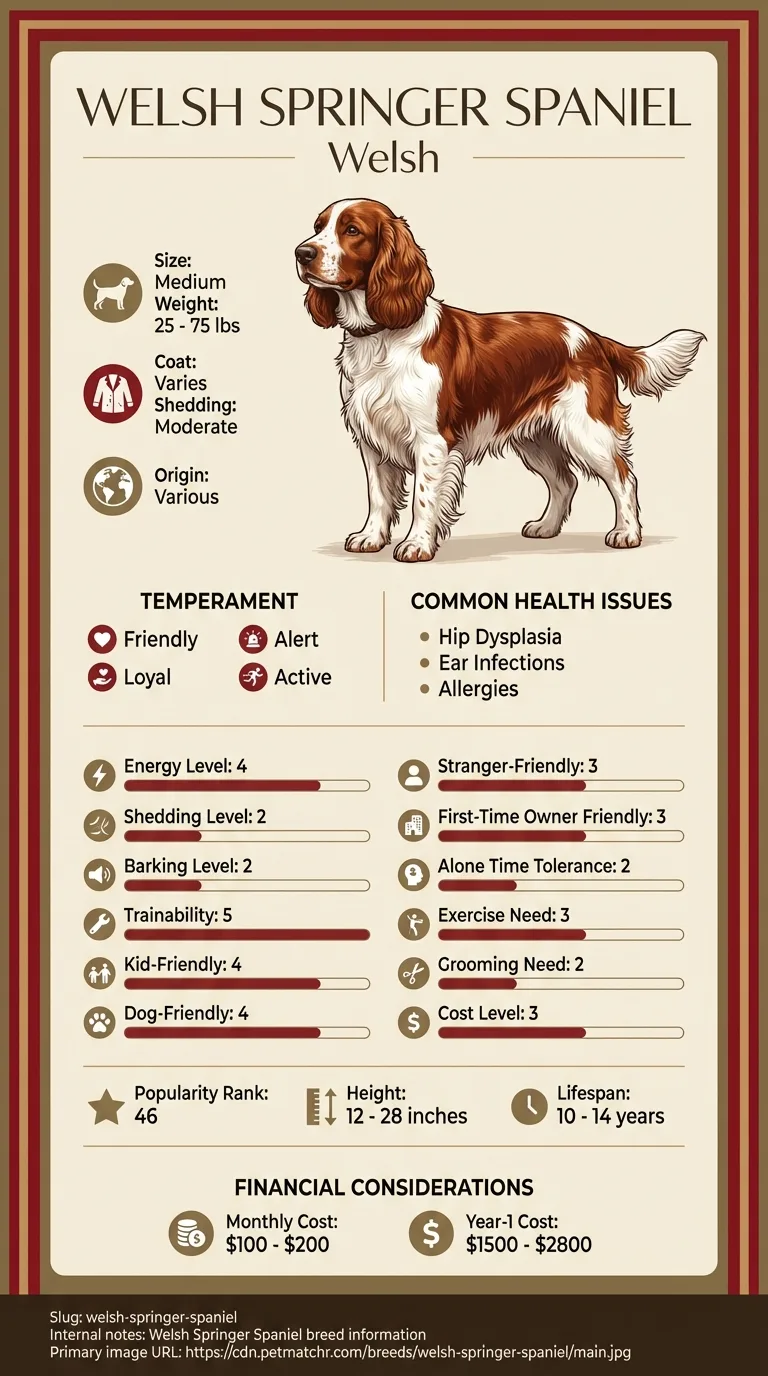
Owners who regularly walk or work their Welsh Springer Spaniel through brush, tall grass, or wooded areas are the ones most likely to encounter a scratched cornea or an eye irritated by trapped plant material.
This guide is not medical advice. If your dog shows pain, sudden behavior change, or worsening symptoms, consult a licensed veterinarian.
Some links may be affiliate links. We may earn a commission at no extra cost to you. We only suggest products we believe are helpful for dog owners.
Eye problems here refer to traumatic injury, scratches, foreign bodies like grass awns, and irritation, rather than a chronic disease process. It isn't a documented genetic risk for the Welsh Springer Spaniel, but the breed's documented high exercise need and heritage of working through brush and rough terrain create genuine physical exposure to eye injury during normal, breed-typical activity.
This isn't among the Welsh Springer Spaniel's five specifically documented health issues, since it's a lifestyle-driven physical risk rather than a genetic predisposition. It's included here because this breed's documented exercise needs and working heritage mean many individual dogs spend real time in exactly the environments where these injuries occur.
There's no documented genetic eye vulnerability behind this specific risk. The relevant breed factor is behavioral and historical: this breed's documented drive and heritage as a flushing and retrieving gundog mean many individual dogs are still exercised through brush and rough cover rather than exclusively on cleared paths.
Thick brush, thorny plants, grass awns, and wooded trails are the primary environmental risk factors. Dogs exercised mainly in open, cleared areas face substantially lower risk than those doing regular field or hedgerow work.
See your vet the same day if you notice persistent squinting, the eye staying partially closed, visible redness, excessive tearing, or any sign your dog is in pain after brush or field contact. Don't attempt to remove anything embedded or resistant to a gentle rinse yourself.
See all Welsh Springer Spaniel health problems, which breeds are prone to eye problems, or the full Welsh Springer Spaniel breed guide for temperament, exercise needs and ownership costs.
Minor scratches and irritation typically resolve within a few days with appropriate treatment. Injuries involving embedded debris or deeper corneal damage may take one to two weeks of monitored healing with prescribed medication.
Success looks like catching and treating injuries promptly enough to prevent complications like infection or scarring, allowing your dog to keep doing the field work it was bred for without repeated serious eye problems.
The Welsh Springer Spaniel's documented heritage is flushing and retrieving work across rough terrain, and its documented high exercise need means most of these dogs are still exercised in ways that echo that original job, through fields, hedgerows, and undergrowth rather than exclusively on cleared paths.
That kind of movement puts the eyes at genuine, mechanical risk: a branch snapping back at face height, a thorn brushing past, or a grass awn, one of those barbed seed heads that only travels one direction once it catches on fur or skin, working its way toward the eye's surface. Unlike a slow-developing disease, this kind of injury happens in an instant during normal activity.
This is a lifestyle-driven risk rather than a documented genetic predisposition, similar in nature to the general injury risk any actively worked sporting or field breed faces. It's included here because owners who exercise this breed the way it was bred to be exercised deserve to know what a field eye injury looks like and how urgently it needs attention.
A quick, calm response in the moment can prevent a minor scratch from turning into a more serious corneal ulcer.

If you think your Welsh has eye problems, the plan is three steps: write down what you have seen and when it started, book a veterinary appointment rather than waiting for the next flare, and take video of the behaviour or symptom before you go — the thing you are worried about rarely happens in the consulting room. Screening in the parents covers hip dysplasia, ear infections, epilepsy.
What the vet visit should produce is a diagnosis and a written plan, not just reassurance: what is being ruled out, what the monitoring interval is, and which signs mean you come back sooner. Ask what the treatment costs across a year rather than per visit, because that is the number that decides whether you are managing this condition or reacting to it.
Between appointments, keep a short log — dates, what you saw, what changed. It is the single most useful thing an owner brings to a follow-up, and for eye problems it is often what separates a clear pattern from a guess.
Partway through a summer walk through a meadow, Rhodri's Welsh Springer Spaniel, Fflam, suddenly stopped and pawed hard at his left eye, squinting it shut. Rhodri had a saline rinse in his bag and flushed the eye gently, but Fflam kept squinting even afterward. Rather than continuing the walk, Rhodri headed straight to the vet. Examination found a grass awn had lodged just under the upper eyelid, resistant to the rinse because of its barbed shape. The vet sedated Fflam briefly to remove it safely and prescribed antibiotic drops for the resulting mild scratch. Rhodri now checks Fflam's eyes immediately after any walk through tall, seeding grass, having learned that a rinse alone doesn't always solve it.
Key takeaway: Persistent squinting after a rinse is the signal that something is actually stuck rather than just irritated, and that's the point to head for the vet rather than keep trying to flush it out.
Not as a genetic predisposition, it's a lifestyle-driven physical risk tied to this breed's documented high exercise need and its heritage of working through brush and rough terrain rather than an inherited eye condition.
Persistent squinting, the eye staying partially closed, excessive tearing, or visible redness that doesn't improve within a few minutes of a gentle saline rinse all suggest something more than passing irritation and warrant a vet exam.
A grass awn is a barbed seed head that can only move in one direction once it catches on fur or tissue, meaning it tends to migrate further in rather than falling out on its own, sometimes requiring sedated removal by a vet.
Minor superficial scratches sometimes heal within a few days with vet-prescribed drops, but deeper scratches or ulcers need proper treatment, since an untreated corneal injury can worsen quickly and risk permanent damage.
A vet visit for a corneal scratch or foreign body removal, including exam and medication, commonly costs $150 to $400, more if sedation or specialist referral is needed for something embedded.
Not entirely, but avoiding the thickest, thorniest cover when possible, and checking your dog's eyes after any brush-heavy walk, meaningfully reduces both the frequency and severity of these injuries.
Not a genetic one; it's a physical risk tied to this breed's documented high exercise need and its history of field and brush work.
Pawing at one eye, squinting, or excessive tearing shortly after brush or field contact are the clearest first signs.
A gentle saline rinse for loose debris is fine, but don't force out anything embedded or resistant; that needs a vet.
A vet visit for a scratch or foreign body removal commonly costs $150 to $400 depending on severity.
Not entirely, but avoiding the thickest brush and checking eyes after every field walk reduces both frequency and severity.
A one-page prep sheet for this condition: the signs, the questions to ask, what to get priced. Unlocks here.
You get: Vet visit prep sheet
No spam. One-click unsubscribe. See our privacy policy.
Preview page 1 before you decide.