Behavior
How can I quickly stop my Miniature Schnauzer from barking?
Try redirecting their attention with toys or treats when they start barking. Consistent training can help reduce excessive barking over time.

Quick answer
How can I quickly stop my Miniature Schnauzer from barking?
Try redirecting their attention with toys or treats when they start barking. Consistent training can help reduce excessive barking over time.
Deciding between a Miniature Schnauzer purebred and a mixed breed can be challenging. Each type has unique traits and needs.
This decision often weighs heavily on new dog owners or families who want to ensure they choose a dog that fits their lifestyle. Those unfamiliar with dog breeds may feel overwhelmed by the differences and similarities between purebreds and mixed breeds.
This guide is not medical advice. If your dog shows pain, sudden behavior change, or worsening symptoms, consult a licensed veterinarian.
Some links may be affiliate links. We may earn a commission at no extra cost to you. We only suggest products we believe are helpful for dog owners.
We research and check what we publish, but we do not warrant that any figure, date, price, or statement is accurate, complete, or current, and we accept no liability for any loss, cost, injury, or other harm arising from the use of this site. Use it as one reference among several. You remain responsible for your own decisions and for your dog's care - confirm anything that matters with a licensed veterinarian or another qualified professional before you act on it. Full disclaimer.
Check this first
It's crucial to know when your Miniature Schnauzer's behavior or health issues signal an emergency. If your dog shows severe signs like difficulty breathing, unresponsiveness, or excessive bleeding, you need to call your vet immediately. These are red flags that require urgent medical attention.
On the other hand, mild cases such as occasional barking, minor digestive issues, or slight changes in behavior can typically be monitored at home. Develop a plan to track these behaviors over a few days, and consult your vet if they persist or worsen.
Here are some signs that indicate an emergency situation: - Difficulty breathing or persistent coughing - Inability to stand or walk - Severe vomiting or diarrhea - Seizures or loss of consciousness - Signs of pain, like whining or reluctance to move
For more minor concerns, consider keeping a watchful eye and documenting any changes. If your Miniature Schnauzer seems lethargic but not in severe pain, monitor their activity levels and eating habits. If changes continue for more than a couple of days, it's best to reach out to your veterinarian for further guidance.
If any of these apply, call your vet or an emergency clinic now. The rest of this page is for the cases that are not an emergency.
The debate around Miniature Schnauzer purebred vs. mixed breeds often leads to confusion among potential dog owners. Purebred Miniature Schnauzers may come with specific health risks, while mixed breeds might offer a more robust genetic background. This decision can affect everything from training approaches to health expectations.
The issue of purebred vs. mixed breed Miniature Schnauzers is quite common, especially among new dog owners. Many first-time owners may not fully understand the implications of choosing a purebred dog, given their specific health issues and behavioral tendencies.
Miniature Schnauzers, whether purebred or mixed, can have distinct personality traits that influence their behavior. Purebreds may have more predictable behavioral patterns due to their genetics, while mixed breeds can inherit a blend of traits, leading to varied temperaments. This genetic background can impact their susceptibility to anxiety and behavioral issues.
The environment plays a significant role in a Miniature Schnauzer's behavior. Factors like lack of socialization, inconsistent training, or changes in routine can trigger anxiety. Additionally, living situations, such as small apartments or homes with limited space, can exacerbate behavioral challenges.
If your dog shows signs of severe anxiety, such as excessive barking, destructive behavior, or changes in appetite, consult your vet. They can rule out any underlying health issues and discuss potential solutions, including behavior modification or medication.
Avoiding certain behaviors can help improve your Miniature Schnauzer's situation. Here are some common mistakes to steer clear of and safer alternatives to consider.
Start here: Miniature Schnauzer Most Common Genetic Disorders: Screening
See all Miniature Schnauzer health problems, which breeds are prone to purebred vs mixed breeds, or the full Miniature Schnauzer breed guide for temperament, exercise needs and ownership costs.
Expect to see improvements within 4 to 6 weeks of consistent care and a steady routine.
Success means your Miniature Schnauzer is more balanced, less anxious, and shows better behavior with other dogs and people.
Jessica, a first-time dog owner in Austin, adopted Bella, a Miniature Schnauzer mix. Bella was anxious around other dogs and often barked excessively. After researching, Jessica enrolled Bella in a local training class and committed to daily socialization at the dog park. Within a few weeks, Bella became more confident and less reactive, allowing her to enjoy playtime without anxiety.
Key takeaway: With the right training and socialization, even anxious Miniature Schnauzers can thrive and become well-adjusted companions.
Miniature Schnauzer purebreds typically have consistent traits, like a wiry coat and a friendly temperament. Mixed breeds may vary widely in size, temperament, and health, depending on their genetic makeup. Understanding these differences can help you choose the right fit for your lifestyle. This answer relates to Miniature Schnauzer purebred vs. mixed breeds.
To address behavior issues, start with consistent training using positive reinforcement. Regular exercise and mental stimulation are crucial for Miniature Schnauzers to reduce anxiety and prevent destructive behaviors. Consider consulting a professional trainer if problems persist.
Anxiety in Miniature Schnauzers can stem from their purebred lineage, which may predispose them to certain health issues. Changes in environment or routine can also trigger anxiety. Identifying the cause can help in creating a tailored plan to manage these problems.
Yes, Miniature Schnauzer purebreds can be more susceptible to certain health problems, such as pancreatitis and hip dysplasia. Mixed breeds often benefit from hybrid vigor, which can lead to fewer health issues. Regular vet check-ups are essential to catch any concerns early.
Both purebred and mixed Miniature Schnauzers respond well to positive reinforcement techniques. Start training early and focus on socialization to ensure good behavior. Tailoring your approach to your dog's unique personality is key.
Miniature Schnauzer mixed breeds can offer a blend of traits from both parent breeds. This may mean fewer health issues, as mixed dogs often enjoy hybrid vigor. They can also inherit unique temperaments, making them adaptable to different family lifestyles.
Training a Miniature Schnauzer mixed breed requires patience and consistency. Use positive reinforcement techniques, such as treats and praise, to encourage good behavior. Also, tailor your training methods to fit the traits of both breeds involved for better results.
If your Miniature Schnauzer displays persistent behavioral issues, such as excessive barking or anxiety, it may be time to consult a professional trainer or behaviorist. Early intervention can prevent problems from worsening and help your dog feel more secure.
Yes, purebred Miniature Schnauzers can be more prone to certain health issues like pancreatitis and hip dysplasia. Mixed breeds may inherit a wider range of genetic traits, potentially reducing the risk of breed-specific conditions.
To determine if your Miniature Schnauzer is purebred or mixed, consider looking at physical traits and behavior. If you're unsure, a DNA test can provide clarity by identifying breed composition and potential health risks associated with each breed.
Try redirecting their attention with toys or treats when they start barking. Consistent training can help reduce excessive barking over time.
Use positive reinforcement and keep training sessions short and fun. Consistency is key, so practice commands daily for the best results.
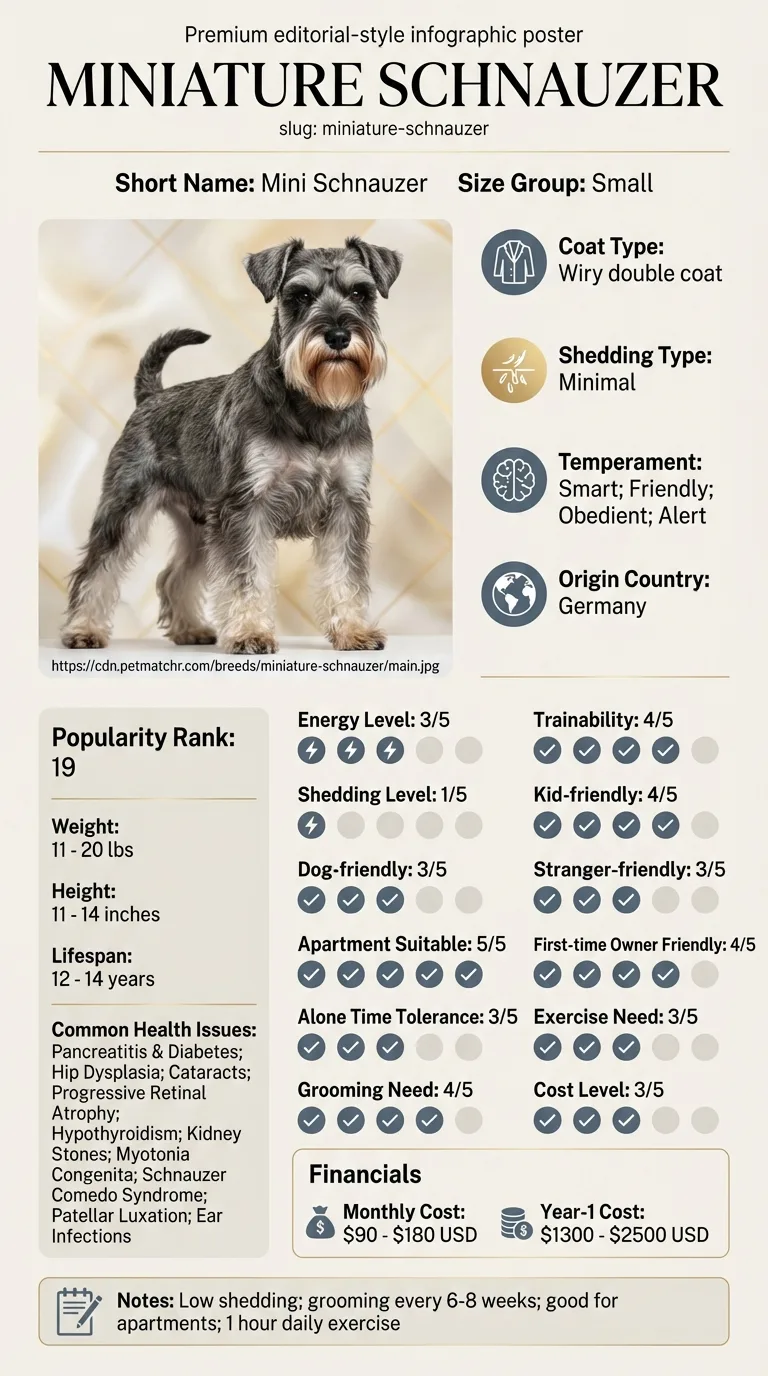
The average monthly cost for a Miniature Schnauzer ranges from $90 to $180, covering food, grooming, and health care.
Miniature Schnauzers require about an hour of exercise daily, including walks and playtime to keep them healthy and happy.
A one-page prep sheet for this condition: the signs, the questions to ask, what to get priced. Unlocks here.
You get: Vet visit prep sheet
No spam. One-click unsubscribe. See our privacy policy.
Preview page 1 before you decide.