Behavior
What are quick tips for managing a Poodle's anxiety?
Provide a structured routine, regular exercise, and positive reinforcement training to help manage anxiety in your Poodle.

Quick answer
What are quick tips for managing a Poodle's anxiety?
Provide a structured routine, regular exercise, and positive reinforcement training to help manage anxiety in your Poodle.
Choosing between a Poodle purebred and a mixed breed can be tough. Each option has its unique traits and challenges.
New dog owners or families may struggle with this decision, especially those unaware of the health risks and behavioral traits associated with purebreds versus mixed breeds. Busy professionals and first-time pet parents often feel overwhelmed when trying to determine which dog fits their lifestyle best.
This guide is not medical advice. If your dog shows pain, sudden behavior change, or worsening symptoms, consult a licensed veterinarian.
Some links may be affiliate links. We may earn a commission at no extra cost to you. We only suggest products we believe are helpful for dog owners.
We research and check what we publish, but we do not warrant that any figure, date, price, or statement is accurate, complete, or current, and we accept no liability for any loss, cost, injury, or other harm arising from the use of this site. Use it as one reference among several. You remain responsible for your own decisions and for your dog's care - confirm anything that matters with a licensed veterinarian or another qualified professional before you act on it. Full disclaimer.
Check this first
Understanding when to seek immediate veterinary help can be crucial for your Poodle. If you notice any serious symptoms, don’t hesitate to call your vet right away. On the other hand, there are milder situations where you can monitor your dog at home with a plan.
If any of these apply, call your vet or an emergency clinic now. The rest of this page is for the cases that are not an emergency.
The debate between Poodle purebreds and mixed breeds often leads to confusion among dog owners. Purebred Poodles are known for their distinct traits, but they may be more prone to certain health issues. On a day-to-day basis, this can manifest in unexpected vet visits or concerns about hereditary conditions.
It's common for Poodle owners to face these issues, as purebred dogs can be more susceptible to specific health problems compared to mixed breeds. In fact, studies show that purebreds are 1.9 times more likely to develop serious conditions like cancer, making discussions about their health particularly relevant.
Poodles, whether purebred or mixed, have specific traits that can influence their health. Purebred Poodles may inherit genetic predispositions that increase their risk of certain health issues. This can include conditions like hip dysplasia or certain cancers, leading to more significant health challenges over time.
The environment also plays a critical role in a Poodle's overall health and behavior. Factors such as diet, exercise, and the level of socialization can affect how a Poodle, regardless of being purebred or mixed, reacts to their surroundings. A lack of mental stimulation or insufficient physical activity can lead to anxiety and behavioral issues.
If your Poodle exhibits signs of distress, such as excessive barking, aggression, or withdrawal, it’s essential to consult a veterinarian. They can rule out any underlying health issues and suggest appropriate treatment options.
Avoiding these common mistakes can help you better understand the differences between Poodle purebreds and mixed breeds and improve your dog's behavior.
See all Poodle health problems, which breeds are prone to purebred vs mixed breeds, or the full Poodle breed guide for temperament, exercise needs and ownership costs.
You might see improvements in your Poodle's behavior within 4 to 6 weeks, with consistent care and a steady routine.
Success means your Poodle feels more comfortable around other dogs and people, resulting in less anxiety and more confidence.
These signs indicate that you need to act fast:
1. Severe Behavioral Changes: If your Poodle suddenly becomes lethargic or aggressive, it could signal a serious health issue. 2. Difficulty Breathing: Struggling to breathe is a clear emergency. 3. Uncontrollable Vomiting or Diarrhea: If this continues for more than a few hours, it can lead to dehydration. 4. Severe Pain: If your dog is whining or unable to move comfortably, don't wait. 5. Signs of Shock: Weakness, pale gums, or a rapid heartbeat require immediate attention.

For less severe situations, here’s what to keep an eye on:
1. Minor Anxiety: If your Poodle shows some signs of anxiety, calm techniques can help. 2. Occasional Barking: This can be normal behavior; observe if it becomes excessive. 3. Mild Digestive Issues: A temporary upset stomach may resolve on its own, but track it closely. 4. Behavioral Quirks: Keep a log of any unusual habits to discuss with your vet later. 5. Weight Changes: A slight fluctuation in weight can be monitored, but keep it under review.

Emma, a first-time dog owner, adopted a Poodle named Max. She noticed Max was anxious around other dogs and often barked excessively during walks. After researching, Emma learned about the differences between Poodle purebreds and mixed breeds and how they can affect behavior. With patience, she enrolled Max in a local training class focused on socialization. Over several weeks, Emma practiced techniques at home, slowly introducing Max to other dogs. Gradually, he became more relaxed and playful during their outings.
Key takeaway: Understanding your Poodle's needs and committing to training can significantly improve their behavior and confidence.
Poodles, whether purebred or mixed, can exhibit behavioral issues due to genetics, environment, and training. Purebreds may have specific traits that can lead to anxiety or behavioral problems. Mixed breeds may inherit different traits that can either mitigate or exacerbate these issues. This answer relates to Poodle purebred vs. mixed breeds.
To help your Poodle, start by providing a stable environment and consistent training. Engaging in regular exercise and mental stimulation can also alleviate anxiety. If issues persist, consider consulting a trainer or behaviorist who specializes in Poodles.
Poodle purebreds are typically very intelligent and eager to please, making them highly trainable. Mixed breeds may vary in trainability based on their genetic background. Always use positive reinforcement and tailor your approach based on your dog's individual needs.
Poodles can be prone to specific health issues, including certain cancers, especially in purebreds. Regular veterinary check-ups and a healthy lifestyle can help manage these risks. Mixed breeds may have a lower risk of genetic health issues but still require care.
Consider your lifestyle, budget, and the specific traits you want in a dog. Purebreds may offer predictability in temperament and appearance, whereas mixed breeds can bring diversity and often lower health risks. Assess your preferences carefully before making a choice.
Mixed-breed Poodles can often inherit the best traits from both parent breeds. They might have fewer genetic health issues and can be more adaptable to different environments. This can make them a great option for first-time dog owners.
Helping a mixed-breed Poodle adjust involves understanding its unique personality and needs. Consistent training and socialization are key. You might also want to consult a behaviorist familiar with mixed breeds for tailored strategies.
You should see a vet if your Poodle shows any sudden changes in behavior, appetite, or energy levels. Regular check-ups are also important, especially for purebreds, as they can be more prone to certain health issues. If you're unsure, it's best to err on the side of caution.
Training mixed-breed Poodles can sometimes differ from purebreds, depending on their traits. They may require more patience and flexibility in training methods. Tailoring your approach to their specific needs will help ensure success.
Generally, mixed-breed dogs tend to have a longer lifespan compared to purebreds due to their diverse genetics. However, a Poodle's lifespan can still be influenced by factors like diet, exercise, and regular veterinary care. Keeping your Poodle healthy is crucial for a long life.
Provide a structured routine, regular exercise, and positive reinforcement training to help manage anxiety in your Poodle.
Use positive reinforcement techniques and keep training sessions short and engaging to maintain your Poodle's interest.
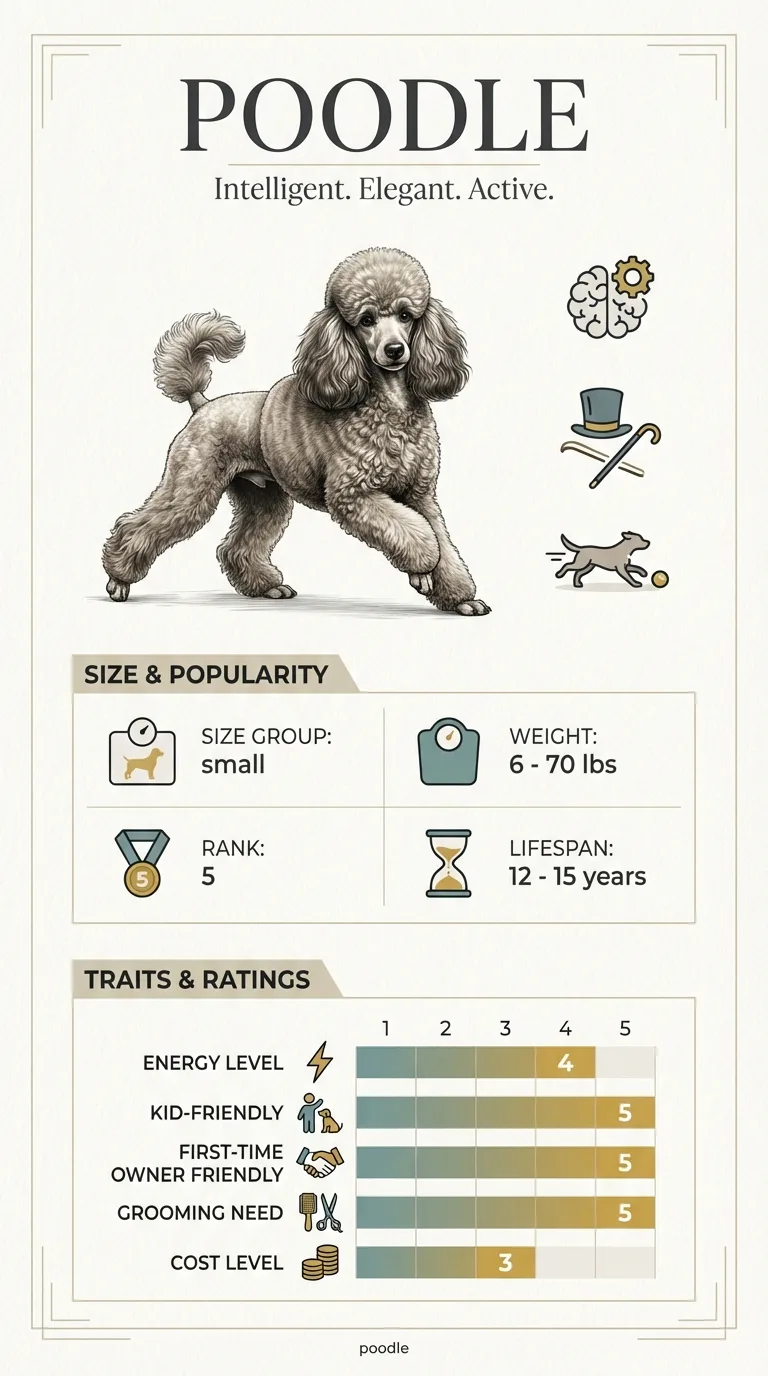
Poodles may have moderate costs for grooming, food, and vet visits, so plan for a budget that accommodates these needs.
A one-page prep sheet for this condition: the signs, the questions to ask, what to get priced. Unlocks here.
You get: Vet visit prep sheet
No spam. One-click unsubscribe. See our privacy policy.
Preview page 1 before you decide.