Health
What is a liver shunt in a puppy?
A congenital liver shunt is an abnormal vessel, present from birth, that lets blood bypass the liver's filtering function, allowing toxins to circulate through the body.

Quick answer
What is a liver shunt in a puppy?
A congenital liver shunt is an abnormal vessel, present from birth, that lets blood bypass the liver's filtering function, allowing toxins to circulate through the body.
A vessel that never closed properly before birth can leave toxins circulating through a puppy's body instead of being filtered out, and it usually shows up first as odd behavior rather than an obvious illness.
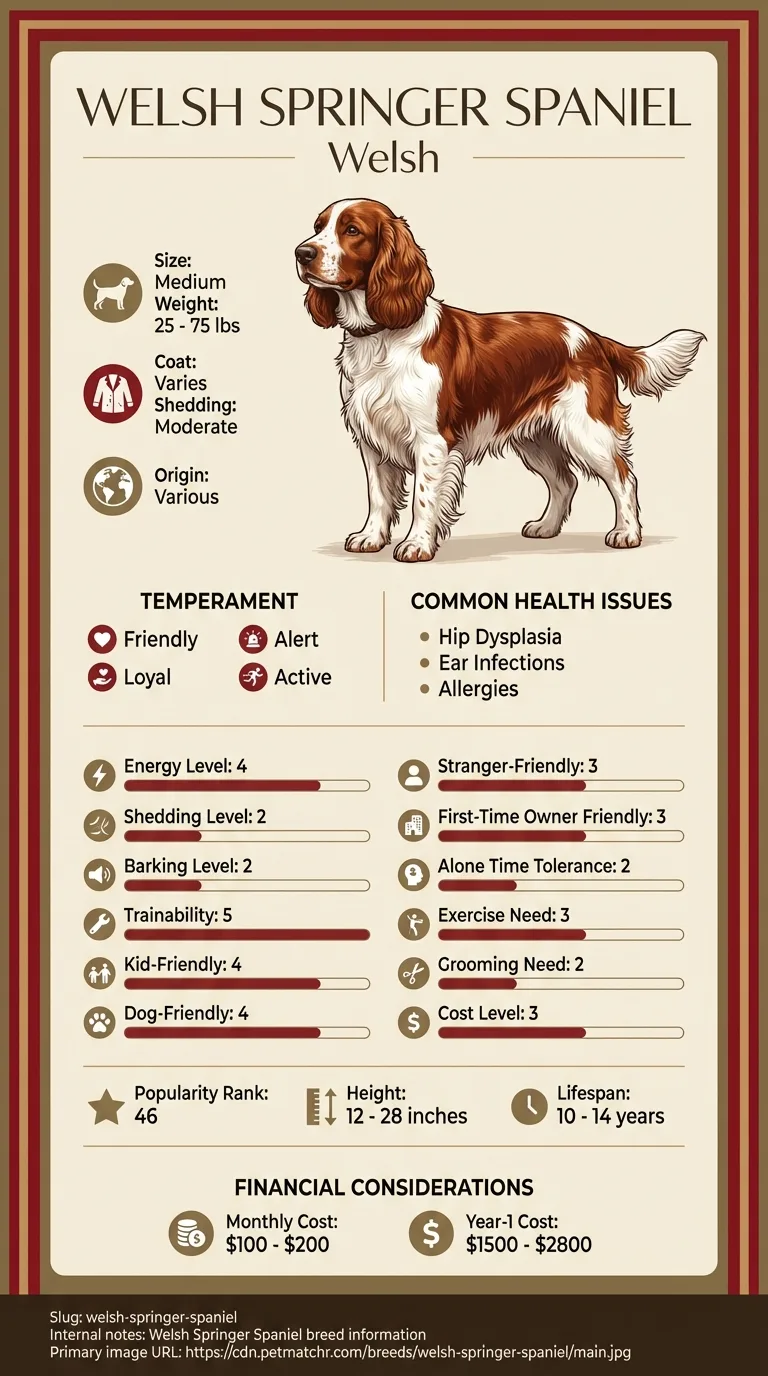
Owners of young Welsh Springer Spaniel puppies who notice unusual post-meal behavior or slower-than-expected growth are the ones most likely to end up investigating this condition.
This guide is not medical advice. If your dog shows pain, sudden behavior change, or worsening symptoms, consult a licensed veterinarian.
Some links may be affiliate links. We may earn a commission at no extra cost to you. We only suggest products we believe are helpful for dog owners.
A congenital liver shunt is a vessel abnormality present from birth that lets blood bypass the liver's filtering function, allowing toxins to circulate through a Welsh Springer Spaniel puppy's body. Signs often appear specifically after meals, and early bile acid testing followed by imaging is the standard path to diagnosis and treatment planning.
Congenital liver shunts are relatively uncommon overall and are not specifically flagged as a leading documented condition for this breed, but they occur across many breeds and are serious enough that any suspicious puppy-stage signs deserve prompt veterinary evaluation.
A liver shunt results from a specific vessel failing to close properly around the time of birth, a congenital event rather than a condition that develops from lifestyle or environment, and any Welsh Springer Spaniel puppy affected was born with the abnormality already present.
While the shunt itself is congenital, meal composition and timing influence how obvious symptoms become, since protein-heavy digestion produces the toxin load that most clearly triggers post-meal neurological signs in an affected puppy.
Talk to your vet promptly if a puppy shows disorientation, unusual sleepiness, or seizure-like activity after meals, or shows stunted growth compared to littermates, since bile acid testing can help confirm or rule out a shunt. A puppy having an active seizure or unable to be roused needs emergency veterinary care immediately.
See all Welsh Springer Spaniel health problems, which breeds are prone to liver shunts, or the full Welsh Springer Spaniel breed guide for temperament, exercise needs and ownership costs.
Diagnosis typically unfolds over one to a few weeks once symptoms prompt testing, and if surgery is pursued, recovery and full symptom resolution can take several weeks to a few months.
Success looks like an early diagnosis, appropriate treatment whether surgical or dietary, and a puppy that goes on to grow and develop normally with ongoing monitoring.
Normally, blood from the intestines travels through the portal vein directly into the liver, where toxins, byproducts of protein digestion in particular, are filtered out before that blood joins general circulation. In a shunt, an abnormal vessel routes some or all of that blood around the liver instead, so those toxins reach the brain and other organs undiluted.
This is why the classic signs of a shunt often appear specifically after meals, when protein digestion produces the most toxins for the bypassed liver to miss filtering. A puppy might seem disoriented, unusually lethargic, or even have a brief seizure-like episode an hour or two after eating, then seem to recover as the toxin load clears on its own. Other puppies show more general signs: stunted growth compared to littermates, poor muscle development, or a puppy that always seems to want to sleep after eating.
Because the liver also produces less blood-clotting protein and processes fewer nutrients efficiently when it is being bypassed, some affected puppies also show unusually slow recovery from minor cuts or a generally poor body condition despite eating normally. Bloodwork, particularly bile acid testing done before and after a meal, is usually the first step toward confirming a shunt is behind these signs.

A shunt diagnosis is serious, but it is not automatically a poor long-term prognosis, especially for shunts caught and treated while a puppy is still young.
If you think your Welsh has liver shunts, the plan is three steps: write down what you have seen and when it started, book a veterinary appointment rather than waiting for the next flare, and take video of the behaviour or symptom before you go — the thing you are worried about rarely happens in the consulting room. Screening in the parents covers hip dysplasia, ear infections, epilepsy.
What the vet visit should produce is a diagnosis and a written plan, not just reassurance: what is being ruled out, what the monitoring interval is, and which signs mean you come back sooner. Ask what the treatment costs across a year rather than per visit, because that is the number that decides whether you are managing this condition or reacting to it.
Between appointments, keep a short log — dates, what you saw, what changed. It is the single most useful thing an owner brings to a follow-up, and for liver shunts it is often what separates a clear pattern from a guess.
Sofia noticed her Welsh Springer puppy, Wren, seemed to go unusually still and glassy-eyed for a few minutes after her evening meal, always recovering within twenty minutes or so. She initially assumed Wren was just an unusually sleepy puppy, until a friend who bred dogs suggested it sounded like it could be shunt-related. Bile acid testing at the vet came back clearly abnormal, and follow-up imaging located a single shunt vessel outside Wren's liver, the type most amenable to surgical correction. Wren had surgery at four months old and spent several weeks on a restricted diet during recovery. A year later, Wren's bloodwork has normalized and she has caught up fully in size and energy to her littermates, with no further episodes since surgery.
Key takeaway: The clearest tell for a liver shunt is often a strange, brief pattern tied specifically to mealtimes, which is why noting exactly when odd behavior happens matters as much as noticing that it happens at all.
A congenital liver shunt is an abnormal blood vessel, present from birth, that allows blood to bypass the liver instead of being filtered through it, letting toxins that the liver would normally clear circulate through the body.
Disorientation, unusual lethargy, or seizure-like episodes appearing an hour or two after eating are classic signs, since that is when protein digestion produces the toxins a bypassed liver fails to filter out.
Stunted growth compared to littermates, poor muscle development, and a puppy that seems unusually sleepy or disoriented after meals are common non-neurological signs worth mentioning to your vet.
Bile acid testing, done before and after a meal, is typically the first screening step. If results suggest a problem, imaging such as ultrasound or CT scan is used to locate the shunt precisely.
Yes, often. Many shunts, particularly those located outside the liver, can be surgically closed with a generally good long-term outcome, especially when caught and treated while the puppy is still young.
This is a congenital condition, meaning it is present from birth. It does not develop later in a previously healthy adult dog, so watching puppies closely for early signs matters most.
The early signs are set out in the sections above, and they are the reason to book a veterinary appointment rather than wait. Liver Shunts in Welshs is diagnosed by a vet, not from a symptom list, and the sooner it is on record the more options remain open.
The early signs are set out in the sections above, and they are the reason to book a veterinary appointment rather than wait. Liver Shunts in Welsh Springer Spaniels is diagnosed by a vet, not from a symptom list, and the sooner it is on record the more options remain open.
A congenital liver shunt is an abnormal vessel, present from birth, that lets blood bypass the liver's filtering function, allowing toxins to circulate through the body.
Disorientation, unusual lethargy, or brief seizure-like episodes appearing an hour or two after eating are the classic warning signs.
Bile acid blood testing done before and after a meal is the standard first screening step, followed by imaging to locate the shunt if results are abnormal.
Often yes, especially for shunts outside the liver itself, and outcomes are generally best when caught and treated while the puppy is still young.
Diagnostic imaging and surgery represent a significant cost, so pet insurance purchased before any symptoms appear can meaningfully offset the expense of treating a congenital condition like this.
A one-page prep sheet for this condition: the signs, the questions to ask, what to get priced. Unlocks here.
You get: Vet visit prep sheet
No spam. One-click unsubscribe. See our privacy policy.
Preview page 1 before you decide.