Health
Is there a documented obesity gene in this breed?
No, that specific mutation is documented in Labradors and Flat-Coated Retrievers, not in the Welsh Springer Spaniel.

Quick answer
Is there a documented obesity gene in this breed?
No, that specific mutation is documented in Labradors and Flat-Coated Retrievers, not in the Welsh Springer Spaniel.
This breed's documented high energy level means its calorie needs are calibrated for a genuinely active life, and the gap between that calibration and what many households can realistically provide is where weight gain tends to creep in.
Owners whose lifestyle changed after adopting, less active jobs, injuries, weather, without a matching adjustment to food portions are the ones most likely to see gradual weight creep in this breed.
This guide is not medical advice. If your dog shows pain, sudden behavior change, or worsening symptoms, consult a licensed veterinarian.
Some links may be affiliate links. We may earn a commission at no extra cost to you. We only suggest products we believe are helpful for dog owners.
We research and check what we publish, but we do not warrant that any figure, date, price, or statement is accurate, complete, or current, and we accept no liability for any loss, cost, injury, or other harm arising from the use of this site. Use it as one reference among several. You remain responsible for your own decisions and for your dog's care - confirm anything that matters with a licensed veterinarian or another qualified professional before you act on it. Full disclaimer.
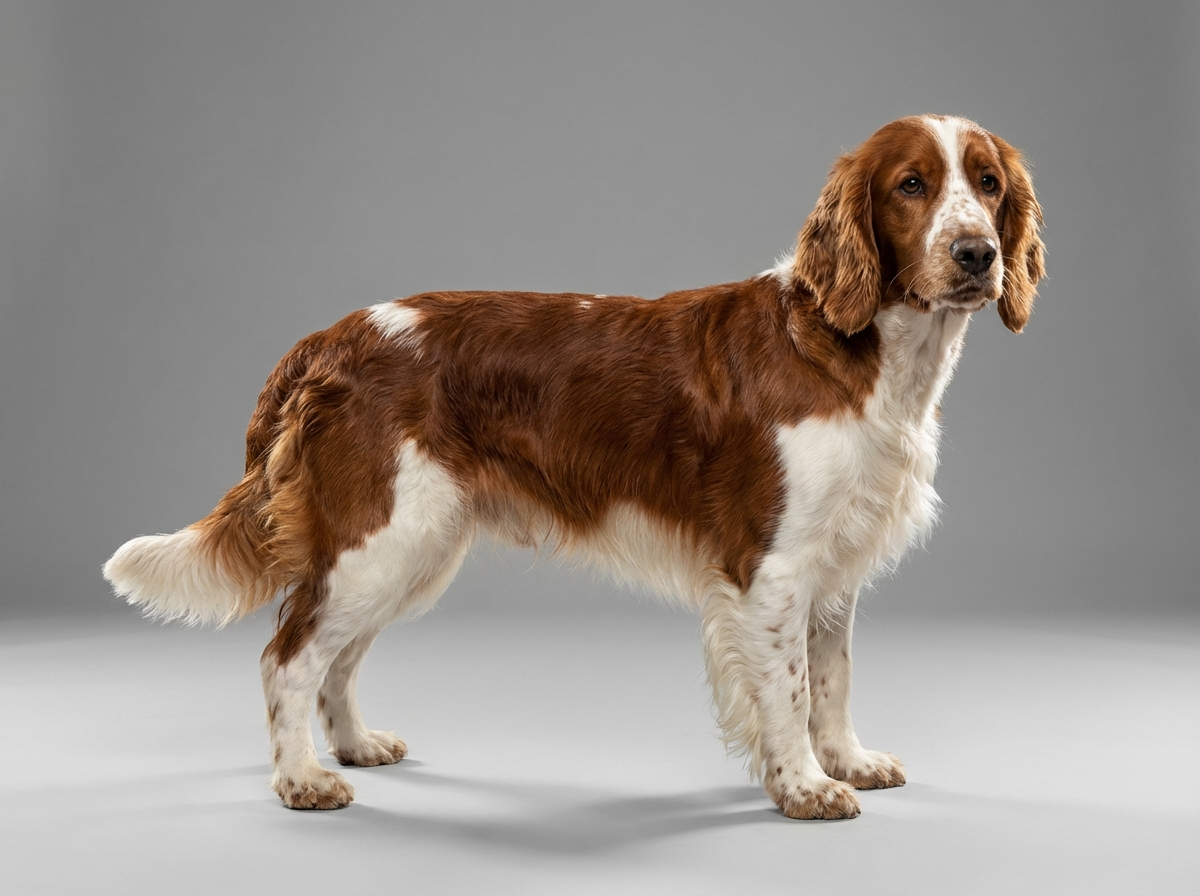
Weight gain risk in the Welsh Springer Spaniel isn't driven by a documented genetic obesity mutation the way it is in Labrador Retrievers and Flat-Coated Retrievers. Instead, it stems from a mismatch between this breed's documented high energy level and exercise need, and the actual activity and food portions many households provide, which can allow weight to creep up gradually over months.
There's no documented breed-specific obesity gene for this breed in breeds.json, unlike the POMC mutation identified in Labrador and Flat-Coated Retrievers. Weight gain here is better understood as a lifestyle mismatch risk relevant to any breed with high documented exercise needs that isn't consistently met.
The breed's documented high energy level and exercise need mean its calorie requirements are calibrated for real, sustained activity. There's no documented genetic appetite-driving mutation for this breed, so the main breed-linked factor is this calibration gap between typical activity and actual activity provided.
Household activity level, portion sizing, and treat frequency are the most significant environmental factors. A household that can't consistently provide this breed's documented level of exercise needs to adjust food portions accordingly to avoid gradual weight gain.
Talk to your vet if you notice ribs becoming harder to feel, a lost waistline, or reduced stamina during normal activity. A vet can also confirm a body condition score and rule out underlying causes like hypothyroidism if weight gain seems disproportionate to diet and exercise changes.
See all Welsh Springer Spaniel health problems, which breeds are prone to genetic predisposition to obesity, or the full Welsh Springer Spaniel breed guide for temperament, exercise needs and ownership costs.
Gradual weight loss of about 1 to 2 percent of body weight per week is a realistic, safe target once a vet-guided plan is in place. Full return to ideal body condition commonly takes a few months depending on how much weight needs to come off.
Success looks like an easily palpable ribcage, a visible waist, and sustained energy for this breed's documented activity level, maintained through a portion and exercise routine that matches your actual lifestyle rather than an idealized one.
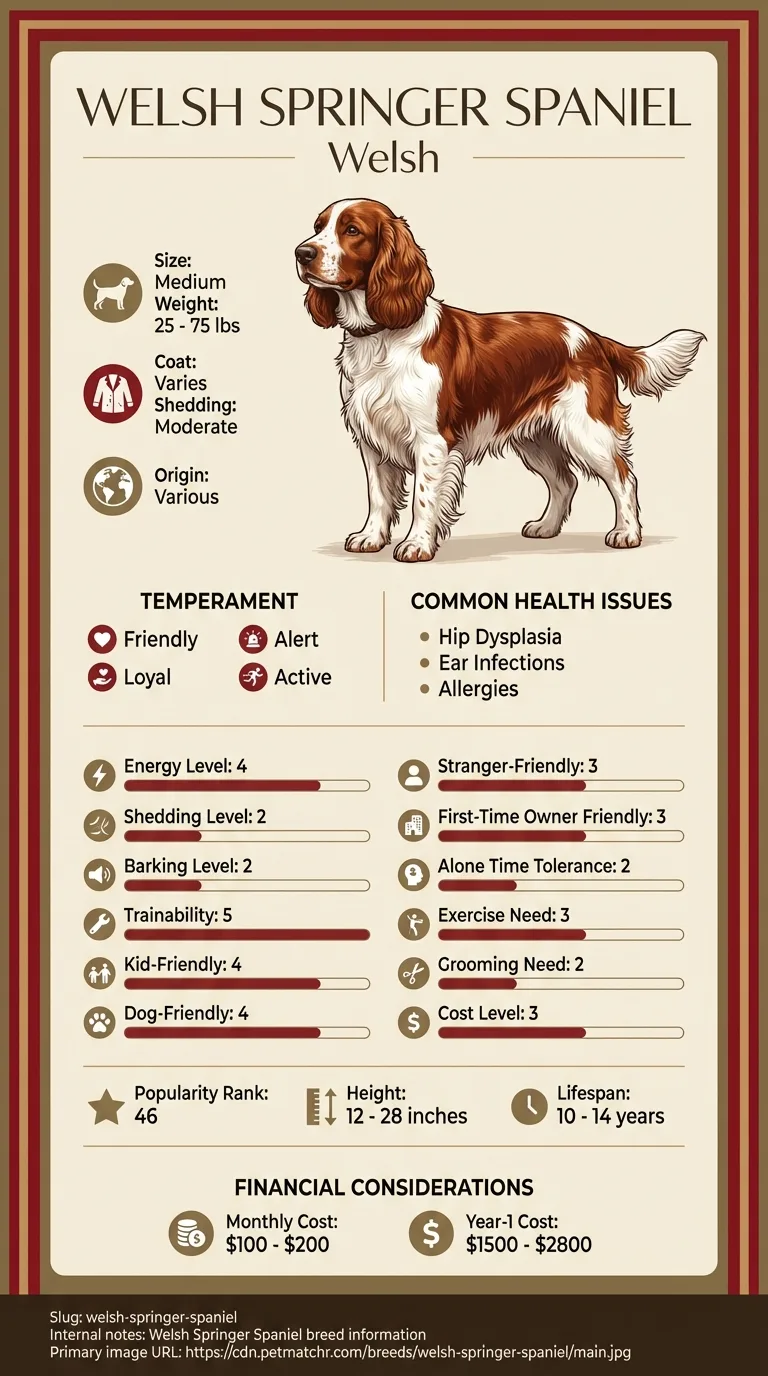
The Welsh Springer Spaniel is documented as having a high energy level and a high exercise need, traits that reflect its history as a working flushing and retrieving gundog. A dog bred and calibrated for that level of activity has correspondingly higher calorie needs when it's actually getting that much exercise.
The practical risk isn't a documented genetic mutation driving excess hunger, it's a mismatch: many owners feed a portion sized for an actively worked sporting dog while providing exercise closer to that of a much less active breed. Over months, that gap between calories in and calories burned adds up steadily, often without a single dramatic change an owner would notice day to day.
This breed's moderate documented apartment suitability and lower documented tolerance for being left alone also mean it's sometimes kept in situations that don't fully match its exercise calibration, which compounds the risk further if food portions aren't adjusted to match actual activity levels rather than the breed's theoretical exercise needs.
Because weight gain in this breed is more often gradual than sudden, these physical signs are more reliable than relying on visual impression alone.

If you think your Welsh has genetic predisposition to obesity, the plan is three steps: write down what you have seen and when it started, book a veterinary appointment rather than waiting for the next flare, and take video of the behaviour or symptom before you go — the thing you are worried about rarely happens in the consulting room. Screening in the parents covers hip dysplasia, ear infections, epilepsy.
What the vet visit should produce is a diagnosis and a written plan, not just reassurance: what is being ruled out, what the monitoring interval is, and which signs mean you come back sooner. Ask what the treatment costs across a year rather than per visit, because that is the number that decides whether you are managing this condition or reacting to it.
Between appointments, keep a short log — dates, what you saw, what changed. It is the single most useful thing an owner brings to a follow-up, and for genetic predisposition to obesity it is often what separates a clear pattern from a guess.
When Iestyn's job shifted to remote work, his Welsh Springer Spaniel, Cai, went from daily hour-long field walks to shorter neighborhood strolls, but Iestyn kept feeding the same portion size out of habit. Over about eight months, Cai's once-visible waist disappeared, and his ribs were harder to feel. At a routine vet visit, Cai's body condition score confirmed he'd gained close to 15 percent of his ideal body weight. There was no underlying medical cause, just the calorie math no longer adding up. The vet recommended a modest portion reduction and building back in more structured daily exercise, even if it looked different from Cai's old field-walk routine. Over the following four months, Cai returned to a healthy weight, and Iestyn now reviews portion size any time Cai's activity level changes for more than a couple of weeks.
Key takeaway: This breed's calorie needs are built around real activity, and when the activity level changes, the portion size needs to change with it, rather than staying fixed out of habit.
No, the POMC gene mutation linked to increased appetite and obesity risk has been documented in Labrador Retrievers and Flat-Coated Retrievers specifically, not in this breed. The risk here is more about matching food to actual activity level.
This breed is documented as having a high energy level and exercise need, which in practice often means well over an hour of real activity daily, not just a short walk, to match its calorie needs appropriately.
Beyond weight gain, an under-exercised dog with this documented energy level often develops behavioral issues like restlessness or destructive behavior, since the mismatch affects more than just the waistline.
Feel along the ribcage, you should be able to feel the ribs without pressing hard, and look from above for a visible waist narrowing behind the ribs. If neither is present, it's worth a vet check.
Yes, spayed and neutered dogs generally have somewhat lower calorie needs, and portions often need to be adjusted downward afterward to avoid gradual weight gain.
Yes, this breed's documented hip dysplasia risk means extra weight adds meaningful strain to already vulnerable joints, making weight management a genuine orthopedic concern, not just a cosmetic one.
No, that specific mutation is documented in Labradors and Flat-Coated Retrievers, not in the Welsh Springer Spaniel.
A mismatch between this breed's documented high calorie needs and the exercise actually provided is the main driver.
Feel for easily palpable ribs and look for a visible waist narrowing from above; both missing suggests excess weight.
Yes, it adds meaningful strain to this breed's documented hip dysplasia risk, making weight management an orthopedic issue too.
This breed's documented high exercise need often translates to well over an hour of real daily activity to match its calorie needs.
A one-page prep sheet for this condition: the signs, the questions to ask, what to get priced. Unlocks here.
You get: Vet visit prep sheet
No spam. One-click unsubscribe. See our privacy policy.
Preview page 1 before you decide.