Behavior
What are quick tips for handling Maltese anxiety?
Create a calm environment, establish a routine, and provide toys that promote comfort. Gradual exposure to new experiences can also help.

Quick answer
What are quick tips for handling Maltese anxiety?
Create a calm environment, establish a routine, and provide toys that promote comfort. Gradual exposure to new experiences can also help.
Choosing between a Maltese purebred and a mixed breed can be tough. This decision impacts your dog's health, behavior, and your lifestyle.
New dog owners, families with children, and busy professionals often struggle with this decision. They want a loving companion but may be uncertain about the potential challenges each type might present.
This guide is not medical advice. If your dog shows pain, sudden behavior change, or worsening symptoms, consult a licensed veterinarian.
Some links may be affiliate links. We may earn a commission at no extra cost to you. We only suggest products we believe are helpful for dog owners.
We research and check what we publish, but we do not warrant that any figure, date, price, or statement is accurate, complete, or current, and we accept no liability for any loss, cost, injury, or other harm arising from the use of this site. Use it as one reference among several. You remain responsible for your own decisions and for your dog's care - confirm anything that matters with a licensed veterinarian or another qualified professional before you act on it. Full disclaimer.
Check this first
Red-flag symptoms that mean you should call your vet right away include: severe difficulty breathing, unresponsiveness, or extreme lethargy. If your Maltese is bleeding heavily, has seizures, or shows signs of severe pain, these are also emergencies. These symptoms require immediate professional intervention.
On the other hand, if your Maltese is displaying mild behavioral issues, such as slight anxiety or occasional barking, you can monitor these at home. For example, if your Maltese seems a bit restless or has mild separation anxiety, it may be best to observe their behavior before taking action. Keeping a journal of their actions can help you identify patterns.
Always trust your instincts. If you’re unsure about your dog’s condition, it’s better to err on the side of caution and consult with your vet. You know your Maltese best, and if something feels off, don’t hesitate to seek help.
If any of these apply, call your vet or an emergency clinic now. The rest of this page is for the cases that are not an emergency.
The debate around Maltese purebred vs. mixed breeds often centers on health, behavior, and temperament. Purebred Maltese can be more prone to certain health issues, such as dental disease and patellar luxation. Owners may notice behaviors like separation anxiety or high energy levels that can be challenging to manage, especially in purebreds.
Separation anxiety and other behavior issues are quite common among Maltese, particularly purebreds. Many owners report struggles with these problems, especially during the first few years of ownership.
Maltese dogs, whether purebred or mixed, can inherit specific traits from their lineage. Purebreds like the Maltese may have a higher chance of developing certain health issues, such as dental disease or patellar luxation. These inherited traits can lead to behavioral problems as well, as their genetics can affect temperament and anxiety levels.
The environment plays a crucial role in the behavior of Maltese dogs. Factors like lack of socialization, inconsistent training, or changes in routine can exacerbate anxiety or behavioral issues. Even a noisy home or a lack of exercise can significantly affect how a Maltese behaves, regardless of whether it is purebred or mixed.
If your Maltese shows signs of severe anxiety, such as excessive barking, destructive behavior, or obsessive behaviors, consult your vet. They can help rule out any underlying health issues and may recommend behavioral therapy or medication if necessary.
When dealing with the challenges of Maltese purebred versus mixed breeds, owners can sometimes unintentionally make things worse. Here are common mistakes to avoid, along with safer alternatives.
Start here: Maltese Most Common Genetic Disorders: What to Screen For
See all Maltese health problems, which breeds are prone to purebred vs mixed breeds, or the full Maltese breed guide for temperament, exercise needs and ownership costs.
You can expect noticeable improvements within 3 to 6 months of consistent care and a steady routine.
Success looks like a well-adjusted Maltese that is comfortable around people and other pets, with reduced anxiety and manageable barking.
Sarah, a busy nurse in Chicago, adopted Bella, a Maltese mix. Bella was anxious and barked excessively whenever someone knocked on the door. Sarah felt overwhelmed, but she decided to take a dog training class focused on anxiety issues. With patience, she learned techniques to help Bella feel secure and reduce her barking. After a few months, Bella became more relaxed and even made friends with the neighbor's dog.
Key takeaway: With the right training and socialization, even an anxious Maltese can thrive in a busy household.
Maltese purebreds are known for their specific traits, like a hypoallergenic coat and a friendly temperament. Mixed breeds often inherit a variety of traits from their parent breeds, which can result in different behaviors and health issues. Understanding these differences can help you decide which type is best for your lifestyle. This answer relates to Maltese purebred vs. mixed breeds.
Your Maltese may display behaviors typically seen in mixed breeds due to its genetic background or environmental influences. Factors such as training, socialization, and early experiences play a significant role in shaping behavior. Addressing these behaviors requires consistent training and reinforcement.
Training your Maltese to cope with anxiety can involve gradual exposure to stressful situations, positive reinforcement, and creating a safe space at home. Consider using calming techniques, like soothing music or special toys. Consulting a professional trainer can also provide tailored strategies.
Yes, Maltese purebreds may be more susceptible to certain health issues, like patellar luxation and dental disease. Mixed breeds often have a lower risk of genetic disorders due to their diverse gene pool. Regular vet check-ups are essential for early detection and management of health concerns.
Consider factors like your lifestyle, living situation, and your ability to handle specific health care needs. Maltese purebreds need regular grooming and may require more attention due to their sensitivity. Mixed breeds might offer more variability in temperament and health.
Introducing a mixed breed to your Maltese should be done gradually. Start with short meetings and ensure both dogs feel comfortable. Positive reinforcement will help build a strong bond between them.
Maltese purebreds can sometimes exhibit stubbornness, making training a challenge. Consistent, positive reinforcement methods work best, and patience is key. If you're struggling, consider enrolling in a training class tailored to small breeds.
Maltese mixed breeds can inherit health issues from either parent. Common concerns include dental problems, allergies, and joint issues like patellar luxation. It's important to monitor their health closely and consult a vet for regular check-ups.
Yes, behavioral traits can vary between Maltese purebreds and mixed breeds. Purebreds often have more predictable temperaments, while mixed breeds may display a mix of behaviors from their parent breeds. Training and socialization play key roles in shaping their behavior.
To help a Maltese with separation anxiety, create a safe space for them with familiar toys and bedding. Gradual desensitization to being alone can also help. If the anxiety persists, consider consulting a vet or a dog trainer for additional strategies.
As your Maltese ages, keep an eye out for signs of discomfort, changes in appetite, or unusual behavior. Regular vet visits become increasingly important to catch potential health issues early, especially as they may become more prone to conditions like heart murmurs and dental disease.
Yes, you can train a Maltese mixed breed similarly to a purebred. Consistent training methods, positive reinforcement, and patience are key. However, be aware that mixed breeds might have varying levels of trainability based on their other breed influences.
Create a calm environment, establish a routine, and provide toys that promote comfort. Gradual exposure to new experiences can also help.
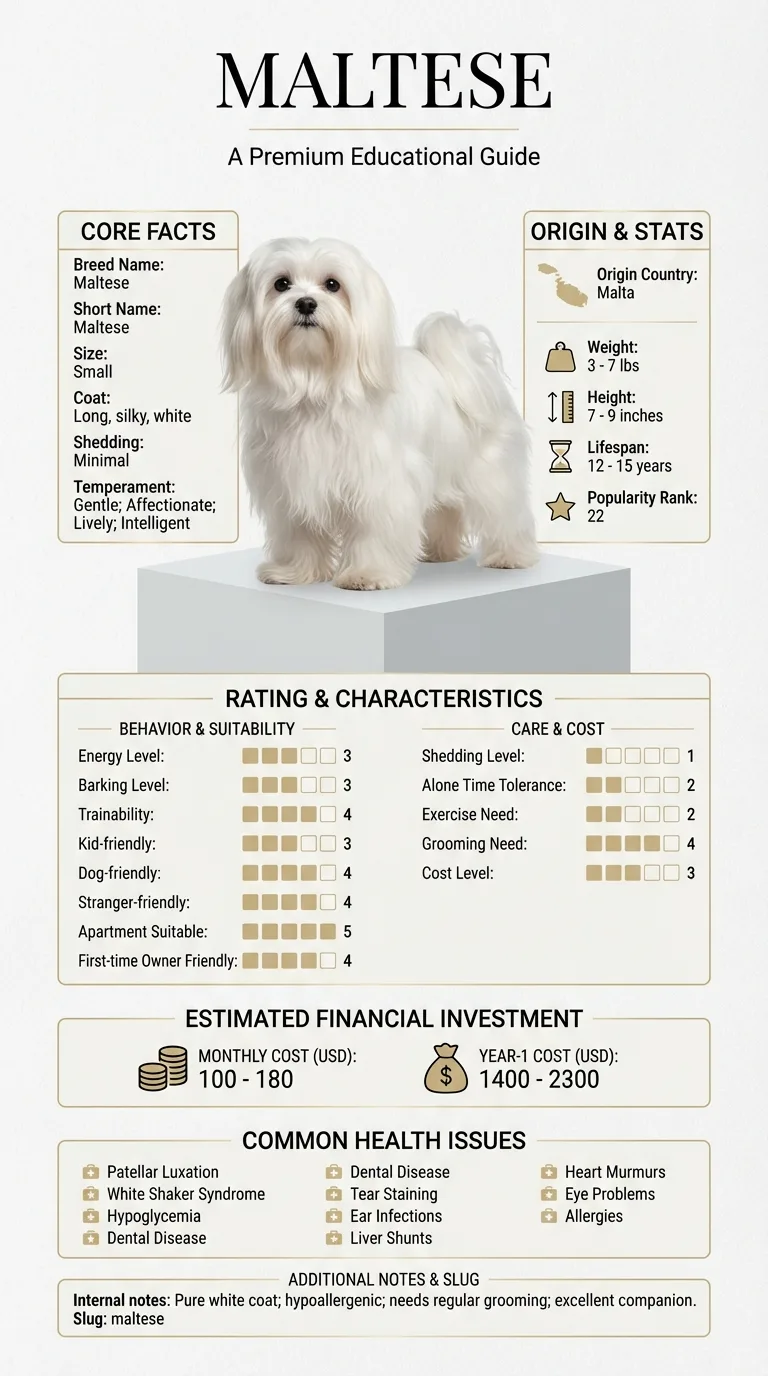
Monthly costs for a Maltese range from approximately $100 to $180, covering food, grooming, and routine vet visits.
Positive reinforcement is highly effective for Maltese training. Use treats and praise to encourage good behavior and avoid harsh corrections.
Maltese should be groomed regularly, ideally every 4-6 weeks, to maintain their long, silky coat and prevent matting.
Many Maltese mixed breeds may shed less than purebreds, depending on the other breed involved. Regular grooming helps keep shedding under control.
A one-page prep sheet for this condition: the signs, the questions to ask, what to get priced. Unlocks here.
You get: Vet visit prep sheet
No spam. One-click unsubscribe. See our privacy policy.
Preview page 1 before you decide.