Training
What are quick tips for training a Jack Russell Terrier?
Use consistent commands and positive reinforcement to motivate your Jack Russell. Regular training sessions of short duration can keep them engaged and focused.

Quick answer
What are quick tips for training a Jack Russell Terrier?
Use consistent commands and positive reinforcement to motivate your Jack Russell. Regular training sessions of short duration can keep them engaged and focused.
Choosing between a Jack Russell Terrier purebred and a mixed breed can be tough. This decision impacts your dog's health, behavior, and compatibility with your lifestyle.
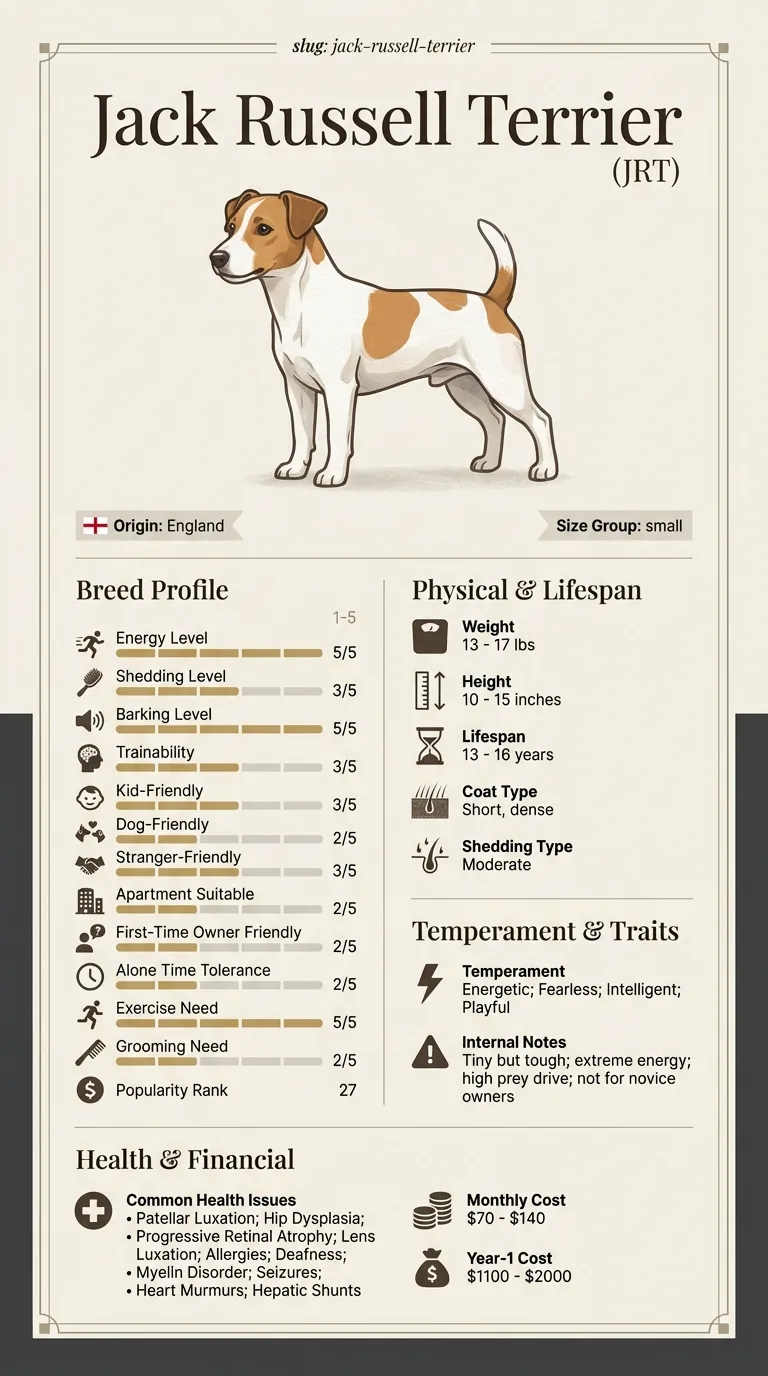
Many first-time dog owners, families considering a new pet, and those looking for the best fit for their living situation often face challenges in choosing between these options.
This guide is not medical advice. If your dog shows pain, sudden behavior change, or worsening symptoms, consult a licensed veterinarian.
Some links may be affiliate links. We may earn a commission at no extra cost to you. We only suggest products we believe are helpful for dog owners.
We research and check what we publish, but we do not warrant that any figure, date, price, or statement is accurate, complete, or current, and we accept no liability for any loss, cost, injury, or other harm arising from the use of this site. Use it as one reference among several. You remain responsible for your own decisions and for your dog's care - confirm anything that matters with a licensed veterinarian or another qualified professional before you act on it. Full disclaimer.
Check this first
Red flag signs that mean you should call your vet include sudden lethargy, persistent vomiting, severe diarrhea, difficulty breathing, or a swollen abdomen. If your Jack Russell Terrier shows signs of seizures, excessive bleeding, or has been hit by a vehicle, do not wait. These are serious issues that need urgent care.
On the other hand, if your dog is mildly lethargic, has a slight cough, or seems to have a minor upset stomach, you can monitor their condition at home. Keep an eye on their behavior, ensure they stay hydrated, and look for improvement. If symptoms persist or worsen over 24 hours, contact your vet.
In summary, trust your instincts. If something feels off with your Jack Russell Terrier, don’t hesitate to reach out to a professional. Regular check-ups can also help catch potential issues early, so stay proactive about their health.
If any of these apply, call your vet or an emergency clinic now. The rest of this page is for the cases that are not an emergency.
The debate over Jack Russell Terrier purebred vs. mixed breeds can lead to confusion for dog owners. Purebreds may showcase specific traits but are often more prone to health issues. This issue can affect the daily life of owners, as they may deal with unexpected expenses or behavioral challenges.
Many Jack Russell Terriers face challenges related to their breed classification. Owners often find that purebreds may have higher medical costs due to genetic predispositions, while mixed breeds can have unpredictable behaviors. This issue is quite common among Jack Russell Terriers, making it crucial for potential owners to weigh the pros and cons carefully.
Jack Russell Terriers are known for their high energy and intelligence, which can lead to behavioral issues if not properly managed. Their strong prey drive may cause them to react unpredictably to other animals or distractions. Additionally, purebred JRTs can be more prone to specific health issues, which may affect their behavior.
The environment plays a significant role in a Jack Russell Terrier's behavior. High-stress settings, such as noisy homes or crowded areas, can increase anxiety. Lack of exercise or mental stimulation can lead to boredom, resulting in destructive behaviors like excessive barking or digging.
If you notice sudden changes in your dog's behavior, such as increased aggression or severe anxiety, it's important to consult a veterinarian. They can rule out any underlying health issues that may be affecting your dog's mood or behavior.
Avoiding these common mistakes can help you manage the challenges of choosing between a Jack Russell Terrier purebred and mixed breeds.
Start here: Jack Russell Terrier Most Common Genetic Disorders
See all Jack Russell Terrier health problems, which breeds are prone to purebred vs mixed breeds, or the full Jack Russell Terrier breed guide for temperament, exercise needs and ownership costs.
You can expect to see improvements in your Jack Russell Terrier's behavior within 4 to 8 weeks of consistent care and a steady routine.
Success means your dog becomes more manageable in social situations, shows fewer behavioral issues, and has a stronger bond with you.
When Sarah adopted Max, a 2-year-old Jack Russell Terrier, she quickly realized he was a bundle of energy. Max struggled with anxiety and would bark excessively, especially when left alone. After researching Jack Russell Terrier purebred vs. mixed breeds traits, Sarah decided to enroll Max in a training class focused on behavior modification. Over the next few weeks, with patience and consistency, she learned techniques to help him feel secure and reduce his barking. Now, Max is a much calmer dog who enjoys quiet time and plays well with other dogs.
Key takeaway: Understanding your dog's breed traits and investing in training can lead to a happier, more balanced life for both you and your pet.
Jack Russell Terriers, especially purebreds, often display specific traits due to their genetic background. Their high energy and strong prey drive can lead to unique behavior challenges. Mixed breeds may exhibit a blend of these traits, leading to different behaviors. This answer relates to Jack Russell Terrier purebred vs. mixed breeds.
To manage behavior issues, routine training and exercise are key. Engage your Jack Russell with consistent commands and socialization opportunities. Consider professional training if behaviors like excessive barking or anxiety persist.
Signs of anxiety can include excessive barking, destructive behavior, or restlessness. If your Jack Russell is showing these signs, it's important to address them early. Training and comforting techniques can help alleviate anxiety.
The cost of owning a purebred Jack Russell Terrier typically ranges from $70 to $140 monthly, while mixed breeds might be slightly lower. However, purebreds may have higher veterinary costs due to breed-specific health issues. Be prepared for initial and ongoing expenses.
Mixed breed Jack Russells can still inherit health issues common in purebreds, like hip dysplasia or allergies. Regular vet check-ups and a healthy lifestyle are crucial for both types. Always consult with a vet for breed-specific concerns.
Positive reinforcement training techniques, including treats and praise, work best for Jack Russells. They respond well to consistency and motivation. Incorporating playtime into training can also keep them engaged and eager to learn.
Purebred Jack Russell Terriers are known for their energetic, fearless, and intelligent nature. These traits can sometimes lead to stubbornness, making training challenging. Understanding their temperament can help in managing their behavior effectively.
Jack Russell Terriers can face several health problems, particularly if they're purebred. Common issues include patellar luxation, hip dysplasia, and progressive retinal atrophy. It's crucial to stay informed about these potential health risks when choosing between a purebred and a mixed breed.
Training a Jack Russell Terrier mix can be similar to training a purebred, but it may require some adjustments based on the mix's traits. Consistent positive reinforcement works well, and socializing them early can help with behavior. Be patient and flexible, as some traits from the mixed breed may influence their learning pace.
Yes, there can be behavioral differences based on genetics. Purebred Jack Russells tend to exhibit high energy and a strong prey drive, while mixed breeds might show a mix of behaviors from both parent breeds. Understanding these differences can help you set realistic expectations for training and daily activities.
If your Jack Russell Terrier is displaying sudden changes in behavior, such as increased aggression or withdrawal, it's time to consult a vet. These changes could be linked to health issues or stressors. Early intervention is key to ensuring your pup’s well-being.
Mixed breed Jack Russells can indeed be just as energetic as purebreds, depending on their genetic makeup. It's essential to provide them with ample exercise and mental stimulation to keep their energy in check. Regular playtime and training sessions can help manage their activity levels.
Use consistent commands and positive reinforcement to motivate your Jack Russell. Regular training sessions of short duration can keep them engaged and focused.
Establish a routine and provide plenty of exercise to help alleviate anxiety. Consider calming products or training techniques to support their mental health.
The initial cost of a Jack Russell Terrier can range from $1,100 to $2,000 in the first year, with monthly expenses between $70 to $140 thereafter.
Jack Russell Terriers can be suitable for families, especially those with active lifestyles. However, they may require supervision around small children due to their energetic nature.
Common health issues include patellar luxation and hip dysplasia. Regular vet check-ups can help catch any potential issues early.
A one-page prep sheet for this condition: the signs, the questions to ask, what to get priced. Unlocks here.
You get: Vet visit prep sheet
No spam. One-click unsubscribe. See our privacy policy.
Preview page 1 before you decide.