Health
Is heart disease genetic in Welsh Springer Spaniels?
No, this breed does not carry the documented genetic pattern seen in breeds like Dobermans; the more relevant version here is a diet-linked form tied to certain grain-free formulations.

Quick answer
Is heart disease genetic in Welsh Springer Spaniels?
No, this breed does not carry the documented genetic pattern seen in breeds like Dobermans; the more relevant version here is a diet-linked form tied to certain grain-free formulations.
A heart muscle can weaken from what's in the bowl, not just from what's in the genes, and that changes what owners actually need to watch for.
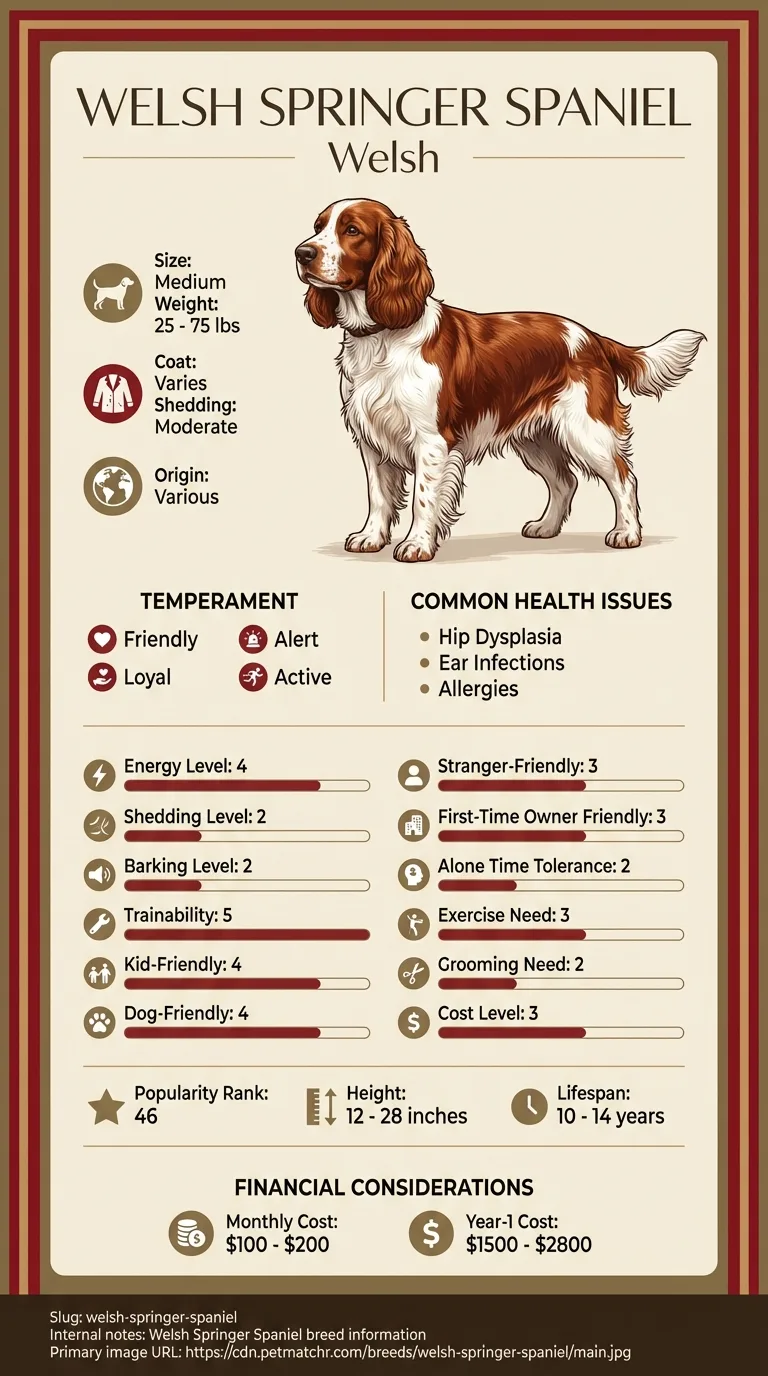
Owners who feed grain-free, legume-heavy, or boutique exotic-protein diets, often chosen with good intentions for a dog with a sensitive stomach or skin issues, are the ones this topic is most relevant to.
This guide is not medical advice. If your dog shows pain, sudden behavior change, or worsening symptoms, consult a licensed veterinarian.
Some links may be affiliate links. We may earn a commission at no extra cost to you. We only suggest products we believe are helpful for dog owners.
Dilated cardiomyopathy is not a genetically documented risk for Welsh Springer Spaniels, but a diet-linked form of the disease, associated with certain grain-free formulations heavy in legumes, has affected dogs across many breeds regardless of genetic background. Understanding the ingredient link matters more here than worrying about inherited breed risk.
This diet-linked pattern has been documented across numerous breeds without a prior cardiomyopathy history, making it a relevant consideration for any dog, including Welsh Springer Spaniels, fed a long-term grain-free or boutique diet, even though this breed carries no inherited genetic predisposition to the disease.
Welsh Springer Spaniels do not carry the documented genetic predisposition to dilated cardiomyopathy seen in breeds like Dobermans, so any risk here is driven by diet composition and feeding volume rather than inherited heart muscle vulnerability.
Long-term feeding of certain grain-free or legume-heavy diets, particularly at the higher calorie volumes an active breed like this one typically consumes, is the primary environmental driver behind the diet-linked form of the disease.
Talk to your vet if you notice reduced exercise stamina, a new or worsening cough, or increased breathing effort, especially if your dog has been on a grain-free or boutique diet for an extended period, so a cardiac workup can be considered. Sudden collapse, severe breathing difficulty, or blue-tinged gums are signs of a cardiac emergency requiring immediate veterinary care.
See all Welsh Springer Spaniel health problems, which breeds are prone to heart disease, or the full Welsh Springer Spaniel breed guide for temperament, exercise needs and ownership costs.
Diet-linked heart muscle changes typically develop gradually over months to years of consistent feeding, and in documented cases, improvement after a diet change and taurine supplementation has also unfolded gradually over several months.
Success looks like feeding a well-researched diet, staying alert to gradual stamina or breathing changes, and catching any early heart muscle changes while they are still responsive to a diet and supplementation change.
Classic dilated cardiomyopathy is strongly genetic in breeds like Dobermans and Great Danes, where it appears reliably enough to warrant routine breed-specific cardiac screening. The Welsh Springer Spaniel does not carry that same documented genetic pattern, which is exactly why the diet-linked form of the disease is the more relevant version for this breed's owners to understand.
The suspected mechanism involves taurine, an amino acid important for heart muscle function. Some dogs can synthesize enough taurine from other dietary building blocks, but this process can be disrupted by certain ingredients common in grain-free formulations, particularly diets heavy in peas, lentils, and other legumes used as the primary starch source instead of grains. Over months to years of consistent feeding, some dogs on these diets have developed measurable heart muscle changes that improved after switching to a different diet and adding taurine supplementation under veterinary guidance.
For an active, working-bred dog like the Welsh Springer Spaniel, which often gets a higher-calorie diet to support its exercise needs, the diet conversation matters just as much as it would for any breed, since the amount of food consumed daily amplifies whatever the ingredient list is doing. This is not a reason to panic about any single food, but it is a reason to know what's actually in the bag rather than choosing based on marketing alone.

None of this means grain-free food is automatically dangerous; it means ingredient awareness is worth the same attention as any other health decision for this breed.
If you think your Welsh has heart disease, the plan is three steps: write down what you have seen and when it started, book a veterinary appointment rather than waiting for the next flare, and take video of the behaviour or symptom before you go — the thing you are worried about rarely happens in the consulting room. Screening in the parents covers hip dysplasia, ear infections, epilepsy.
What the vet visit should produce is a diagnosis and a written plan, not just reassurance: what is being ruled out, what the monitoring interval is, and which signs mean you come back sooner. Ask what the treatment costs across a year rather than per visit, because that is the number that decides whether you are managing this condition or reacting to it.
Between appointments, keep a short log — dates, what you saw, what changed. It is the single most useful thing an owner brings to a follow-up, and for heart disease it is often what separates a clear pattern from a guess.
When Welsh Springer owner Alicia noticed her dog Duke developing mild skin irritation two years ago, she switched him to a boutique grain-free diet on a friend's recommendation, without checking the ingredient list closely. Duke seemed fine on it, aside from a new, occasional soft cough that Alicia assumed was just seasonal allergies. At a routine checkup, her vet noted the cough and asked about diet history as a matter of course. Learning Duke had been on a legume-heavy grain-free food for two years, the vet recommended an echocardiogram, which showed mild early heart muscle changes consistent with diet-linked cardiomyopathy. Alicia switched Duke back to a well-researched, grain-inclusive diet and added vet-prescribed taurine supplementation. A follow-up echocardiogram eight months later showed meaningful improvement in heart muscle function.
Key takeaway: A seemingly unrelated skin-driven diet switch can end up affecting heart muscle health years later, which is why the full ingredient list matters more than a marketing label like grain-free.
No. Classic genetically driven dilated cardiomyopathy is documented in specific breeds like Dobermans and Great Danes, and the Welsh Springer Spaniel does not carry that same established genetic pattern.
Certain grain-free diets, particularly those using peas, lentils, and other legumes as a primary starch source, have been associated in some dogs with reduced taurine synthesis, an amino acid important for heart muscle function.
Check the ingredient list for legumes among the first several ingredients rather than relying on the grain-free label alone, and discuss your specific food choice with your vet, especially if you switched diets for an unrelated reason.
In many documented cases, switching away from the suspected diet and adding taurine supplementation under veterinary guidance has led to measurable improvement in heart muscle function, though this should always be done with veterinary involvement.
Reduced exercise stamina, a new or worsening cough, increased breathing effort, or fainting are worth discussing with your vet, particularly alongside a diet history that includes a grain-free or boutique food.
Not automatically, but it is worth checking the ingredient list and discussing the choice with your vet, especially since this is a gradual-risk situation rather than an acute emergency requiring an immediate food change.
No, this breed does not carry the documented genetic pattern seen in breeds like Dobermans; the more relevant version here is a diet-linked form tied to certain grain-free formulations.
Certain grain-free diets heavy in peas or lentils have been associated with reduced taurine synthesis, an amino acid important for heart muscle function, in some dogs across many breeds.
Check whether legumes appear among the first several ingredients rather than trusting the grain-free label alone, and discuss the choice with your vet.
Reduced exercise stamina, a new cough, or increased breathing effort are worth mentioning to your vet, especially alongside a grain-free or boutique diet history.
A cardiac workup if symptoms appear represents a real cost, but simply reviewing your current food's ingredient list and discussing it with your vet at a routine visit costs nothing extra.
A one-page prep sheet for this condition: the signs, the questions to ask, what to get priced. Unlocks here.
You get: Vet visit prep sheet
No spam. One-click unsubscribe. See our privacy policy.
Preview page 1 before you decide.