Health
Is anesthesia riskier for overweight Labs?
Yes, obesity changes drug distribution and dosing calculations, which is part of why vets weigh dogs and discuss weight before scheduling any procedure requiring anesthesia.

Quick answer
Is anesthesia riskier for overweight Labs?
Yes, obesity changes drug distribution and dosing calculations, which is part of why vets weigh dogs and discuss weight before scheduling any procedure requiring anesthesia.
If you've read that some breeds are "sensitive" to anesthesia and are now worried about your Lab's upcoming spay, neuter, or cruciate surgery, the honest answer is more nuanced than a yes or no.
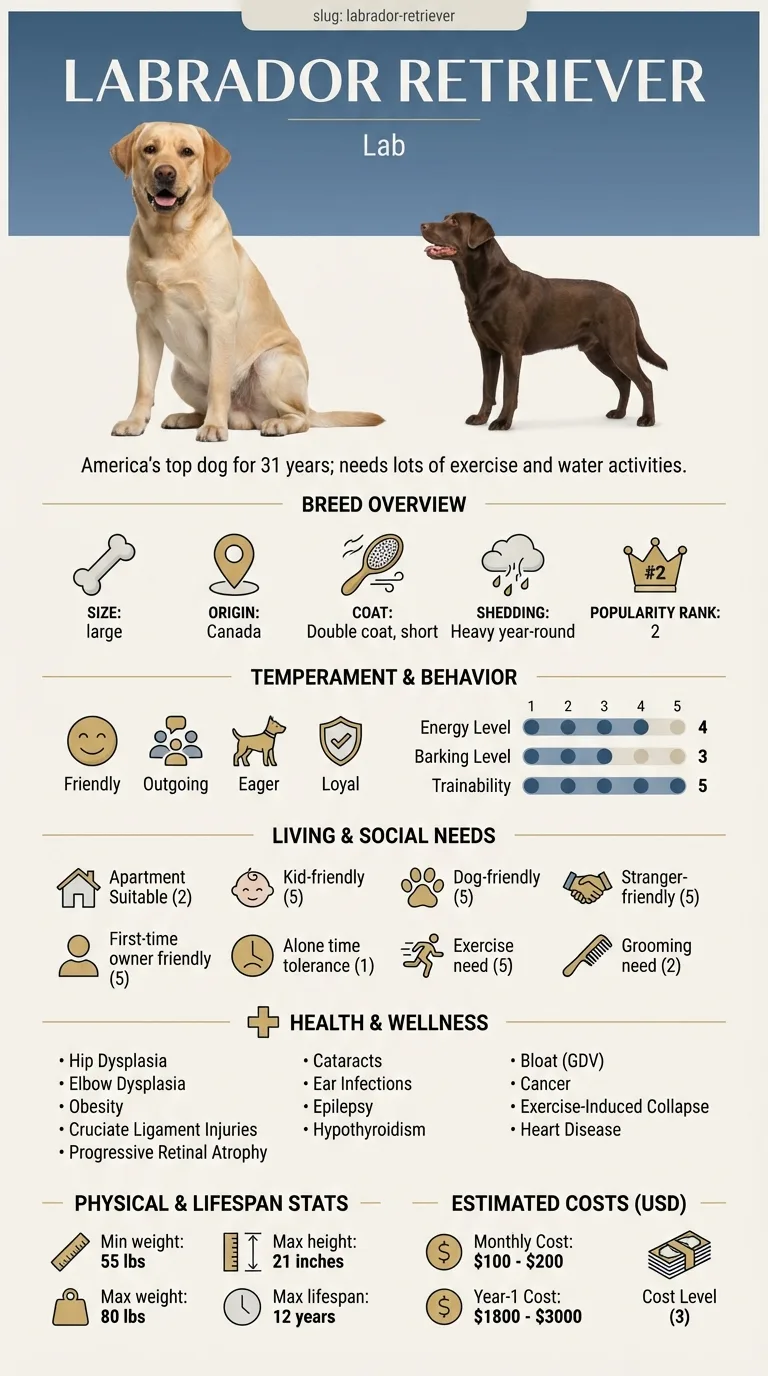
Owners scheduling routine surgery, orthopedic repair, or a dental procedure for an overweight, older, or Exercise-Induced Collapse-affected Labrador benefit most from understanding these specific factors, since a generic "Labs are fine under anesthesia" reassurance skips real, individual variables.
This guide is not medical advice. If your dog shows pain, sudden behavior change, or worsening symptoms, consult a licensed veterinarian.
Some links may be affiliate links. We may earn a commission at no extra cost to you. We only suggest products we believe are helpful for dog owners.
We research and check what we publish, but we do not warrant that any figure, date, price, or statement is accurate, complete, or current, and we accept no liability for any loss, cost, injury, or other harm arising from the use of this site. Use it as one reference among several. You remain responsible for your own decisions and for your dog's care - confirm anything that matters with a licensed veterinarian or another qualified professional before you act on it. Full disclaimer.
Anesthesia sensitivity describes how predictably and safely a dog's body processes sedative and anesthetic drugs. Labrador Retrievers are not a documented high-risk breed the way lean-bodied sighthounds are, so there is no breed-wide anesthesia warning for a healthy Lab. The real risk factors in this breed are individual: excess body weight, EIC status, and age-related airway changes, all of which a vet can plan around with the right information.
True anesthesia complications in Labrador Retrievers are uncommon in a healthy, appropriately screened dog. The breed simply doesn't carry the documented drug-metabolism differences that make some other breeds a defined risk category, so most of what owners hear about "sensitive breeds" doesn't apply here directly.
Labradors don't have the low body-fat, altered-metabolism profile that drives real anesthesia sensitivity in sighthounds. What this breed does carry, documented directly in its health profile, is a strong tendency toward obesity and a specific exercise-related collapse condition (EIC), both of which change how a vet should approach dosing and monitoring even though neither is a classic "anesthesia-sensitive breed" trait.
A dog that's been allowed to carry extra weight going into a scheduled procedure, or whose EIC or collapse history wasn't clearly communicated, faces more real risk than the breed itself creates. Clinics that skip pre-anesthetic bloodwork to save cost also raise risk regardless of breed.
Talk to your vet before scheduling any elective procedure if your Labrador is overweight, has ever fainted or collapsed during exercise, snores more than it used to, or is over seven years old. These aren't reasons to avoid necessary surgery, but they're reasons to ask for a more thorough pre-anesthetic workup.
See all Labrador Retriever health problems, which breeds are prone to anesthesia sensitivity, or the full Labrador Retriever breed guide for temperament, exercise needs and ownership costs.
Pre-anesthetic screening and planning typically happens in the one to two weeks before a scheduled procedure. Recovery from routine anesthesia in a healthy Labrador is usually uneventful within 24 to 48 hours.
Success looks like a routine, uneventful anesthesia event because the real risk factors, weight, EIC status, and age-related changes, were identified and planned for ahead of time rather than discovered mid-procedure.
Breeds like Greyhounds and Whippets metabolize certain anesthetic drugs slowly because they carry very little body fat and have a different liver enzyme profile, a well-studied, breed-defined risk. Labrador Retrievers don't share that build or that documented metabolic pattern, so there's no equivalent breed-wide anesthesia warning for them in the way there is for sighthounds. Vets don't treat a healthy, normal-weight Lab as an elevated anesthetic risk on breed alone.
Three documented Labrador traits change the anesthesia conversation in practice, even without a breed-wide drug sensitivity:

If you think your Lab has anesthesia sensitivity, the plan is three steps: write down what you have seen and when it started, book a veterinary appointment rather than waiting for the next flare, and take video of the behaviour or symptom before you go — the thing you are worried about rarely happens in the consulting room. Screening in the parents covers hip dysplasia, elbow dysplasia, obesity.
What the vet visit should produce is a diagnosis and a written plan, not just reassurance: what is being ruled out, what the monitoring interval is, and which signs mean you come back sooner. Ask what the treatment costs across a year rather than per visit, because that is the number that decides whether you are managing this condition or reacting to it.
Between appointments, keep a short log — dates, what you saw, what changed. It is the single most useful thing an owner brings to a follow-up, and for anesthesia sensitivity it is often what separates a clear pattern from a guess.
Duke, a Labrador just over his ideal weight at eleven months old, was scheduled for a routine neuter until his vet flagged his weight at the pre-surgical exam and recommended delaying the procedure by six weeks while Duke's owner adjusted his food portions and added a daily swim. Duke lost enough weight to bring his dosing calculations back in line with a healthy body condition score, and the neuter went smoothly with no complications. His owner later admitted she'd assumed the delay was overly cautious, but appreciated afterward that the vet had treated Duke's actual body condition as the relevant factor rather than rushing ahead on the original date.
Key takeaway: A brief delay to address a modifiable risk factor like weight is often the safest path, and it's a normal, reasonable part of responsible anesthesia planning rather than a sign something is wrong.
No, not as a breed-wide rule. Labs don't carry the low body-fat, slow-drug-clearance profile that makes sighthounds a genuinely elevated-risk group. Individual factors like weight and age matter more than breed alone.
Yes. Since obesity is a well-documented issue in this breed, excess fat changes how anesthetic drugs distribute in the body. Vets typically calculate dosing based on estimated lean body mass in an overweight dog rather than total weight.
If your Lab has been diagnosed with or tested positive for the EIC gene mutation, mention it before any procedure. It affects stress and temperature regulation during intense exertion, and your vet may adjust monitoring during recovery as a precaution.
A healthy, appropriately weighted Labrador undergoing a routine spay or neuter carries the same general anesthesia risk as most large breeds, which is low. Pre-surgical bloodwork and an honest weight assessment are the standard precautions that matter most.
Age itself isn't a disqualifier, but older dogs generally get more thorough pre-anesthetic bloodwork and sometimes a chest X-ray or cardiac check, since organ function and airway muscle tone can change gradually with age.
Mention current weight and any recent weight changes, known EIC status if tested, any history of fainting or collapse during exercise, and any snoring or noisy breathing changes, even minor ones.
Keep your Labrador at a healthy weight year-round, disclose full exercise and collapse history to your vet, and follow pre-surgical fasting instructions exactly as given.
Yes, obesity changes drug distribution and dosing calculations, which is part of why vets weigh dogs and discuss weight before scheduling any procedure requiring anesthesia.
Not as a breed rule. Most healthy Labs tolerate standard modern anesthetic protocols well; adjustments are typically based on individual weight, age, and health history rather than breed.
Yes, always disclose known EIC status or any exercise-related collapse history before any procedure requiring sedation or anesthesia, even a routine one.
Most vets include or separately bill for pre-anesthetic bloodwork, typically an additional cost on top of the procedure itself, and it's worth budgeting for rather than declining.
Follow fasting instructions precisely, keep your dog calm the morning of the procedure, and avoid strenuous exercise the day before if your dog has any history of exercise intolerance.
A one-page prep sheet for this condition: the signs, the questions to ask, what to get priced. Unlocks here.
You get: Vet visit prep sheet
No spam. One-click unsubscribe. See our privacy policy.
Preview page 1 before you decide.