Behavior
What are quick tips for Schnauzer (Standard) anesthesia sensitivity?
Ensure all health conditions are managed, discuss alternative anesthetics with your vet, and keep your dog calm before procedures.

Quick answer
What are quick tips for Schnauzer (Standard) anesthesia sensitivity?
Ensure all health conditions are managed, discuss alternative anesthetics with your vet, and keep your dog calm before procedures.
Schnauzer (Standard) anesthesia sensitivity can be a concern for many dog owners. This condition can lead to complications during medical procedures.
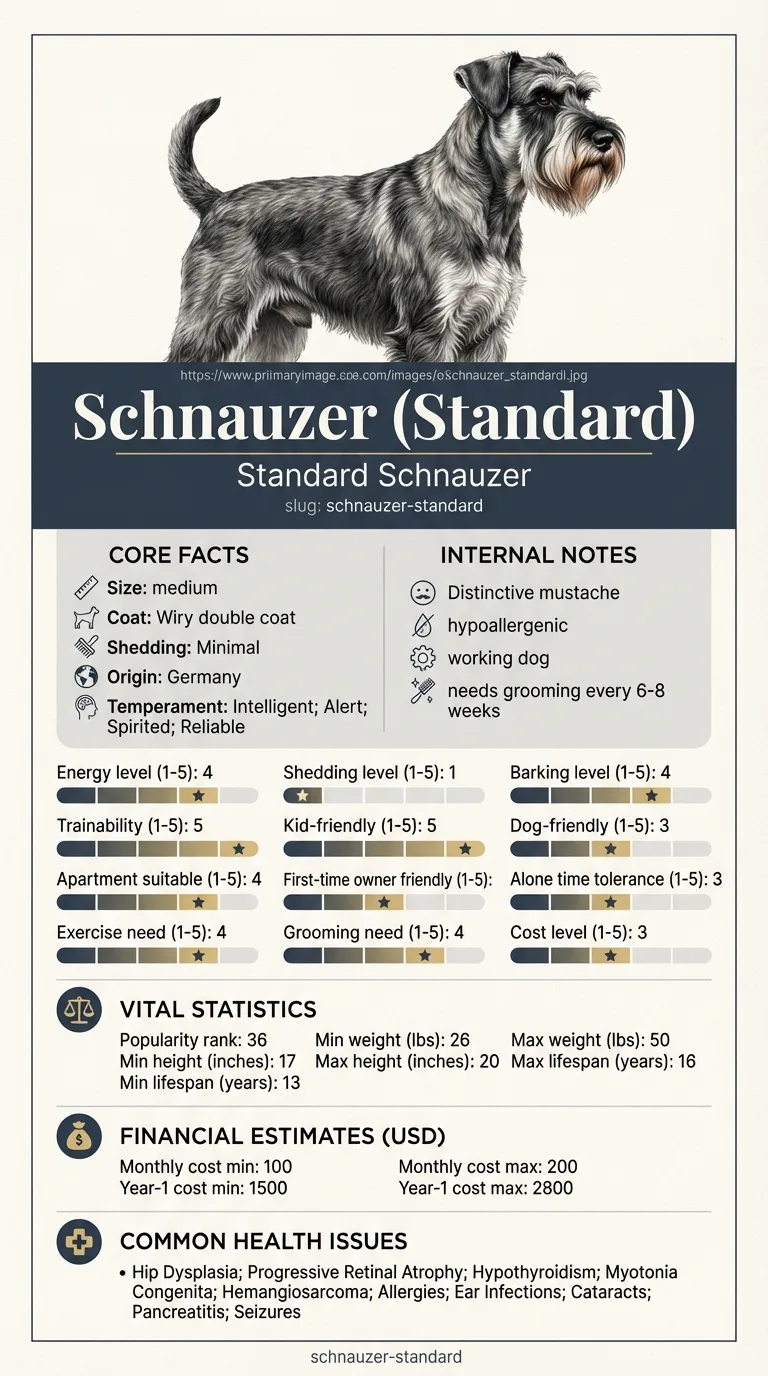
Owners of Schnauzer (Standards) often face challenges when it comes to anesthesia sensitivity. This includes first-time pet parents, families trying to manage their dog’s health, or those who frequently need veterinary care for their furry companions.
This guide is not medical advice. If your dog shows pain, sudden behavior change, or worsening symptoms, consult a licensed veterinarian.
Some links may be affiliate links. We may earn a commission at no extra cost to you. We only suggest products we believe are helpful for dog owners.
We research and check what we publish, but we do not warrant that any figure, date, price, or statement is accurate, complete, or current, and we accept no liability for any loss, cost, injury, or other harm arising from the use of this site. Use it as one reference among several. You remain responsible for your own decisions and for your dog's care - confirm anything that matters with a licensed veterinarian or another qualified professional before you act on it. Full disclaimer.
Check this first
Understanding when Schnauzer (Standard) anesthesia sensitivity becomes an emergency is crucial for your dog's safety. Certain signs indicate that you should contact your vet immediately. If your Schnauzer experiences severe breathing difficulties, extreme lethargy, or unresponsiveness after anesthesia, these are red flags. Additionally, if your dog has a rapid heartbeat or shows signs of swelling, these symptoms require urgent veterinary attention.
On the other hand, mild anesthesia sensitivity can often be monitored at home. If your Schnauzer shows slight grogginess or mild disorientation after a procedure, this may not be a cause for alarm. You can track their recovery and provide a calm environment. Be sure to follow your vet's aftercare instructions, and watch for any new symptoms.
It’s important to know your dog. If their behavior changes significantly or they seem in distress, don’t hesitate to reach out to your vet. When in doubt, it’s better to err on the side of caution. Keeping your Schnauzer comfortable and safe should always be your top priority.
If any of these apply, call your vet or an emergency clinic now. The rest of this page is for the cases that are not an emergency.
Schnauzers (Standard) can experience anesthesia sensitivity, making them more reactive to anesthetic drugs than some other breeds. This issue can manifest as prolonged recovery times or unusual reactions during and after procedures. Daily life can be affected if your Schnauzer requires regular vet visits, as this sensitivity may cause concern for both the dog and the owner.
Anesthesia sensitivity is not extremely common in Schnauzers (Standard), but it's something owners should be aware of. While many Schnauzers can tolerate anesthesia without issues, some may show sensitivity, particularly if they have underlying health concerns.
Schnauzers (Standard) can have a genetic predisposition to anesthesia sensitivity. This may be due to their unique metabolism and how their bodies process anesthetic drugs. Additionally, certain health issues common in the breed, such as heart conditions, may increase their reaction to anesthesia.
Environmental factors can also play a role in anesthesia sensitivity. Stress during vet visits or changes in routine may heighten anxiety, which can affect how a Schnauzer responds to anesthesia. Poor overall health or existing medical conditions can further complicate anesthesia administration.
If you notice consistent sensitivity symptoms or if your Schnauzer has a history of adverse reactions to anesthesia, consult your vet. They may recommend specific tests or adjustments to anesthesia protocols tailored to your dog's needs.
Avoiding common pitfalls can significantly improve your Schnauzer (Standard) anesthesia sensitivity. Here are some mistakes to watch out for.
Start here: Standard Schnauzer Most Common Genetic Disorders: Screening
See all Schnauzer Standard health problems, which breeds are prone to anesthesia sensitivity, or the full Schnauzer Standard breed guide for temperament, exercise needs and ownership costs.
You can expect to see improvements in your Schnauzer's behavior around anesthesia within 4 to 6 months. Consistent care and monitoring are key.
Success means your Schnauzer can undergo necessary procedures with reduced anxiety and a more stable response to anesthesia. You'll notice a calmer demeanor during vet visits and less stress for both of you.
Emily had a Standard Schnauzer named Max who showed extreme anxiety during vet visits, especially when anesthesia was involved. After a particularly stressful experience, she decided it was time to take action. She consulted with her vet about Max's anesthesia sensitivity and started a training regimen that included desensitization techniques and positive reinforcement. Over the next few months, Emily worked diligently with Max, gradually introducing him to the sights and sounds of the vet’s office. With patience and consistent effort, Max became much calmer, allowing for smoother visits and less anxiety about anesthesia.
Key takeaway: With dedication and the right training approach, even Schnauzers with anesthesia sensitivity can learn to cope better with stressful situations.
Schnauzers (Standard) can have anesthesia sensitivity due to their unique metabolism and genetic factors. This breed might react differently to anesthetic drugs, sometimes experiencing prolonged effects. Always discuss your dog's health history with your vet before procedures. This answer relates to Schnauzer (Standard) anesthesia sensitivity.
To help manage anesthesia sensitivity, ensure your Schnauzer is in optimal health before any procedure. Discuss with your veterinarian about adjusting dosages or using alternative anesthetics that might be safer for your dog.
Preparing your Schnauzer for surgery involves ensuring they are well-hydrated and fasting as instructed by your vet. Bring along any relevant medical records and discuss any concerns about anesthesia sensitivity with your veterinarian.
Signs of anesthesia sensitivity in Schnauzers may include excessive sedation, difficulty waking up, or unusual behavior post-surgery. If you notice any of these symptoms, contact your vet immediately for advice.
Yes, training can help reduce anxiety related to anesthesia by familiarizing your Schnauzer with the vet's office and the sounds of medical equipment. Positive reinforcement techniques can create a calmer experience for your dog.
Yes, older Schnauzers (Standard) may have increased anesthesia sensitivity due to age-related health issues. Always discuss your dog's age and health history with your vet before any procedures requiring anesthesia.
To prepare your Schnauzer (Standard) for anesthesia, ensure they are healthy and follow your vet's pre-surgery instructions. This may include fasting and reducing stress before the procedure to help minimize anxiety.
If your Schnauzer (Standard) has a bad reaction to anesthesia, contact your vet immediately. They can provide guidance and may need to monitor your dog for any serious complications.
Yes, there are alternative anesthesia options that may be safer for Schnauzers (Standard), especially if they are known to be sensitive. Discuss these alternatives with your vet to find the best approach for your dog's specific needs.
Ensure all health conditions are managed, discuss alternative anesthetics with your vet, and keep your dog calm before procedures.
Plan for potential extra vet visits and consultations, and consider pet insurance that covers anesthesia-related procedures.
Keep an eye on their behavior, eating habits, and any unusual lethargy after anesthesia. Contact your vet if you have concerns.
A one-page prep sheet for this condition: the signs, the questions to ask, what to get priced. Unlocks here.
You get: Vet visit prep sheet
No spam. One-click unsubscribe. See our privacy policy.
Preview page 1 before you decide.