Health
Is a sudden back-leg limp likely a cruciate tear in a Lab?
It's one of the most likely explanations given how documented this injury is in the breed, especially if it happened suddenly during activity rather than building gradually.

Quick answer
Is a sudden back-leg limp likely a cruciate tear in a Lab?
It's one of the most likely explanations given how documented this injury is in the breed, especially if it happened suddenly during activity rather than building gradually.
A Lab that suddenly won't put weight on a back leg mid-play, rather than limping gradually worse over weeks, is describing a classic cruciate tear, not a minor sprain to wait out.
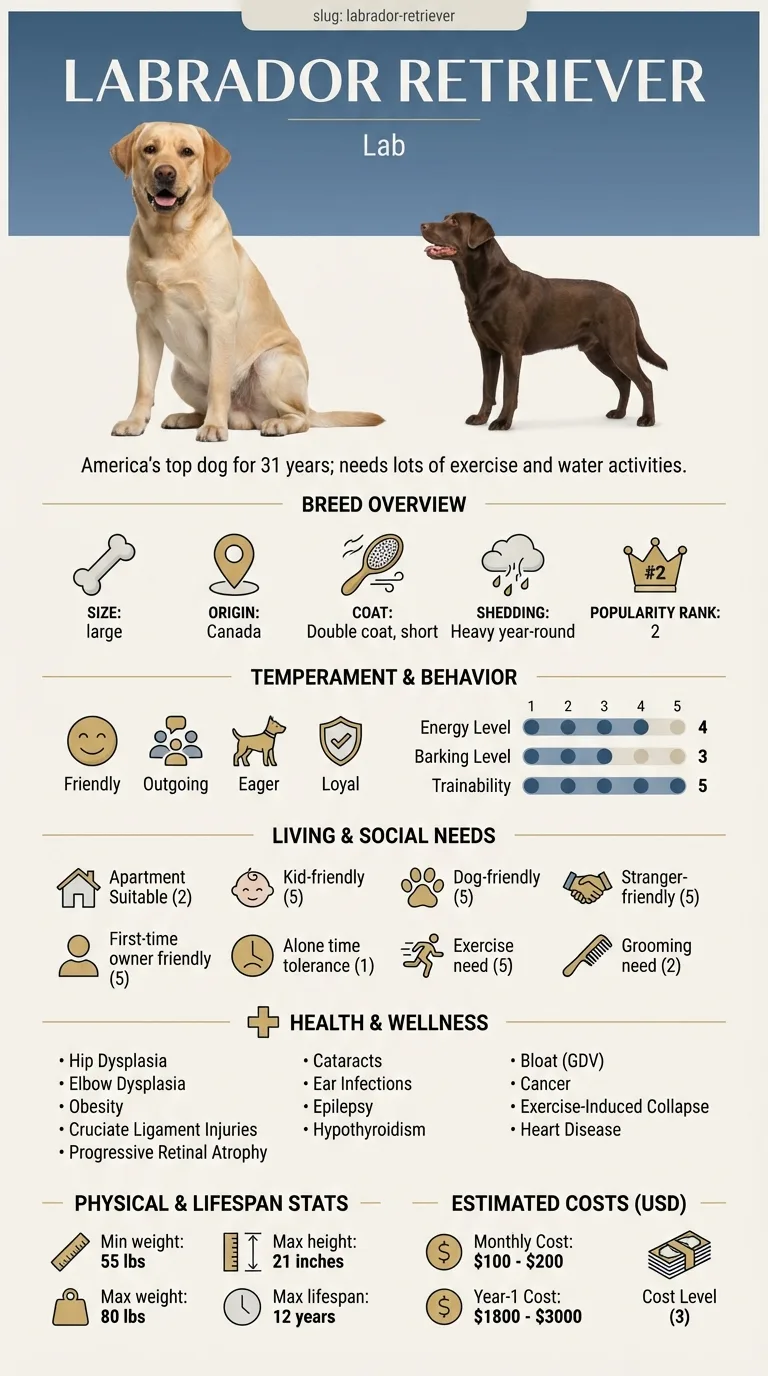
Owners of active, athletic, or overweight adult Labradors, particularly those in their middle years, are the ones most likely to encounter this injury, since both activity level and excess weight are documented contributing factors.
This guide is not medical advice. If your dog shows pain, sudden behavior change, or worsening symptoms, consult a licensed veterinarian.
Some links may be affiliate links. We may earn a commission at no extra cost to you. We only suggest products we believe are helpful for dog owners.
We research and check what we publish, but we do not warrant that any figure, date, price, or statement is accurate, complete, or current, and we accept no liability for any loss, cost, injury, or other harm arising from the use of this site. Use it as one reference among several. You remain responsible for your own decisions and for your dog's care - confirm anything that matters with a licensed veterinarian or another qualified professional before you act on it. Full disclaimer.
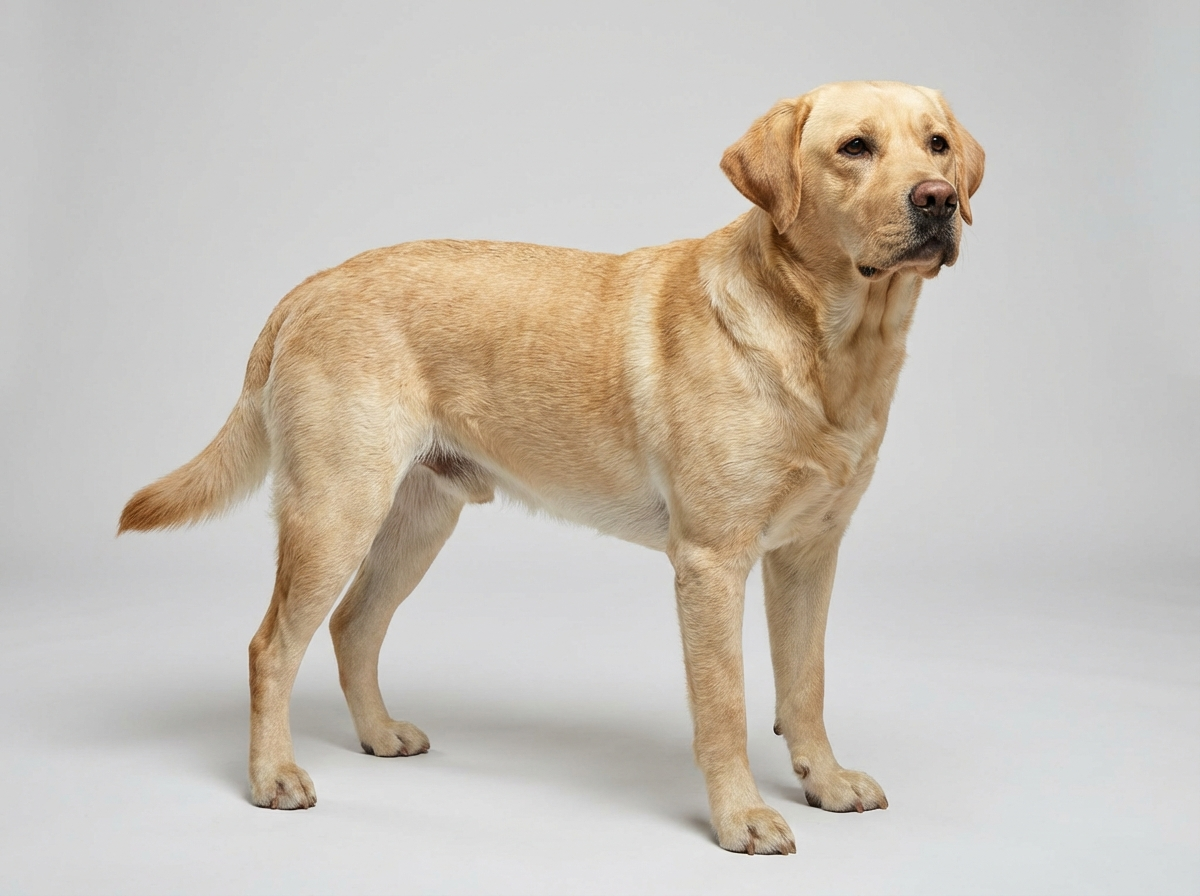
Cruciate ligament injuries, most often a tear of the cranial cruciate ligament in the knee, are a documented, common orthopedic injury in Labrador Retrievers, driven by the breed's athletic, high-impact lifestyle combined with its well-known tendency toward carrying extra weight. Unlike gradual joint conditions, this injury is frequently sudden and obvious, and surgical repair, typically TPLO, is generally recommended for a full tear in a dog this size and activity level.
Directly documented as a common health concern in this breed, making it one of the more likely orthopedic injuries a Labrador owner may encounter over the dog's lifetime, particularly in active or overweight individuals.
Cruciate ligament injuries are specifically listed among Labrador Retrievers' documented health concerns, reflecting the real mechanical demand this breed's athletic, high-drive lifestyle places on the knee joint, further compounded by the breed's well-documented tendency toward obesity.
Hard, repetitive jumping and pivoting, especially on uneven or slippery surfaces, raises acute injury risk. Carrying excess weight adds constant mechanical strain that can weaken the ligament over time even before an acute tearing event occurs.
See your vet promptly, ideally the same day, for any sudden inability or reluctance to bear weight on a back leg, especially following activity. This warrants an exam and likely imaging rather than a wait-and-see approach, since delaying treatment for a full tear generally worsens the outcome.
See all Labrador Retriever health problems, which breeds are prone to cruciate ligament injuries, or the full Labrador Retriever breed guide for temperament, exercise needs and ownership costs.
Surgical repair is typically scheduled within one to two weeks of diagnosis. Recovery involves eight to twelve weeks of restricted activity and structured rehabilitation before a full return to normal exercise.
Success is a dog that returns to full, comfortable activity, running, jumping, and playing normally, achieved through appropriate surgical repair and committed rehabilitation, though some dogs develop mild arthritis in the joint over the years regardless of how well the surgery goes.
Cruciate ligament injuries are specifically documented as a common Labrador health concern, and the mechanism makes sense given the breed: a heavy, athletic dog that jumps, pivots, and sprints hard puts significant rotational and shearing force through the knee joint. Add the breed's well-documented tendency toward obesity, which increases the mechanical load on that joint with every landing, and you get a breed genuinely set up for this specific injury more than many others. Unlike some joint conditions that build slowly, a cruciate tear is frequently a discrete, sudden event, a bad landing or an awkward pivot that tears a ligament that may have already been partially weakened.
Tibial plateau leveling osteotomy, commonly called TPLO, is the most widely used surgical repair for a full cruciate tear in a large, active breed like a Labrador. Rather than replacing the torn ligament directly, the procedure changes the geometry of the top of the shin bone so the knee joint becomes mechanically stable without relying on the ligament at all. It's a bigger, more involved surgery than it sounds, performed by a veterinary surgeon, typically followed by a structured, weeks-long rehabilitation period. Outcomes are generally very good in appropriately managed cases, though it's a genuinely significant undertaking, not a quick fix.

Huck, a five-year-old Labrador carrying a few extra pounds, was mid-sprint chasing a frisbee when he suddenly pulled up lame, refusing to put weight on his right hind leg. His owner took him in the same day, and X-rays combined with a physical exam confirmed a full cruciate tear. Huck had TPLO surgery within the week, followed by a strict rehabilitation schedule that included controlled leash walks and, once cleared, supervised swimming. Twelve weeks later, Huck was back to full activity, and his owner used the recovery period to bring his weight down as well, hoping to reduce the odds of the same injury happening to his other knee.
Key takeaway: A sudden non-weight-bearing limp in an active Labrador is a strong signal of a cruciate tear, and prompt surgical repair combined with committed rehabilitation generally leads to a full return to activity.
Yes, this is directly documented as a common health concern for this breed, driven by the combination of an athletic, high-impact lifestyle and the breed's well-known tendency toward carrying extra weight.
Often a sudden inability or reluctance to bear weight on a back leg during or right after activity, sometimes with an audible yelp at the moment of injury, distinct from a gradual, slowly worsening limp.
In a large, active breed like a Labrador, surgery is generally recommended for a full tear, since conservative management alone often leads to ongoing instability and faster arthritis progression in a dog this size and activity level.
A procedure that changes the geometry of the top of the shin bone to stabilize the knee joint without relying on the torn ligament, the most common surgical approach for cruciate tears in larger, more athletic breeds.
Typically eight to twelve weeks of restricted activity and structured rehabilitation before a full return to normal exercise, with initial improvement often visible within the first few weeks.
Yes, a meaningful number of dogs that tear one cruciate ligament go on to injure the other within a couple of years, partly because of shifted weight-bearing and any ongoing weight or activity risk factors.
Yes, since excess weight adds mechanical load to the knee joint during every jump and pivot, keeping a Labrador lean is one of the most effective, controllable ways to reduce this specific injury risk.
It's one of the most likely explanations given how documented this injury is in the breed, especially if it happened suddenly during activity rather than building gradually.
It's a significant orthopedic procedure, typically costing several thousand dollars per knee including surgery, imaging, and follow-up care.
Keeping a Labrador at a lean weight measurably reduces the mechanical stress on the knee joint and is one of the most controllable risk-reduction factors available.
Most dogs regain excellent function after TPLO surgery and appropriate rehabilitation, though full recovery takes patience over the following two to three months.
Yes, structured post-surgical rehabilitation meaningfully improves outcomes and speeds safe return to normal activity compared to rest alone.
A one-page prep sheet for this condition: the signs, the questions to ask, what to get priced. Unlocks here.
You get: Vet visit prep sheet
No spam. One-click unsubscribe. See our privacy policy.
Preview page 1 before you decide.