Health
Is wobbler syndrome a real risk for Bichon Frises?
No, it is a large and giant breed condition driven by rapid growth and heavy body mass, neither of which applies to this toy breed's size and growth pattern.

Quick answer
Is wobbler syndrome a real risk for Bichon Frises?
No, it is a large and giant breed condition driven by rapid growth and heavy body mass, neither of which applies to this toy breed's size and growth pattern.
A wobbly gait or neck pain in a Bichon Frise is worth taking seriously, but wobbler syndrome specifically is very unlikely to be the explanation.
This affects owners who found wobbler syndrome on a generic multi-breed symptom checker after noticing their Bichon holding its head oddly or seeming unsteady, and are trying to work out whether that specific, expensive diagnosis actually applies to their dog.
This guide is not medical advice. If your dog shows pain, sudden behavior change, or worsening symptoms, consult a licensed veterinarian.
Some links may be affiliate links. We may earn a commission at no extra cost to you. We only suggest products we believe are helpful for dog owners.
We research and check what we publish, but we do not warrant that any figure, date, price, or statement is accurate, complete, or current, and we accept no liability for any loss, cost, injury, or other harm arising from the use of this site. Use it as one reference among several. You remain responsible for your own decisions and for your dog's care - confirm anything that matters with a licensed veterinarian or another qualified professional before you act on it. Full disclaimer.
Wobbler syndrome, or cervical spondylomyelopathy, is a real neurological condition driven by rapid puppy growth and substantial adult body mass creating mechanical stress on the neck's spinal canal. That mechanism does not transfer to a 12 to 18 pound toy breed with a gradual growth curve, making it an unrealistic diagnosis for the Bichon Frise despite occasionally appearing on generic breed health lists.
Wobbler syndrome occurs almost exclusively in large and giant breeds and is essentially not documented in toy breeds like the Bichon Frise, whose size and growth pattern sit entirely outside the condition's known risk profile.
No documented predisposition to wobbler syndrome exists in the Bichon Frise, and the breed's small mature size of 12 to 18 pounds along with its gradual, modest growth curve place it outside the mechanical risk category the condition depends on. Dental disease, a genuinely documented condition in this breed, is the more plausible explanation when a dog shows guarded head or neck posture.
Rough play, an awkward jump or fall, or an untreated dental problem are all realistic environmental contributors to neck stiffness or an unsteady gait in this breed, none of which relate to the growth-rate and body-mass mechanism behind true wobbler syndrome.
Talk to your vet about any neck stiffness, guarded head posture, or unsteady gait so the actual cause can be identified through a physical exam, which very often points toward something simpler and more common in this breed, such as dental pain or muscle strain, before advanced imaging is considered.
See all Bichon Frise health problems, which breeds are prone to wobbler syndrome, or the full Bichon Frise breed guide for temperament, exercise needs and ownership costs.
Simple muscle strain typically improves within a week or two of rest. Dental pain resolves once the underlying tooth or gum issue is treated, often within days of the procedure.
Success looks like correctly identifying a common, treatable cause, muscle strain or dental pain, rather than pursuing an expensive workup for a condition this breed's size and growth pattern make very unlikely.
Cervical spondylomyelopathy develops when the bony canal running through the neck vertebrae, which houses the spinal cord, becomes too narrow or malformed relative to the cord it protects. In dogs that develop this, rapid skeletal growth during puppyhood combined with substantial adult body mass creates disproportionate mechanical stress on the developing neck structures, and dynamic compression of the spinal cord occurs as the neck moves, worst during extension. This is fundamentally a large-body, fast-growth mechanical problem, most documented in giant and large breeds with rapid puppy growth curves and heavy adult frames.
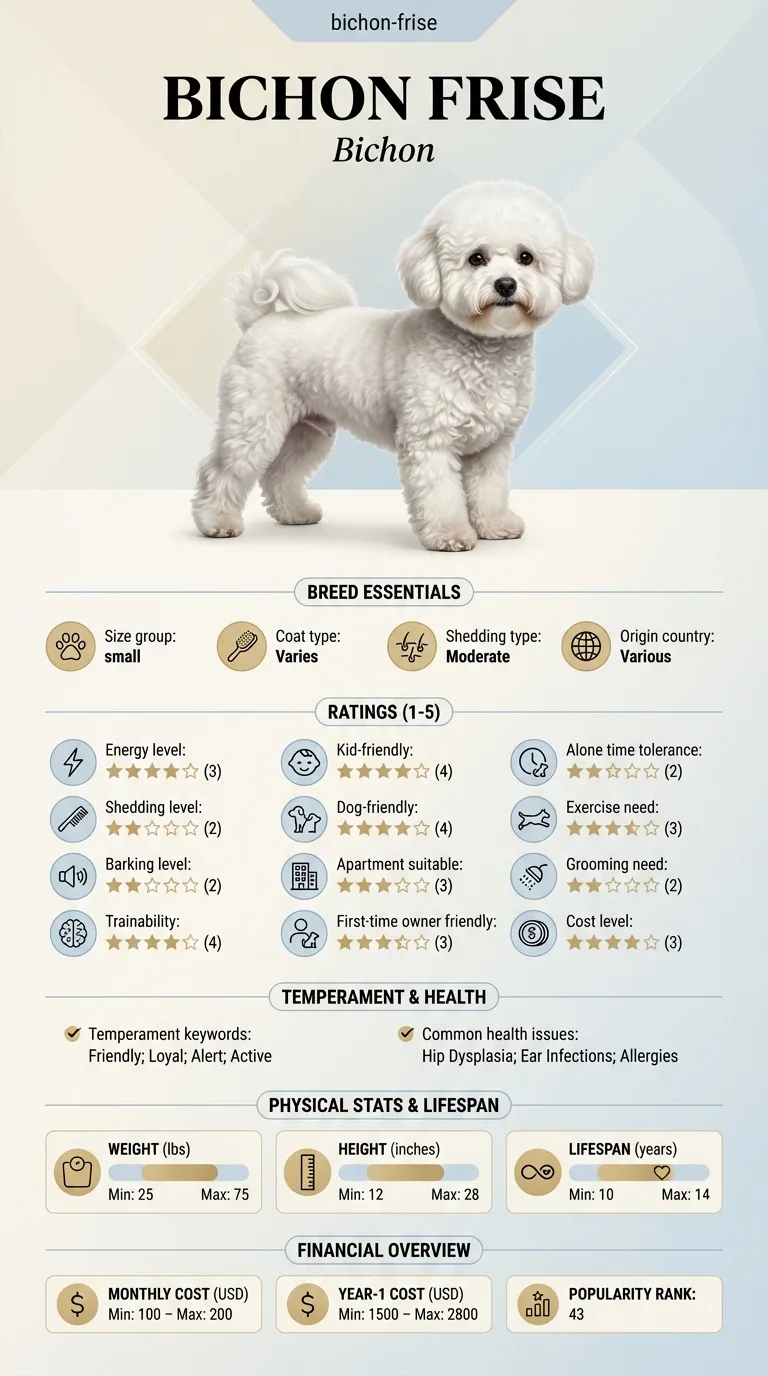
The Bichon Frise reaches a mature weight of just 12 to 18 pounds through a comparatively slow, modest growth curve, nothing like the rapid weight gain seen in a growing giant breed puppy. The mechanical loading that drives canal narrowing and dynamic cord compression in large, fast-growing dogs simply does not apply to a body this light and a growth pattern this gradual. Presenting wobbler syndrome as a realistic Bichon Frise risk would be importing a large-breed mechanism into a body plan that does not generate the forces the disease depends on.

A Bichon holding its head stiffly, resisting having its neck touched, or seeming reluctant to look up or turn is far more often dealing with a simple muscle strain from rough play or an awkward jump, than with a spinal canal malformation. Dental disease, which is genuinely documented in this breed, is another honest and often overlooked possibility: a painful tooth or infected gum can make a dog hold its head guardedly or resist having its face and jaw handled in a way that reads as neck stiffness to an owner watching from the outside. Neither of these requires the extensive imaging or surgical consultation that a true wobbler syndrome workup would, which is part of why correctly identifying the actual cause matters.
Louis started holding his head slightly to one side and resisting his usual chin scratches, and a family member who had researched wobbler syndrome for an unrelated large-breed dog years earlier suggested it might be the same thing. Louis's vet started with a straightforward physical exam rather than jumping to imaging, given his small size and normal growth history made a spinal canal problem an unlikely fit. Opening his mouth revealed a fractured premolar with visible gum inflammation around it. A dental extraction resolved the head tilt within a week, with no neurological workup ever needed. Louis had simply been avoiding pressure on the painful side of his jaw, which changed how he carried his head.
Key takeaway: Head and neck posture changes in this breed are worth a vet visit, but the actual cause is far more often something ordinary and treatable, like a dental problem, than a large-breed spinal condition this body size does not realistically develop.
It is highly unlikely. Wobbler syndrome depends on rapid growth and substantial adult body mass creating mechanical stress on the neck, neither of which applies to a 12 to 18 pound toy breed with a gradual growth curve.
Generic multi-breed symptom or condition lists often include conditions without filtering for realistic breed risk. Wobbler syndrome is a large and giant breed condition and does not transfer mechanically to a toy breed's body plan.
Simple muscle strain from rough play or an awkward jump is common. Dental disease, which is genuinely documented in this breed, can also cause a dog to hold its head guardedly in a way that looks like neck pain from the outside.
Discuss it with your vet first rather than assuming extensive imaging is needed. A physical exam, including a dental check, often identifies a simpler, more likely cause before advanced imaging becomes necessary.
Diagnostic imaging and neurology consultation for suspected cervical spondylomyelopathy can range from several hundred to several thousand dollars, which is part of why correctly ruling it out early, rather than assuming it, matters.
No, pain from any source, including muscle strain, joint discomfort, or dental pain, can cause a dog to move cautiously or unevenly without any neurological problem being present at all.
No, it is a large and giant breed condition driven by rapid growth and heavy body mass, neither of which applies to this toy breed's size and growth pattern.
Muscle strain from play or an awkward jump is common, and dental disease, a genuinely documented condition in this breed, can also cause guarded head posture that looks like neck pain.
Many multi-breed symptom or condition lists include conditions without filtering for whether the underlying mechanism realistically applies to a specific breed's size and build.
Imaging and specialist consultation for suspected spinal conditions can range from several hundred to several thousand dollars, making an accurate initial assessment valuable before advanced testing.
It is worth a vet visit to identify the actual cause, but wobbler syndrome specifically is an unlikely explanation given this breed's small size and gradual growth pattern.
A one-page prep sheet for this condition: the signs, the questions to ask, what to get priced. Unlocks here.
You get: Vet visit prep sheet
No spam. One-click unsubscribe. See our privacy policy.
Preview page 1 before you decide.