DogBreedCompass
← Back to breed profile

Schnauzer (Standard) Wobbler Syndrome: What You Need to Know

Schnauzer (Standard) wobbler syndrome is a serious condition affecting your dog's mobility and well-being. It can lead to significant discomfort and difficulty in movement.

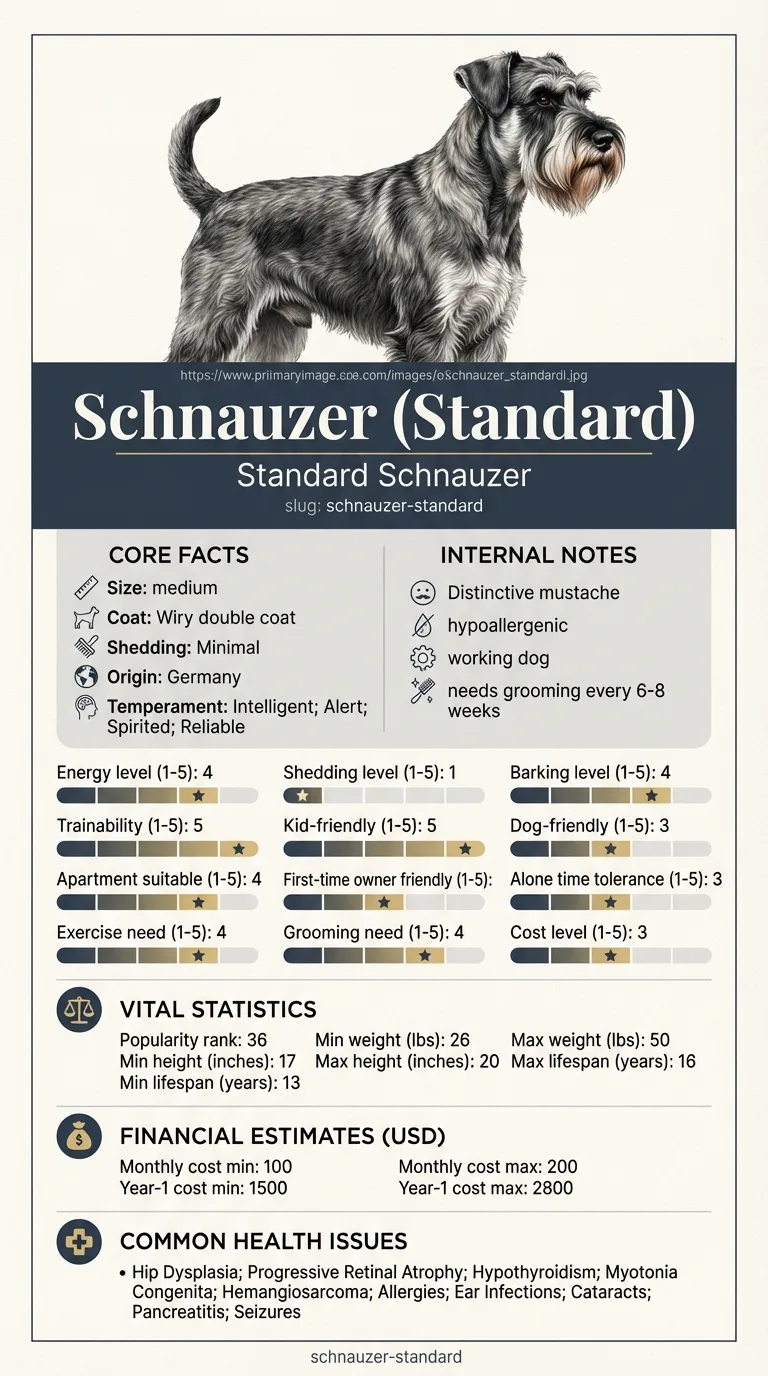
Schnauzer (Standard) Wobbler Syndrome: What You Need to Know infographic

Pet owners, especially those with active Schnauzers, may face this issue. First-time dog owners or those unfamiliar with canine health problems often struggle with recognizing the signs and taking appropriate action.

Important reminder

This guide is not medical advice. If your dog shows pain, sudden behavior change, or worsening symptoms, consult a licensed veterinarian.

Some links may be affiliate links. We may earn a commission at no extra cost to you. We only suggest products we believe are helpful for dog owners.

What this problem looks like

Schnauzer (Standard) wobbler syndrome is a serious condition that affects the neck area, causing wobbling and instability. This can manifest in daily life as difficulty walking, a lack of coordination, or even stumbling. Owners may notice their Schnauzer struggling to stand or move properly, especially during play or exercise.

Common triggers

  • Genetic predisposition
  • Injury or trauma to the neck
  • Age-related degeneration
  • Excessive jumping or rough play

Wobbler syndrome is relatively common in Schnauzers, particularly as they age. While not every Schnauzer will develop this condition, it's important for owners to be aware of its symptoms and seek veterinary advice if they suspect an issue.

Why this happens

Breed factors

Schnauzers (Standard) may inherit a predisposition to wobbler syndrome, which affects the cervical spine. This genetic factor can lead to instability in the vertebrae, resulting in coordination issues and wobbling. Larger breeds, including Standard Schnauzers, are particularly vulnerable due to their size and structure.

Environment factors

Environmental factors, such as obesity and lack of exercise, can exacerbate wobbler syndrome. If your Schnauzer is overweight, the extra weight can put additional stress on their spine. Additionally, rough play or injuries may worsen existing conditions, leading to more noticeable symptoms.

What you can try

At-home strategies

  • Maintain a healthy weight for your Schnauzer by offering a balanced diet and regular exercise. Aim for daily walks and engaging playtime to keep them active.
  • Create a safe environment by removing obstacles that may cause your dog to trip or fall. This can help prevent further injury to their spine.
  • Incorporate gentle stretching and low-impact exercises into their routine. Activities like swimming can be beneficial without putting strain on their joints.

When to consider a trainer

If your Schnauzer is struggling with coordination or exhibiting signs of anxiety due to their condition, a professional trainer can help. Look for trainers experienced with medical issues and behavior problems. They can offer customized training plans to support your dog's needs.

When to talk to your vet

Consult your vet if you notice persistent wobbling or changes in your Schnauzer's behavior. If symptoms worsen or your dog seems to be in pain, seek veterinary advice as soon as possible. They may recommend diagnostic tests or treatments to help manage the condition.

Realistic expectations

Addressing Schnauzer (Standard) wobbler syndrome can take several weeks to months, depending on the severity. Consistent training and veterinary care are crucial.

Success means your Schnauzer shows improved stability and mobility, responding well to training and veterinary recommendations. Reduced symptoms and a happier, more active life for your dog are key indicators.

Mistakes that make this worse

Here are some common mistakes that can worsen Schnauzer (Standard) wobbler syndrome. Avoiding these can help your dog feel better faster.

  • Ignoring early signs of wobbler syndrome: Many owners overlook initial symptoms like neck stiffness or unsteady walking. Early intervention is crucial for effective treatment.
  • Overexerting your dog: Allowing your Schnauzer (Standard) to engage in high-impact activities can worsen their condition. Instead, focus on low-impact exercises that promote mobility without strain.
  • Neglecting a proper diet: Poor nutrition can exacerbate health issues. Opt for a balanced diet that supports joint health and consult your vet for tailored recommendations.
  • Inconsistent training methods: Switching training techniques frequently can confuse your dog and hinder progress. Stick to a consistent training plan that focuses on gentle reinforcement.
  • Avoiding veterinary check-ups: Skipping regular vet visits can delay necessary treatments. Schedule routine check-ups to monitor your dog’s condition and adjust care as needed.
  • Using harsh corrections: Yelling or using physical discipline can increase anxiety and worsen symptoms. Instead, use positive reinforcement to encourage desired behaviors.
  • Failing to provide mental stimulation: Boredom can lead to anxiety or behavioral issues. Engage your Schnauzer (Standard) with puzzle toys and gentle training exercises to keep their mind active.

When Schnauzer (Standard) Wobbler Syndrome Is an Emergency

Recognizing when Schnauzer (Standard) wobbler syndrome requires immediate veterinary attention is crucial. If your dog shows severe symptoms such as sudden loss of coordination, inability to stand, or signs of extreme pain, you should call your vet right away. These red-flag signs can indicate a serious worsening of the condition that needs prompt care.

Milder symptoms, like a slight wobble while walking, can often be monitored at home. If your Schnauzer (Standard) is still eating, drinking, and interacting normally, keep an eye on them for changes. Maintain a plan to manage their activity and ensure a safe environment, especially if they seem unsteady on their feet. Regular check-ins with your vet can help track progression and determine if treatments are needed.

In summary, don’t hesitate to seek immediate help if your dog exhibits any severe symptoms. However, for minor indications of wobbler syndrome, you can typically create a watch-and-wait plan while staying in touch with your vet to monitor their condition. This balanced approach can help ensure your pup stays safe while managing their health effectively.

Schnauzer (Standard) Wobbler Syndrome: What You Need to Know - When Schnauzer (Standard) Wobbler Syndrome Is an Emergency

Emily and Max: Overcoming Wobbler Syndrome

Emily, a busy nurse in Chicago, noticed her Standard Schnauzer, Max, was wobbling and struggling to walk. After a vet diagnosed him with wobbler syndrome, Emily felt overwhelmed. She committed to a structured training plan and followed her vet's advice, which included physical therapy and regular check-ups. Gradually, Max regained his strength and started enjoying walks again. Although it took several months, their bond grew stronger through the process.

Key takeaway: With patience, dedication, and professional support, managing Schnauzer (Standard) wobbler syndrome is possible, leading to a happier life for both you and your dog.

Frequently asked questions

What is Schnauzer (Standard) wobbler syndrome?

Schnauzer (Standard) wobbler syndrome is a condition caused by cervical vertebral instability. It leads to neurological issues like wobbling or lack of coordination in your dog. Early detection and treatment are crucial in managing this syndrome.

Why does my Schnauzer (Standard) have wobbler syndrome?

Wobbler syndrome can be due to genetic predisposition or injury. It often appears in medium to large breeds and may develop as they age. Regular vet check-ups can help catch early signs.

How can I help my Schnauzer (Standard) with wobbler syndrome?

To support your Schnauzer (Standard), ensure they have a comfortable environment with minimal hazards. Consult your vet about potential treatments, which may include medication or surgery. Physical therapy can also be beneficial.

Can wobbler syndrome be treated effectively?

Yes, treatment options for wobbler syndrome vary from conservative management to surgery. The effectiveness largely depends on the severity of the condition. Early intervention typically leads to better outcomes.

What are some common signs of wobbler syndrome in Schnauzers?

Common signs include difficulty walking, wobbly movements, and neck pain. You may also notice changes in behavior, like reluctance to play or climb stairs. If you see these signs, consult your vet promptly.

How can I train a Schnauzer (Standard) with wobbler syndrome?

Training a Schnauzer (Standard) with wobbler syndrome should be gentle and patient. Focus on low-impact activities and use positive reinforcement techniques. Always consult your vet for tailored advice on training.

What are the early signs of Schnauzer (Standard) wobbler syndrome?

Early signs of Schnauzer (Standard) wobbler syndrome can include unsteady gait, difficulty in coordination, and a tendency to stumble. You might also notice your dog having trouble with jumping or climbing stairs. If you observe these symptoms, it's important to consult a veterinarian promptly.

Can wobbler syndrome affect older Schnauzers (Standards)?

Yes, older Schnauzers (Standards) can develop wobbler syndrome as they age. The risk increases due to the wear and tear on their cervical vertebrae. Regular check-ups with your vet can help catch this condition early.

Why does my Schnauzer (Standard) have wobbler syndrome?

Schnauzer (Standard) wobbler syndrome is often caused by cervical vertebral instability, which can be genetic or due to physical stress. It’s important to consider their history and any previous injuries. Consulting with a vet can provide clarity on your dog's specific situation.

What treatment options are available for Schnauzer (Standard) wobbler syndrome?

Treatment options for Schnauzer (Standard) wobbler syndrome may include medication for pain relief, physical therapy, and in severe cases, surgery. Your vet will recommend the best course of action based on the severity of the condition. Always follow your vet’s guidance for the best outcomes.

How can I support my Schnauzer (Standard) with wobbler syndrome at home?

Supporting your Schnauzer (Standard) at home involves creating a safe environment with minimal hazards. Soft bedding, avoiding slippery floors, and gentle exercise can help. Additionally, maintaining regular vet visits for monitoring is crucial.

Quick answers

View more answers
Behavior

What are quick tips for Schnauzer (Standard) wobbler syndrome?

Monitor your Schnauzer's movements closely and keep their environment safe. Regular vet visits are essential for managing the condition. Consider physical therapy as part of their treatment plan.

Costs

How much does it cost to treat Schnauzer (Standard) wobbler syndrome?

Treatment costs for Schnauzer (Standard) wobbler syndrome can range from $500 to $7,000 depending on the severity and type of care needed. It's important to discuss costs with your vet upfront.

Living

How can I help my Schnauzer (Standard) cope with their condition?

Provide a supportive environment with soft bedding and minimize strenuous activities. Gentle, short walks can help maintain mobility without overexertion. Always consult your vet for specific care strategies.

Related DogBreedCompass guides

  • Schnauzer (Standard) behavior problemsUnderstanding common health issues can help you care for your Schnauzer (Standard).
  • Schnauzer (Standard) wobbler syndrome trainingLearn effective training methods to manage wobbler syndrome in your Schnauzer (Standard).
  • Schnauzer (Standard) health care guideExplore general health care tips that specifically address Schnauzer (Standard) needs.
  • Schnauzer (Standard) cost breakdownUnderstand the costs related to caring for a Schnauzer (Standard) with health issues.
  • Schnauzer (Standard) separation anxiety guideFind out how to support your Schnauzer (Standard) during separation anxiety.

Related guides