Living
Which is bigger?
The Rottweiler, by a huge margin — up to 135 lbs versus 18 lbs.

Quick answer
Which is bigger?
The Rottweiler, by a huge margin — up to 135 lbs versus 18 lbs.
Bichon Frise or Rottweiler? On paper they differ most on grooming need, and on the scales Rottweiler is the heavier at 80–135 lbs. Here is how the two compare on everything that shapes an ordinary week.
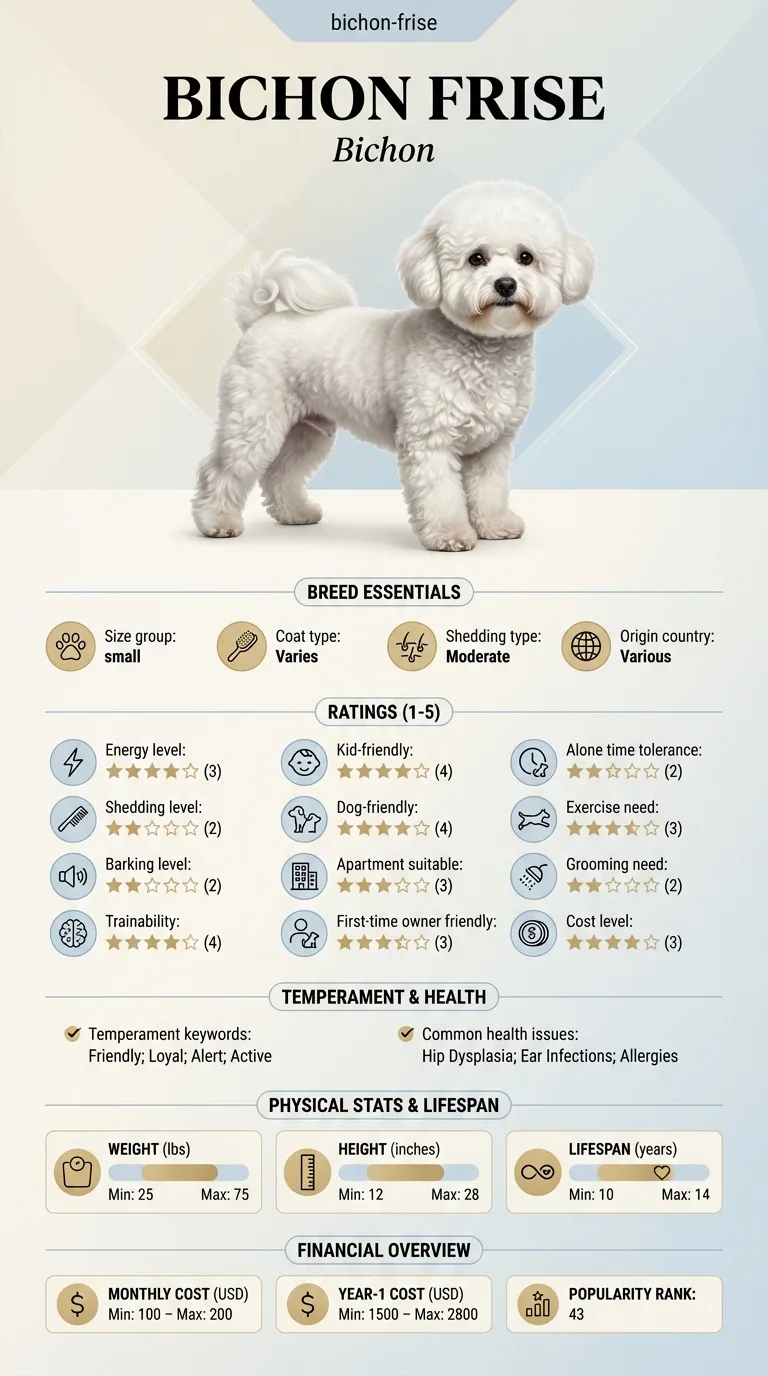
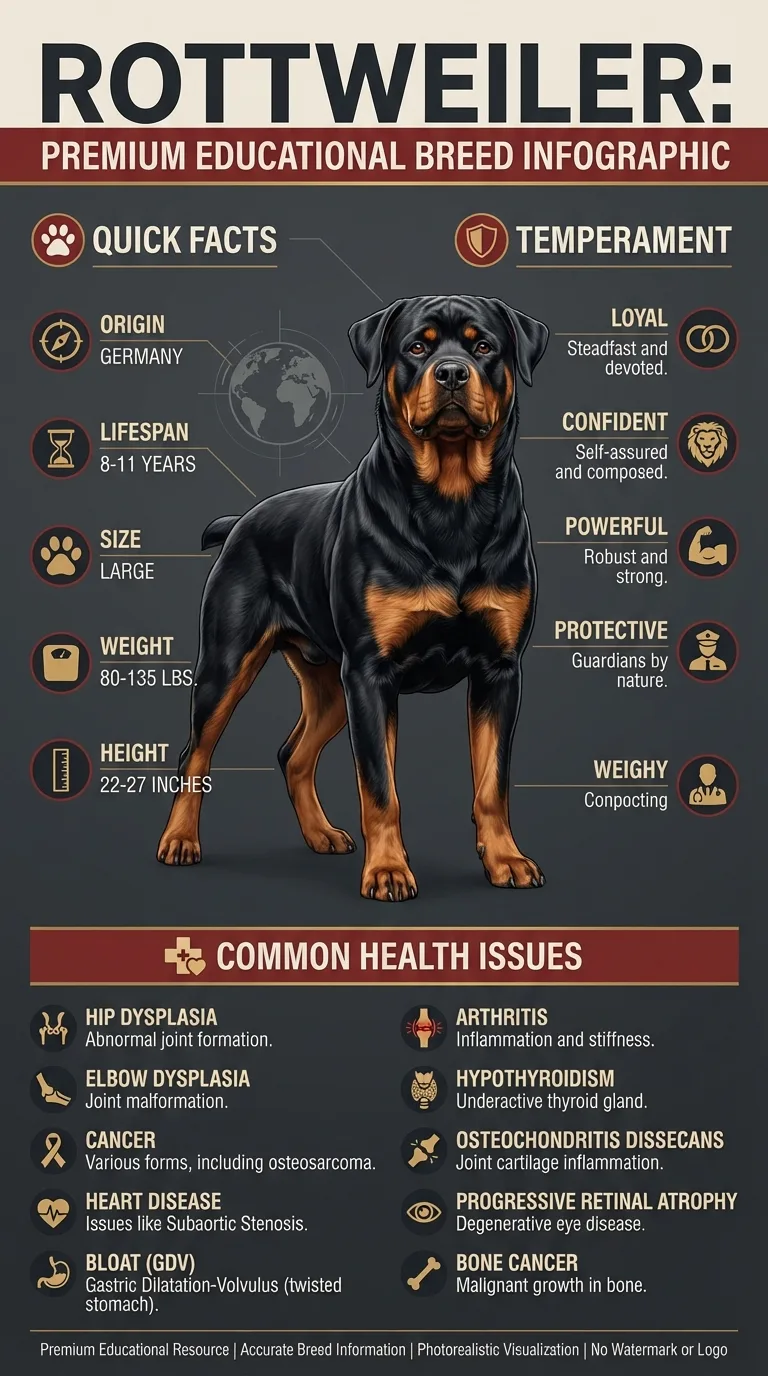
This is for someone already down to Bichon Frise and Rottweiler and deciding between them. For this pair the decision usually turns on grooming need and apartment suitability, so those are covered first and in most detail. Anyone choosing from a flat has a clear answer here: Bichon Frise rates 5/5 against 2/5. The focus throughout is on daily consequences rather than breed background.
Between Bichon Frise and Rottweiler, grooming need is what separates them, and Bichon Frise is the lower-effort dog of the two to keep.
Choose Bichon Frise if you are in a flat or a smaller home, this is your first dog and shedding is a problem in your house.
Choose Rottweiler if you do not want a standing grooming appointment, you want a dog that picks up training quickly and you want a dog that can keep up with an active routine.
| Feature | bichon frise | rottweiler | Winner |
|---|---|---|---|
| Size class | small | large | Equal |
| Weight | 12–18 lbs | 80–135 lbs | Equal |
| Height | 9–12 in | 22–27 in | Equal |
| Lifespan | 14–15 years | 8–11 years | bichon frise |
| Exercise need | Low (2/5) | High (4/5) | bichon frise |
| Grooming need | Very high (5/5) | Low (2/5) | rottweiler |
| Shedding | Very low (1/5) | High (4/5) | bichon frise |
| Energy level | Moderate (3/5) | High (4/5) | Equal |
| Barking | Moderate (3/5) | Moderate (3/5) | Equal |
| Apartment suitability | Very high (5/5) | Low (2/5) | bichon frise |
| Good for first-time owners | High (4/5) | Low (2/5) | bichon frise |
| Tolerates being alone | Low (2/5) | Low (2/5) | Equal |
| Trainability | Moderate (3/5) | High (4/5) | rottweiler |
| Good with kids | High (4/5) | High (4/5) | Equal |
| Good with other dogs | High (4/5) | Moderate (3/5) | bichon frise |
| Friendly to strangers | High (4/5) | Low (2/5) | bichon frise |
| Cost level | Moderate (3/5) | High (4/5) | bichon frise |
| Coat | Curly, dense double coat | Double coat, short | Equal |
| Origin | Various | Germany | Equal |
| Typical monthly cost | $80–$150 | $125–$250 | Equal |
| Typical first-year cost | $1,100–$2,300 | $2,000–$3,500 | Equal |
Scale defines this pairing more than any other trait: the Bichon Frise's 12–18 lbs and 9–12 inch frame sits inside the paw of an 80–135 lb Rottweiler standing 22–27 inches tall. Where the Bichon is built as a fluffy companion dog with a curly, dense double coat, the Rottweiler carries a short, dense double coat over a muscular, Powerful frame historically used for driving cattle and guarding property. Anyone weighing these two side by side is choosing between a dog that can travel in a tote bag and one that needs a reinforced leash, a large crate, and furniture that can withstand real weight.
Exercise need is rated Low (2/5) for the Bichon against High (4/5) for the Rottweiler, and while energy level is scored a tie at Moderate (3/5) versus High (4/5), the daily reality diverges sharply. The Confident, Powerful Rottweiler needs structured daily exercise — long walks, working games, or job-like activity — to avoid boredom-driven destructiveness in a breed strong enough to do real damage when restless. The Bichon's Playful, Curious energy burns off with a couple of short walks and living-room play, making it the far lower-commitment option for anyone without the time for a large working breed's routine.
The grooming picture flips the two breeds' usual size expectations: the small Bichon rates Very high (5/5) grooming need against the much larger Rottweiler's Low (2/5), while shedding runs the opposite direction — Very low (1/5) for the Bichon versus High (4/5) for the Rottweiler. In practice, the Bichon demands frequent brushing and regular professional trims to prevent its dense coat from matting, while the Rottweiler needs only routine brushing but leaves noticeably more hair around the house, especially during seasonal coat blow.
Apartment suitability favors the Bichon decisively, Very high (5/5) against the Rottweiler's Low (2/5), a gap driven by size and exercise need rather than noise — both breeds share a Moderate (3/5) barking rating. Neither tolerates being left alone well, both scored Low (2/5), so long workdays are a poor fit either way. A Rottweiler in a small apartment without a yard or daily structured outlet is a common source of frustration for both dog and owner, while the Bichon adapts comfortably to compact living.
Trainability leans toward the Rottweiler, High (4/5) versus the Bichon's Moderate (3/5), reflecting the breed's working-dog heritage and Loyal, protective drive to work with its handler. But the Bichon is rated far friendlier to first-time owners, High (4/5) against the Rottweiler's Low (2/5) — a large, strong, protective breed requires confident, consistent handling from day one, and inexperienced owners can struggle to manage a Rottweiler's size and guarding instincts even when the dog is fundamentally trainable.
Both breeds score High (4/5) with kids, but the rest of the household profile diverges: the Bichon rates High (4/5) with other dogs and High (4/5) with strangers thanks to its Cheerful, Affectionate nature, while the Rottweiler drops to Moderate (3/5) with other dogs and Low (2/5) with strangers, consistent with its Protective, Watchful temperament. Families that host frequently or want a dog that welcomes every visitor will find the Bichon far less work to manage socially than a Rottweiler, which needs deliberate socialization to be reliably comfortable around unfamiliar people and dogs.
The lifespan gap is stark — 14–15 years for the Bichon against just 8–11 years for the Rottweiler — and the health lists explain part of why. The Bichon's five concerns (Skin Allergies, Patellar Luxation, Bladder Stones, Cataracts, Dental Disease) are typical small-breed issues, while the Rottweiler's ten-item list includes Cancer, Bone Cancer, Heart Disease, and Bloat (GDV) alongside joint conditions like Hip and Elbow Dysplasia — cancer in particular is a well-documented, serious risk in the breed that shortens many Rottweilers' lives well before old age.
Cost level runs Moderate (3/5) for the Bichon versus High (4/5) for the Rottweiler, and the numbers back it up: $80–$150 monthly and $1,100–$2,300 in year one for the Bichon against $125–$250 monthly and $2,000–$3,500 for the Rottweiler. Larger food portions, bigger-dose medications, higher-capacity gear, and the potential for expensive cancer or orthopedic treatment later in life all push the Rottweiler's lifetime cost meaningfully higher than the Bichon's.
Bichon Frise weighs 12–18 lbs and lives 14–15 years; Rottweiler weighs 80–135 lbs and lives 8–11 years. The two diverge most on grooming need, apartment suitability and shedding and 3 other rated axes. They are level on tolerates being alone, barking and good with kids, so those cannot decide it. The table below marks a winner only where one breed is genuinely easier for a typical owner; size and origin are facts rather than merits and stay level. Ratings come from one source applied to both breeds, so they are meaningful against each other rather than as absolute scores.

Rated Low (2/5) for first-time owners versus the Bichon's High (4/5) — a Rottweiler's size, strength, and protective instincts call for an owner with prior experience in confident handling and early socialization.
About four to six years longer — 14–15 years versus 8–11 years — largely because Rottweilers carry a higher documented risk of cancer and other serious large-breed conditions.
Yes, rated High (4/5) shedding versus the Bichon's Very low (1/5), despite having a shorter coat.
The Rottweiler, rated Low (2/5) grooming versus Very high (5/5) for the Bichon's dense double coat.
Yes, rated High (4/5) with kids — the same rating as the Bichon — though its Low (2/5) friendliness to strangers means visiting children's friends need proper introductions.
The Bichon, at $1,100–$2,300 in year one versus $2,000–$3,500 for the Rottweiler, roughly 60% more.
It's possible but harder — rated Low (2/5) apartment suitability against the Bichon's Very high (5/5) — a Rottweiler in a small space needs a serious daily exercise commitment to stay content.
The Rottweiler, by a huge margin — up to 135 lbs versus 18 lbs.
The Rottweiler, rated Protective and Watchful with lower stranger-friendliness.
The Rottweiler, rated High (4/5) versus Low (2/5).
The Bichon Frise, 14–15 years versus 8–11 years.
Secure checkout on Stripe. We never see your card.
7-day money-back guarantee. Instant access.

Health information here is general and is not veterinary advice. If your dog shows pain, sudden behaviour change, or worsening symptoms, consult a licensed veterinarian.
Some links on this site are affiliate links. We may earn a commission at no extra cost to you, and we only suggest products we believe are helpful for dog owners.
We research and check what we publish, but we do not warrant that any figure, date, price, or statement is accurate, complete, or current, and we accept no liability for any loss, cost, injury, or other harm arising from the use of this site. Use it as one reference among several. You remain responsible for your own decisions and for your dog's care - confirm anything that matters with a licensed veterinarian or another qualified professional before you act on it. Full disclaimer.
Match your lifestyle to the right dog.
Take quizNot sure which breed is right for you? Take our 2-minute quiz to find out.
Take the quiz