Behavior
What are quick tips for managing Labradoodle wobbler syndrome?
Keep your Labradoodle's weight in check, limit high-impact activities, and schedule regular vet visits for monitoring. Early detection and management can make a big difference.

Quick answer
What are quick tips for managing Labradoodle wobbler syndrome?
Keep your Labradoodle's weight in check, limit high-impact activities, and schedule regular vet visits for monitoring. Early detection and management can make a big difference.
Labradoodle wobbler syndrome is a serious condition that affects your dog's mobility and quality of life. Understanding this syndrome is crucial for any Labradoodle owner.
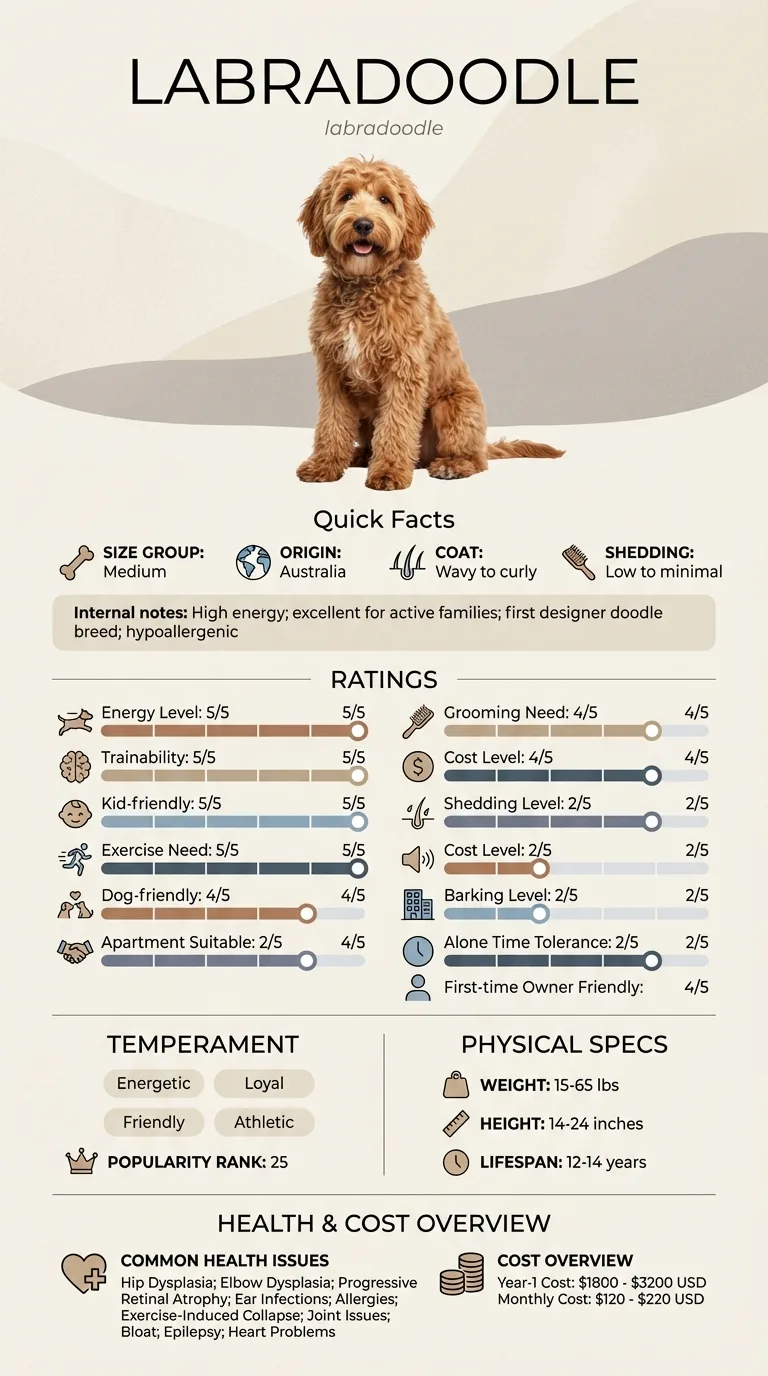
Owners of Labradoodles, especially those who are first-time dog parents, often find themselves facing the challenges of wobbler syndrome. This can be particularly distressing for busy families or individuals who may not be familiar with common canine health issues.
This guide is not medical advice. If your dog shows pain, sudden behavior change, or worsening symptoms, consult a licensed veterinarian.
Some links may be affiliate links. We may earn a commission at no extra cost to you. We only suggest products we believe are helpful for dog owners.
We research and check what we publish, but we do not warrant that any figure, date, price, or statement is accurate, complete, or current, and we accept no liability for any loss, cost, injury, or other harm arising from the use of this site. Use it as one reference among several. You remain responsible for your own decisions and for your dog's care - confirm anything that matters with a licensed veterinarian or another qualified professional before you act on it. Full disclaimer.
Check this first
It's crucial to recognize when Labradoodle wobbler syndrome becomes an emergency. Signs indicating immediate veterinary attention include severe neck pain, inability to walk or stand, or sudden changes in behavior like aggression or excessive whining. If your dog shows any of these symptoms, call your vet right away.
On the other hand, mild cases can usually be monitored before seeking help. If your Labradoodle is wobbling slightly while walking but still able to move around and seems to be in good spirits, keep an eye on them. You can track their behavior and set up a plan to manage their condition through training and lifestyle adjustments.
Watch for signs like mild wobbling, occasional stumbling, or slight reluctance to jump. If these symptoms persist or worsen, it's time to consult your vet for further evaluation.
If any of these apply, call your vet or an emergency clinic now. The rest of this page is for the cases that are not an emergency.
Labradoodle wobbler syndrome is a health issue that affects a dog's ability to walk steadily. Owners may notice their Labradoodle wobbling, having difficulty with coordination, or even showing signs of pain. This condition can lead to serious mobility challenges if not addressed early.
Wobbler syndrome is relatively common in Labradoodles, particularly in older dogs. While not every Labradoodle will experience this issue, it's important to be aware of the signs and consult a vet if you notice wobbly movements.
Labradoodles can be genetically predisposed to issues like wobbler syndrome due to their mixed breed lineage. This condition often stems from defects in the cervical vertebrae, which can affect balance and coordination. The breed's size and structure may also contribute to their vulnerability.
Environmental factors like a lack of exercise or improper nutrition can exacerbate wobbler syndrome. Overweight Labradoodles are particularly at risk, as additional weight puts extra strain on their joints. Additionally, high-impact activities without proper conditioning can lead to injuries that trigger or worsen the syndrome.
If your Labradoodle exhibits severe symptoms such as persistent wobbling, difficulty walking, or signs of pain, it’s essential to consult your vet. They can diagnose the severity of the condition and recommend treatment options, which may include medication or surgery.
Avoiding common mistakes can help improve your Labradoodle's wobbler syndrome. Here are some behaviors to watch out for and safer alternatives.
Start here: Labradoodle Most Common Genetic Disorders: Screening
See all Labradoodle health problems, which breeds are prone to wobbler syndrome, or the full Labradoodle breed guide for temperament, exercise needs and ownership costs.
Expect to see improvements in your Labradoodle's condition within 3 to 6 months with consistent care and management.
Success means your Labradoodle can move more freely, shows reduced wobbling, and enjoys daily activities without discomfort.
Emily, a busy nurse in Seattle, noticed her Labradoodle Max started wobbling while walking. At first, she thought it was just a quirk, but it soon became clear that Max was struggling. After a vet visit, Emily learned that Max had Labradoodle wobbler syndrome. Determined to help him, she committed to a structured training program focusing on strength and balance exercises. Over the next few months, with regular vet check-ups and tailored activities, Max showed remarkable improvement. He regained much of his mobility and was able to enjoy his favorite park visits again. Emily felt relieved and grateful for the support she received.
Key takeaway: With dedication and the right training approach, managing Labradoodle wobbler syndrome can lead to significant improvements in your dog's quality of life.
Labradoodle wobbler syndrome is a condition caused by cervical vertebral instability. This can lead to neck pain, coordination issues, and overall discomfort in your dog. It's essential to identify the symptoms early to manage the condition effectively.
While you can't completely prevent wobbler syndrome, early intervention is key. Regular vet check-ups, maintaining a healthy weight, and providing low-impact exercise can help manage symptoms. Consult your vet for a tailored plan.
Treatment options for Labradoodle wobbler syndrome range from conservative management, like physical therapy, to surgical interventions in severe cases. Your vet will assess your dog's condition to recommend the best approach.
Yes, training should focus on gentle commands and low-impact activities to avoid strain. Positive reinforcement can help your Labradoodle learn without exacerbating any discomfort. Always consult with a trainer experienced in handling special needs dogs.
Yes, older Labradoodles can develop wobbler syndrome. As they age, their cervical vertebrae may become unstable, leading to mobility issues. Regular check-ups with your vet can help catch these problems early.
Not always. Surgery may be recommended for severe cases, but some dogs respond well to physical therapy and medication. Your vet will help determine the best course of action based on your dog's specific needs.
You can help by providing a comfortable, supportive environment. Ensure they have easy access to food and water, and consider gentle exercises to maintain mobility. Always follow your vet's advice for the best care.
Yes, positive reinforcement training can be beneficial for Labradoodles with wobbler syndrome. Focus on low-impact activities that don't strain their neck and back, and always prioritize their comfort and safety during training sessions.
Keep your Labradoodle's weight in check, limit high-impact activities, and schedule regular vet visits for monitoring. Early detection and management can make a big difference.
Treatment costs can vary widely, ranging from $500 to $7,000 depending on the severity and type of treatment needed. It's essential to budget for potential expenses.
Look for signs like neck pain, wobbling when walking, or difficulty in coordination. If you notice these symptoms, consult your vet immediately.
A one-page prep sheet for this condition: the signs, the questions to ask, what to get priced. Unlocks here.
You get: Vet visit prep sheet
No spam. One-click unsubscribe. See our privacy policy.
Preview page 1 before you decide.