Living
Which is bigger, Bichon Frise or Shar-Pei?
The Shar-Pei, at 45-60 lbs versus the Bichon's 12-18 lbs.

Quick answer
Which is bigger, Bichon Frise or Shar-Pei?
The Shar-Pei, at 45-60 lbs versus the Bichon's 12-18 lbs.
Bichon Frise or Chinese Shar-Pei? On paper they differ most on grooming need, and on the scales Chinese Shar-Pei is the heavier at 45–60 lbs. Here is how the two compare on everything that shapes an ordinary week.
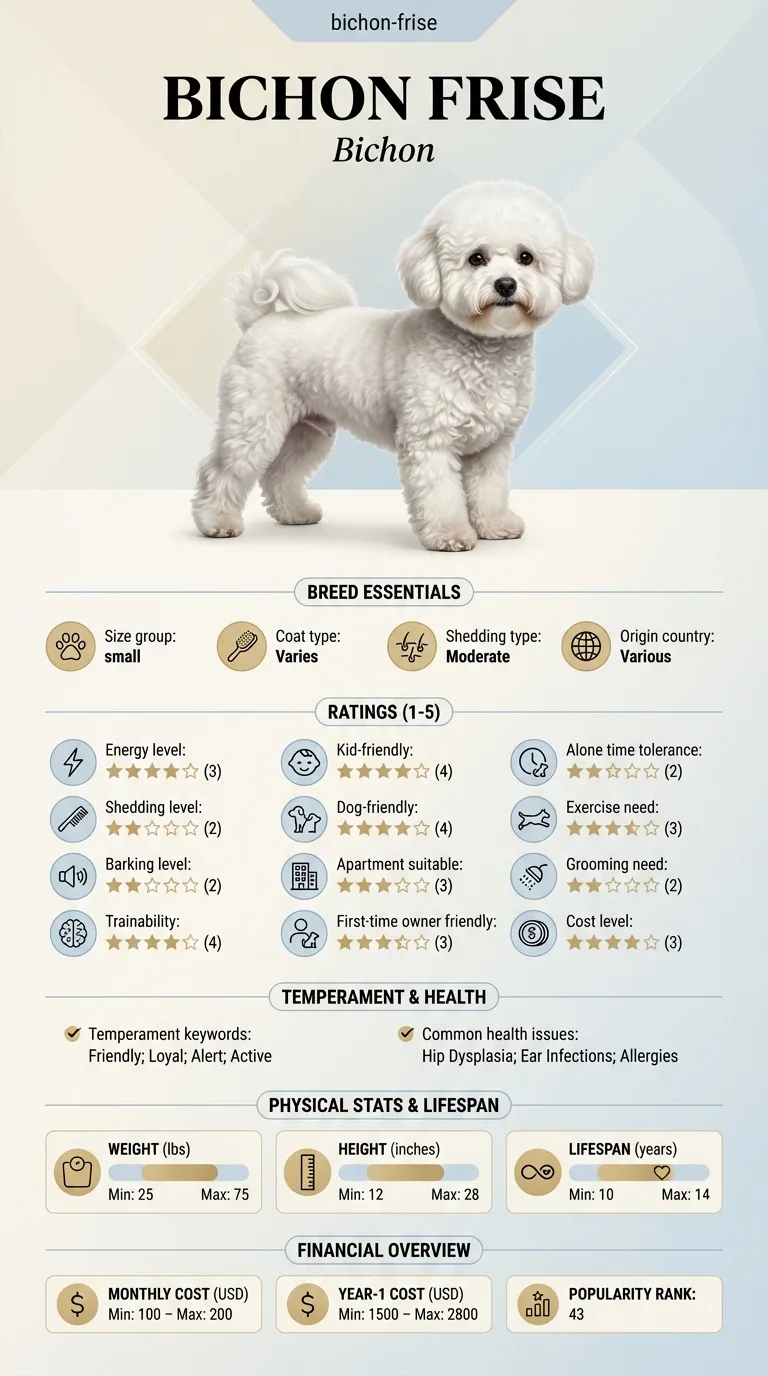
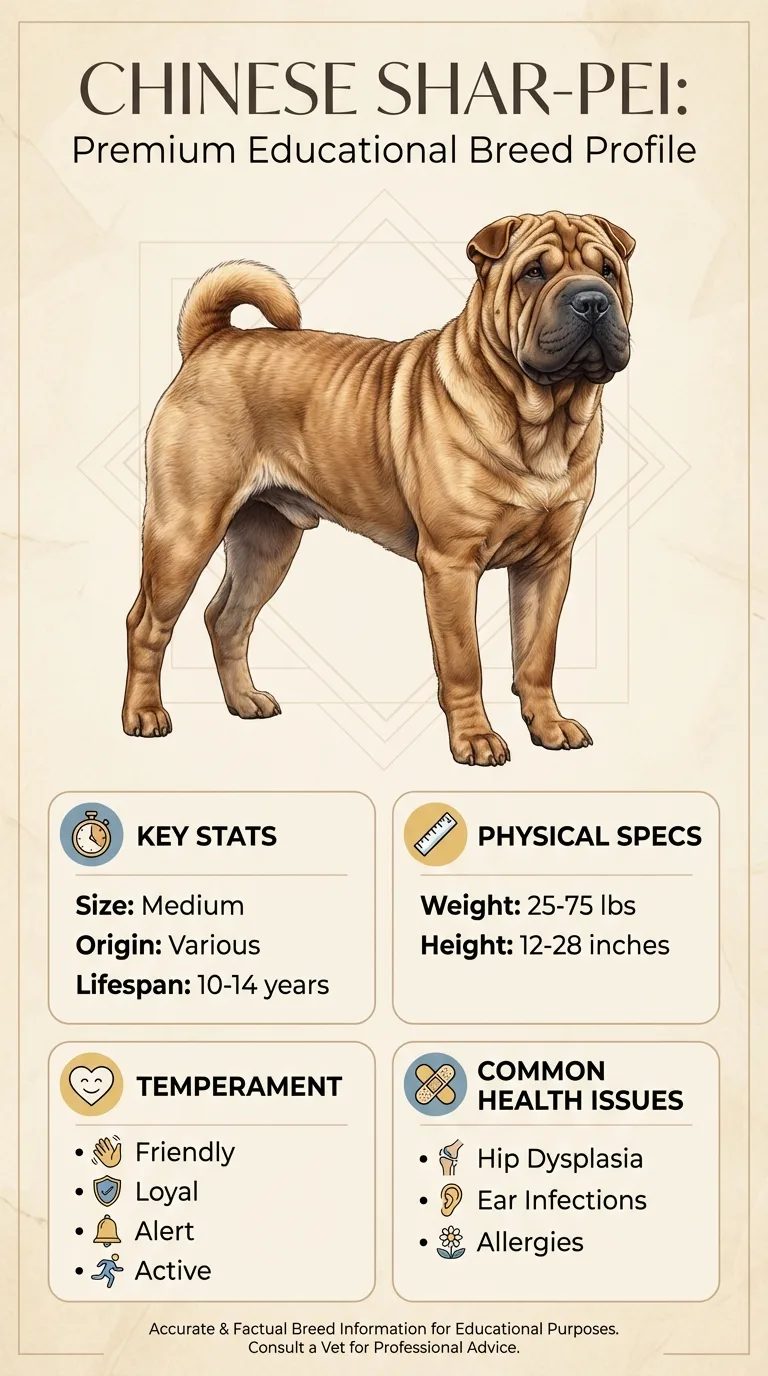
This is for someone already down to Bichon Frise and Chinese Shar-Pei and deciding between them. For this pair the decision usually turns on grooming need and good for first-time owners, so those are covered first and in most detail. Anyone choosing from a flat has a clear answer here: Bichon Frise rates 5/5 against 4/5. The focus throughout is on daily consequences rather than breed background.
Between Bichon Frise and Chinese Shar-Pei, grooming need is what separates them, and Chinese Shar-Pei is the lower-effort dog of the two to keep.
Choose Bichon Frise if you are in a flat or a smaller home, this is your first dog and shedding is a problem in your house.
Choose Chinese Shar-Pei if you do not want a standing grooming appointment, the dog will be alone during the working day and you want a dog that is more watchful with visitors.
| Feature | bichon frise | chinese shar pei | Winner |
|---|---|---|---|
| Size class | small | medium | Equal |
| Weight | 12–18 lbs | 45–60 lbs | Equal |
| Height | 9–12 in | 18–20 in | Equal |
| Lifespan | 14–15 years | 8–12 years | bichon frise |
| Exercise need | Low (2/5) | Low (2/5) | Equal |
| Grooming need | Very high (5/5) | Low (2/5) | chinese shar pei |
| Shedding | Very low (1/5) | Low (2/5) | bichon frise |
| Energy level | Moderate (3/5) | Low (2/5) | Equal |
| Barking | Moderate (3/5) | Low (2/5) | chinese shar pei |
| Apartment suitability | Very high (5/5) | High (4/5) | bichon frise |
| Good for first-time owners | High (4/5) | Low (2/5) | bichon frise |
| Tolerates being alone | Low (2/5) | Moderate (3/5) | chinese shar pei |
| Trainability | Moderate (3/5) | Low (2/5) | bichon frise |
| Good with kids | High (4/5) | Moderate (3/5) | bichon frise |
| Good with other dogs | High (4/5) | Low (2/5) | bichon frise |
| Friendly to strangers | High (4/5) | Low (2/5) | bichon frise |
| Cost level | Moderate (3/5) | High (4/5) | bichon frise |
| Coat | Curly, dense double coat | Short and harsh | Equal |
| Origin | Various | Various | Equal |
| Typical monthly cost | $80–$150 | $100–$200 | Equal |
| Typical first-year cost | $1,100–$2,300 | $1,400–$2,900 | Equal |
The Chinese Shar-Pei is considerably larger and heavier than the Bichon Frise: 45-60 lbs and 18-20 inches versus the Bichon's 12-18 lbs and 9-12 inches, roughly three to four times the weight. Both tie on size class formatting despite the real gap. The Shar-Pei's short, harsh coat and famously wrinkled skin give it a completely different physical presence than the Bichon's soft, curly double coat, those characteristic folds aren't just cosmetic, they factor directly into the grooming and health considerations covered further down.
Exercise need ties at Low (2/5) for both breeds, and energy level is listed as a tie despite the Bichon rating Moderate (3/5) against the Shar-Pei's Low (2/5), in practice, the Shar-Pei is the more low-key of the two, with a Calm, Reserved temperament that suits a quieter household. Neither breed needs vigorous daily exercise, making this one of the more evenly matched pairs on activity level, though the Shar-Pei's independent streak means it's less likely to seek out play the way the Playful Bichon does.
The Bichon Frise's Very high (5/5) grooming need is substantially steeper than the Shar-Pei's Low (2/5) for its short, harsh coat, no trims or elaborate brushing required. Shedding favors the Bichon slightly, Very low (1/5) versus Low (2/5). But coat care isn't the Shar-Pei's only maintenance concern: its skin folds need regular cleaning to prevent Skin Fold Dermatitis, which appears at the top of its health list, so low grooming shouldn't be read as no maintenance for this particular breed.
The Bichon Frise edges ahead on apartment suitability, Very high (5/5) versus the Shar-Pei's still-solid High (4/5), a large but low-energy, Reserved breed like the Shar-Pei can adapt reasonably well to compact living. Barking favors the Shar-Pei, Low (2/5) against the Bichon's Moderate (3/5), fitting its generally quiet, watchful temperament. The Shar-Pei also tolerates being alone slightly better, Moderate (3/5) versus the Bichon's Low (2/5), consistent with its more Independent nature compared to the Bichon's higher attachment needs.
The Bichon Frise leads clearly on both first-time-owner suitability (High 4/5 vs. Low 2/5) and trainability (Moderate 3/5 vs. Low 2/5). The Shar-Pei's Independent, Reserved temperament is a double-edged sword: it's not a breed that seeks out constant direction from its owner, which can read as stubbornness during training, and its wariness toward strangers means early, consistent socialization matters more than with the naturally outgoing Bichon. A first-time owner will generally find the Bichon the more straightforward dog to raise and train.
The gap here is substantial: Bichon Frise rates High (4/5) with kids against the Shar-Pei's Moderate (3/5), High (4/5) with other dogs against the Shar-Pei's Low (2/5), and High (4/5) friendliness to strangers against the Shar-Pei's Low (2/5). The Shar-Pei's Loyal, Reserved temperament reflects its history as a guarding and hunting breed bred to be watchful of outsiders rather than universally sociable, a trait that makes early socialization especially important for households that expect regular visitors, other pets, or dog-park outings.
The Bichon Frise's 14-15 year lifespan clearly outpaces the Shar-Pei's 8-12 years. The Shar-Pei's five-item health list is short but distinctive: Skin Fold Dermatitis and Entropion both relate directly to its wrinkled skin and facial structure, while Familial Shar-Pei Fever is a breed-specific hereditary condition that prospective owners should ask breeders about directly. The Bichon's five-item list (Skin Allergies, Patellar Luxation, Bladder Stones, Cataracts, Dental Disease) is comparably short but doesn't carry a named hereditary fever condition unique to the breed.
The Shar-Pei costs more to keep: High (4/5) cost level against the Bichon's Moderate (3/5), with monthly costs of $100-200 versus $80-150 and first-year costs of $1,400-2,900 versus $1,100-2,300. Some of that premium reflects the Shar-Pei's larger size and greater food needs, but skin fold care and monitoring for Familial Shar-Pei Fever likely add recurring veterinary costs too. The Bichon's grooming bills partially close the gap but the Shar-Pei still runs meaningfully higher across both monthly and first-year cost ranges.
Bichon Frise weighs 12–18 lbs and lives 14–15 years; Chinese Shar-Pei weighs 45–60 lbs and lives 8–12 years. The two diverge most on grooming need, good for first-time owners and good with other dogs and 1 other rated axes. Almost every rated axis separates them at least slightly. The table below marks a winner only where one breed is genuinely easier for a typical owner; size and origin are facts rather than merits and stay level. Ratings come from one source applied to both breeds, so they are meaningful against each other rather than as absolute scores.

It's a hereditary condition specific to the Chinese Shar-Pei that appears on its health list, a breed-specific risk the Bichon Frise doesn't share, worth discussing directly with any breeder.
The Bichon Frise, rated High (4/5) versus the Shar-Pei's Low (2/5), the Shar-Pei's Reserved temperament makes it naturally more watchful around unfamiliar people.
Their coat itself needs little care, rated Low (2/5), but their characteristic skin folds require regular cleaning to prevent Skin Fold Dermatitis, which tops their health list.
The Bichon Frise, typically 14-15 years, versus the Shar-Pei's 8-12 years.
Not ideally, it rates Low (2/5) for first-time-owner suitability, versus the Bichon Frise's High (4/5), largely due to its Independent, Reserved temperament and socialization needs.
The Shar-Pei, rated Low (2/5) for barking versus the Bichon Frise's Moderate (3/5).
The Shar-Pei, with a typical first-year cost of $1,400-2,900 versus the Bichon Frise's $1,100-2,300.
The Shar-Pei, at 45-60 lbs versus the Bichon's 12-18 lbs.
The Bichon Frise, at 14-15 years versus the Shar-Pei's 8-12 years.
The Bichon Frise, rated High (4/5) versus the Shar-Pei's Low (2/5).
The Shar-Pei, rated Low (2/5) versus the Bichon's Very high (5/5).
Secure checkout on Stripe. We never see your card.
7-day money-back guarantee. Instant access.
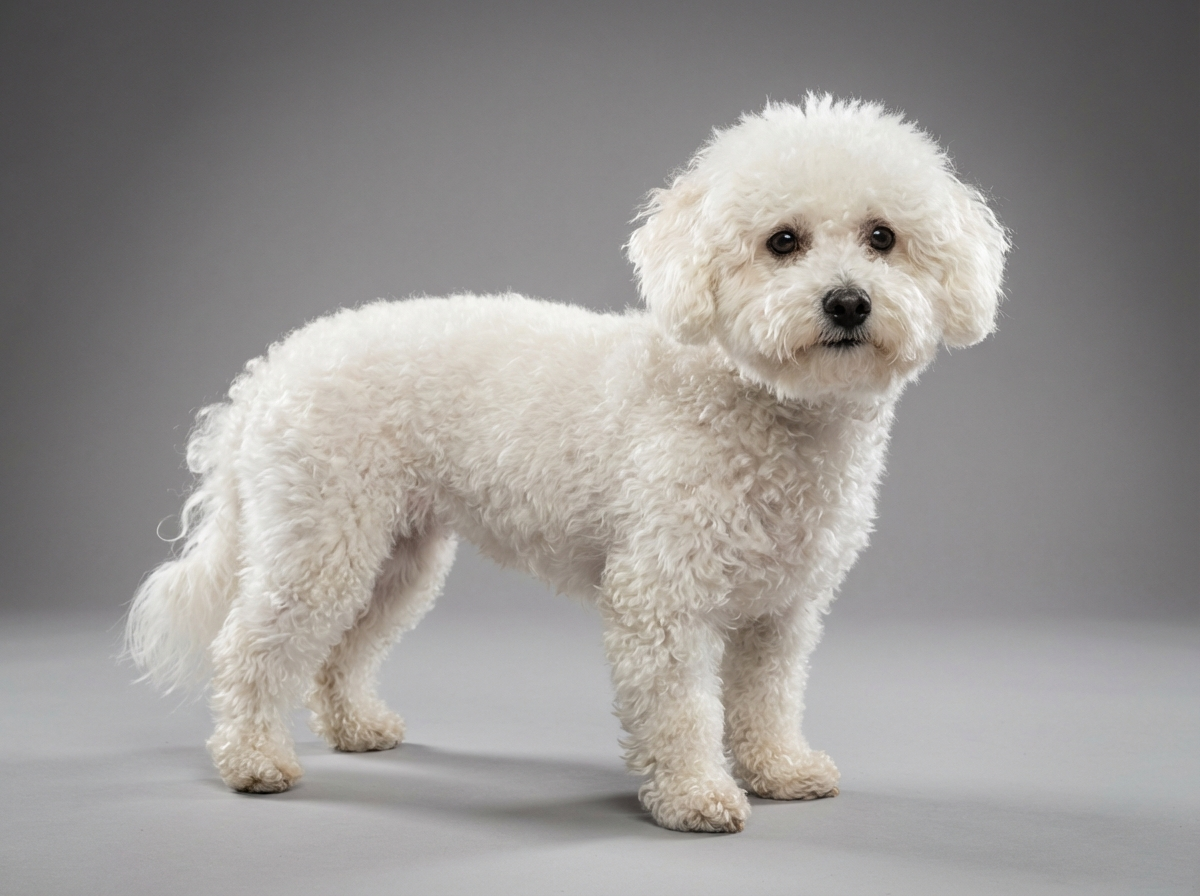
Health information here is general and is not veterinary advice. If your dog shows pain, sudden behaviour change, or worsening symptoms, consult a licensed veterinarian.
Some links on this site are affiliate links. We may earn a commission at no extra cost to you, and we only suggest products we believe are helpful for dog owners.
We research and check what we publish, but we do not warrant that any figure, date, price, or statement is accurate, complete, or current, and we accept no liability for any loss, cost, injury, or other harm arising from the use of this site. Use it as one reference among several. You remain responsible for your own decisions and for your dog's care - confirm anything that matters with a licensed veterinarian or another qualified professional before you act on it. Full disclaimer.
Match your lifestyle to the right dog.
Take quizNot sure which breed is right for you? Take our 2-minute quiz to find out.
Take the quiz