Health
What is reverse sneezing?
A brief throat spasm causing rapid snorting inhalations. It sounds alarming, lasts under half a minute, and the dog is normal immediately afterwards.

Quick answer
What is reverse sneezing?
A brief throat spasm causing rapid snorting inhalations. It sounds alarming, lasts under half a minute, and the dog is normal immediately afterwards.
Most owners who search for a flat-faced airway disorder are not really asking about anatomy. They are asking why their dog has started making a noise she did not used to make.
Owners kept awake by a dog who has recently started snoring loudly. People whose Sheltie occasionally has terrifying-sounding snorting fits that stop as suddenly as they start. Anyone whose older dog has developed a rasping noise on walks.
This guide is not medical advice. If your dog shows pain, sudden behavior change, or worsening symptoms, consult a licensed veterinarian.
Some links may be affiliate links. We may earn a commission at no extra cost to you. We only suggest products we believe are helpful for dog owners.
We research and check what we publish, but we do not warrant that any figure, date, price, or statement is accurate, complete, or current, and we accept no liability for any loss, cost, injury, or other harm arising from the use of this site. Use it as one reference among several. You remain responsible for your own decisions and for your dog's care - confirm anything that matters with a licensed veterinarian or another qualified professional before you act on it. Full disclaimer.
Noisy breathing in a long-muzzled dog is a symptom rather than a syndrome. The sound tells you roughly where the problem sits: snorting bursts point to the back of the throat, continuous rasping on inhalation to the larynx, snoring at rest to the nasal chamber or soft tissues, and a honking cough to the windpipe. Because the Shetland Sheepdog has none of the fixed anatomical obstruction that defines flat-faced breeds, a new noise here means something has changed and is worth explaining.
Flat-faced airway syndrome does not occur in this breed. Reverse sneezing, by contrast, is extremely common across all small and medium dogs and is what most Sheltie owners are actually witnessing. Genuine nasal disease is much less frequent but is over-represented in long-nosed breeds compared with short-nosed ones, which is the one respiratory area where this conformation carries a real cost.
The Shetland Sheepdog's long, tapered head provides a large nasal chamber with extensive turbinate surface. That is excellent for scenting and for conditioning inhaled air, and it also gives inhaled material more places to lodge and gives fungal and neoplastic disease more tissue to affect. Long-nosed breeds are recognised as over-represented for nasal disease relative to flat-faced ones, which is the direct trade-off of this conformation. Body size is a minor factor: at 15 to 25 pounds the airway is small in absolute terms, so modest swelling produces audible noise sooner than it would in a large dog.
Season and terrain drive most of it. Summer stubble and seeding grasses are the classic source of inhaled foreign bodies, and a herding dog working nose-down through them is the classic patient. Dust, aerosols, smoke and household cleaning sprays irritate the nasopharynx and trigger reverse sneezing bouts. Cold air and sudden temperature changes do the same. Collar pressure in a dog that pulls irritates both the throat and the windpipe, which is why lead equipment is worth reviewing when a noise appears.
Go to an emergency hospital immediately for blue or grey gums, open-mouth breathing at rest that does not settle, a dog bracing her elbows and extending her neck to breathe, or collapse. In hot weather, a dog with a rasping inhalation who becomes distressed is a heat emergency and needs cooling on the way in. Book an urgent appointment for sudden violent sneezing after a summer walk, for discharge or bleeding from one nostril, for a swelling below an eye, or for a change in the sound of your dog's bark. Book routinely for new or worsening snoring, for occasional snorting fits that are increasing in frequency, and for any noise that has appeared over recent months in a middle-aged or older dog.
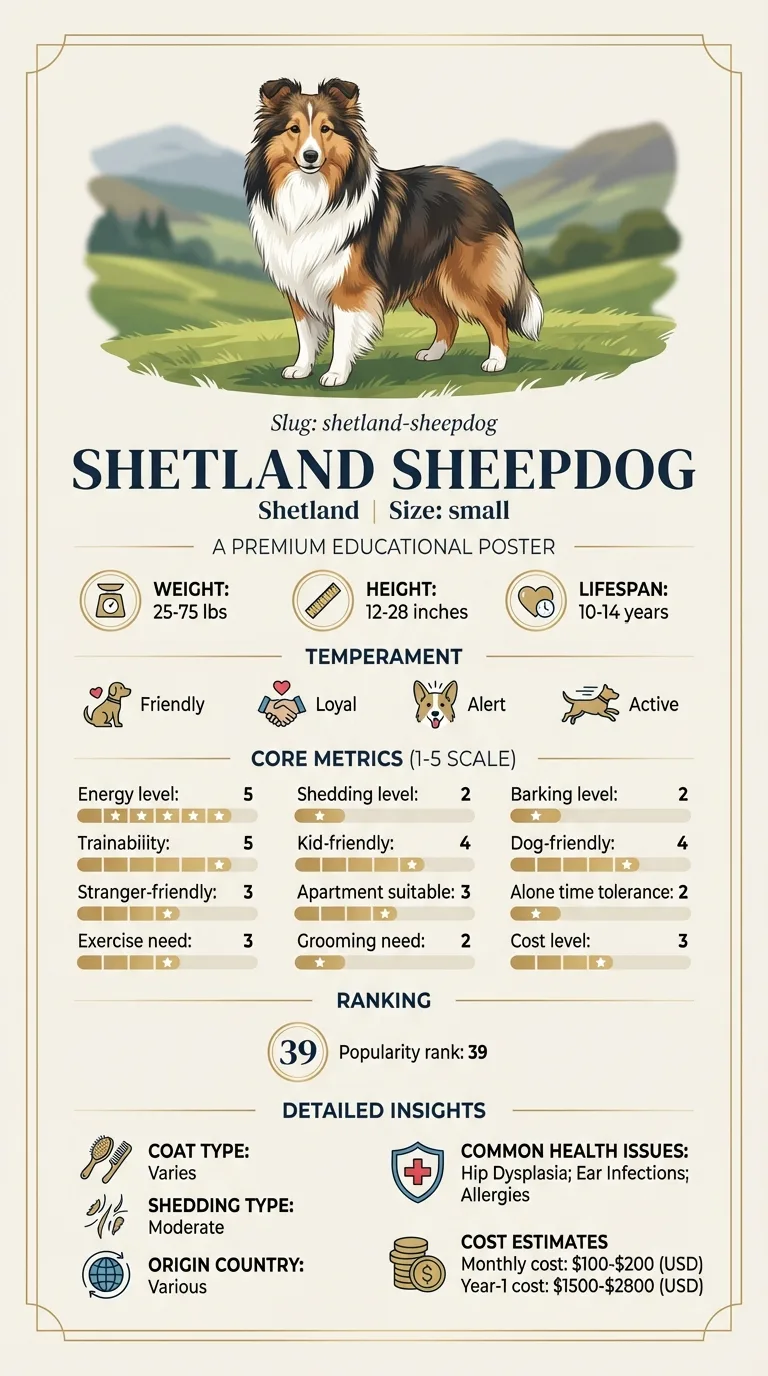
See all Shetland Sheepdog health problems, which breeds are prone to brachycephalic obstructive airway syndrome boas, or the full Shetland Sheepdog breed guide for temperament, exercise needs and ownership costs.
Reverse sneezing needs no treatment and does not resolve because there is nothing to resolve. Grass seeds are dealt with in a single procedure. Nasal disease investigations typically run two to four weeks from first appointment to diagnosis. Laryngeal problems are managed long term and monitored across seasons.
An owner who can tell the difference between a harmless snorting fit and a noise that means something, who acts fast on one-sided discharge, and whose dog breathes quietly at rest. In most cases success is confident reassurance rather than treatment.
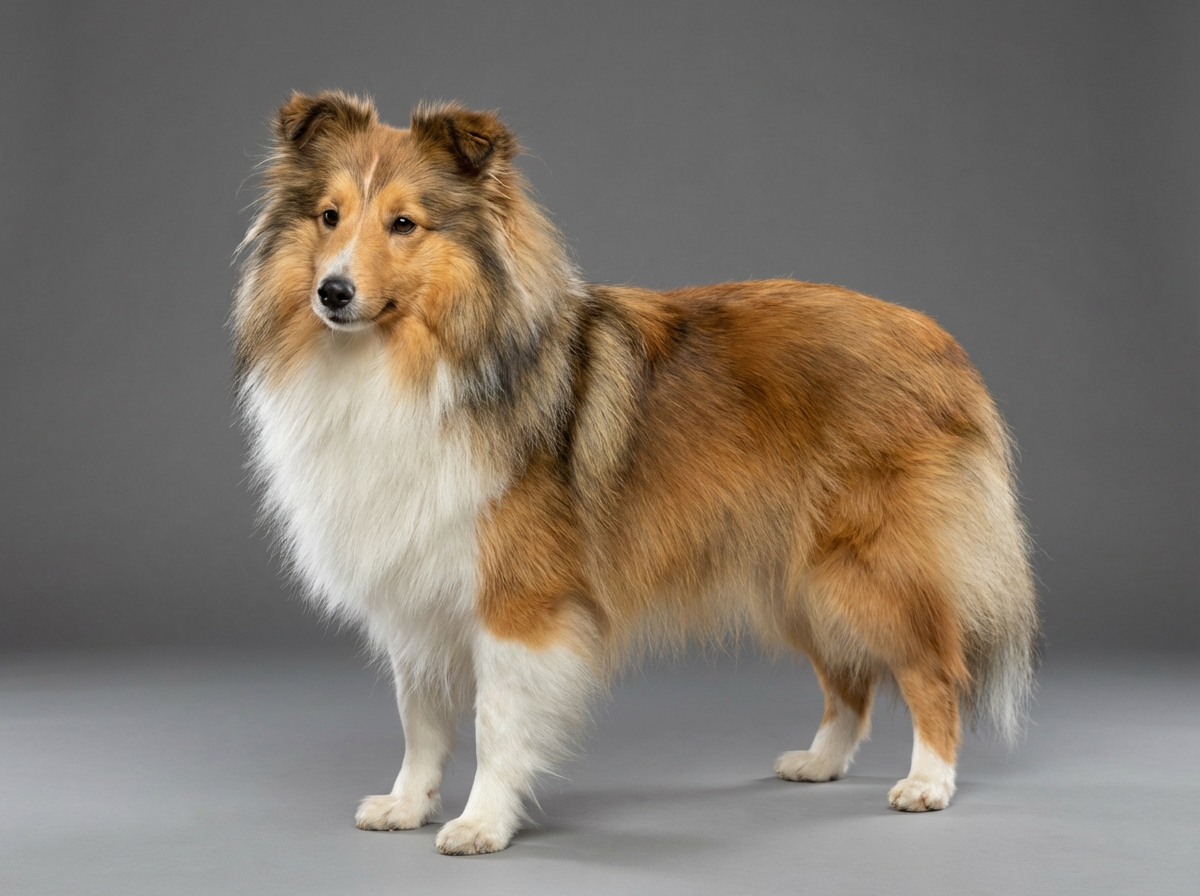
The single most common reason a Sheltie owner panics about breathing is the reverse sneeze. The dog stops, extends her neck, plants her elbows and makes a series of rapid, violent snorting inhalations that sound as though she cannot get air in. It lasts between five and thirty seconds and then stops completely, and the dog carries on as though nothing happened.
What is actually happening is a spasm of the muscles at the back of the throat, usually triggered by irritation of the soft palate or the nasopharynx: dust, pollen, a sudden change in temperature, excitement, or pulling against a collar. It is not an airway obstruction and the dog is getting air throughout. Gently stroking the throat or briefly covering the nostrils to encourage a swallow often shortens an episode, though most stop on their own.
The reason to know this is that owners who do not, sometimes drive to an emergency hospital for it, and owners who do, sometimes dismiss something that is not a reverse sneeze. The distinguishing features are the abruptness, the complete normality afterwards, and the fact that it happens on the inhale rather than as coughing. If your dog has episodes that leave her tired, that occur many times a day, or that are becoming more frequent over weeks, that is a different picture and needs examination.
One more distinction worth holding. A reverse sneeze is a burst. A dog who makes a continuous rasping noise on every breath in, particularly during exercise or hot weather, may have a laryngeal problem, which is a genuine progressive condition of older dogs and one that can become an emergency in heat.
A full-length nose gives excellent airflow and scenting ability, and provides a large internal space where things can go wrong. These are the causes that specifically favour long-muzzled breeds.

Juniper had reverse sneezing episodes from puppyhood, and her owner Dev had long since stopped worrying about them. He knew the pattern: neck out, elbows braced, twenty seconds of horrible snorting, then a wag and back to normal. One August he noticed the fits were happening several times an hour and that her left nostril was wet while the right was dry. That was not the pattern. The vet found a grass seed lodged high in the left nasal chamber, retrieved under anesthesia the same day. Dev had had Juniper's MDR1 status tested two years earlier as part of a routine panel, which the practice pulled straight from the file. She was back to her usual noisy self by the evening.
Key takeaway: Knowing your dog's normal noise is what lets you notice the abnormal one. One wet nostril was the whole diagnosis.
In isolation, no. It is a throat spasm, the dog is getting air, and it resolves on its own within half a minute. What changes the picture is frequency: episodes many times a day, or a pattern that is clearly worsening over weeks, deserve investigation.
Yes, a great deal. One-sided nasal discharge is one of the more useful signs in veterinary medicine and points towards a localised problem such as a foreign body, a tooth root, a fungal infection or a mass. Mention it explicitly when you book.
New snoring in a middle-aged or older dog can reflect weight gain, nasal inflammation, laryngeal changes or a mass. It is worth an appointment rather than acceptance, particularly if it has appeared over months rather than always been there.
It contributes. Fat deposits around the throat narrow the airway and reduce chest expansion. In a breed that should weigh 15 to 25 pounds and hides gain under a heavy coat, this is worth checking with scales rather than eyes.
Treat it as urgent if the dog also tires quickly, struggles in the heat, or has a change in the sound of her bark. That combination in an older dog suggests laryngeal function and can deteriorate into a breathing emergency on a hot day.
Usually imaging and examination of the nasal chamber under general anesthesia, sometimes with biopsy. That makes MDR1 status relevant, since the Shetland Sheepdog carries a documented drug sensitivity worth testing for beforehand.
A brief throat spasm causing rapid snorting inhalations. It sounds alarming, lasts under half a minute, and the dog is normal immediately afterwards.
Discharge from one nostril only. It points to a localised cause such as a grass seed, a tooth root, a fungal infection or a mass.
No. It is a condition of shortened skulls and does not occur in a breed with a full-length muzzle and normal nasal architecture.
Gently stroking the throat or briefly covering the nostrils to prompt a swallow often shortens it. Most stop unaided within seconds.
Imaging and scoping under anesthesia sit far above the breed's typical eighty to a hundred and fifty dollar monthly running cost.
A one-page prep sheet for this condition: the signs, the questions to ask, what to get priced. Unlocks here.
You get: Vet visit prep sheet
No spam. One-click unsubscribe. See our privacy policy.
Preview page 1 before you decide.