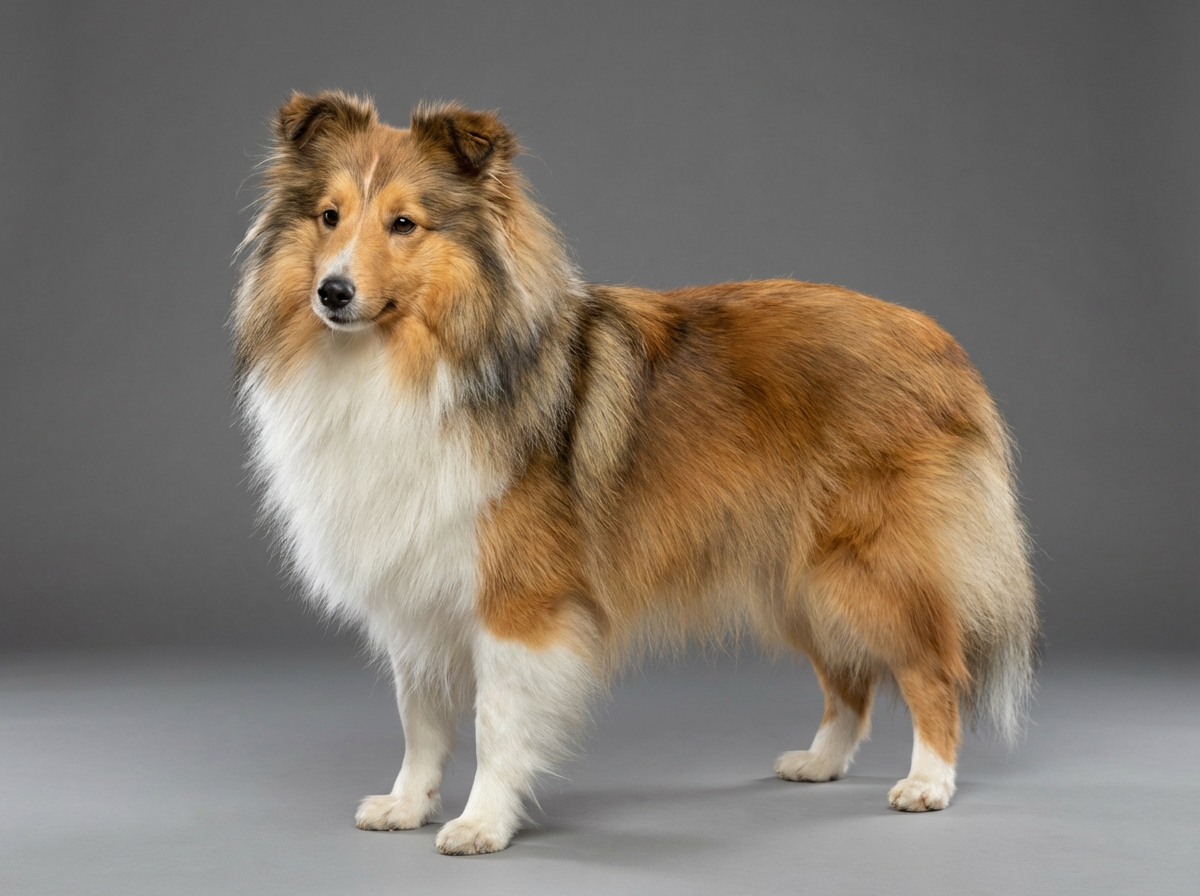
Costs
Shetland Sheepdog cost in Washington, DC
$100–$188 monthly and $1,375–$2,875 in year one, well above average. The local consideration is a twelve-to-fourteen-year commitment in a city where household income can pause without notice.

See Shetland Sheepdog price across all cities →
Quick answer
Shetland Sheepdog cost in Washington, DC
$100–$188 monthly and $1,375–$2,875 in year one, well above average. The local consideration is a twelve-to-fourteen-year commitment in a city where household income can pause without notice.
Washington has a category of financial risk that most cities do not: a government shutdown. When appropriations lapse, hundreds of thousands of federal employees and a much larger number of contractors stop being paid, and while federal staff have since been guaranteed back pay, contractors historically have not. Shutdowns have arrived repeatedly over the past three decades and have lasted anywhere from a weekend to more than a month. In a city where a very large share of household income traces back to federal appropriations, that is a planning fact rather than a political one.
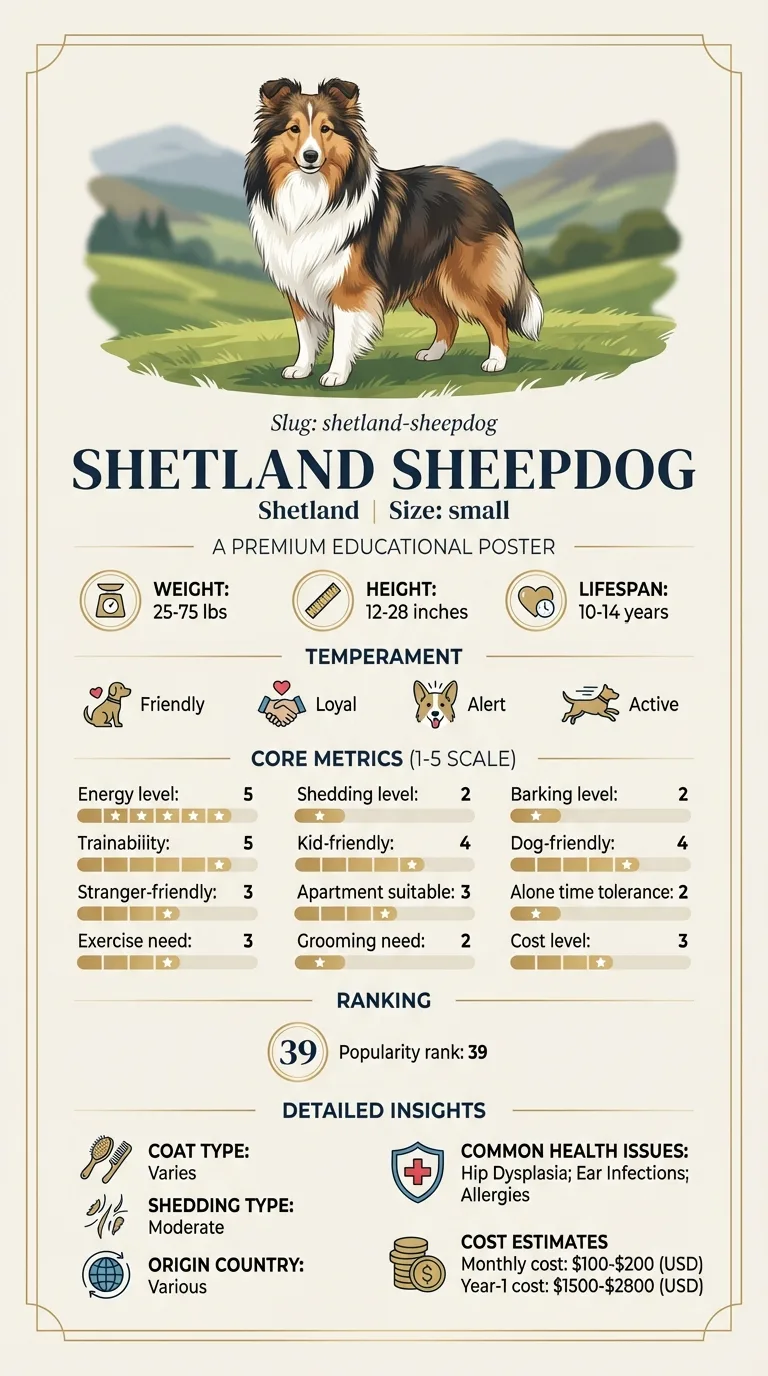
This breed's documented conditions are Collie Eye Anomaly, MDR1 Drug Sensitivity, Dermatomyositis, Hypothyroidism and Patellar Luxation. Several of them, particularly Hypothyroidism and a managed patellar grade, involve ongoing rather than one-off costs, which is precisely the kind of commitment that interacts badly with an interrupted income.
Washington prices run well above national norms with paid walking common, and the local planning question is how a fixed twelve-to-fourteen-year cost sits against an income that can be interrupted.
Estimate · source: estimation · confidence: medium · updated 2026-09-06 · not a quote
| Item | Cost range |
|---|---|
Initial costs (exam, sterilization, genetic testing, gear) Priced at local rates; front-loading the genetic testing avoids it competing with a difficult month later. | $460 - $780 |
| Item | Cost range |
|---|---|
Food Portions for a fifteen-to-twenty-five-pound dog at DC grocery pricing. This is the line that cannot be paused. | $40 - $68 |
Dog walking Normal in housing without private outdoor space, and one of the few lines that genuinely flexes during an interrupted month. | $0 - $260 |
Grooming Two seasonal blows at above-average local rates, which makes home grooming more valuable here than in a cheaper market. | $36 - $72 |
Each range starts from a national baseline for this breed's size class and is then adjusted for local cost of living and veterinary pricing. The baselines, and the source each one came from, are listed on our sources page (dataset 2026.09). Two inputs, the purchase price and the emergency reserve, have no published national figure we could verify, so we leave them to you rather than invent them.
These are planning estimates, not quotes. Your own numbers will move with the individual dog, your vet and your insurer. Build a budget with your own figures.
This is one of the few markets where the case for a policy rests on cash-flow predictability rather than on total expected cost.
Where household income is genuinely interruptible. A known monthly premium is far easier to carry through an unpaid stretch than an unpredictable four-figure bill arriving in the middle of one.
Where income is stable and a properly separated reserve exists, the usual arithmetic applies and self-funding is defensible even at DC pricing.
The Washington saving is structural: know in advance which costs bend and keep the dog's reserve out of the household buffer.
The useful reframing is to separate the dog's costs into the ones that can flex and the ones that cannot. Grooming appointments can be pushed a month. Daycare can be cut back if someone is home, and during a shutdown someone frequently is. What cannot flex is food, prescribed medication, and anything acute. Knowing which is which before you need to know it makes a difficult month a manageable one rather than a series of bad decisions.
That suggests a specific approach to insurance in this city, and it is not the usual one. The ordinary argument for a policy is that it converts a large unpredictable bill into a small predictable one. In a household with genuinely interruptible income, that conversion is worth more than it would be elsewhere, because the failure mode being protected against is not just an expensive month but an expensive month that coincides with an unpaid one. A premium is a known number you can plan around; an emergency is not.
The other half is a reserve that is genuinely ring-fenced. The mistake people describe is having savings that are notionally the dog's emergency fund and actually the household's buffer, so that six weeks without pay quietly consumes it and the dog's emergency arrives to an empty account. Two separate pots, however small the second one is, behave differently from one large one. For a breed with five documented inherited conditions and a twelve-to-fourteen-year horizon, that separation is worth setting up at the start.
DC service pricing runs well above national norms across consultations, boarding, grooming and daycare. A large share of the city's dogs live in apartments and rowhouses without private outdoor space, which makes paid walking a normal recurring line rather than a luxury, particularly for a breed rated four out of five for exercise need.
The parasite window runs about nine months, longer than the upper Midwest and short of year-round, worth buying as a single seasonal purchase.
The Mid-Atlantic climate gives the coat a proper four-season rhythm with two distinct shedding periods, and summers humid enough that the undercoat needs raking open rather than left to felt. Neither is unusual; what is unusual is the price of having someone else do it, which makes home grooming a more valuable skill here than in a mid-cost market. A dog rated two out of five for alone-time tolerance in a city of long working days is the other structural pressure, and it is the one that determines whether the walker line item is optional.

A federal contractor in Petworth went five weeks unpaid during a shutdown with a six-year-old Sheltie on daily thyroid medication. The medication and the food were non-negotiable; the daycare he had been paying for stopped immediately, which he could do because he was home anyway. What saved him was that his dog's emergency fund sat in a separate account he had deliberately made awkward to reach, so when a knee flare-up needed seeing in week four the money was still there. He has never combined the two accounts since.
Key takeaway: In a city where income can pause, the useful discipline is not spending less on the dog but keeping the dog's reserve somewhere the household cannot quietly absorb it.
About $100 to $188, well above the national average, with paid dog walking a normal line item in housing without private outdoor space.
Roughly $1,375 to $2,875, including the first exam, sterilization, vaccinations and setup gear at local rates.
Because the dog's costs do not pause with the income. Over a twelve-to-fourteen-year life a Washington household is likely to see several periods where pay is interrupted without warning.
Grooming appointments and daycare, particularly since someone is often home during a shutdown. Food, prescribed medication and anything acute cannot be paused.
It strengthens it. A premium is a known number you can plan around, and the risk being managed is an expensive month coinciding with an unpaid one.
About $660 at local pricing, and it should be genuinely ring-fenced rather than doubling as the household's general buffer.
$100–$188 monthly and $1,375–$2,875 in year one, well above average. The local consideration is a twelve-to-fourteen-year commitment in a city where household income can pause without notice.
Twelve to fourteen years, which is the number that matters when weighing a recurring cost against an income that is not perfectly reliable year to year.
This guide is not medical advice. If your dog shows pain, sudden behavior change, or worsening symptoms, consult a licensed veterinarian.
Some links may be affiliate links. We may earn a commission at no extra cost to you. We only suggest products we believe are helpful for dog owners.
We research and check what we publish, but we do not warrant that any figure, date, price, or statement is accurate, complete, or current, and we accept no liability for any loss, cost, injury, or other harm arising from the use of this site. Use it as one reference among several. You remain responsible for your own decisions and for your dog's care - confirm anything that matters with a licensed veterinarian or another qualified professional before you act on it. Full disclaimer.
One sheet with every line item, the emergency fund and when insurance pays off - unlocks on this page.
You get: 12-month budget sheet
No spam. One-click unsubscribe. See our privacy policy.
Preview page 1 before you decide.