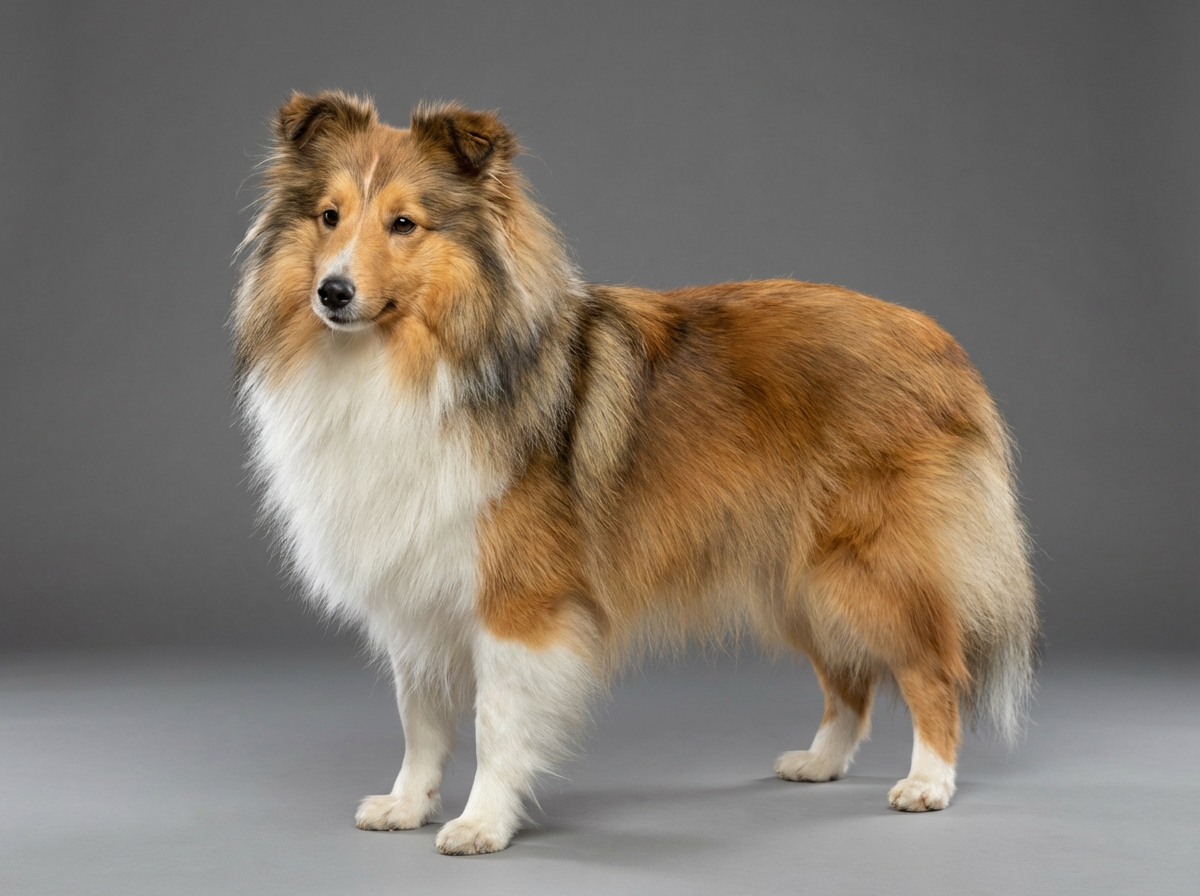
Health
Do Shelties get brachycephalic airway syndrome?
No. They have long muzzles and full-length nasal passages, and BOAS does not appear on the breed's documented health profile.

Quick answer
Do Shelties get brachycephalic airway syndrome?
No. They have long muzzles and full-length nasal passages, and BOAS does not appear on the breed's documented health profile.
If a search has brought you here worried your Sheltie has a flat-faced breathing disorder, the short answer is that she almost certainly does not. The longer answer is that laboured breathing still deserves an explanation.
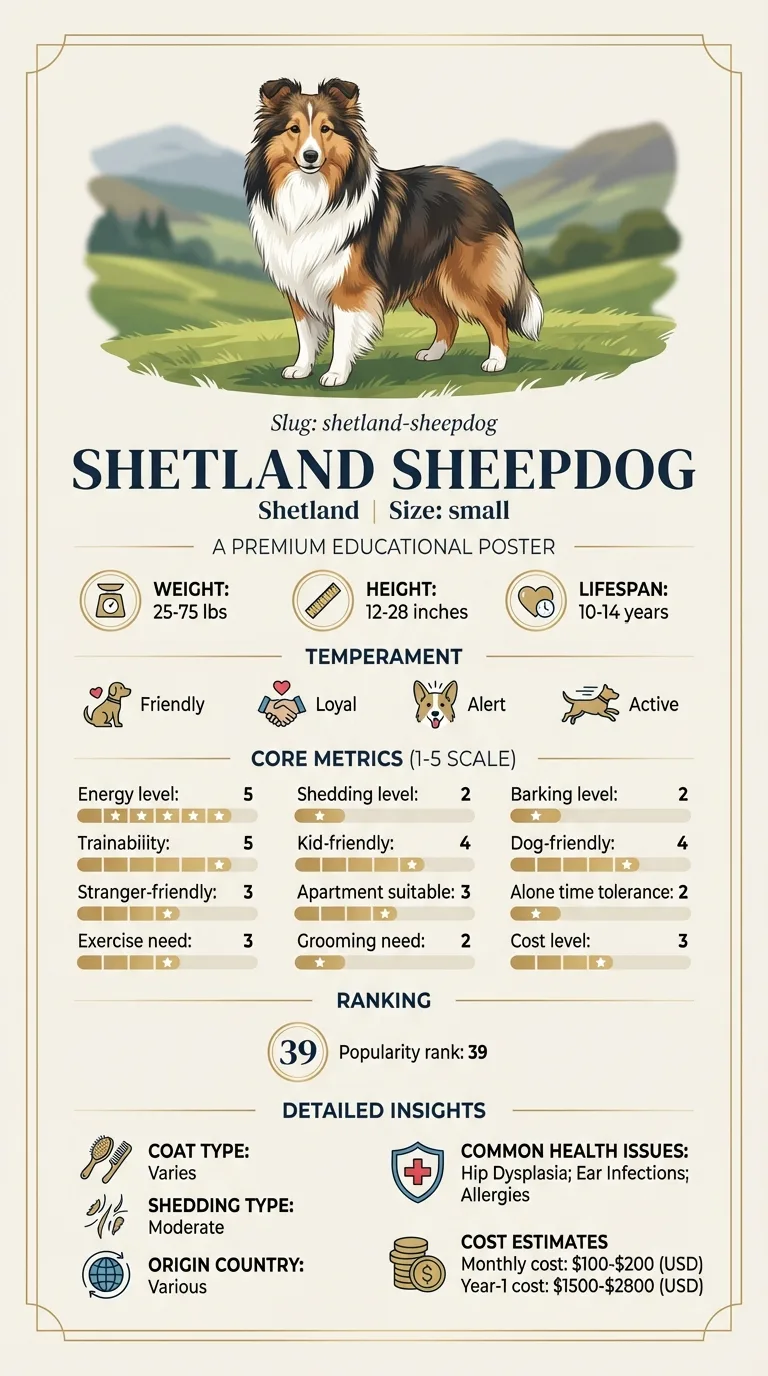
Owners whose Sheltie has started breathing noisily and who searched the symptom rather than the breed. People whose dog struggles badly in hot weather and assumed the airway was the cause. Anyone comparing breeds and checking whether this one comes with breathing problems.
This guide is not medical advice. If your dog shows pain, sudden behavior change, or worsening symptoms, consult a licensed veterinarian.
Some links may be affiliate links. We may earn a commission at no extra cost to you. We only suggest products we believe are helpful for dog owners.
We research and check what we publish, but we do not warrant that any figure, date, price, or statement is accurate, complete, or current, and we accept no liability for any loss, cost, injury, or other harm arising from the use of this site. Use it as one reference among several. You remain responsible for your own decisions and for your dog's care - confirm anything that matters with a licensed veterinarian or another qualified professional before you act on it. Full disclaimer.
BOAS describes a stack of anatomical obstructions caused by shortening the skull without shortening the soft tissue inside it. Affected dogs snore, snort, tire quickly and overheat easily, and severe cases need surgery to open the airway. None of this describes the Shetland Sheepdog, whose long muzzle and normal nasal architecture place it outside the affected group entirely. Breathing difficulty in a Sheltie is a genuine symptom that points elsewhere.
As a diagnosis in this breed, essentially absent. BOAS incidence tracks muzzle shortening almost perfectly, and the Shetland Sheepdog sits at the opposite end of that spectrum. Breathing complaints do reach vets from Sheltie owners, but they resolve into infection, tracheal irritation, heart disease, laryngeal dysfunction in older dogs, or overheating rather than into airway conformation.
There is no brachycephalic driver here. The Shetland Sheepdog's head is long and tapered with a full nasal chamber and a soft palate proportioned to the space it occupies. If anything the breed's conformation is favourable for airflow. The genuine breed factor affecting respiratory comfort is the coat: long, dense, double, with heavy seasonal shedding, which impedes heat loss rather than airflow. Body size is also relevant in a minor way, since small dogs of 15 to 25 pounds have narrower airways in absolute terms, so a given amount of swelling from infection has more effect than it would in a large dog.
Heat and humidity are the dominant environmental stressors, particularly when the undercoat has not been raked out after a seasonal shed. Exposure to other dogs in classes, kennels and parks brings respiratory infection. Collar pressure during pulling irritates the windpipe directly. Long grass and stubble fields in summer are the classic source of inhaled grass seeds, which lodge in the nose and cause violent sneezing and one-sided discharge.
Go to an emergency hospital immediately for blue, grey or very pale gums, open-mouth breathing at rest that will not settle, a dog extending her neck and bracing her elbows to breathe, collapse, or heatstroke signs such as frantic panting with thick drool and staggering on a hot day. Book an urgent appointment for a new persistent cough, noisy breathing that was not there before, violent one-sided sneezing with discharge, or a clear drop in exercise tolerance. Phone rather than walk in if kennel cough is possible, so the practice can manage contact with other patients. Persistent snoring that is new and progressive also deserves examination rather than acceptance.
See all Shetland Sheepdog health problems, which breeds are prone to brachycephalic airway syndrome boas, or the full Shetland Sheepdog breed guide for temperament, exercise needs and ownership costs.
Infectious causes such as kennel cough usually resolve over one to three weeks. Tracheal irritation improves within days of removing collar pressure. Structural and cardiac causes are managed long term. Heat-related breathing difficulty resolves as soon as the dog cools and the coat is dealt with properly.
A dog who breathes quietly at rest, recovers her normal breathing rate within a few minutes of exercise, and copes with summer because her coat and her schedule have been managed. Success here is usually a correct diagnosis rather than a cure, because the label that brought you to this page was the wrong one.
A long-muzzled dog with breathing trouble has a real problem that needs a real diagnosis. These are the categories a vet works through, and the sound itself often points to the location.
Owners often conflate two different things. A flat-faced dog overheats because it cannot move enough air through a compromised airway to lose heat by panting. A Shetland Sheepdog can move plenty of air. What it cannot easily do is shed heat through a long, dense double coat rated four out of five for grooming demand, with a woolly undercoat designed to insulate against wind and rain on exposed northern hills.
That distinction matters because the interventions are completely different. For a brachycephalic dog you manage the airway and, in serious cases, surgically widen it. For a Sheltie you manage the coat and the environment: brushing out dead undercoat so air can reach the skin, avoiding midday walks in summer, providing shade and cool surfaces, and never leaving the dog in a warm car or conservatory.
What this breed shares with flat-faced dogs is only the outcome. Heatstroke is an emergency in any dog and it kills. A Sheltie panting frantically with bright red gums, drooling thick saliva, staggering or vomiting on a hot day needs an emergency veterinary hospital immediately, with active cooling started on the way. The cause differs; the urgency does not.
There is one more reason not to mislabel this. Treatment for a genuine airway problem often involves sedation for examination of the larynx, and the Shetland Sheepdog carries a documented MDR1 drug sensitivity. Knowing the genotype before an airway investigation is worth arranging in advance.

Kelpie was a six year old Sheltie who spent one July lying on the kitchen tiles refusing walks and panting long after coming inside. Her owner Hamish had read about flat-faced dogs and heat, and assumed something similar was going on with her breathing. The vet listened to her chest, found it clear, and then buried both hands in her coat. The undercoat had not been properly raked out that spring and had felted into a solid insulating layer across her back and hindquarters. Two long grooming sessions and a set of early morning walks later, Kelpie was back to normal within a week. Hamish now strips the coat out every May as a fixed date in the calendar rather than when he gets around to it.
Key takeaway: In this breed, a heat and breathing complaint is far more often about the coat than the airway. Check under the fur first.
No. The breed has a long, wedge-shaped head with a full-length muzzle, which is the standard mesaticephalic to dolichocephalic conformation. BOAS is not on the breed's documented health list and is not a condition Shelties are bred into.
Occasional snoring in a particular sleeping position is common and usually harmless. What warrants a check is snoring that is new, loud, worsening, or accompanied by noisy breathing while awake or reduced exercise tolerance.
A goose-honk cough triggered by excitement or lead pressure points towards the trachea rather than the nose or palate. It is worth a veterinary examination, and switching from a collar to a well-fitted harness usually reduces the trigger.
Very possibly, if it started suddenly, sounds harsh and productive, and followed a boarding kennel, class or dog park visit. Contact your vet by phone first so they can advise on isolation rather than filling a waiting room.
Clipping a Sheltie's double coat is generally advised against, since the coat also reflects heat and protects skin, and it often grows back poorly. Thorough undercoat removal by brushing achieves the airflow without the drawbacks.
Open-mouth breathing at rest that will not settle, blue or grey gums, extending the neck and splaying the elbows to breathe, or collapse. Any of those means an emergency hospital immediately, whatever the underlying cause turns out to be.
No. They have long muzzles and full-length nasal passages, and BOAS does not appear on the breed's documented health profile.
Because of the dense insulating double coat, not the airway. The management is coat care, shade and avoiding midday heat.
Blue or grey gums, or open-mouth breathing at rest that does not settle. Go to an emergency hospital immediately.
For any dog with a cough, yes. A harness removes pressure from the windpipe, which is a common trigger for honking coughs.
Airway examination under sedation plus imaging runs well above the breed's typical eighty to a hundred and fifty dollar monthly cost.
A one-page prep sheet for this condition: the signs, the questions to ask, what to get priced. Unlocks here.
You get: Vet visit prep sheet
No spam. One-click unsubscribe. See our privacy policy.
Preview page 1 before you decide.