Health
What is the first sign of allergy in a Shetland Sheepdog?
Paw licking, usually before anything else. Look for rust-coloured staining on the hair between the toes.

Quick answer
What is the first sign of allergy in a Shetland Sheepdog?
Paw licking, usually before anything else. Look for rust-coloured staining on the hair between the toes.
Chronic allergy is a management problem, not a curable one. Owners who accept that early tend to have far more comfortable Shelties than owners still hunting for the one food that fixes everything.
Owners hearing scratching through the floor at two in the morning. People whose Sheltie has had four courses of ear drops in a year. Anyone who has already changed food three times and is not sure whether anything improved.
This guide is not medical advice. If your dog shows pain, sudden behavior change, or worsening symptoms, consult a licensed veterinarian.
Some links may be affiliate links. We may earn a commission at no extra cost to you. We only suggest products we believe are helpful for dog owners.
We research and check what we publish, but we do not warrant that any figure, date, price, or statement is accurate, complete, or current, and we accept no liability for any loss, cost, injury, or other harm arising from the use of this site. Use it as one reference among several. You remain responsible for your own decisions and for your dog's care - confirm anything that matters with a licensed veterinarian or another qualified professional before you act on it. Full disclaimer.
Chronic allergy in dogs is an over-reactive immune response to ordinary substances, and in Shelties it shows up almost entirely through the skin and ears rather than through sneezing. The itch comes first, the damage from scratching comes second, and the bacterial or yeast infection that follows is usually what finally gets the dog to a vet. Under a dense double coat that whole sequence can run for weeks before the owner sees anything.
Allergic skin disease is one of the most common reasons any dog visits a vet, and it is not restricted to breeds with a documented predisposition. The Shetland Sheepdog's own documented health list centres on eye, thyroid, skin-muscle and joint conditions rather than atopy, so the honest framing is that Shelties get allergies at roughly the ordinary rate but suffer the complications more, because their coat conceals the early stage.
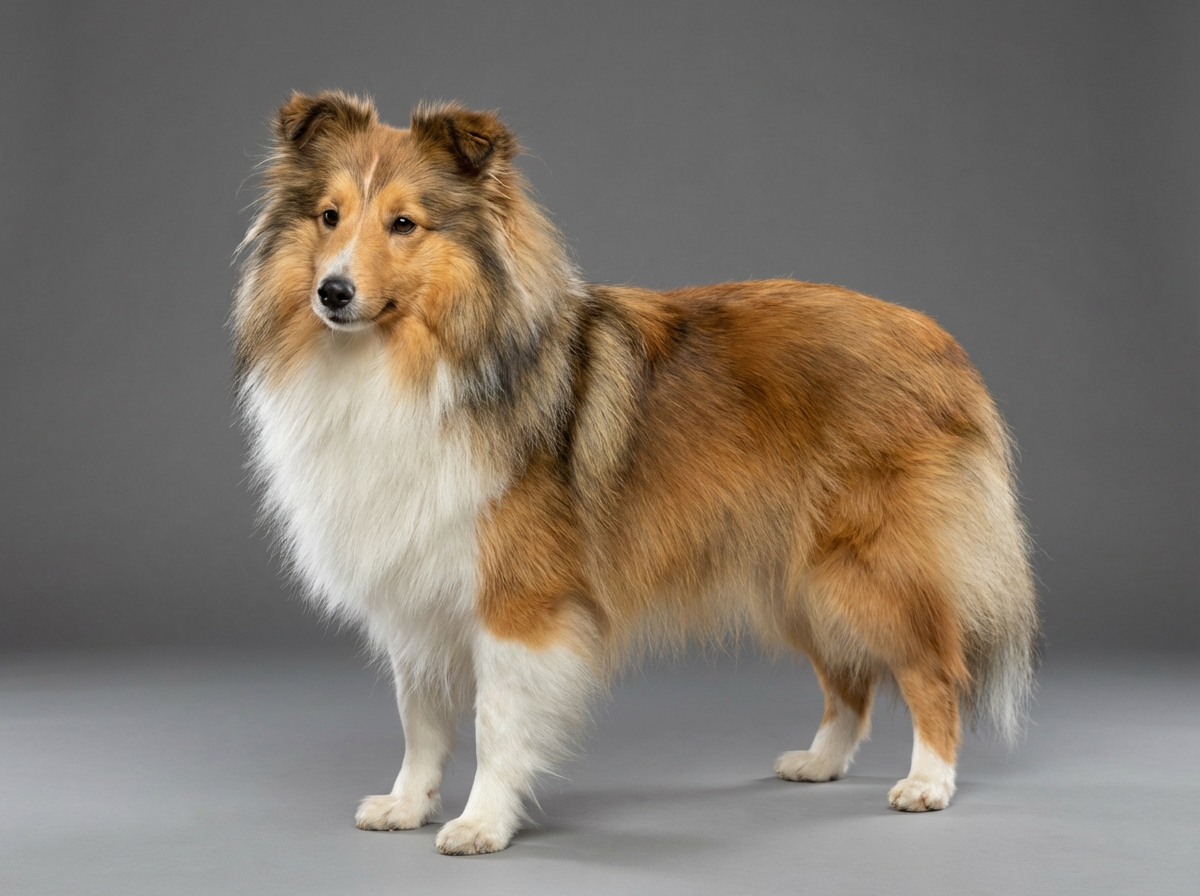
The main breed contribution is structural rather than immunological. A long, dense double coat with heavy seasonal shedding holds allergens against the skin, retains moisture after rain and bathing, and blocks the airflow that would otherwise keep the skin surface hostile to yeast. The breed also carries documented hypothyroidism, which can independently degrade skin and coat quality and make an allergic dog look worse than the allergy alone would explain. Dermatomyositis, another documented Sheltie condition, causes skin lesions that owners sometimes mistake for allergy, which is one more reason not to self-diagnose.
Anything that keeps the coat damp raises the risk: wet walks without proper drying, swimming, humid summers, and bathing without a forced dryer. Fleas amplify every other allergy a dog has, so lapsed parasite control is a frequent hidden driver. Indoors, dust mite exposure concentrates in bedding and soft furnishings, which is exactly where a devoted, people-oriented breed spends its downtime.
Book promptly if your dog is scratching enough to disrupt sleep, if you find a rapidly spreading moist red patch, if an ear smells bad or the dog cries when it is touched, or if the skin is thickened, dark and greasy. Any of those means infection is already involved. Go the same day for a painful ear with a head tilt or loss of balance, for an eye that is red and being rubbed hard, or for skin that is ulcerated and open. Do not run repeated over-the-counter treatments on a dog whose ears keep relapsing, because that pattern usually means the underlying allergy has never been addressed and the ear canal is quietly changing shape.
A Sheltie's coat sheds heavily on a seasonal cycle. When the undercoat loosens and is not brushed out, it packs into a dense felt against the skin. Air stops moving, moisture stays put, and the yeast and bacteria that live harmlessly on every dog get an environment they can multiply in. That is why so many Sheltie skin flares are really infections sitting on top of an allergy.
The intuitive fix is to shave the dog down. For this breed that is usually a mistake. The double coat insulates against heat as well as cold, and clipping it can leave a Sheltie less able to cope with warm weather while doing nothing about the underlying allergy. Coat texture often returns patchy afterwards. The better answer is unglamorous and mechanical: line brushing to the skin with an undercoat rake, especially through the seasonal blow, and drying the dog properly after baths rather than letting a thick coat dry slowly from the inside.
There is one breed-specific caution worth holding on to. The Shetland Sheepdog carries a documented MDR1 drug sensitivity, an inherited variation affecting how certain drug molecules are handled. Allergy management often involves long-term medication and parasite control, so your vet needs to know your dog's MDR1 status before choosing a plan. That is a reason to test, not a reason to avoid treatment.

See all Shetland Sheepdog health problems, which breeds are prone to allergies, or the full Shetland Sheepdog breed guide for temperament, exercise needs and ownership costs.
Secondary infections usually clear in two to four weeks. Getting the underlying allergy under control takes longer, typically three to six months of adjusting diet, parasite control and medication before a stable routine emerges. Elimination diet trials alone need eight to twelve uninterrupted weeks.
A dog who scratches occasionally rather than constantly, sleeps through the night, and has one or two mild flares a year instead of a rolling ear infection. Success is a good baseline with predictable dips, not a permanently itch-free dog.
Allergic dogs itch in a fairly predictable distribution, and knowing the map helps you describe the problem accurately. On a heavily coated breed, part the hair rather than looking at it.
Piper was a four year old blue merle Sheltie who had been treated for ear infections five times in eighteen months. Her owner, Nadia, had switched foods twice and assumed the ears were just bad luck. At the fifth visit the vet parted the coat over Piper's rump and found the undercoat matted into a solid layer, with pink, greasy skin beneath. The plan was unglamorous. A proper strip-out of the dead undercoat, a forced dryer after every wash, weekly hot-wash bedding, and a strict twelve week diet trial. Thyroid bloods came back normal. By month four Piper had gone from constant ear drops to one mild seasonal flare in the spring. Nadia's summary was that she had spent two years treating the ears and none of it treating the coat.
Key takeaway: On a heavy double-coated breed, mechanical coat care is part of the medical plan. Brushing is not cosmetic here.
Environmental allergy is far more common and usually seasonal at first, worsening in spring or late summer. Food allergy tends to be year-round and often comes with ear infections and digestive upset. The only reliable way to separate them is a strict elimination diet trial run under veterinary supervision.
Eight to twelve weeks with absolutely nothing else passing the dog's lips. No flavoured chews, no scraps, no dental treats. Most failed trials fail because of a single family member handing over crusts, not because the diet was wrong.
Recurring ear infection in an itchy dog is usually the allergy showing itself in the ear canal rather than an independent problem. Treating the ear alone clears it and lets it come back. Ask your vet whether the ears are a symptom of something broader.
Hypothyroidism is documented in the Shetland Sheepdog, and it can produce coat and skin changes that look allergic: thinning hair, dull coat, recurring infections. It is worth ruling out with bloodwork in a dog whose skin problems come with weight gain or low energy.
Bathing genuinely helps by washing allergens off the skin, but only if the dog is dried thoroughly to the skin afterwards. A damp undercoat is worse than no bath at all. Frequency should be set by your vet alongside whatever shampoo they recommend.
Rarely. Atopic dogs usually start showing signs between one and three years old and stay allergic for life. What changes is how well controlled they are, and good control is a realistic goal even when a cure is not.
Paw licking, usually before anything else. Look for rust-coloured staining on the hair between the toes.
Generally no. The double coat helps regulate heat, and clipping it does not address the allergy. Thorough undercoat brushing is the better intervention.
Ongoing skin care sits well above the breed's typical eighty to a hundred and fifty dollar monthly range once medication, prescription diets and repeat ear treatments are added.
Several times a week at minimum, to the skin rather than over the top, and daily during the heavy seasonal shed.
Yes. Persistent itch disrupts sleep, and a tired, uncomfortable Sheltie is often more reactive and noisier than usual.
A one-page prep sheet for this condition: the signs, the questions to ask, what to get priced. Unlocks here.
You get: Vet visit prep sheet
No spam. One-click unsubscribe. See our privacy policy.
Preview page 1 before you decide.