Health
What do the patellar luxation grades mean?
They describe joint stability on examination, from grade I where the kneecap only moves under pressure to grade IV where it is permanently dislocated.

Quick answer
What do the patellar luxation grades mean?
They describe joint stability on examination, from grade I where the kneecap only moves under pressure to grade IV where it is permanently dislocated.
The grade written on your dog's notes describes a specific finding on examination, and it is the number that decides whether an operation is on the table.
Owners weighing up a surgeon's recommendation, and anyone who has been given a grade without an explanation of what it means or what would change it.
This guide is not medical advice. If your dog shows pain, sudden behavior change, or worsening symptoms, consult a licensed veterinarian.
Some links may be affiliate links. We may earn a commission at no extra cost to you. We only suggest products we believe are helpful for dog owners.
We research and check what we publish, but we do not warrant that any figure, date, price, or statement is accurate, complete, or current, and we accept no liability for any loss, cost, injury, or other harm arising from the use of this site. Use it as one reference among several. You remain responsible for your own decisions and for your dog's care - confirm anything that matters with a licensed veterinarian or another qualified professional before you act on it. Full disclaimer.
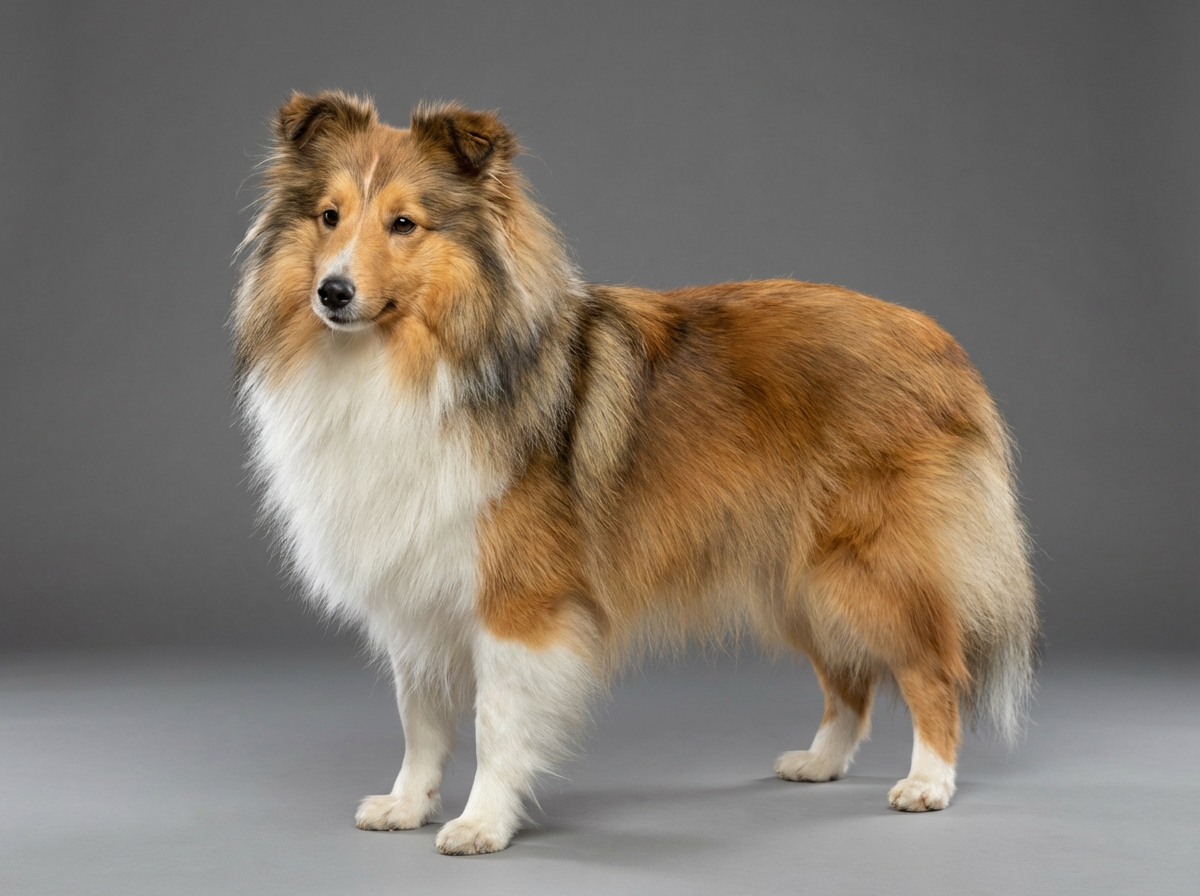
Patellar luxation is a documented Shetland Sheepdog condition in which misalignment of the extensor mechanism allows the kneecap to leave its groove. It is graded I to IV on examination, and that grade, combined with how the dog is actually coping, determines whether surgery is appropriate. Most affected Shelties sit at the lower grades and are managed conservatively for life; the ones that progress face a well-established but demanding surgical pathway.
Common in the breed and one of its five documented health conditions. Among small dogs generally it is one of the most frequently diagnosed orthopaedic problems. The majority of affected Shelties are grade I or II and never need an operation, which is worth holding onto when a diagnosis first arrives.
The underlying fault is skeletal alignment rather than the kneecap itself. In affected Shelties the groove at the end of the femur may be shallow, the bony attachment of the patellar ligament on the tibia may sit too far medially, and in severe cases the femur itself may be subtly bowed. Those features are inherited and are why patellar luxation sits on the Shetland Sheepdog's documented health list and why responsible breeders have stifles graded. MDR1 drug sensitivity, also documented in this breed, governs the anaesthetic planning that any surgical correction requires.
Environment does not create the deformity but it determines how quickly the joint deteriorates. Hard slippery floors produce lateral forces on take-off that lever the kneecap out repeatedly. Jumping down from furniture and cars adds high-impact loading. Body weight multiplies every force through the joint and is concealed by the breed's double coat. And a dog that has lost hind end muscle, whether from inactivity or from another sore joint, has lost the active stabiliser that keeps the patella tracking correctly.
Same day: a hind leg held up continuously rather than for a stride or two, a kneecap that has luxated and will not go back, refusal to bear weight, or a sudden dramatic worsening, which in a dog with an unstable stifle may mean a torn cruciate ligament rather than the patella. Also same day for any swelling, heat or severe pain around the knee after surgery. Within a few weeks: a rising frequency of skipping, new stiffness after rest, reluctance to jump onto things the dog previously managed, or thigh muscle that feels smaller on one side. Ask for a grade for each stifle and a referral opinion if the grade has changed.
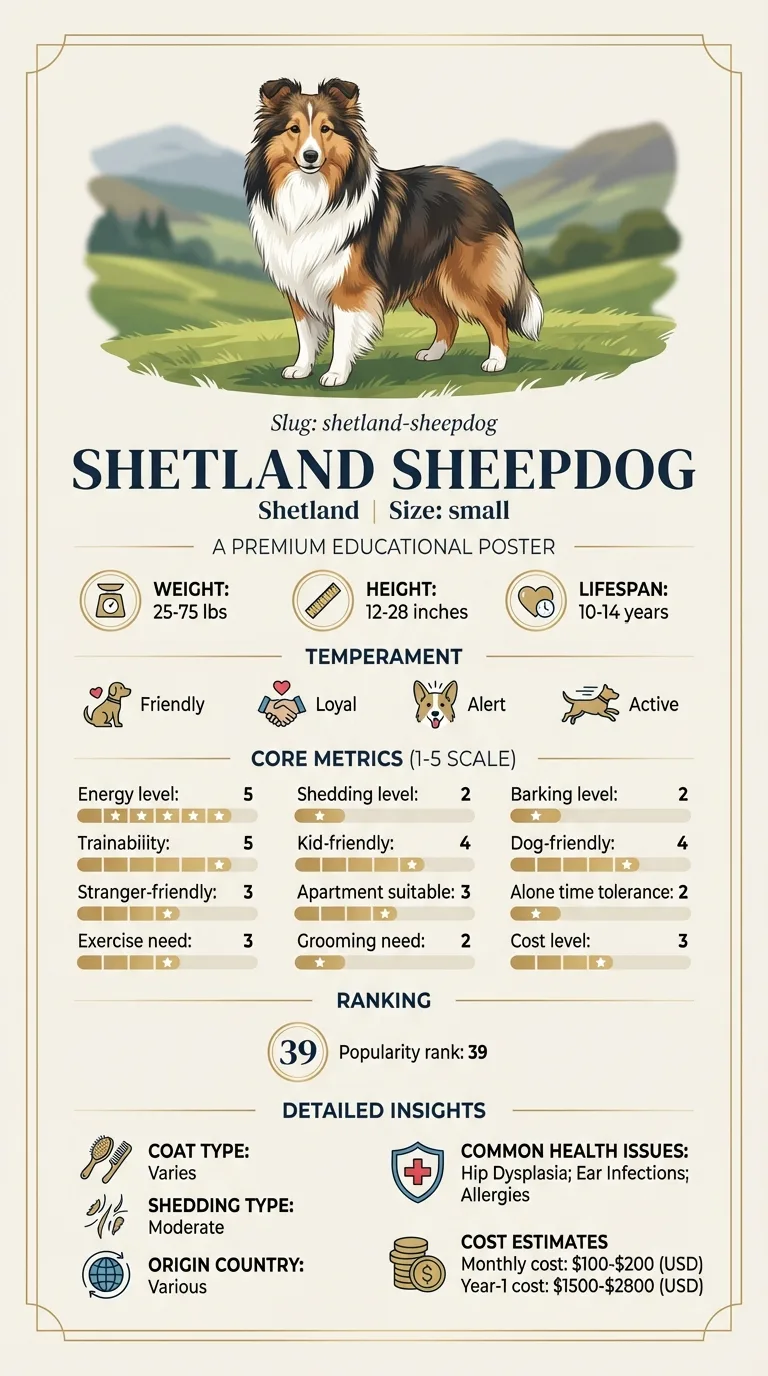
See all Shetland Sheepdog health problems, which breeds are prone to patellar luxation, or the full Shetland Sheepdog breed guide for temperament, exercise needs and ownership costs.
The surgery itself is a single day. Strict confinement runs four to six weeks, followed by a graded return over six to eight weeks with physiotherapy throughout. Most dogs are walking on the leg within days and using it well by two months. Return to agility or comparable sport is usually a six month proposition. If both stifles need operating, allow several months between them.
Success is a dog that uses the leg normally, has rebuilt symmetrical thigh muscle, and is not skipping. It is not a knee that will look normal on radiographs, since the arthritis already present does not reverse. For conservatively managed dogs, success is a grade that has not changed in five years. For surgical dogs, it is a Sheltie that goes back to doing what it wants to do without the household organising itself around the knee.
Grading is done by manipulation during examination and it is a description of joint stability, not of how much the dog is limping. Both stifles are graded separately, and they are often different.
There is no single patellar luxation operation. A surgeon assesses which of several anatomical faults are present and combines procedures accordingly, which is why costs and recovery times vary so widely between dogs.
Deepening the groove addresses a trochlea that is too shallow to hold the kneecap. A wedge or block of cartilage and underlying bone is lifted, the bed beneath is deepened, and the piece is replaced, preserving the joint surface.
Moving the attachment point addresses the commonest underlying fault. The bony bump on the shin where the patellar ligament attaches sits too far to the inside, so the whole mechanism pulls the kneecap off-centre. The surgeon cuts that bump free, moves it outward, and pins it in its new position.
Soft tissue balancing tightens the stretched capsule on one side of the joint and releases the tight tissue on the other.
In severe grade IV cases with genuine bone deformity, corrective osteotomy of the femur may be needed, which is a considerably bigger undertaking.
For a Shetland Sheepdog all of this happens under general anaesthesia, sometimes more than once if both stifles are done separately, which makes MDR1 genotype a non-negotiable piece of information rather than a detail. Have it tested and recorded before the surgical consultation, not after.

If you think your Shetland has patellar luxation, the plan is three steps: write down what you have seen and when it started, book a veterinary appointment rather than waiting for the next flare, and take video of the behaviour or symptom before you go — the thing you are worried about rarely happens in the consulting room. Screening in the parents covers collie eye anomaly, mdr1 drug sensitivity, dermatomyositis.
What the vet visit should produce is a diagnosis and a written plan, not just reassurance: what is being ruled out, what the monitoring interval is, and which signs mean you come back sooner. Ask what the treatment costs across a year rather than per visit, because that is the number that decides whether you are managing this condition or reacting to it.
Between appointments, keep a short log — dates, what you saw, what changed. It is the single most useful thing an owner brings to a follow-up, and for patellar luxation it is often what separates a clear pattern from a guess.
Aled's Sheltie, Cerys, was recorded as grade II on the left stifle at four. She skipped occasionally and it did not seem to bother her, so nothing was done, which was reasonable advice at the time. At six the same vet graded her III. She was skipping most days, had lost noticeable muscle from the left thigh, and had started refusing the stile on their usual walk. There was already early arthritic change on the radiographs. Her surgeon deepened the groove and moved the tibial attachment point outward. The anaesthetic was planned around a carrier MDR1 result that Aled's practice had recorded when she was a puppy. She was confined for five weeks, which Aled describes as the hardest five weeks of dog ownership he has had, and got through it on scentwork games and a food-dispensing puzzle. At eight she is sound, symmetrical and back over the stile. Her surgeon's one comment was that the operation would have gone better at four than at six, because the arthritis would not have been there.
Key takeaway: The grade is a moving number, and the joint's condition when you operate determines the ceiling on the result. Have both stifles graded annually, and treat a rising grade as the prompt for a surgical opinion rather than waiting for the dog to stop coping.
Not automatically. Grade II covers a wide range, from a dog that skips twice a month to one that skips constantly and is developing arthritis. The decision rests on how often it luxates, whether that frequency is increasing, whether the dog is showing pain or muscle loss, and what the other stifle is doing.
Usually not. Staging the surgeries lets the dog use one sound leg while the other recovers, which is safer and produces better rehabilitation. It does mean two anaesthetics, which is a specific consideration in an MDR1 breed and worth discussing with the anaesthetist rather than assuming.
Good in experienced hands for grades II and III, with most dogs returning to normal or near-normal function. Complication rates rise with grade, with severity of bone deformity, and where an owner cannot enforce the post-operative restriction. Ask your surgeon for their own outcomes rather than general figures.
It slows the process rather than preventing it. Arthritis that has already developed does not reverse, and the joint has been abnormal since birth. What surgery buys is the removal of ongoing abnormal wear, which is why operating before extensive arthritis has developed produces better long-term results.
Strict confinement for several weeks with lead-only toileting, then a graded return over a further six to eight weeks, usually with formal physiotherapy. Full return to sport takes longer. The restriction phase is the part that determines the outcome and the part that most owners underestimate.
Patellar luxation has a hereditary component and is documented in this breed, which is why Sheltie breeders have stifles examined and graded and why the results should be part of any breeding decision. If you are buying a puppy, ask about it alongside the eye certification and MDR1 status.
Yes. A stifle that is chronically maltracking loads the cruciate ligament abnormally, and dogs with long-standing patellar luxation have a higher rate of cruciate injury. A sudden severe lameness in a dog with a known luxating patella should be examined rather than assumed to be the kneecap again.
They describe joint stability on examination, from grade I where the kneecap only moves under pressure to grade IV where it is permanently dislocated.
Grade III and IV almost always, grade II depending on symptoms and progression, grade I rarely. The dog's clinical picture matters as much as the number.
Commonly two to four thousand dollars per stifle including imaging and follow-up, and a Sheltie may need both knees done at different times.
Several weeks of strict confinement followed by six to eight weeks of graded return, with formal physiotherapy through most of that period.
Because the genotype determines which sedative and anaesthetic agents are appropriate in a Shetland Sheepdog, and this surgery may mean two separate anaesthetics.
A one-page prep sheet for this condition: the signs, the questions to ask, what to get priced. Unlocks here.
You get: Vet visit prep sheet
No spam. One-click unsubscribe. See our privacy policy.
Preview page 1 before you decide.