Why are Shetland Sheepdogs prone to separation anxiety?
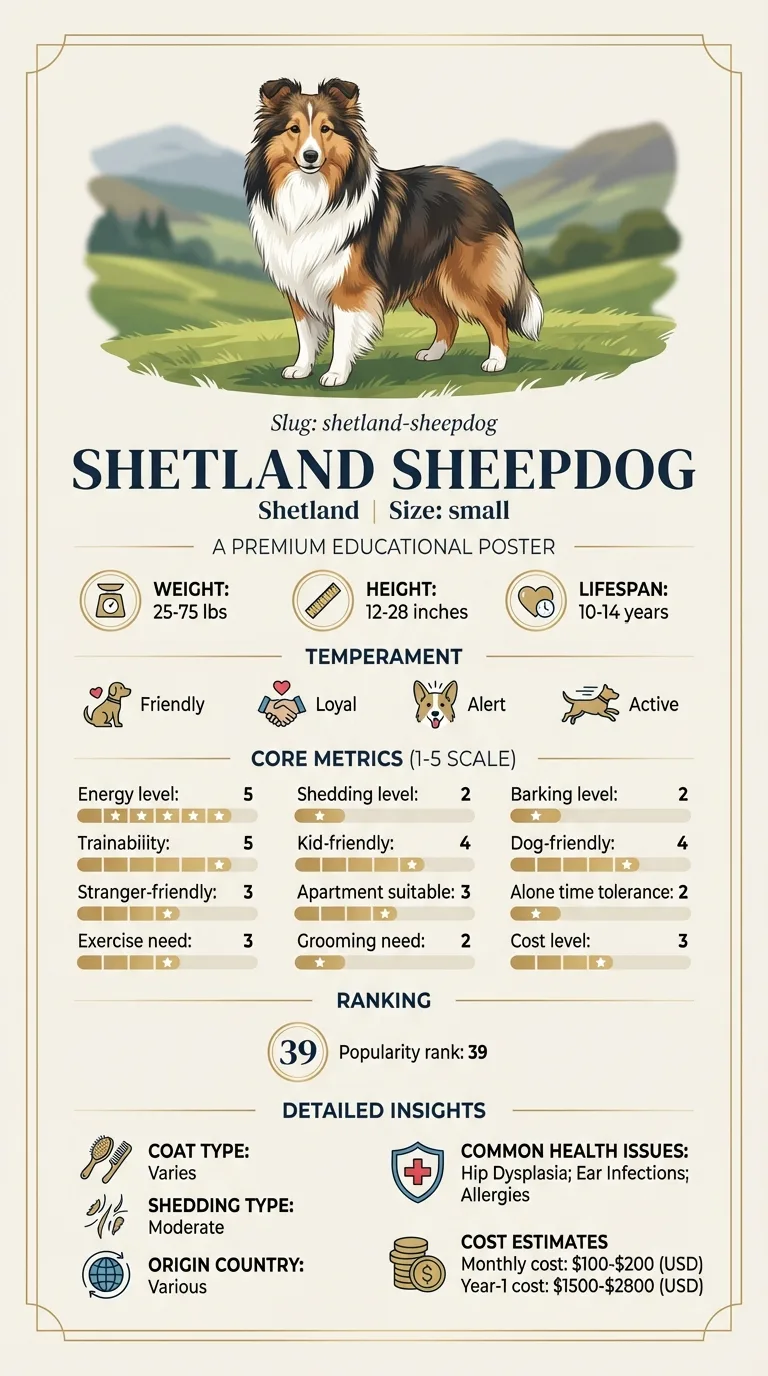
The breed rates low for tolerating time alone and carries a devoted, highly attentive temperament developed for close partnership with a handler, which does not adapt easily to an empty house.
A dog developed to read a handler's smallest gesture across a field of sheep was never selected for comfort with an empty house. Separation anxiety in this breed is not a training failure so much as a mismatch between what the dog was built to do and what modern life sometimes asks of it.
Owners who have come home to chewed door frames, a hoarse dog, or a neighbour's complaint about barking. People who adopted an adult Sheltie and are seeing anxiety signs appear once the honeymoon settling-in period ends. Anyone whose work schedule has just increased time away from a dog who was previously rarely alone.
Important reminder
This guide is not medical advice. If your dog shows pain, sudden behavior change, or worsening symptoms, consult a licensed veterinarian.
Some links may be affiliate links. We may earn a commission at no extra cost to you. We only suggest products we believe are helpful for dog owners.
We research and check what we publish, but we do not warrant that any figure, date, price, or statement is accurate, complete, or current, and we accept no liability for any loss, cost, injury, or other harm arising from the use of this site. Use it as one reference among several. You remain responsible for your own decisions and for your dog's care - confirm anything that matters with a licensed veterinarian or another qualified professional before you act on it. Full disclaimer.
What this problem looks like
Separation anxiety is a genuine panic response to being left alone rather than simple boredom, and it fits naturally with the Shetland Sheepdog's documented profile: a low rating for tolerating time alone, paired with a bright, sensitive, vocal and devoted temperament developed for close working partnership with a handler. The signs concentrate tightly around departure and the owner's absence, and left unaddressed they tend to intensify rather than resolve on their own.
Common triggers
A sudden increase in hours left alone after a change in the owner's schedule
A change of home, routine or household member that disrupts the dog's sense of predictability
Adoption as an adult dog with an unknown or difficult history around being left
A traumatic or frightening event that occurred while the dog was alone
General anxiety proneness, reflected in this breed's low ratings for both alone-time tolerance and stranger comfort
Separation-related distress is one of the more frequently reported behavioural concerns across dogs generally, and it is a genuinely common issue in this breed specifically, consistent with its documented low tolerance for time alone. Not every Sheltie develops it, but the underlying temperament traits that predispose to it are core, well-documented features of the breed rather than an occasional individual quirk.
Why this happens
Breed factors
This breed was developed to work in close, continuous partnership with a handler, reading subtle cues at a distance, and that history has left a strong genetic imprint on temperament: devotion, sensitivity and constant attentiveness to the people in the household. Rated two out of five for tolerating time alone and two out of five for comfort with strangers, the Shetland Sheepdog is built to find its person's absence genuinely distressing rather than merely inconvenient, and to express that distress vocally given its five out of five rating for barking tendency.
Environment factors
Sudden changes in routine are the most common practical trigger: a return-to-office schedule after a period of more time at home, a house move, a new baby, or the loss of a companion animal that previously provided some company during absences. A history of adoption with unknown prior experiences of being left is a frequent contributor in rescued adult dogs. Inconsistent departure and return routines, where absences vary unpredictably in length with no pattern the dog can learn to anticipate, tend to make the anxiety harder to resolve rather than easier.
What you can try
At-home strategies
Practise short, low-key departures repeatedly, starting with absences of seconds to a few minutes and only extending the time once the dog remains calm at the current length.
Remove the ritual around leaving: keys, coat and shoes handled at random times throughout the day so they stop predicting an actual departure.
Set up a camera to record what actually happens in the first ten minutes alone, since this tells you far more than guessing from what you find on return.
Provide a long-lasting food puzzle given just before departure, timed so the most engaging part of it coincides with the hardest early minutes alone.
Keep arrivals and departures calm and low-energy, since a highly charged greeting or goodbye reinforces that leaving and returning are significant events worth being anxious about.
When to consider a trainer
A trainer or veterinary behaviourist experienced specifically in separation-related distress, rather than general obedience, is the right resource here, since the desensitisation protocols involved are quite different from teaching commands. This breed's high trainability is a genuine advantage in this process: a Shetland Sheepdog rated five out of five for trainability tends to progress through a well-structured gradual absence plan more readily than a less biddable breed, provided the steps are kept small enough that the dog never actually experiences the panic response during practice sessions.
When to talk to your vet
Book an appointment if new anxiety around being alone appears suddenly in a previously settled adult dog, since pain, sensory changes or an underlying medical condition can present this way and are worth ruling out before assuming a purely behavioural cause. Seek veterinary or veterinary behaviourist input specifically for anxiety-medication options if distress is severe, if the dog is at risk of injuring itself through frantic escape attempts or destruction, or if structured behavioural work has not produced improvement after several consistent weeks. This is not typically an emergency presentation, but severe panic-driven self-injury during an owner's absence does warrant same-day veterinary attention.
Mild cases can show real improvement within two to four weeks of consistent, correctly paced departure practice. Moderate to severe cases commonly take two to four months of structured work, sometimes longer, and rushing the process by extending absences too quickly is the most common reason progress stalls or reverses.
Success is a dog who settles within the first few minutes of departure and remains calm, verified by camera rather than assumed from a quiet-looking house on return. It is not necessarily a dog who is thrilled to be left, since some baseline preference for company is normal and expected in this breed, but rather one who no longer panics.
How real separation anxiety shows up, distinct from garden-variety boredom
Boredom in an under-exercised dog tends to be intermittent and mild: some chewing of a low-value item, some barking at passers-by. True separation anxiety is concentrated tightly around the owner's absence and often begins the moment the door closes, which is the pattern worth documenting before assuming either explanation.
Vocalising that starts within minutes of departure: barking, howling or a high, sustained whine, distinct from occasional barking at outside noise throughout the day.
Destruction concentrated at exit points: door frames, window sills and the immediate area around wherever the owner was last seen, rather than random household damage.
Toileting indoors despite being reliably house-trained, which in an otherwise clean adult dog is a strong indicator of distress rather than a training lapse.
Pacing, panting and drooling visible on camera footage, often starting before the owner has even left the driveway.
Frantic, prolonged greeting on return that goes well beyond normal excitement and takes a long time to settle.
Shadowing the owner constantly indoors, following from room to room including the bathroom, which often intensifies in the days before a known departure.
Why devotion and vocal sensitivity combine badly with an empty house
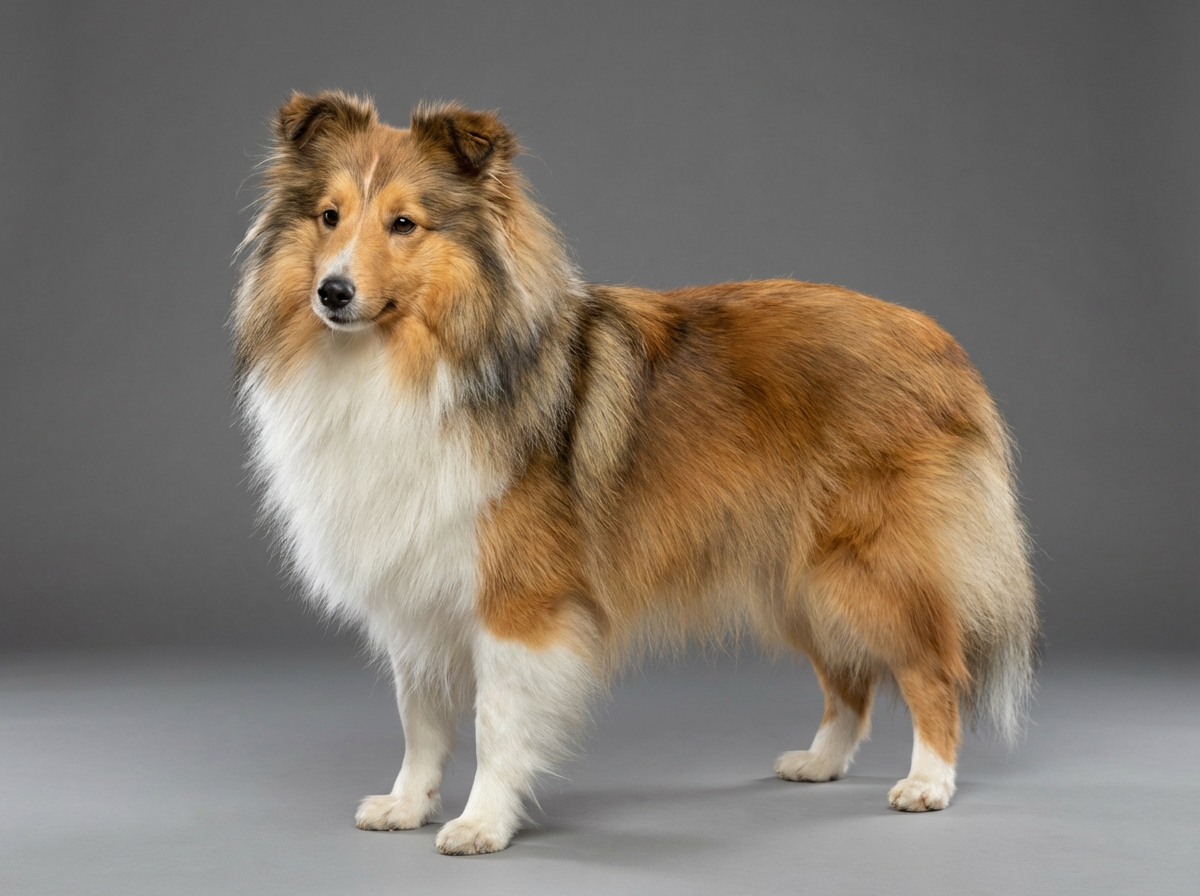
A herding dog's working relationship with its handler is built on constant, close attention: reading a shift in posture, a change in whistle tone, a hand signal from fifty yards away. That level of attunement does not require the handler to be physically adjacent every second, but it does require the dog to always know roughly where the handler is and to be ready to respond. A Shetland Sheepdog kept as a companion animal, rather than a working stock dog, still carries that same attentiveness, and many owners describe their dog as constantly aware of their location around the house even when not actively interacting.
That trait, genuinely appealing day to day, becomes a liability the instant the person the dog is tracking disappears through a door with no warning of when they will return. A breed rated five out of five for vocal tendency also expresses distress loudly rather than quietly, which is one reason Sheltie separation anxiety often surfaces first as a neighbour's noise complaint rather than a chewed doorframe the owner discovers privately.
The breed's low rating for comfort with strangers compounds this in a specific way: a dog that is naturally reserved around unfamiliar people does not always settle easily with an unfamiliar dog-sitter or in an unfamiliar boarding environment, which removes one of the more obvious workarounds available to owners of more universally sociable breeds. This does not mean separation anxiety is inevitable in every Sheltie. It means the breed's core temperament traits, the very ones that make it such an attentive, biddable companion, are the same traits that make it more vulnerable to distress when that attention has nowhere to go.
It is also worth ruling out physical contributors before assuming the picture is purely behavioural. A dog in discomfort from an unrelated condition, or one whose hearing or vision has started to change, can develop new anxiety around being left that looks behavioural on the surface but has a medical root, which is one reason a veterinary check is a reasonable early step rather than an afterthought.
Shetland Sheepdog - Why devotion and vocal sensitivity combine badly with an empty house
Cassidy, the return-to-office order, and four weeks of very short goodbyes
Cassidy was a four year old Sheltie who had spent her first three years with an owner, Jonah, working from home full time. When Jonah's employer ended remote work, Cassidy went from being alone for perhaps an hour at a time to being alone for eight hours daily within a single week.
By the second week, Jonah's neighbour had mentioned near-constant barking during the day, and he came home twice to find the door frame scratched raw. Camera footage showed Cassidy pacing and vocalising within two minutes of the door closing every single time.
Jonah started over almost from nothing: departures of ten seconds, then thirty, then two minutes, building up gradually across four weeks rather than jumping straight back to eight hours. He also arranged a midday dog walker for the interim to break up the day. By week five, camera footage showed Cassidy settling onto her bed within five minutes of Jonah leaving for a full working day.
Key takeaway: The mistake was not lack of love or lack of training ability, it was the size of the jump. Rebuilding tolerance for time alone in very small increments succeeded where hoping she would simply adjust had not.
Frequently asked questions
How do I know if it's separation anxiety or just boredom?
Timing is the clearest signal. True separation anxiety typically starts within the first few minutes of the owner leaving and is concentrated around exit points and the owner's usual location. Boredom-driven behaviour tends to be spread more evenly through the time alone and involves lower-value chewing or occasional barking at outside stimuli.
Can a Sheltie grow out of this on its own?
Rarely without some active intervention. Left unaddressed, separation anxiety more often escalates as the dog rehearses the same distress pattern every departure. Structured desensitisation to being alone, built up gradually, has a much better track record than waiting for it to resolve by itself.
Will getting a second dog fix it?
Sometimes it helps, but often it does not, because true separation anxiety is usually specifically about the absence of the person rather than about being physically alone. Many dogs with separation anxiety show identical distress even with a canine companion present.
Is crate training helpful or harmful for this?
It depends entirely on the individual dog. A crate introduced positively and well before it is needed for departures can become a safe den some anxious dogs settle into. A crate introduced only during distress, or used as a first response to destruction, can become another source of panic. Go slowly and watch the dog's actual response rather than assuming either outcome.
Does this breed's high trainability make it easier to fix?
Genuinely, yes, relative to less biddable breeds. A Shetland Sheepdog rated five out of five for trainability responds well to the structured, gradual desensitisation protocols that treat separation anxiety, provided the work is consistent and not rushed.
When does this need medication rather than just training?
When distress is severe enough that the dog cannot function even at the earliest, most gradual steps of a desensitisation plan, or when there is a risk of self-injury from panic-driven destruction. A vet or veterinary behaviourist can assess whether anti-anxiety medication alongside behavioural work is appropriate, and this is a legitimate, common part of treatment rather than a last resort to be ashamed of.
Could barking at other times mean my Sheltie also has separation anxiety?
Not necessarily. This breed is rated five out of five for barking tendency generally, and a lot of that vocal behaviour is simply an alert response to activity outside, unrelated to being alone. What points specifically towards separation anxiety is barking or howling that starts at the moment of departure and continues through the absence.
Why are Shetland Sheepdogs prone to separation anxiety?
The breed rates low for tolerating time alone and carries a devoted, highly attentive temperament developed for close partnership with a handler, which does not adapt easily to an empty house.
Behavior
What is the first sign of separation anxiety to watch for?
Vocalising or distress that begins within minutes of departure, concentrated around exit points, rather than behaviour spread evenly through the day.
Training
Can training actually resolve this?
Yes, gradual desensitisation to departures works well in this highly trainable breed, though it takes consistent weeks of structured practice rather than a quick fix.
Health
Is medication ever needed for Sheltie separation anxiety?
In moderate to severe cases, yes, alongside behavioural work, and it is a legitimate part of treatment rather than a failure of training.
Costs
How much does treating separation anxiety typically cost?
A veterinary behaviour consultation and any prescribed medication add a real but manageable amount to the breed's typical monthly costs, and camera monitoring equipment is a modest one-time expense.
Related DogBreedCompass guides
excessive barking in Shetland Sheepdogs – Excessive vocalising overlaps with separation anxiety but has its own broader triggers worth distinguishing.
hypothyroidism and behaviour changes in Shelties – Ruling out a physical cause is a sensible early step before treating new anxiety as purely behavioural.