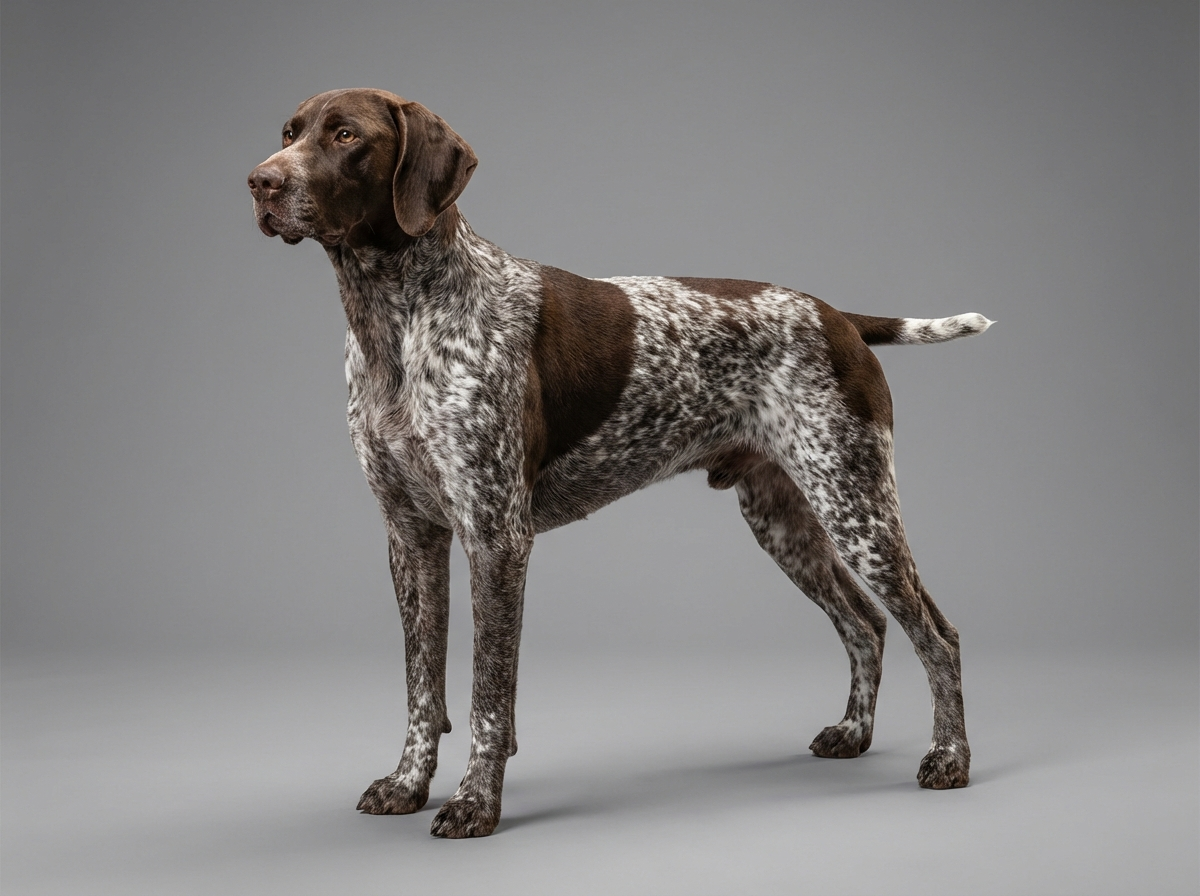
Health
Is this a documented condition in German Shorthaired Pointers?
No, it is mainly a giant-breed and Doberman condition and does not appear on this breed's health list.

Quick answer
Is this a documented condition in German Shorthaired Pointers?
No, it is mainly a giant-breed and Doberman condition and does not appear on this breed's health list.
The gait this condition produces, a sway affecting all four legs rather than just the hindquarters, is the detail that actually distinguishes it from the more common causes of unsteadiness in this breed, and it's worth knowing even though the named syndrome itself is unlikely.
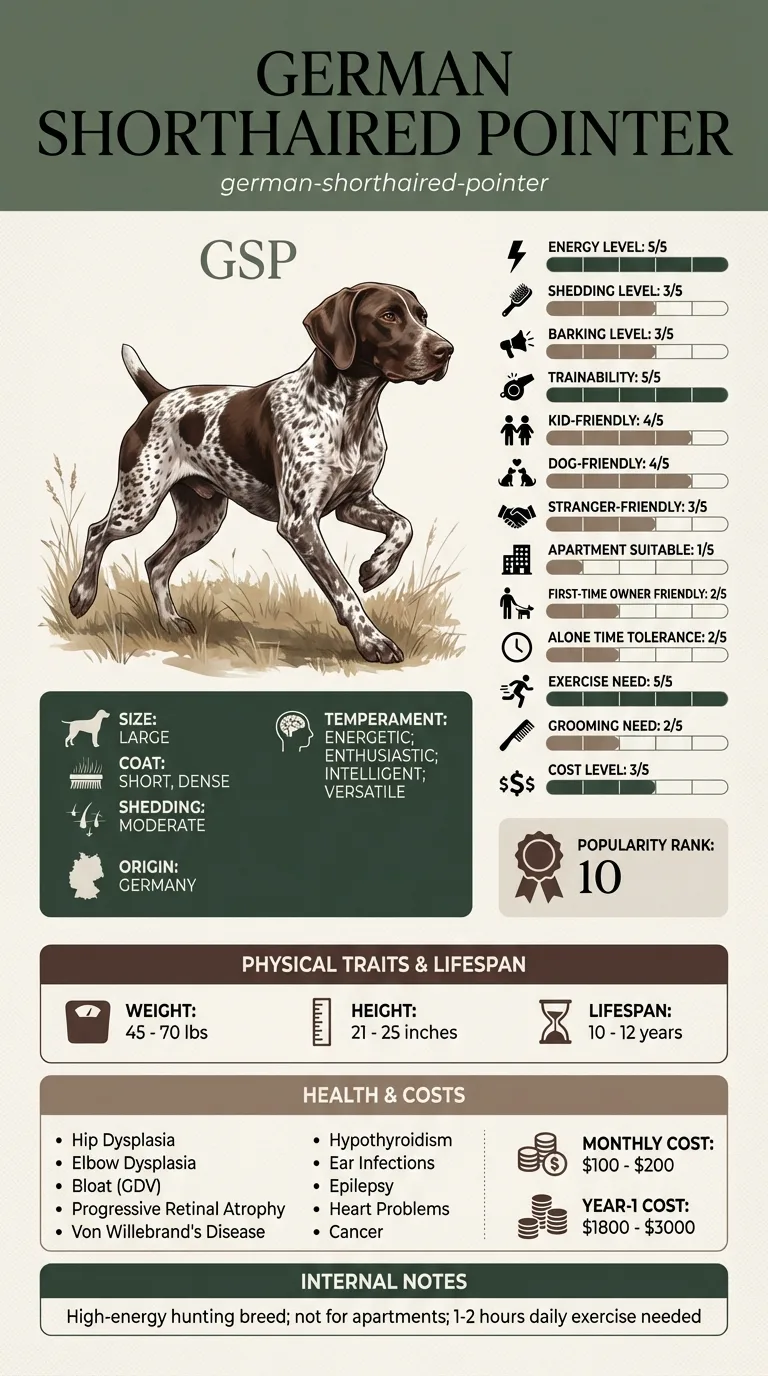
Owners of an older GSP who has developed an unsteady, swaying way of moving and is trying to work out whether it points toward something in the neck or somewhere else entirely.
This guide is not medical advice. If your dog shows pain, sudden behavior change, or worsening symptoms, consult a licensed veterinarian.
Some links may be affiliate links. We may earn a commission at no extra cost to you. We only suggest products we believe are helpful for dog owners.
We research and check what we publish, but we do not warrant that any figure, date, price, or statement is accurate, complete, or current, and we accept no liability for any loss, cost, injury, or other harm arising from the use of this site. Use it as one reference among several. You remain responsible for your own decisions and for your dog's care - confirm anything that matters with a licensed veterinarian or another qualified professional before you act on it. Full disclaimer.
Wobbler syndrome, a compression of the spinal cord within the neck, is mainly documented in giant breeds and Dobermans and does not appear on the German Shorthaired Pointer's health list. A wobbly, all-four-limb gait in this breed still needs a proper neurological workup, but the more likely destination is hip or elbow disease rather than a true cervical diagnosis.
True Wobbler syndrome is not documented in this breed and is uncommon outside the giant and Doberman-type breeds it is mainly associated with. A generalised wobbly gait from some cause, most often orthopedic, is a more realistic concern as this breed reaches its senior years.
The German Shorthaired Pointer is a large but not giant breed at 45 to 70 pounds, and it is not chondrodystrophic, which puts it outside the two groups most associated with true cervical spondylomyelopathy. Its documented predisposition to hip and elbow dysplasia is the far more plausible driver of an aging dog's unsteady gait, since joint pain and weakness can produce a generalised wobble that superficially resembles a neurological problem without one being present.
A long working life on hard or uneven ground accelerates wear on joints already predisposed to dysplasia, which is the environmental factor most likely to bring on the kind of gait change that prompts a Wobbler-syndrome search in the first place. Delayed veterinary attention, letting a gradual change go unexamined for months, is what allows uncertainty about the cause to persist longest.
Book a full neurological and orthopedic exam for any new, persistent gait change, ideally bringing video of how it looks at home. Seek same-day attention for sudden collapse, inability to rise, or rapid worsening over hours rather than weeks, since rapid onset changes the urgency regardless of the eventual diagnosis.
See all German Shorthaired Pointer health problems, which breeds are prone to wobbler syndrome, or the full German Shorthaired Pointer breed guide for temperament, exercise needs and ownership costs.
A neurological and orthopedic exam with X-rays can often be completed in a single visit, with results guiding next steps within days. If advanced imaging is needed, expect a specialist referral and a wait of one to several weeks depending on availability, before a definitive plan is set.
A confirmed, specific diagnosis, whether that turns out to be joint disease, a spinal condition, or something else entirely, followed by a management plan suited to what was actually found rather than continued guessing based on a symptom that can point in several directions.
This breed's other documented back and spine problems, covered elsewhere, concentrate in the lumbar and lumbosacral spine, the lower back, and typically affect the hind end specifically: reluctance to jump, scuffed rear nails, weakness in the back legs. True cervical, or neck-level, spinal cord compression produces a different pattern, because a lesion higher up the spinal cord can affect all four limbs rather than just the hind two, often with a more pronounced sway or floating quality to the walk, sometimes with the head held low or carried stiffly.
The German Shorthaired Pointer is not a chondrodystrophic or giant breed, and Wobbler syndrome specifically is not part of its documented profile. What genuinely happens in an aging GSP with a swaying, uncoordinated gait affecting all four legs is worth a proper neurological exam precisely because the location, neck versus elsewhere, changes everything about what comes next, and a vet cannot skip straight to a rare named syndrome without first localising where the problem actually sits.
This is the general sequence, and it applies whether or not true cervical disease turns out to be involved.

If you think your GSP has wobbler syndrome, the plan is three steps: write down what you have seen and when it started, book a veterinary appointment rather than waiting for the next flare, and take video of the behaviour or symptom before you go — the thing you are worried about rarely happens in the consulting room. Screening in the parents covers hip dysplasia, elbow dysplasia, bloat (gdv).
What the vet visit should produce is a diagnosis and a written plan, not just reassurance: what is being ruled out, what the monitoring interval is, and which signs mean you come back sooner. Ask what the treatment costs across a year rather than per visit, because that is the number that decides whether you are managing this condition or reacting to it.
Between appointments, keep a short log — dates, what you saw, what changed. It is the single most useful thing an owner brings to a follow-up, and for wobbler syndrome it is often what separates a clear pattern from a guess.
Cricket, at nine, developed a swaying, uncertain gait that seemed to affect all four legs, and Padraig, worried after reading about Wobbler syndrome online, brought him in expecting to discuss the neck specifically. A full neurological exam found normal reflexes and proprioception consistent with no spinal cord compression at all. An orthopedic exam told a different story: bilateral early arthritic changes in both hips and early changes in one shoulder, enough combined joint discomfort to produce the generalised, careful, swaying way Cricket had started moving. An MRI was never needed. Padraig started a joint-support plan and modified exercise recommended by his vet, and Cricket's gait, while not back to a young dog's stride, stabilised and stopped worsening.
Key takeaway: The gait looked like it might point to the neck, but a proper exam localised it somewhere far more likely for this breed. Skipping straight to the named syndrome would have meant chasing the wrong diagnosis entirely.
It is not documented on the German Shorthaired Pointer's health list and is mainly a disease of giant breeds and Dobermans. A GSP with a wobbly gait is more likely dealing with something else, but the symptom itself still deserves a proper workup.
The clearest home clue is which legs are affected. Weakness or scuffing limited to the hind legs points toward the lower back or hips, both more likely in this breed, while a sway affecting all four legs points toward the neck and needs a vet exam to localise properly.
It ranges roughly from $500 for an exam and basic X-rays to around $7,000 if advanced imaging like an MRI and specialist referral are needed, with most cases resolved well short of the upper end.
In an older GSP, yes, this is a common and likely explanation, since hip and elbow disease are documented in this breed and can produce a generalised unsteadiness that superficially resembles a neck problem without any spinal cord compression being involved.
Where genuinely diagnosed, management ranges from conservative approaches like activity modification and anti-inflammatory treatment to surgical decompression in more severe cases, decisions made by a veterinary neurologist based on the specific findings.
Not usually as a first step. A neurological and orthopedic exam first localises the problem and often points toward a more likely, less expensive explanation before advanced imaging is needed at all.
No, it is mainly a giant-breed and Doberman condition and does not appear on this breed's health list.
Weakness or swaying affecting all four legs rather than just the hind end.
Roughly $500 to $7,000 depending on whether advanced imaging like an MRI is ultimately needed.
Hip or elbow arthritis, both documented conditions in this breed, are a considerably more likely explanation.
Moderate activity restriction is often reasonable until a vet has localised the problem, since pushing hard exercise before a diagnosis can worsen either a neck or a joint issue.
A one-page prep sheet for this condition: the signs, the questions to ask, what to get priced. Unlocks here.
You get: Vet visit prep sheet
No spam. One-click unsubscribe. See our privacy policy.
Preview page 1 before you decide.