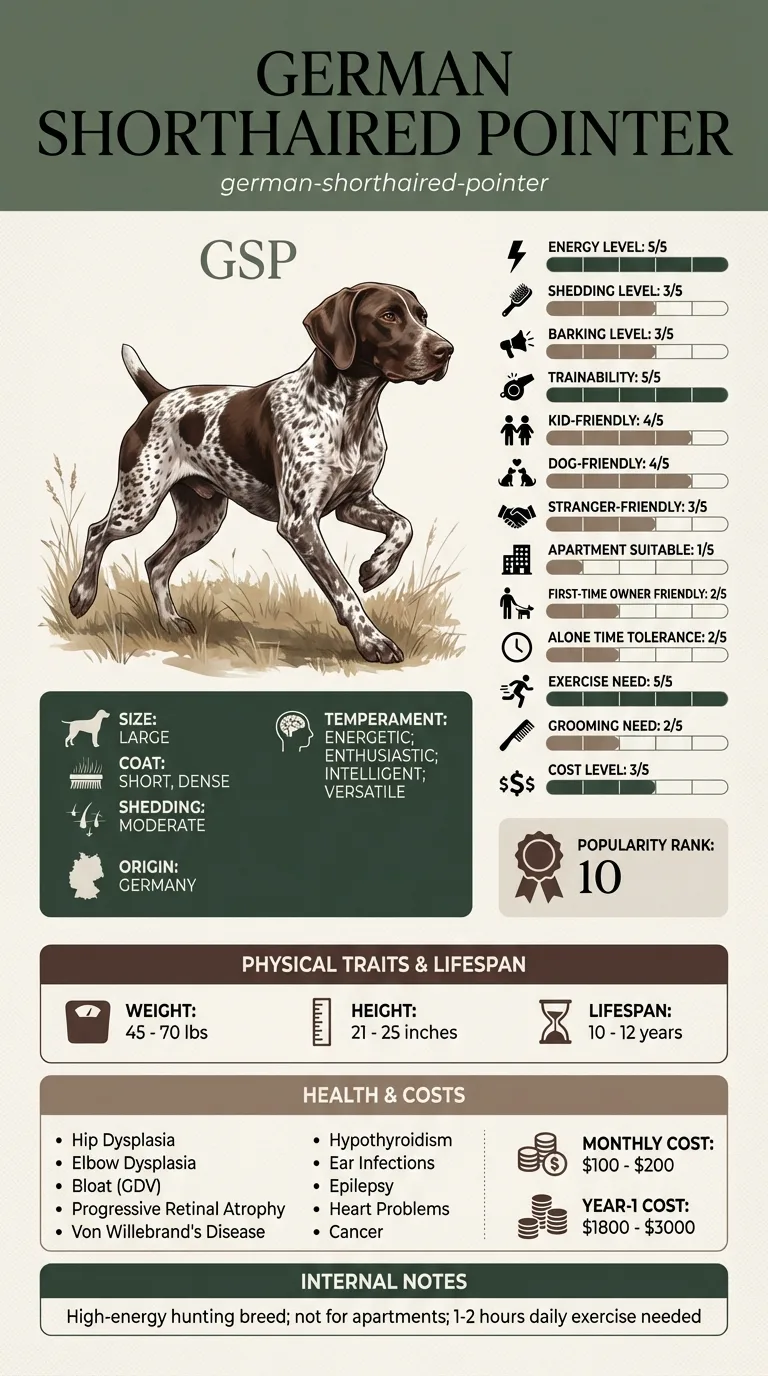
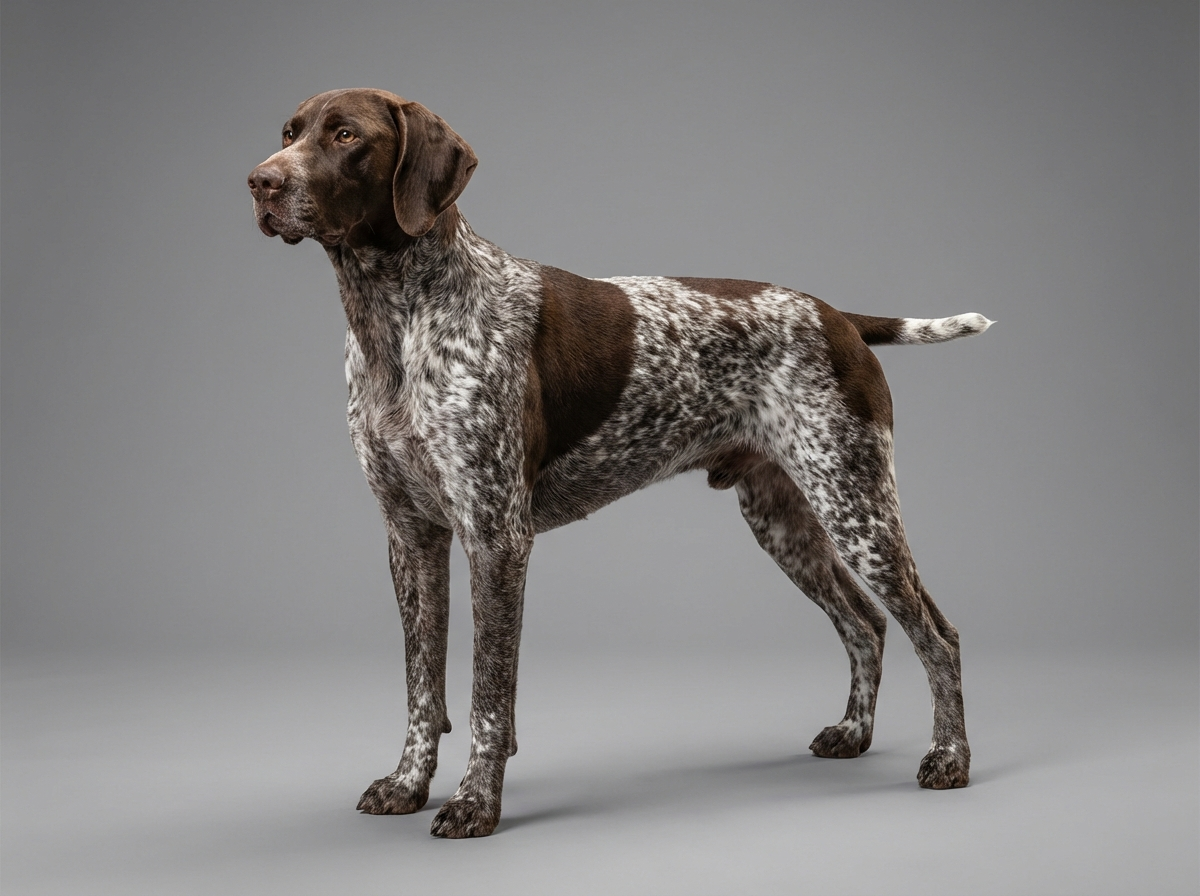
About $135–$260/month, $1,950–$3,300 for year one — among the pricier cities this site tracks, where the district's formal off-leash system genuinely matters for this breed's real exercise needs.
A German Shorthaired Pointer in Washington, DC costs about $135–$260 a month, with the first year around $1,950–$3,300 — among the higher prices this site tracks, in a city where finding a legal spot to actually let this breed run matters as much as any line item in the budget.
Why costs vary
Bloat is a sudden emergency risk given this breed's deep chest — no warning, immediate surgery needed. Hip and elbow dysplasia are the separate, ongoing joint risks worth budgeting real, recurring vet attention for.
Cost summary
These figures reflect Washington, DC's above-national-average pricing, with this breed's genuinely substantial food needs factored in against the real, near-essential value of the district's Dog Exercise Areas.
Estimate · source: estimation · confidence: medium · updated 2026-09-05 · not a quote
First year
$1950 - $3300
Ongoing monthly
$135 - $260
First-year expenses
Item
Cost range
One-time setup (initial vet visit, spay/neuter, gear)
Covers the first exam, vaccinations, spay/neuter if needed, and gear sized for this breed's large adult weight — priced at Washington, DC's above-average rates.
$415 - $705
Monthly expenses
Item
Cost range
Food
Above the national average for a large, highly active breed, consistent with Washington, DC's overall high price level.
$70 - $112
Dog-walking service
A real, near-necessary cost for many owners given DC's apartment and rowhouse-heavy housing stock and this breed's real exercise needs.
$85 - $170
How these numbers are estimated
Each range starts from a national baseline for this breed's size class and is then adjusted for local cost of living and veterinary pricing. The baselines, and the source each one came from, are listed on our sources page (dataset 2026.09). Two inputs, the purchase price and the emergency reserve, have no published national figure we could verify, so we leave them to you rather than invent them.
These are planning estimates, not quotes. Your own numbers will move with the individual dog, your vet and your insurer. Build a budget with your own figures.
Is pet insurance worth it?
For a German Shorthaired Pointer in Washington, DC, insurance is worth taking seriously given the breed's documented bloat and joint risk, on top of the district's above-average general vet pricing.
When insurance makes sense
This breed's well-documented bloat and joint risk makes insurance worth locking in early — a policy bought before any diagnosis covers costs a self-funded emergency fund alone often can't stretch to match.
When you might skip it
Skipping coverage is a reasonable call for an owner who's already set aside a meaningful cash reserve and is comfortable managing a serious diagnosis without monthly premiums.
Ways to save without cutting essentials
Washington, DC's above-average costs are real, but knowing exactly where this breed can legally run off-leash matters more here than any single cost-cutting tip.
Learn the exact locations and hours of the nearest official Dog Exercise Area before assuming any park works.
Watch feeding pace and avoid vigorous exercise right after meals given this breed's real bloat risk.
Get pet insurance quoted while the dog is young, given the breed's bloat and joint risk.
Compare routine-care pricing across a few practices outside the most expensive neighborhoods.
Ask about a wellness plan bundling routine visits, since this breed's frequent monitoring needs add up fast at DC's rates.
Washington, DC Cost Factors: A Formal System This Breed Genuinely Needs
Most cities this site covers leave off-leash access to informal, unposted park hours, but DC codifies it into a specific map of Dog Exercise Areas, and a dog running loose outside those exact lines is a real, ticketable offense, not a gray area. That distinction lands harder on this breed than on most, since its documented exercise needs run to real hours of sustained activity daily, not a token off-leash break. Owners who treat the DEA map as a genuine planning tool, checking hours and locations before a move-in rather than after a citation, avoid a real, avoidable headache.
A large share of DC's dogs live in apartments or rowhouses without a private yard, and between that reality and this breed's real activity level, professional dog-walking shows up as a genuinely routine cost for a lot of owners here.
Washington, DC's overall cost of living runs well above the national average, driven by the district's dense urban core, while the region's real four-season climate at least keeps flea-and-tick prevention seasonal rather than a year-round expense.
German Shorthaired Pointer Cost in Washington, DC - Washington, DC Cost Factors: A Formal System This Breed Genuinely Needs
The Citation That Changed the Routine
A Washington, DC German Shorthaired Pointer owner let their dog off-leash in what seemed like an empty stretch of a neighborhood park, assuming a quick run posed no issue, only to be stopped by an officer and issued a real citation for being outside a designated Dog Exercise Area. The fine was frustrating, but a bit of research turned up a genuine, mapped exercise area less than ten minutes away the family hadn't known existed. The dog's actual exercise routine improved once they stopped guessing and started using the real, legal option.
Key takeaway: In Washington, DC specifically, this breed's real exercise needs require using the district's official system deliberately, not assuming any open space will do.
Frequently asked questions
How much does a German Shorthaired Pointer cost per month in Washington, DC?
About $135–$260, among the higher prices this site tracks, consistent with the district's overall high cost of vet care and pet services.
What's the first-year cost of a German Shorthaired Pointer in Washington, DC?
Roughly $1,950–$3,300, including the initial vet exam, spay/neuter if needed, and gear on top of ongoing monthly costs.
Where can this breed legally go off-leash in DC?
Only within DC's officially designated Dog Exercise Areas — a more formal system than most cities' informal off-leash park hours, and genuinely important given this breed's real, demanding exercise needs.
Is Washington, DC an expensive city for this breed?
Yes — the district's overall cost of living runs well above the national average, and apartment or rowhouse living without a yard makes dog-walking a real, recurring cost for many owners.
Is pet insurance worth it for a German Shorthaired Pointer in Washington, DC?
Especially worth pricing out given this breed's extensive documented joint and bloat risk combined with the district's above-average pricing, bought while the dog is young and before anything is on record.
How much emergency fund should I keep for a German Shorthaired Pointer in Washington, DC?
Around $1,050 covers a typical significant vet visit in this market, reflecting the district's genuinely high general pricing.
About $135–$260/month, $1,950–$3,300 for year one — among the pricier cities this site tracks, where the district's formal off-leash system genuinely matters for this breed's real exercise needs.
German Shorthaired Pointer compared with a lower-maintenance breed – Owners weighing DC's high costs may want to compare against a lower-maintenance breed.
best dogs for active families – Households near a Dog Exercise Area are a genuinely necessary fit given this breed's demanding exercise needs.
This guide is not medical advice. If your dog shows pain, sudden behavior change, or worsening symptoms, consult a licensed veterinarian.
Some links may be affiliate links. We may earn a commission at no extra cost to you. We only suggest products we believe are helpful for dog owners.
We research and check what we publish, but we do not warrant that any figure, date, price, or statement is accurate, complete, or current, and we accept no liability for any loss, cost, injury, or other harm arising from the use of this site. Use it as one reference among several. You remain responsible for your own decisions and for your dog's care - confirm anything that matters with a licensed veterinarian or another qualified professional before you act on it. Full disclaimer.