Health
Are Bichon Frises at risk of bloat?
Low risk. GDV is tied to deep narrow chests and large body size, and this compact 12 to 18 pound breed has neither.

Quick answer
Are Bichon Frises at risk of bloat?
Low risk. GDV is tied to deep narrow chests and large body size, and this compact 12 to 18 pound breed has neither.
GDV is overwhelmingly a disease of large deep-chested dogs, and a 12 to 18 pound Bichon Frise is close to the opposite of that body shape, but the emergency is severe enough that owners deserve a straight answer rather than a reassuring one.
Owners who have read a general dog health article that treats bloat as a universal risk, and who now want to know whether their small companion dog needs the elevated bowls and post-meal rest rules aimed at Great Danes. Also owners facing a genuine emergency who need to know what the treatment decision looks like.
This guide is not medical advice. If your dog shows pain, sudden behavior change, or worsening symptoms, consult a licensed veterinarian.
Some links may be affiliate links. We may earn a commission at no extra cost to you. We only suggest products we believe are helpful for dog owners.
We research and check what we publish, but we do not warrant that any figure, date, price, or statement is accurate, complete, or current, and we accept no liability for any loss, cost, injury, or other harm arising from the use of this site. Use it as one reference among several. You remain responsible for your own decisions and for your dog's care - confirm anything that matters with a licensed veterinarian or another qualified professional before you act on it. Full disclaimer.
Gastric dilatation-volvulus is a surgical emergency in which the stomach distends with gas and then twists, cutting off its own blood supply and obstructing the return of blood to the heart. The dog deteriorates into shock rapidly. It is a disease of large deep-chested breeds, and the Bichon Frise, a compact dog of 9 to 12 inches, sits well outside the classic risk group. The signs are still worth knowing because the condition kills quickly when it occurs.
Common enough in giant breeds that preventive surgery is routinely offered. Rare in small compact dogs like the Bichon Frise, and absent from the breed's documented health issues. Most emergency clinics will see many GDV cases in large breeds for every one in a dog under twenty pounds, which is a useful ratio for putting general internet advice into proportion.
The relevant anatomy is the ratio between chest depth and chest width. A tall dog with a deep keel-shaped chest has a stomach suspended in a space that permits rotation, and the supporting ligaments in such dogs appear to stretch over time. The Bichon Frise has neither the height nor that chest geometry. At 12 to 18 pounds in a square compact frame, its abdominal organs sit in a comparatively crowded space. The breed's documented problems point elsewhere entirely, toward skin, kneecaps, urinary stones, lenses and teeth, and none of those pathways involve stomach position.
The feeding practices blamed for bloat, single huge meals, rapid gulping and heavy exercise immediately afterwards, are worth avoiding for general digestive comfort in any dog. For a Bichon they matter more as a route to vomiting, regurgitation and pancreatitis than as a route to volvulus. Household factors that genuinely raise this breed's odds of an acute abdominal emergency are different: access to fatty leftovers, scavenging on walks, and toys or fabric small enough to swallow but too big to pass. Those are the risks worth managing in a home with this breed in it.
Go straight to an emergency clinic, without phoning ahead and without waiting to see whether it settles, if your dog is retching repeatedly without producing anything, has a rapidly swelling or tight drum-like abdomen, is pacing, restless and unable to settle, is drooling heavily, has pale or grey gums, or collapses. That combination is a surgical emergency in any breed and survival depends on hours. For less dramatic signs, book a same-day appointment for repeated vomiting, a painful abdomen, a hunched praying posture with the front end down and the rear up, or a dog that will not eat and has become unusually flat.
See all Bichon Frise health problems, which breeds are prone to bloat gastric dilatation volvulusgdv, or the full Bichon Frise breed guide for temperament, exercise needs and ownership costs.
If this page has told you that your compact small dog is at low risk, the practical timeline is simply to keep the emergency clinic details to hand and move on. For a dog that does undergo GDV surgery, the first forty-eight hours carry the most risk, particularly from heart rhythm disturbances, and a hospital stay of two to four days is usual. Recovery at home takes two to three weeks of restricted activity. A gastropexy performed at the same time makes recurrence very unlikely.
For the overwhelming majority of Bichon Frise owners, success is correctly recalibrating this risk downward, spending the attention on the digestive problems that genuinely affect small dogs, and knowing the emergency signs well enough to act without hesitating if they ever appear. Where surgery has happened, success is a dog eating normally within a week, no rhythm complications, and a stomach that has been anchored so this cannot repeat.
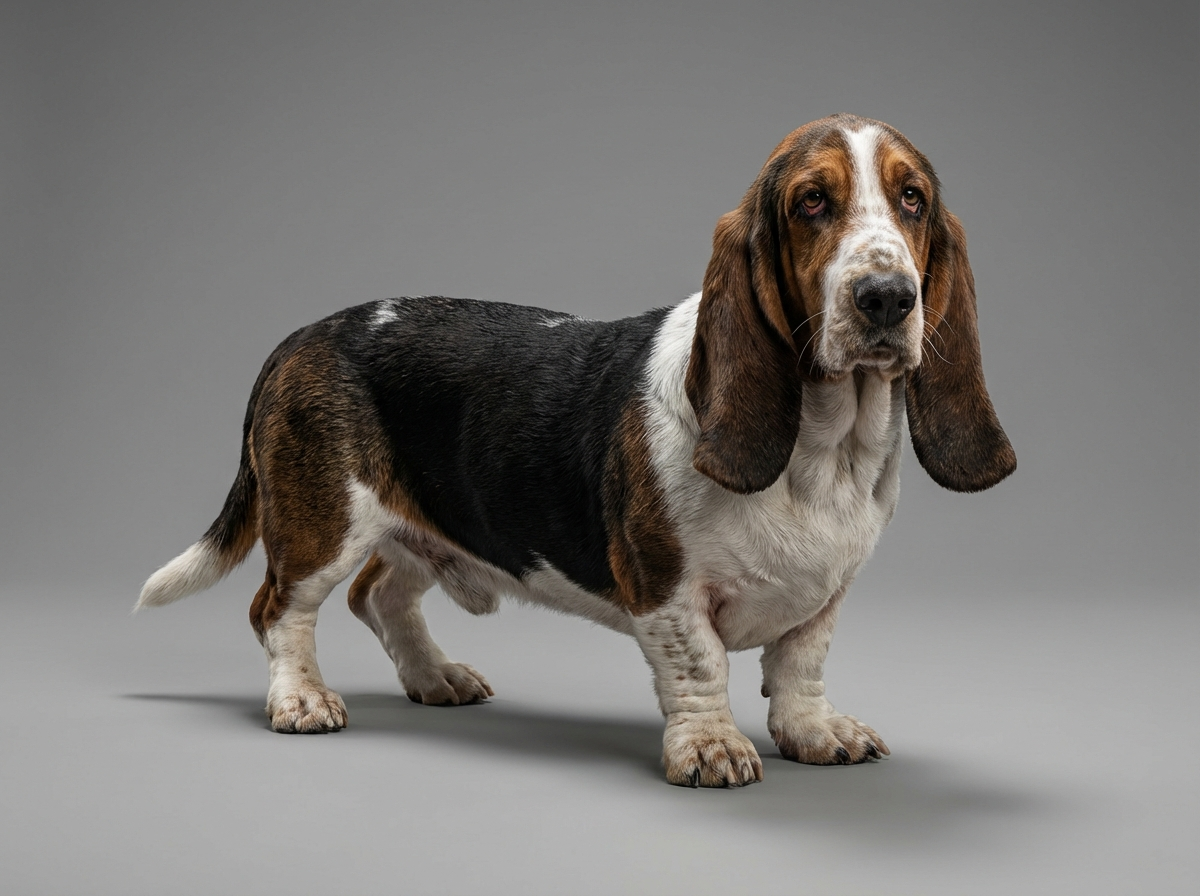
The dogs that twist their stomachs share a specific build: a chest that is deep from spine to breastbone and narrow from side to side. That shape gives the stomach room to swing, and it lengthens the ligaments that would otherwise anchor it in place. Great Danes, standard poodles, Weimaraners, setters and other tall deep-chested breeds fill the emergency caseload.
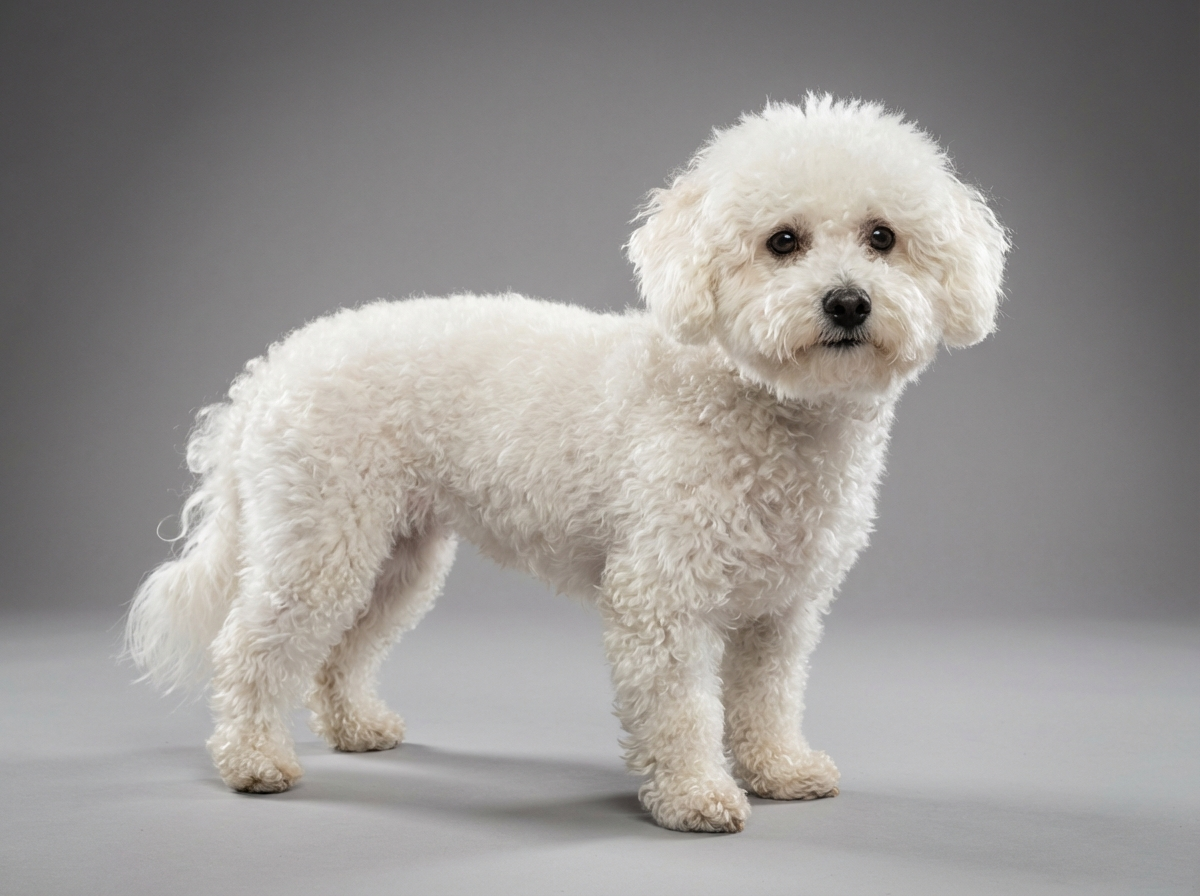
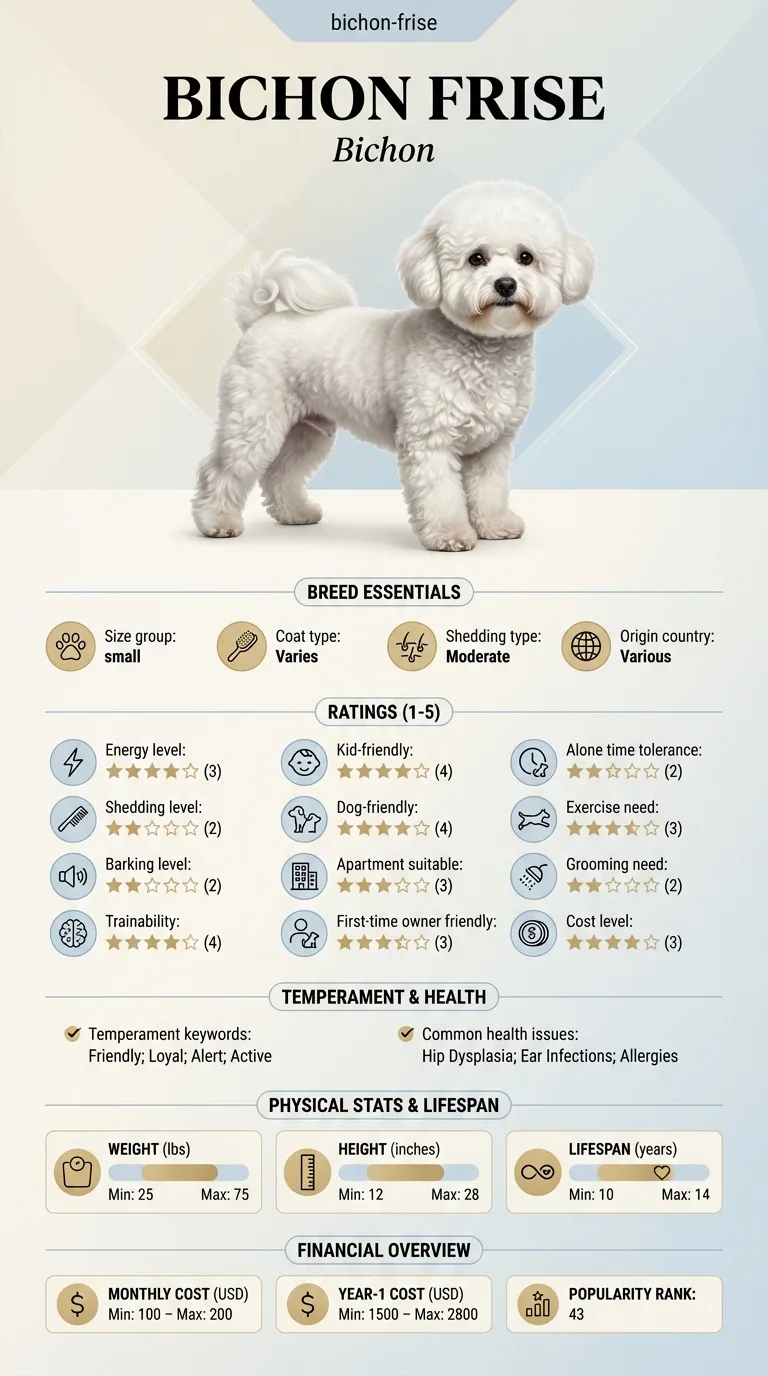
The Bichon Frise is built the other way. It stands 9 to 12 inches tall in a compact, roughly square frame, with a chest that is proportionally broad rather than deep. There is simply less room in that abdomen for a stomach to rotate through.
GDV also does not appear among this breed's documented health problems, which are skin allergies, patellar luxation, bladder stones, cataracts and dental disease.
That is a real reassurance, and it should change what you worry about day to day. It is not a guarantee. Small dogs do occasionally present with gastric dilatation, and any dog with a hugely distended, tight abdomen and retching that produces nothing is an emergency regardless of what the breed statistics say.

Owners see the price range quoted for GDV treatment and struggle to understand why one dog costs a fifth of what another does. The spread is not padding. It reflects how sick the dog is on arrival and what has to be done.
If you think your Bichon has bloat (gastric dilatation-volvulus/gdv), the plan is three steps: write down what you have seen and when it started, book a veterinary appointment rather than waiting for the next flare, and take video of the behaviour or symptom before you go — the thing you are worried about rarely happens in the consulting room. Screening in the parents covers skin allergies, patellar luxation, bladder stones.
What the vet visit should produce is a diagnosis and a written plan, not just reassurance: what is being ruled out, what the monitoring interval is, and which signs mean you come back sooner. Ask what the treatment costs across a year rather than per visit, because that is the number that decides whether you are managing this condition or reacting to it.
Between appointments, keep a short log — dates, what you saw, what changed. It is the single most useful thing an owner brings to a follow-up, and for bloat (gastric dilatation-volvulus/gdv) it is often what separates a clear pattern from a guess.
At half past ten on a Saturday, Aled found his four-year-old Bichon Frise standing in the kitchen with a taut abdomen, drooling and unable to settle. He had read about bloat and drove straight to the emergency clinic, which was exactly the right call. The imaging did not show a twisted stomach. It showed an obstruction: a section of a rubber squeaky toy Bramble had chewed apart that afternoon. Bramble had surgery that night to remove it, and was home in two days. The clinical outcome was good and the bill still ran into four figures. What Aled took away was not that he had been wrong about bloat. It was that he had been right to treat it as an emergency and to drive rather than wait. The urgency was real even though the diagnosis was not the one he expected, and hesitating to be sure would have cost hours Bramble did not have.
Key takeaway: The signs that make you think bloat in a small dog usually turn out to be a different emergency, which is the best possible argument for going immediately rather than waiting to be certain.
It is possible but uncommon. The body shape that predisposes a dog to stomach rotation is a deep narrow chest, and this breed does not have it. Small dogs do occasionally present with gastric dilatation, so the signs remain worth recognising even though the odds are low.
Unproductive retching is the hallmark. The dog makes repeated, forceful attempts to vomit and brings up nothing, or only a little foam. Combined with a swollen, tight, drum-like abdomen and obvious distress, that combination means going to an emergency clinic immediately.
The advice around bowl height came from large breed bloat research, and even there the findings have been mixed and debated. For a 15 pound dog with a low baseline risk, bowl height is not a meaningful safety intervention. Choose a height that lets your dog eat comfortably without straining its neck.
Almost certainly not. A comfortably full stomach in a dog that ate quickly looks round and feels soft, and the dog behaves normally. GDV produces a tight, tympanic abdomen in a dog that is pacing, drooling, retching without result and visibly distressed. The behaviour of the dog is the difference, not the size of the belly.
Preventive gastropexy is routinely discussed for at-risk giant and deep-chested breeds. It is not standard practice for small compact dogs, because the baseline risk does not justify an additional abdominal procedure. Raise it with your vet if you have a specific reason, but expect that reasoning.
In a Bichon, swallowed foreign material causing an obstruction, pancreatitis after a fatty meal, and bladder problems related to the stones this breed is documented to form are all more probable than stomach rotation. All three present as an unwell dog with abdominal signs and all three need prompt veterinary care.
Low risk. GDV is tied to deep narrow chests and large body size, and this compact 12 to 18 pound breed has neither.
Repeated retching that brings nothing up, with a hard swollen belly and a distressed pacing dog. Drive to an emergency clinic without phoning first.
It happens whenever it happens. Know your nearest twenty-four hour clinic and the drive time before you ever need it.
They are useful for dogs that gulp, mainly for comfort and digestion. Treat them as a general good habit rather than as bloat prevention in this breed.
An active accident and illness policy typically would, but confirm your annual limit. A four-figure emergency is exactly the scenario insurance exists for.
A one-page prep sheet for this condition: the signs, the questions to ask, what to get priced. Unlocks here.
You get: Vet visit prep sheet
No spam. One-click unsubscribe. See our privacy policy.
Preview page 1 before you decide.