Health
Is a dog straining to urinate an emergency?
If nothing is coming out, yes. Complete obstruction is life-threatening within about a day and needs same-hour veterinary care.

Quick answer
Is a dog straining to urinate an emergency?
If nothing is coming out, yes. Complete obstruction is life-threatening within about a day and needs same-hour veterinary care.
A male Bichon straining to urinate and producing nothing is a surgical emergency within hours. That single sentence is the most important thing on this page.
Owners whose Bichon has had blood in its urine or sudden accidents in the house, and owners of a dog that has already had stones removed once and been told they usually come back.
This guide is not medical advice. If your dog shows pain, sudden behavior change, or worsening symptoms, consult a licensed veterinarian.
Some links may be affiliate links. We may earn a commission at no extra cost to you. We only suggest products we believe are helpful for dog owners.
We research and check what we publish, but we do not warrant that any figure, date, price, or statement is accurate, complete, or current, and we accept no liability for any loss, cost, injury, or other harm arising from the use of this site. Use it as one reference among several. You remain responsible for your own decisions and for your dog's care - confirm anything that matters with a licensed veterinarian or another qualified professional before you act on it. Full disclaimer.
Urinary stones are among the few conditions genuinely characteristic of this breed. They begin as microscopic crystals in concentrated urine, aggregate over weeks or months, and announce themselves through irritation, blood and frequency. The condition is highly manageable once diagnosed and highly recurrent when the prevention plan is abandoned, and it carries one true emergency in the form of urethral obstruction.
Urinary stones are a leading reason small breed dogs undergo abdominal surgery, and the Bichon Frise is one of the breeds where the problem is documented rather than incidental. Most affected dogs present with irritation signs rather than with obstruction, but obstruction is common enough in males that every owner should know what it looks like.
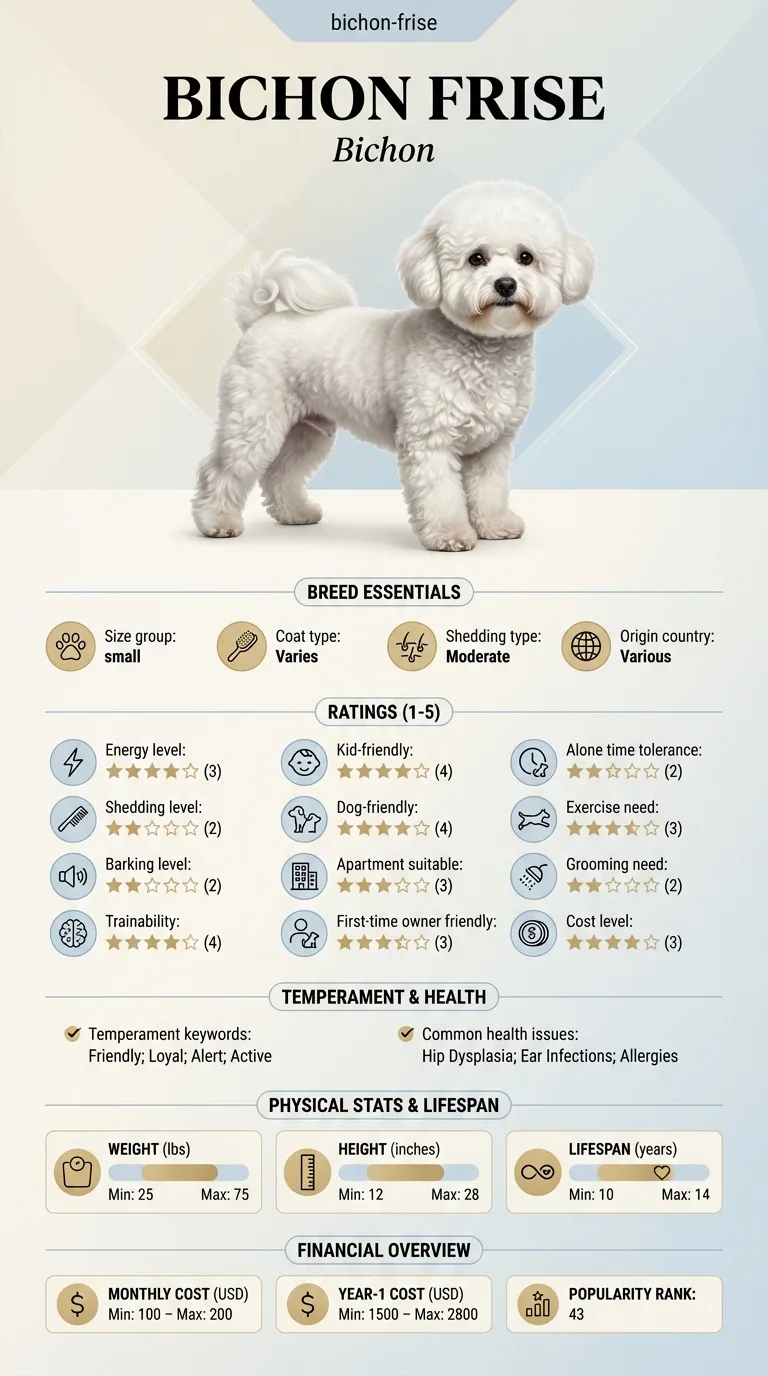
The Bichon carries a documented predisposition to bladder stones, and the mechanism is metabolic rather than mechanical: how the body handles certain minerals determines whether they end up concentrated in urine. Small body size compounds it, because a 12 to 18 pound dog produces a small volume of urine, and small volumes concentrate easily. A urinary tract scaled to a nine to twelve inch dog also means a narrower urethra, so a stone does not need to be large to cause an obstruction.
Water intake is the dominant modifiable factor and it is shaped almost entirely by household habits. A dog fed exclusively dry food with a single bowl in a quiet corner drinks less than the same dog fed wet food with water available in three rooms. Access matters too: a Bichon left for long stretches holds urine, and held urine is concentrated urine sitting in contact with the bladder wall. This breed's low tolerance for being alone often means long days are already part of the picture.
Straining with no urine produced, repeated unproductive squatting, crying while trying to urinate, a tense painful belly, vomiting or collapse in a dog with urinary signs is an emergency. Do not wait for morning; an obstructed dog can deteriorate to kidney failure and dangerous potassium levels within about twenty-four hours. Book within a day or two for blood in the urine, increased frequency, new indoor accidents, or excessive licking at the genital area. Take a fresh urine sample with you if you can collect one.
See all Bichon Frise health problems, which breeds are prone to kidney stones, or the full Bichon Frise breed guide for temperament, exercise needs and ownership costs.
Dissolvable stones typically need four to twelve weeks of a strict diet with imaging to confirm progress. Surgical cases are resolved in a day with a fortnight of recovery. Prevention, by contrast, has no end date: it is a permanent change to how the dog is fed and watered, and periodic urine checks continue for life.
Urine that looks and smells normal, a dog toileting at a normal frequency, follow-up urine tests free of crystals, and no second surgery. Success is defined by the years after the first episode, not by the operation itself.
The word stone covers several very different clinical situations, and knowing which one is in play tells you how urgent it is.
Stones are not interchangeable. Laboratory analysis of a removed stone is not an academic exercise; it is what determines whether recurrence can be prevented and how.
Some stone types dissolve with a specific prescription diet, which can avoid surgery entirely in the right case. Others do not dissolve at all and must be removed physically. Getting that wrong means either an unnecessary operation or weeks of a diet that was never going to work while the dog remains uncomfortable.
Urine pH is central to the chemistry. Certain minerals precipitate in alkaline urine and others in acidic urine, so a diet designed to prevent one type can actively encourage another. This is the reason vets are firm about not swapping between urinary diets on the basis of internet advice or a friend's experience with a different dog.
Urine concentration is the other lever, and it is the one owners control. Dilute urine keeps minerals in solution. Everything in the prevention plan, from wet food to extra water bowls, exists to make the dog drink more and produce more urine.

Buster, a seven-year-old male Bichon, had been squatting more often for about a week. His owner Jeff assumed a mild infection and planned to ring the vet on Monday. On Sunday afternoon Buster squatted eight times in the garden and produced nothing at all, then began pacing and refusing to lie down. Jeff called the emergency service, who told him to come immediately. Buster was obstructed. He was unblocked, stabilised on fluids, and had two stones removed the following day. Analysis identified the type, and he has been on a prescription diet since with no recurrence in four years. His vet's remark was that another twelve hours would have been a very different conversation.
Key takeaway: Frequent squatting is worth an appointment; frequent squatting producing nothing is worth an emergency call. The difference between those two sentences is a day of a dog's life.
Yes. Bladder stones appear on the breed's documented health concerns, which is unusual among the many conditions attributed to Bichons online. If your Bichon shows urinary signs, this should be high on the list of things your vet investigates rather than an afterthought.
Frequent squatting with little produced, straining, blood-tinged or cloudy urine, licking at the genitals more than usual, and house-training accidents in a previously reliable adult. Owners often assume it is a behavioural regression, which delays the appointment by weeks.
Usually with urine testing plus imaging. Some stone types show clearly on radiographs and others need ultrasound to be seen, which is why a clear x-ray does not always rule stones out. Analysis of a retrieved stone completes the picture.
Sometimes. Certain stone types can be dissolved medically over weeks, some small stones can be flushed or retrieved without open surgery, and others need removal from the bladder. An obstructed dog needs intervention immediately regardless of stone type.
Recurrence is common without a prevention plan, and this is the part owners most often let slide once the dog is well again. Lifelong dietary management, encouraging water intake, and periodic urine checks are what keep the second episode from happening.
Do not rely on over-the-counter products, and check with your vet before giving any of them. Some supplements alter urine chemistry in ways that suit one stone type and worsen another, so a product that helped another dog can be actively counterproductive for yours.
If nothing is coming out, yes. Complete obstruction is life-threatening within about a day and needs same-hour veterinary care.
The male urethra is narrower and takes a tighter path, so a stone that would pass in a female can lodge and obstruct.
Surgery with imaging, anaesthesia and stone analysis typically runs into the four figures, plus ongoing prescription diet costs.
Add water to food, feed wet food, place several bowls around the house, and try a pet fountain if the dog prefers moving water.
Yes. Frequent opportunities to empty the bladder reduce the time urine sits concentrated, which is when crystals aggregate.
A one-page prep sheet for this condition: the signs, the questions to ask, what to get priced. Unlocks here.
You get: Vet visit prep sheet
No spam. One-click unsubscribe. See our privacy policy.
Preview page 1 before you decide.