Health
Is bloat an emergency?
Always — bloat progresses quickly and needs immediate emergency veterinary care, never a wait-and-see approach.

Quick answer
Is bloat an emergency?
Always — bloat progresses quickly and needs immediate emergency veterinary care, never a wait-and-see approach.
Bloat is one of the few conditions where the financial question and the survival question are asked in the same breath, because how fast you can act often depends on whether you're prepared to pay for emergency surgery on the spot.
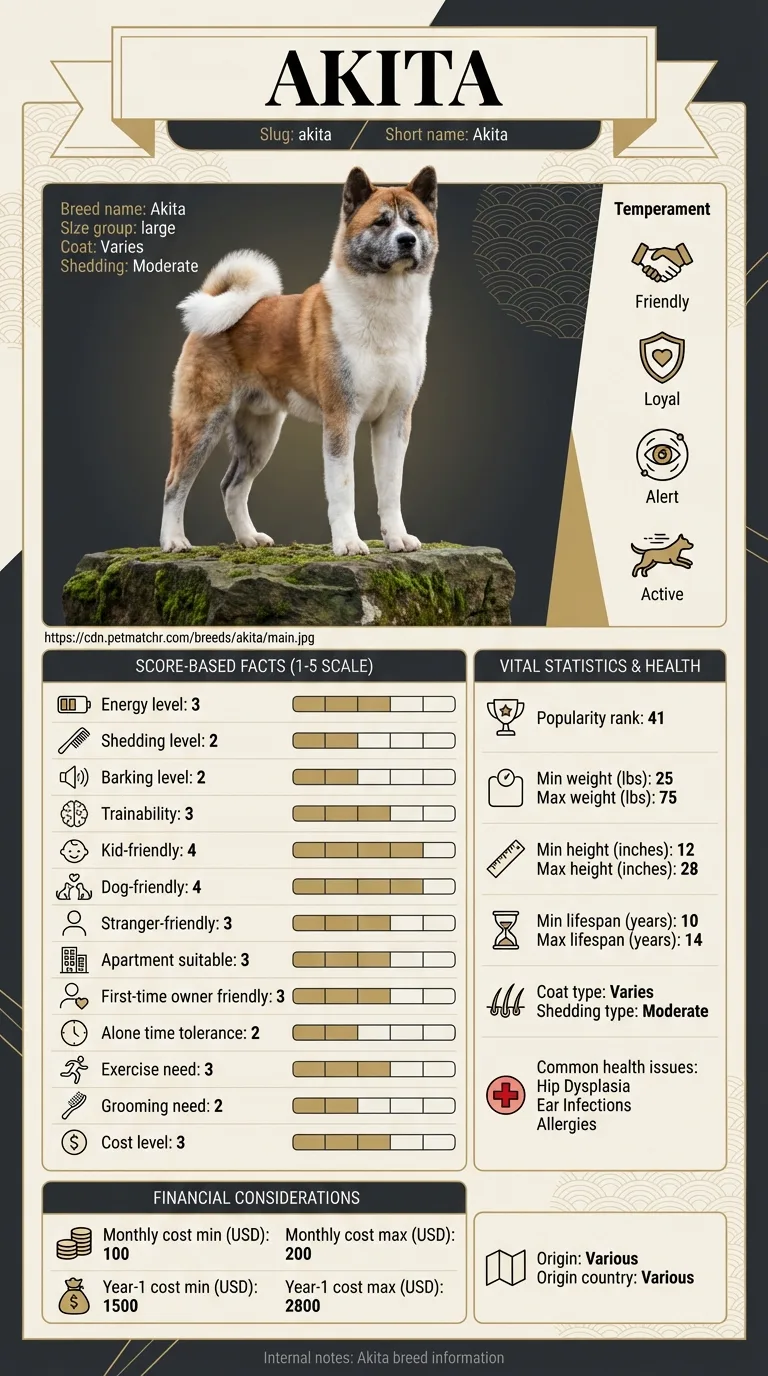
Owners of deep-chested large breeds like the Akita are the population this condition is most associated with, and the financial shock of an emergency bloat surgery bill catches many of them unprepared.
This guide is not medical advice. If your dog shows pain, sudden behavior change, or worsening symptoms, consult a licensed veterinarian.
Some links may be affiliate links. We may earn a commission at no extra cost to you. We only suggest products we believe are helpful for dog owners.
We research and check what we publish, but we do not warrant that any figure, date, price, or statement is accurate, complete, or current, and we accept no liability for any loss, cost, injury, or other harm arising from the use of this site. Use it as one reference among several. You remain responsible for your own decisions and for your dog's care - confirm anything that matters with a licensed veterinarian or another qualified professional before you act on it. Full disclaimer.
Check this first
Because bloat moves fast, the decisions made in the first hour matter enormously for both survival odds and final cost.
If any of these apply, call your vet or an emergency clinic now. The rest of this page is for the cases that are not an emergency.
Bloat, or gastric dilatation-volvulus, is a life-threatening emergency where the stomach fills with gas and twists on itself, and it's specifically named among the Akita's documented common health issues due to the breed's deep chest shape. Beyond the medical urgency, it carries one of the largest and most unpredictable emergency vet bills an Akita owner is likely to face.
Bloat is documented as one of the more common serious health issues in the breed specifically because of chest conformation, placing the Akita alongside other large, deep-chested breeds where lifetime risk is meaningfully elevated compared to small or barrel-chested dogs.
The Akita's deep, relatively narrow chest gives the stomach more room to shift and rotate than it would have in a broader-chested dog, which is the anatomical basis for why this breed carries a documented bloat risk. This is a structural trait, not a behavioral one, which is why prevention focuses heavily on the surgical gastropexy option rather than management alone.
Feeding pattern and timing around exercise are the main environmental levers owners actually control. Large single meals, rapid eating, and vigorous activity too close to mealtimes are all associated with higher bloat risk and are straightforward to adjust in a daily routine.
This is always emergency-only: a distended or hard abdomen, unproductive retching, restlessness, drooling, or labored breathing means immediate emergency veterinary care, day or night, with no waiting period.
Because bloat moves fast, the decisions made in the first hour matter enormously for both survival odds and final cost.
See all Akita health problems, which breeds are prone to bloat gastric dilatation volvulusgdv, or the full Akita breed guide for temperament, exercise needs and ownership costs.
There's no 'recovery timeline' before treatment — this is an immediate-surgery condition. Post-surgical recovery for a straightforward case typically takes 10 to 14 days of restricted activity, longer if tissue had to be removed or complications developed.
Success is prevention through informed feeding habits and, where appropriate, a proactive gastropexy — and for a dog that has already had emergency surgery, a full return to normal eating and activity after recovery.
Unlike most conditions covered in these guides, there is no 'wait and monitor' version of bloat. A distended, hard abdomen, unproductive retching (trying to vomit without bringing anything up), restlessness, drooling, and rapid breathing together mean you go to an emergency vet immediately, at any hour, without waiting to see if it improves.
Bloat progresses from first symptoms to life-threatening in a matter of hours. The stomach twisting on itself cuts off its own blood supply and can compress major blood vessels, sending a dog into shock. Survival odds drop the longer treatment is delayed, which is why this is one of the very few conditions where 'call the vet in the morning' is never the right answer.
Because of this, the most useful preparation isn't a home strategy — it's knowing the location and phone number of your nearest 24-hour emergency veterinary hospital before you ever need it, and having a financial plan (savings, a credit line, or pet insurance) ready to act on immediately.

Diego's five-year-old Akita, Bandit, started pacing and retching without bringing anything up one evening in Chicago. Diego had read about bloat before and recognized the signs immediately, rushing Bandit to the emergency vet rather than waiting to see if it passed. X-rays confirmed a gastric torsion, and Bandit went into surgery within the hour. The bill came to just over $5,000 given the length of surgery and overnight monitoring, an amount Diego was able to manage because he'd enrolled Bandit in pet insurance the year before. Bandit recovered fully, and Diego had a prophylactic gastropexy discussion with his vet to protect against any future recurrence.
Key takeaway: Acting immediately at the first signs of bloat, and having a financial plan in place beforehand, are the two things within an owner's control that make the biggest difference in outcome.
The Akita's deep, narrow chest shape is a recognized risk factor for gastric dilatation-volvulus, similar to other large, deep-chested breeds like Great Danes and Standard Poodles.
Costs commonly range from about $1,500 to $7,500 depending on the severity, how much of the stomach or spleen is compromised, and whether the dog needs extended hospitalization or intensive care afterward.
Most accident-and-illness pet insurance policies cover bloat surgery if the policy was already active before symptoms started, which is a strong argument for enrolling a deep-chested breed like the Akita well before any emergency.
A gastropexy surgically tacks the stomach to the abdominal wall to prevent it from twisting. It doesn't prevent gas buildup itself but essentially eliminates the life-threatening twisting (volvulus) part of the condition, which is what makes bloat so dangerous.
Yes — many owners of deep-chested breeds choose to have it done proactively, sometimes combined with a spay or neuter surgery to avoid a second anesthesia event.
Whether the stomach tissue is still healthy or has died, whether the spleen needs to be removed, how long the dog needs hospitalization, and whether complications like abnormal heart rhythms develop afterward all affect the total bill.
Feeding smaller, more frequent meals, avoiding vigorous exercise right around mealtimes, and using a slow-feed bowl if your dog eats quickly can reduce risk factors, though they don't eliminate risk the way a gastropexy does.
Always — bloat progresses quickly and needs immediate emergency veterinary care, never a wait-and-see approach.
Typically $1,500 to $7,500 depending on severity and whether the spleen or part of the stomach needs removal.
Yes, if the policy was active before symptoms began — this is a strong reason to insure a deep-chested breed early.
Smaller, more frequent meals and avoiding exercise right after eating are commonly recommended risk-reduction steps.
A preventive surgery that tacks the stomach in place to prevent the life-threatening twisting part of bloat.
A one-page prep sheet for this condition: the signs, the questions to ask, what to get priced. Unlocks here.
You get: Vet visit prep sheet
No spam. One-click unsubscribe. See our privacy policy.
Preview page 1 before you decide.