Living
Which is smaller?
The Shih Tzu, by a small margin.

Quick answer
Which is smaller?
The Shih Tzu, by a small margin.
Bichon Frise or Shih Tzu? On paper they differ most on energy level, and on the scales Bichon Frise is the heavier at 12–18 lbs. Here is how the two compare on everything that shapes an ordinary week.
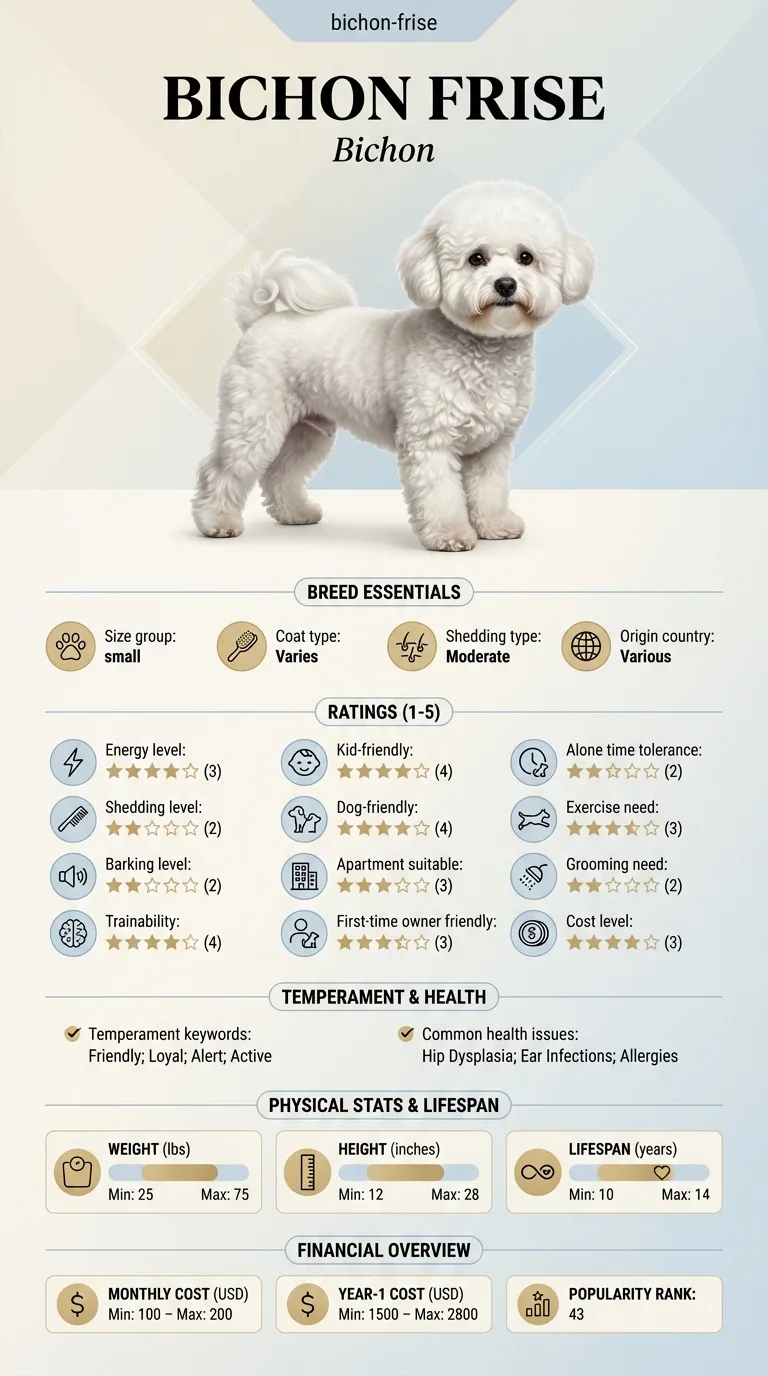
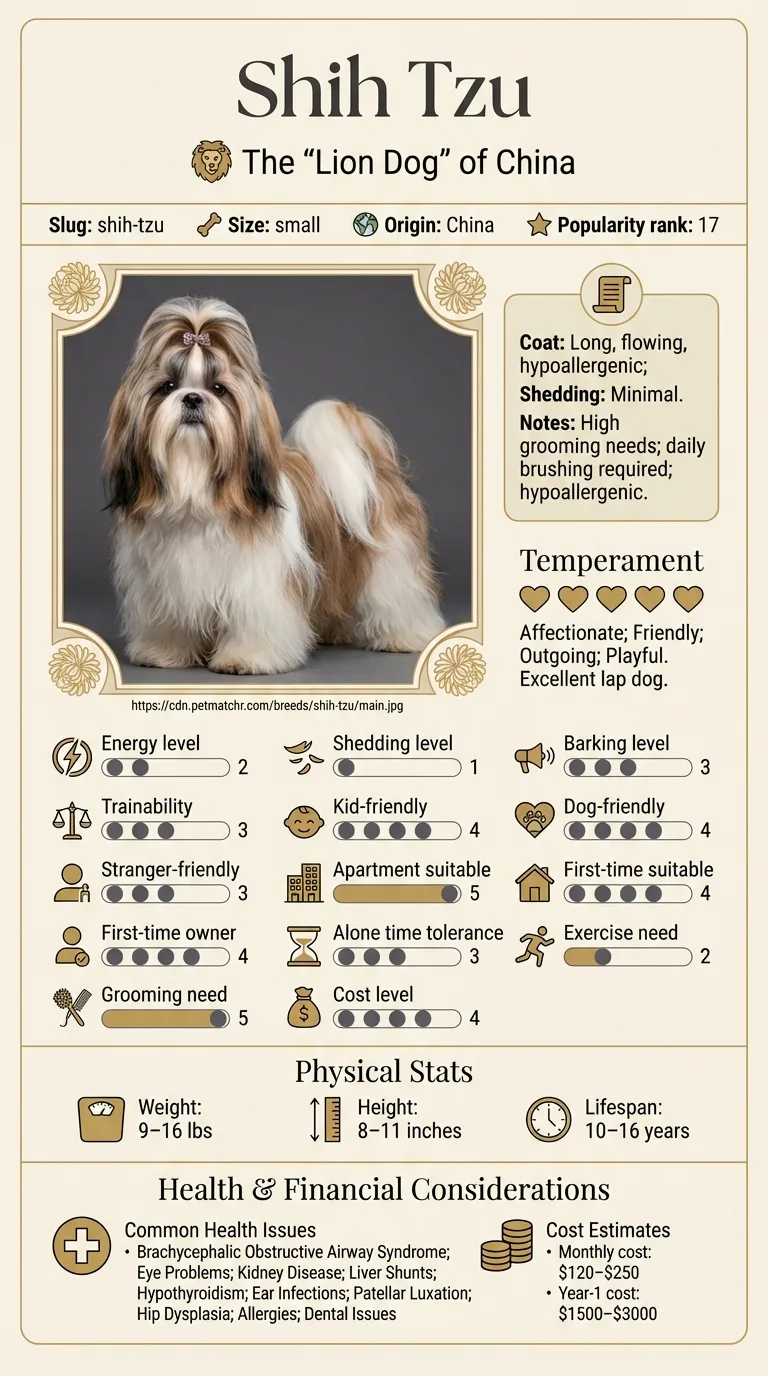
This is for someone already down to Bichon Frise and Shih Tzu and deciding between them. Because the two are so evenly matched, the page works through every axis rather than leading with one. Both rate 5/5 for flats, so housing does not settle this one. Breed history is left out; what follows is what you will actually live with.
Between Bichon Frise and Shih Tzu, they are closer than most pairings, and the choice comes down to temperament, and Shih Tzu is the lower-effort dog of the two to keep.
Choose Bichon Frise if its temperament and look are what you want; on the measurable axes it gives up nothing to the other.
Choose Shih Tzu if the dog will be alone during the working day, a smaller dog suits your car, your home or your back and you want a dog that is more watchful with visitors.
| Feature | bichon frise | shih tzu | Winner |
|---|---|---|---|
| Size class | small | small | Equal |
| Weight | 12–18 lbs | 9–16 lbs | Equal |
| Height | 9–12 in | 8–11 in | Equal |
| Lifespan | 14–15 years | 10–16 years | bichon frise |
| Exercise need | Low (2/5) | Low (2/5) | Equal |
| Grooming need | Very high (5/5) | Very high (5/5) | Equal |
| Shedding | Very low (1/5) | Very low (1/5) | Equal |
| Energy level | Moderate (3/5) | Low (2/5) | Equal |
| Barking | Moderate (3/5) | Moderate (3/5) | Equal |
| Apartment suitability | Very high (5/5) | Very high (5/5) | Equal |
| Good for first-time owners | High (4/5) | High (4/5) | Equal |
| Tolerates being alone | Low (2/5) | Moderate (3/5) | shih tzu |
| Trainability | Moderate (3/5) | Moderate (3/5) | Equal |
| Good with kids | High (4/5) | High (4/5) | Equal |
| Good with other dogs | High (4/5) | High (4/5) | Equal |
| Friendly to strangers | High (4/5) | Moderate (3/5) | bichon frise |
| Cost level | Moderate (3/5) | High (4/5) | bichon frise |
| Coat | Curly, dense double coat | Long, flowing, hypoallergenic | Equal |
| Origin | Various | China | Equal |
| Typical monthly cost | $80–$150 | $120–$250 | Equal |
| Typical first-year cost | $1,100–$2,300 | $1,500–$3,000 | Equal |
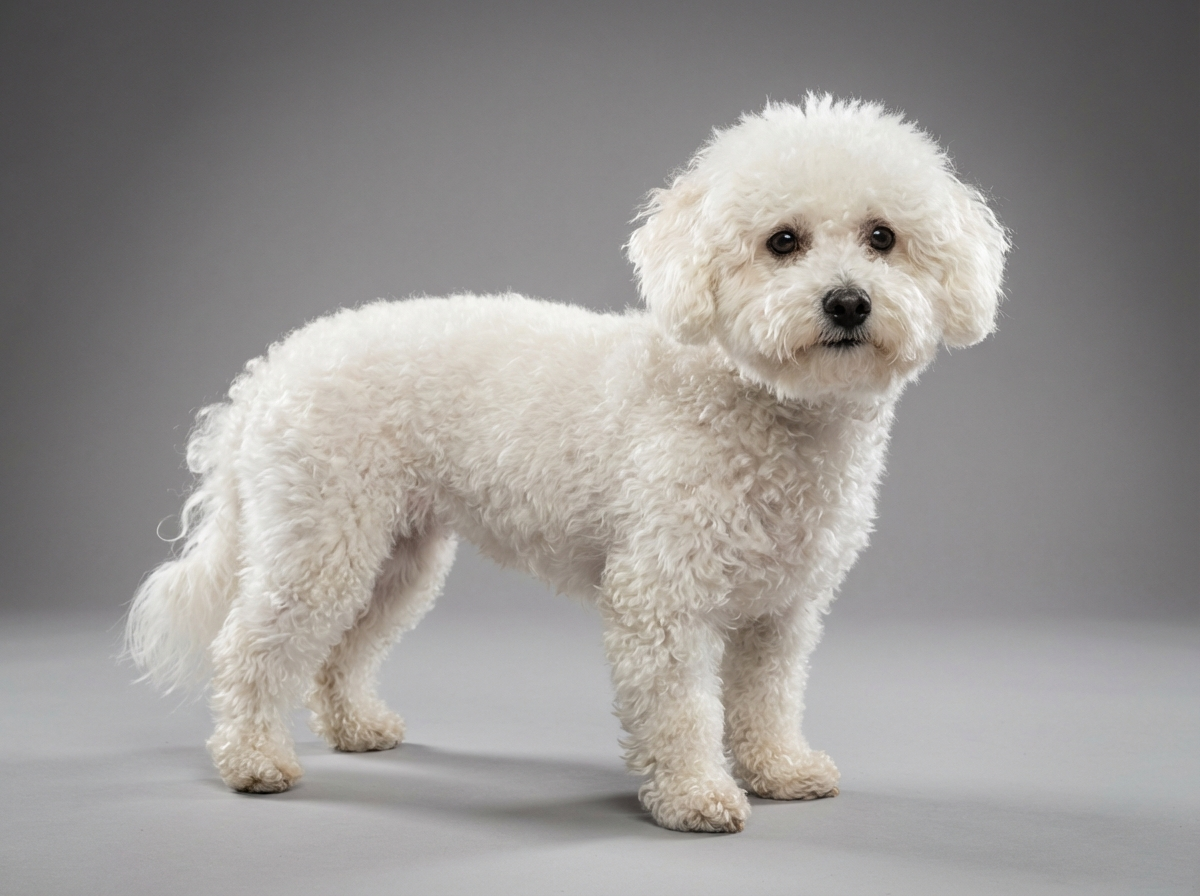
Of all ten pairings in this batch, this is the closest size match: the Shih Tzu at 9–16 lbs and 8–11 inches is, if anything, marginally smaller than the Bichon Frise's 12–18 lbs and 9–12 inches. Where they diverge is coat structure rather than scale — the Bichon's curly, dense double coat versus the Shih Tzu's long, flowing coat, notably tagged hypoallergenic in addition to the Bichon's own low-shed profile. The Shih Tzu's flatter, brachycephalic face also gives it a visibly different silhouette from the Bichon's rounder muzzle despite the near-identical body size.
Exercise need ties at Low (2/5) for both breeds, and energy level runs a similarly relaxed Moderate (3/5) for the Bichon against Low (2/5) for the Shih Tzu — both are companion breeds built for indoor life and short walks rather than serious daily mileage. Neither breed will pressure an owner for long hikes or vigorous play sessions, making this one of the least demanding exercise comparisons in the entire lineup; the choice here comes down almost entirely to other factors, not activity level.
Grooming and shedding are identical on paper: both rated Very high (5/5) grooming need and Very low (1/5) shedding. The Bichon's curly coat mats without frequent brushing and needs regular trims to maintain its round shape, while the Shih Tzu's long, flowing coat tangles just as readily and is often kept in a shorter 'puppy cut' by pet owners precisely to reduce the daily brushing burden. Either way, budget for a groomer every four to six weeks and daily at-home brushing in between.
Apartment suitability ties at Very high (5/5) for both breeds, as does barking at Moderate (3/5) — either dog suits close-quarters living equally well from a noise and space standpoint. The one gap is alone-tolerance: the Shih Tzu is rated Moderate (3/5) against the Bichon's Low (2/5), suggesting it may handle a longer solo stretch during a workday somewhat more gracefully than the more Affectionate, attention-craving Bichon, though neither breed should be left alone for extended periods regularly.
Trainability and first-time-owner suitability both tie between the two — Moderate (3/5) trainability and High (4/5) first-time-owner rating apiece — making this one of the more evenly matched training comparisons in the lineup. Both are Playful, Affectionate companion breeds bred more for temperament than working drive, so neither will pick up complex commands especially fast, but both are patient and food-motivated enough for a first-time owner to make steady progress with consistent, positive-reinforcement sessions.
Kids and other-dogs ratings tie at High (4/5) for both breeds, and their temperament descriptions overlap closely — the Bichon's Playful, Cheerful, Affectionate profile versus the Shih Tzu's Affectionate, Friendly, Outgoing, Playful one. The one point of separation is stranger-friendliness: High (4/5) for the Bichon against Moderate (3/5) for the Shih Tzu, a modest gap that still leaves the Shih Tzu a generally sociable dog, just marginally more reserved on first meeting new people than the outright gregarious Bichon.
The Bichon's 14–15 year lifespan is both longer and narrower than the Shih Tzu's wider 10–16 year range, meaning a Shih Tzu's outcome varies more from dog to dog. The health lists diverge sharply in scope: five conditions for the Bichon versus ten for the Shih Tzu, including Brachycephalic Obstructive Airway Syndrome, Kidney Disease, and Liver Shunts tied to the breed's flat-faced structure. Prospective Shih Tzu owners should ask breeders specifically about airway and liver screening given how frequently these appear on the breed's health list.
Cost level runs Moderate (3/5) for the Bichon against High (4/5) for the Shih Tzu, with the numbers showing a real gap: $80–$150 monthly and $1,100–$2,300 in year one for the Bichon versus $120–$250 monthly and $1,500–$3,000 for the Shih Tzu. Given how closely matched the two breeds are on size and daily care needs, the higher Shih Tzu cost likely reflects the breed's longer health-concern list and the specialized veterinary care brachycephalic dogs sometimes require.
Bichon Frise weighs 12–18 lbs and lives 14–15 years; Shih Tzu weighs 9–16 lbs and lives 10–16 years. No rated axis separates them by more than a single point, which makes this one of the closer pairings on the site. They are level on apartment suitability, barking and good with other dogs, so those cannot decide it. The comparison marks an easier option only where one exists. Facts like weight and country of origin are not scored. Both dogs are rated from the same dataset, which is what makes the numbers comparable with each other even though any individual dog sits somewhere inside its breed's range.

The Shih Tzu, at 9–16 lbs and 8–11 inches versus the Bichon's 12–18 lbs and 9–12 inches, though both are firmly small dogs.
Its coat is described as long, flowing, and hypoallergenic in addition to being a Very low (1/5) shedder, similar to the Bichon's own low-allergen profile.
The Shih Tzu, rated Moderate (3/5) versus the Bichon's Low (2/5).
Yes — Brachycephalic Obstructive Airway Syndrome appears on its health list, a common concern for the breed's flat facial structure.
The Shih Tzu, at $120–$250 monthly and $1,500–$3,000 in year one versus $80–$150 and $1,100–$2,300 for the Bichon.
Very — both are described as Playful and Affectionate, with the Shih Tzu adding Friendly and Outgoing and the Bichon adding Curious and Cheerful.
The Bichon Frise, rated High (4/5) versus the Shih Tzu's Moderate (3/5).
The Shih Tzu, by a small margin.
The Bichon Frise, rated High (4/5).
The Shih Tzu, rated Moderate (3/5) versus Low (2/5).
The Bichon Frise, at roughly $400–$700 less in year one.
Secure checkout on Stripe. We never see your card.
7-day money-back guarantee. Instant access.
Health information here is general and is not veterinary advice. If your dog shows pain, sudden behaviour change, or worsening symptoms, consult a licensed veterinarian.
Some links on this site are affiliate links. We may earn a commission at no extra cost to you, and we only suggest products we believe are helpful for dog owners.
We research and check what we publish, but we do not warrant that any figure, date, price, or statement is accurate, complete, or current, and we accept no liability for any loss, cost, injury, or other harm arising from the use of this site. Use it as one reference among several. You remain responsible for your own decisions and for your dog's care - confirm anything that matters with a licensed veterinarian or another qualified professional before you act on it. Full disclaimer.
Match your lifestyle to the right dog.
Take quizNot sure which breed is right for you? Take our 2-minute quiz to find out.
Take the quiz