Health
When is surgery necessary for a luxating patella?
Higher grades, worsening cases, and highly active dogs are typically steered toward surgery, while stable lower grades in less active dogs may be managed conservatively.

Quick answer
When is surgery necessary for a luxating patella?
Higher grades, worsening cases, and highly active dogs are typically steered toward surgery, while stable lower grades in less active dogs may be managed conservatively.
For a dog built to retrieve for hours, the question stops being whether the kneecap slips and becomes whether the joint can support the life this breed actually wants to lead.
Owners whose Welsh Springer's luxating patella has progressed to a higher grade, or whose dog's activity level makes even a stable lower grade worth correcting surgically, are the ones facing this decision most directly.
This guide is not medical advice. If your dog shows pain, sudden behavior change, or worsening symptoms, consult a licensed veterinarian.
Some links may be affiliate links. We may earn a commission at no extra cost to you. We only suggest products we believe are helpful for dog owners.
Once a Welsh Springer Spaniel's luxating patella progresses beyond an occasional, self-correcting skip, or once the dog's activity level makes even a stable case worth correcting, surgery becomes a genuine consideration. The decision weighs grade, progression, and lifestyle, and recovery for an active, working-bred dog takes real patience over months, not weeks.
Progression to a grade requiring surgical correction is not universal, since many lower-grade cases remain stable for years, but among dogs with progressive or higher-grade luxation, especially highly active ones, surgery becomes a common and often recommended path.
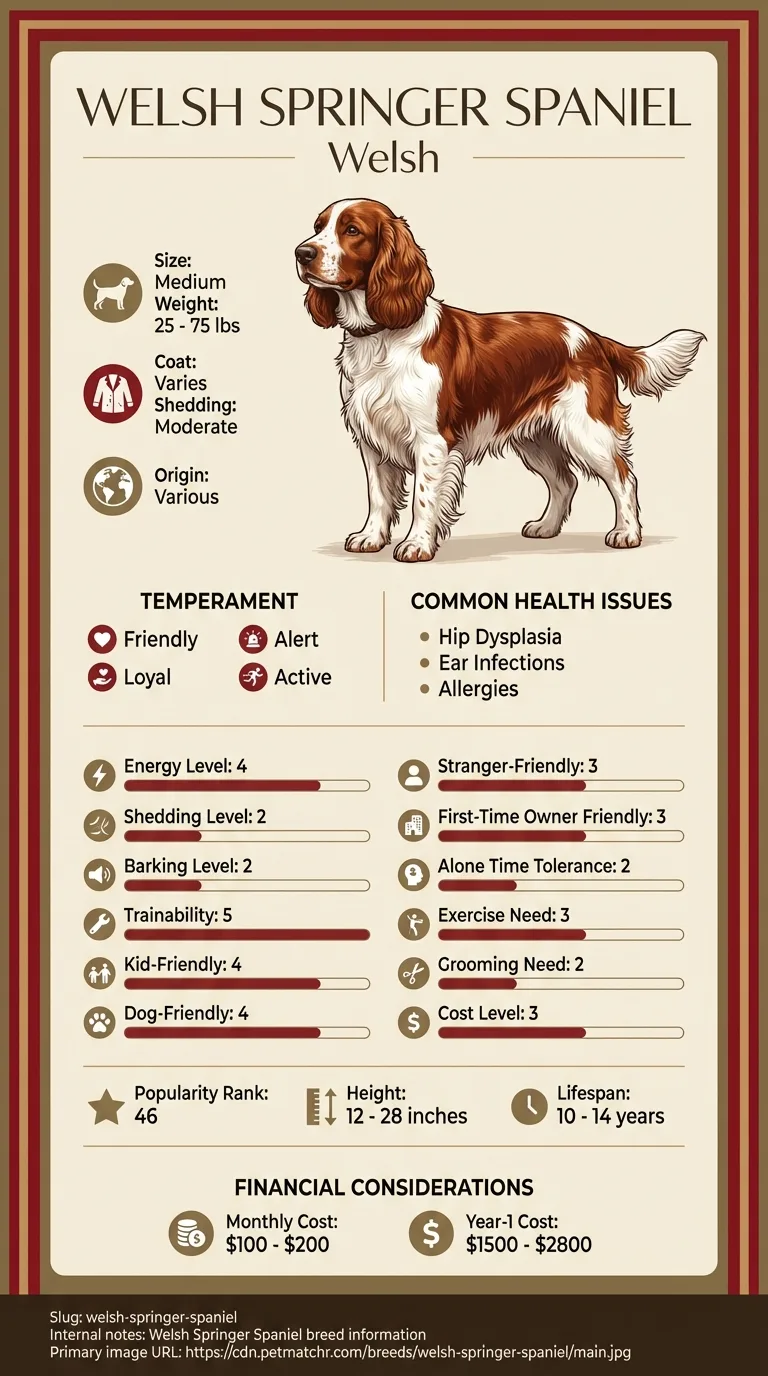
For a Welsh Springer Spaniel with real working drive and an exercise need most sources rate a 4 out of 5, sustained running, jumping, and quick direction changes place ongoing stress on a kneecap already prone to slipping, which can push a case from stable and monitorable toward one that benefits more clearly from surgical correction.
Continued high-impact activity without modification, ongoing weight gain, and delayed veterinary reassessment after an initial diagnosis can all accelerate the progression that eventually makes surgery the recommended path rather than conservative management.
Talk to your vet about surgery timing if your dog's luxation grade is high, worsening, or clearly limiting activity, since earlier correction generally means less accumulated arthritis. Sudden severe lameness, visible joint swelling, or a leg the dog will not bear weight on at all after surgery warrants prompt veterinary attention.
See all Welsh Springer Spaniel health problems, which breeds are prone to patellar luxation, or the full Welsh Springer Spaniel breed guide for temperament, exercise needs and ownership costs.
Initial surgical healing typically takes six to eight weeks, with a full, gradual return to running and fieldwork for an active breed generally taking two to four additional months.
Success looks like a dog that returns to its normal running, jumping, and retrieving activities with a stable, correctly tracking kneecap, rather than simply the absence of an obvious limp.
The decision usually comes down to grade, progression, and how the dog's lifestyle interacts with the joint. A stable, low-grade luxation in a dog with a lighter activity level might be managed for years with weight control and activity modification alone. But a higher grade, one that keeps the kneecap out of place most of the time, or a case that is visibly worsening, tends to push toward surgical correction, since the joint is accumulating arthritis with every step taken in an abnormal position.
For a genuinely athletic, working-bred dog like this one, activity level itself becomes part of the decision. A dog that spends real time running, jumping, and retrieving puts far more cumulative stress on an unstable kneecap than a dog that mostly walks around the block, and vets often factor that lifestyle into the surgery conversation even at a grade that might otherwise be managed conservatively in a less active dog.
Surgical correction typically involves deepening the groove the kneecap sits in, realigning the tendon that guides it, or both, depending on what is driving the instability in that specific dog's knee. The goal is a joint that tracks normally during movement rather than one that continues slipping sideways with every stride.

Getting a working-bred dog back to full activity after knee surgery takes real patience, since the joint needs time to heal properly even after the dog itself feels ready to run.
If you think your Welsh has patellar luxation, the plan is three steps: write down what you have seen and when it started, book a veterinary appointment rather than waiting for the next flare, and take video of the behaviour or symptom before you go — the thing you are worried about rarely happens in the consulting room. Screening in the parents covers hip dysplasia, ear infections, epilepsy.
What the vet visit should produce is a diagnosis and a written plan, not just reassurance: what is being ruled out, what the monitoring interval is, and which signs mean you come back sooner. Ask what the treatment costs across a year rather than per visit, because that is the number that decides whether you are managing this condition or reacting to it.
Between appointments, keep a short log — dates, what you saw, what changed. It is the single most useful thing an owner brings to a follow-up, and for patellar luxation it is often what separates a clear pattern from a guess.
When Marcus's Welsh Springer, Beckett, was diagnosed with a grade three luxating patella that had clearly worsened over the previous year, his vet recommended surgery given both the grade and Beckett's active weekend hiking and retrieving routine. Marcus was nervous about the recovery timeline given how much Beckett loved to run. The surgery went well, and Marcus followed the strict six-week leash-only recovery period closely, resisting Beckett's obvious eagerness to sprint before he was cleared. A physical therapist guided a gradual reconditioning plan over the following two months, slowly building back up to full off-leash activity. Four months after surgery, Beckett was back to full weekend hikes, moving noticeably more evenly than he had in the year leading up to the diagnosis.
Key takeaway: Surgery for an active dog is only half the fix; the disciplined, gradual return to full activity afterward is what actually determines whether the joint holds up long term.
The decision depends on the grade, whether it is progressing, and how active the dog's lifestyle is. Higher grades, worsening cases, and highly active dogs tend to be steered toward surgery, while stable lower grades in less active dogs are sometimes managed conservatively.
Surgery typically involves deepening the groove the kneecap sits in, realigning the guiding tendon, or both, depending on what is causing the instability in that particular knee.
Initial healing typically takes six to eight weeks with strict activity restriction, but a full return to running, jumping, and fieldwork for an active breed can take several months of gradual reconditioning.
Yes, especially for a working breed with real drive to run and jump. Its activity level puts more cumulative stress on an unstable kneecap, which is often factored into the surgery decision even at a grade that might be managed conservatively in a less active dog.
Most dogs regain full or near-full function after successful surgery and proper rehabilitation, though outcomes are generally best when surgery is done before severe arthritis has already developed.
Swelling, unusual heat around the joint, renewed limping, or reluctance to bear weight during the recovery period are signs to report to your vet promptly rather than waiting them out.
Higher grades, worsening cases, and highly active dogs are typically steered toward surgery, while stable lower grades in less active dogs may be managed conservatively.
Initial healing takes six to eight weeks with restricted activity, but a full return to running and fieldwork can take several months of gradual reconditioning.
Yes, an active, working-bred dog puts more cumulative stress on an unstable kneecap, which often factors into the decision even at a grade that might otherwise be managed conservatively.
Costs vary by severity and whether one or both knees are involved, and surgery represents a significant expense, making early insurance enrollment worth considering.
Most dogs regain full or near-full function, especially when surgery happens before significant arthritis develops and rehabilitation is followed closely.
A one-page prep sheet for this condition: the signs, the questions to ask, what to get priced. Unlocks here.
You get: Vet visit prep sheet
No spam. One-click unsubscribe. See our privacy policy.
Preview page 1 before you decide.