Miniature Schnauzer Liver Shunts: What You Need to Know
Miniature Schnauzer liver shunts can pose serious health risks for your dog. These conditions affect how blood flows through the liver, leading to various health issues.
Owners of Miniature Schnauzers, particularly first-time pet parents, often face challenges when dealing with liver shunts. These issues can lead to anxiety and uncertainty about their pet’s health, making it essential to understand the signs and treatment options.
Important reminder
This guide is not medical advice. If your dog shows pain, sudden behavior change, or worsening symptoms, consult a licensed veterinarian.
Some links may be affiliate links. We may earn a commission at no extra cost to you. We only suggest products we believe are helpful for dog owners.
What this problem looks like
Miniature Schnauzer liver shunts are serious health issues that arise from abnormal blood flow in the liver. This condition can lead to a variety of symptoms, including poor growth, vomiting, and seizures. These symptoms often appear in young dogs and can significantly impact their quality of life.
Common triggers
Genetic predisposition
Poor diet or sudden dietary changes
Stressful situations or environmental changes
Liver shunts are relatively common in Miniature Schnauzers, particularly in puppies. Early detection is crucial, as untreated liver shunts can lead to severe complications or even be life-threatening.
Why this happens
Breed factors
Miniature Schnauzers can be prone to liver shunts due to genetic factors. These small dogs may inherit conditions affecting the liver's blood flow, leading to portal vein abnormalities. Their size and breed traits can make them more susceptible to this serious health issue.
Environment factors
Environmental factors can also play a role in the development of liver shunts. Poor diet, exposure to toxins, or lack of proper veterinary care can exacerbate underlying genetic vulnerabilities. Stressful living conditions or improper socialization may further increase the risk of health problems in Miniature Schnauzers.
What you can try
At-home strategies
Ensure a balanced diet with high-quality dog food to support liver health. Consult your vet for specific dietary recommendations tailored to your Miniature Schnauzer.
Monitor your dog for any unusual behavior, such as lethargy, vomiting, or changes in appetite. Keeping a daily log of their behavior can help identify problems early.
Provide a calm and stable environment for your Miniature Schnauzer. Reducing stress through regular exercise and playtime can improve their overall health.
When to consider a trainer
If your Miniature Schnauzer exhibits signs of anxiety or behavior issues, consider consulting a professional trainer. Look for someone experienced in handling small breeds and health-related behavioral problems. A trainer can help implement strategies to manage anxiety and improve your dog's coping skills.
When to talk to your vet
If you notice symptoms like jaundice, excessive drooling, or severe lethargy, it's crucial to contact your veterinarian immediately. These could be signs of liver issues, including liver shunts. Regular check-ups and open communication with your vet are vital for your dog's health.
Realistic expectations
Expect noticeable improvements in your Miniature Schnauzer's health within 3 to 6 months of treatment and proper care.
Success means your Schnauzer shows increased energy, improved appetite, and fewer digestive issues. Regular vet check-ups confirm stable liver function.
Mistakes that make this worse
Avoiding these common mistakes can help improve your Miniature Schnauzer's condition and well-being.
Ignoring symptoms: Many owners overlook signs like vomiting or lethargy. Early detection is crucial for effective treatment.
Delaying veterinary care: Putting off visits to the vet can worsen liver shunt issues. Prompt medical attention is essential for managing the condition.
Feeding inappropriate diets: Providing low-quality or high-protein food can stress the liver. Stick to vet-recommended diets designed for liver health.
Skipping medication: If your vet prescribes medication, be consistent with doses. Missing doses can lead to complications.
Neglecting regular check-ups: Regular vet visits are important for monitoring your Miniature Schnauzer's health. These check-ups help adjust treatment as needed.
Avoiding training: Some owners may shy away from behavior training. Training not only improves behavior but can also reduce stress, which benefits overall health.
Not managing stress: A chaotic environment can negatively impact your dog's health. Create a calm space for your Miniature Schnauzer to relax.
When Miniature Schnauzer Liver Shunts Are an Emergency
Recognizing when Miniature Schnauzer liver shunts become an emergency is crucial. If you notice severe symptoms such as vomiting, seizures, or lethargy, you should call your vet immediately. These signs indicate that the liver is significantly affected, and prompt treatment is essential to prevent serious complications.
On the other hand, if your Mini Schnauzer is experiencing mild symptoms like slight lethargy or occasional gastrointestinal upset, you may opt to monitor them at home. It's important to keep a close eye on their behavior and eating habits. Make a plan to consult your vet if symptoms persist or worsen over the next few days.
Here’s a quick breakdown to help you decide:
**Emergency Signs:**
- Severe vomiting or diarrhea
- Seizures or disorientation
- Sudden changes in appetite or thirst
- Jaundice (yellowing of the skin or eyes)
- Unusual behavior or extreme lethargy
**Mild Cases to Monitor:**
- Occasional mild vomiting
- Slight changes in energy levels
- Mild gastrointestinal upset
- Temporary loss of appetite
When in doubt, it's always best to err on the side of caution. Your vet can provide guidance on whether immediate intervention is needed or if a wait-and-see approach is more appropriate.

Miniature Schnauzer Liver Shunts: What You Need to Know - When Miniature Schnauzer Liver Shunts Are an Emergency
A Journey to Health: Caring for Bella the Miniature Schnauzer
When Lisa adopted Bella, her Miniature Schnauzer, she noticed her new puppy often seemed tired and had digestive problems. After a vet visit, Lisa learned Bella had liver shunts, a serious condition that needed careful management. Determined to help Bella thrive, Lisa followed a strict diet and medication routine. Over the months, Bella's energy levels improved significantly, and she became a lively companion. Lisa also joined a support group for other Schnauzer owners dealing with similar issues, which provided her with valuable tips and emotional support.
Key takeaway: With the right care and support, you can manage Miniature Schnauzer liver shunts effectively and give your dog a happy, healthy life.
Frequently asked questions
What are Miniature Schnauzer liver shunts?
Miniature Schnauzer liver shunts are abnormal connections in the blood vessels that bypass the liver. This condition can lead to serious health issues as toxins aren't filtered properly. It's essential to recognize the symptoms early for effective management.
Why does my Miniature Schnauzer have liver shunts?
Genetics often play a key role in Miniature Schnauzer liver shunts. If there's a family history of this condition, your dog may be at higher risk. Always consult your vet for a thorough examination if you suspect liver issues.
How can I tell if my Miniature Schnauzer has liver shunts?
Common signs of liver shunts in Miniature Schnauzers include poor growth, lethargy, and gastrointestinal upset. If you notice any of these symptoms, seek veterinary care immediately for diagnostic tests. Early detection is crucial for treatment.
How to stop Miniature Schnauzer liver shunts?
Preventing liver shunts is challenging since they are often congenital. However, regular vet check-ups and a balanced diet can help manage symptoms. Always follow your vet's advice on diet and lifestyle to support your dog's liver health.
What treatment options are available for Miniature Schnauzer liver shunts?
Treatment for liver shunts may include surgery to correct the blood flow, medications to manage symptoms, and dietary changes. Regular follow-ups with your vet are essential to monitor your dog's condition. Each case is unique, so tailored care is important.
Can Miniature Schnauzers with liver shunts live a normal life?
With proper management, Miniature Schnauzers with liver shunts can live fulfilling lives. Treatments and lifestyle adjustments can help them thrive. Consult your vet for an individualized plan to support your dog's health.
What are the signs of liver shunts in Miniature Schnauzers?
Common signs of liver shunts include poor growth, lethargy, and vomiting. You might also notice behavioral changes such as confusion or disorientation. If you see these symptoms, it's crucial to consult your vet.
Can liver shunts be managed in older Miniature Schnauzers?
Yes, liver shunts can be managed in older dogs, but treatment options may vary. Your vet will assess the severity and recommend a suitable plan, which might include dietary changes and medication. Regular monitoring is essential for a healthy life.
Why does my Miniature Schnauzer have liver shunts?
Miniature Schnauzers can have liver shunts due to genetic factors or congenital abnormalities. These shunts create abnormal blood flow in the liver, leading to various health issues. Discussing this with your vet can help you understand your dog's specific situation.
How can I help prevent liver shunts in my Miniature Schnauzer?
While not all liver shunts can be prevented, responsible breeding practices can help reduce the risk. Regular vet check-ups and a healthy diet can also support your dog's liver health. Always consult a vet for the best preventive measures.
Are there specific diets for Miniature Schnauzers with liver shunts?
Yes, dogs with liver shunts often require special diets to reduce ammonia levels and support liver function. Low-protein diets are commonly recommended, but it's essential to work with your vet to create a tailored meal plan based on your dog's needs.
What are Miniature Schnauzer liver shunts quick tips?
Keep up with regular vet visits and monitor for symptoms like vomiting or lethargy. A balanced diet and proper hydration are crucial. Early intervention can significantly improve your dog's quality of life.
Training
How to train a Miniature Schnauzer with liver shunts?
Focus on gentle training methods and avoid stressful situations. Positive reinforcement works best, and short training sessions can help keep their stress levels low. Always be patient and observant of their energy levels.
Costs
What costs are associated with Miniature Schnauzer liver shunts?
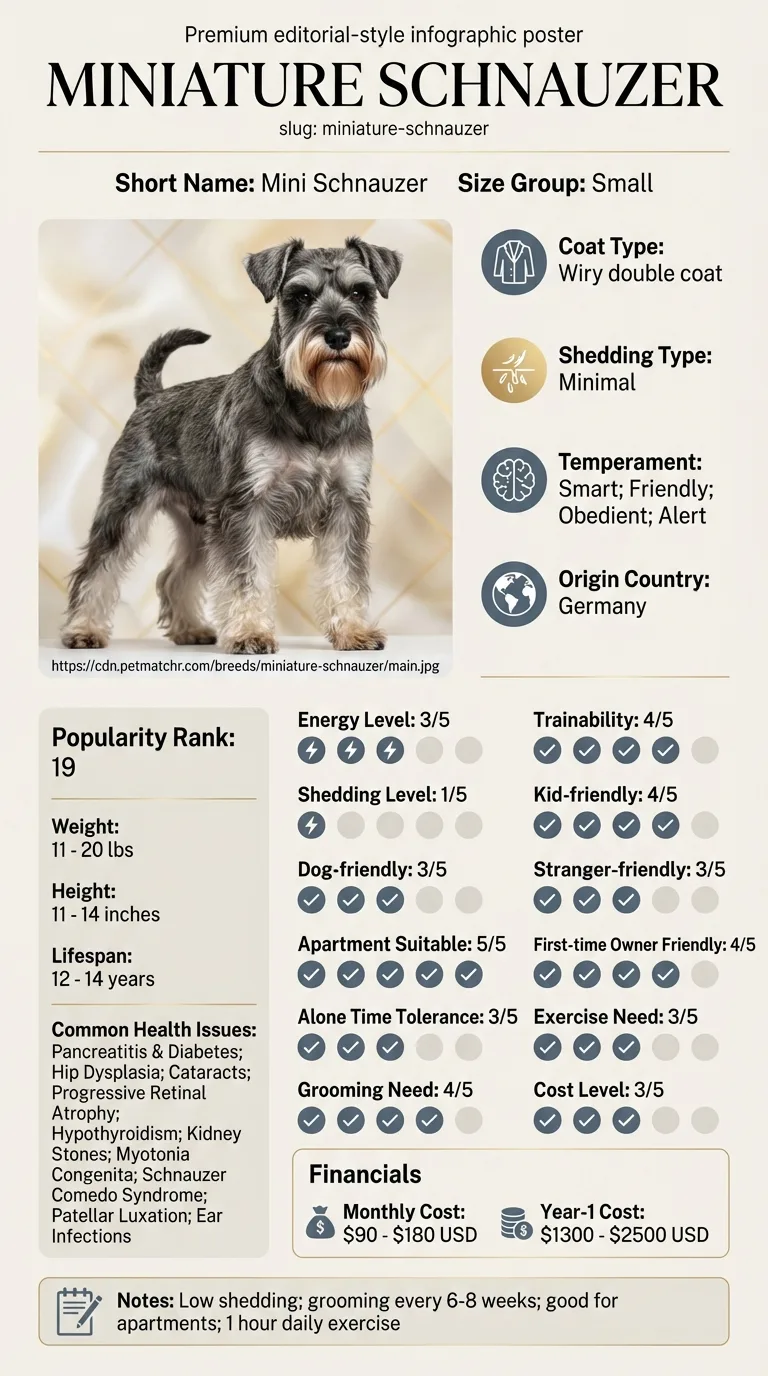
Costs can vary significantly based on treatment options but expect to spend between $1,300 and $2,500 in the first year. Ongoing veterinary care and special diets may add to these costs, so budget accordingly.