Health
What does gastropexy actually prevent?
The stomach twisting (volvulus), not the gas distension itself — this converts a potentially fatal event into a far more manageable one.

Quick answer
What does gastropexy actually prevent?
The stomach twisting (volvulus), not the gas distension itself — this converts a potentially fatal event into a far more manageable one.
The stomach can still distend with gas after a gastropexy, but it can no longer flip. That distinction — preventing the twist rather than the bloating itself — is the whole logic behind why this surgery is worth understanding as its own decision, separate from emergency treatment and feeding habits.
Owners who have heard gastropexy mentioned, often in passing during a spay or neuter consultation, and are trying to decide whether it's worth pursuing proactively rather than only if an emergency happens first.
This guide is not medical advice. If your dog shows pain, sudden behavior change, or worsening symptoms, consult a licensed veterinarian.
Some links may be affiliate links. We may earn a commission at no extra cost to you. We only suggest products we believe are helpful for dog owners.
We research and check what we publish, but we do not warrant that any figure, date, price, or statement is accurate, complete, or current, and we accept no liability for any loss, cost, injury, or other harm arising from the use of this site. Use it as one reference among several. You remain responsible for your own decisions and for your dog's care - confirm anything that matters with a licensed veterinarian or another qualified professional before you act on it. Full disclaimer.
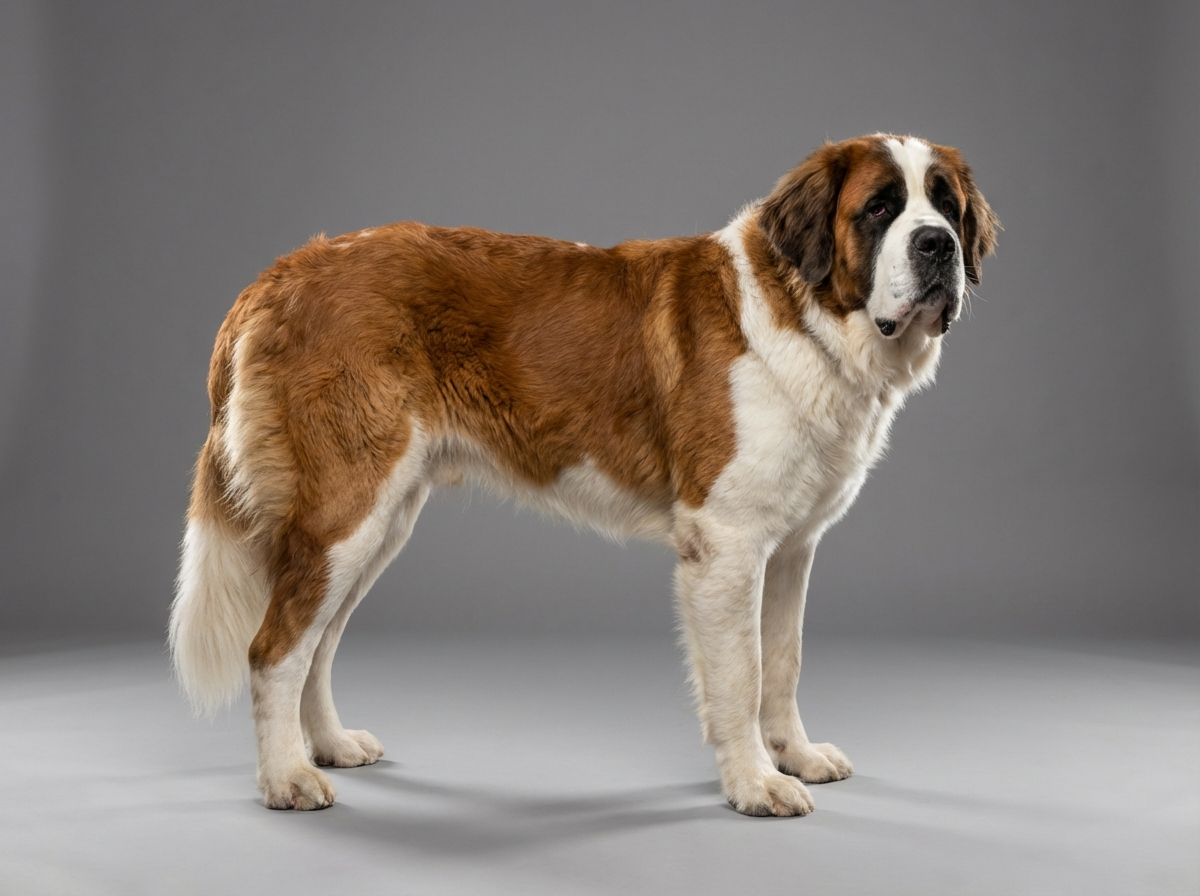
Preventive gastropexy is a surgical procedure that permanently attaches the stomach to the abdominal wall, preventing the life-threatening twist (volvulus) at the center of a bloat emergency without preventing gas distension itself. Given this breed's documented deep-chested GDV risk, many owners discuss the procedure proactively with their vet, often combining it with an already-planned surgery.
Given this breed's documented deep-chested GDV risk, proactive gastropexy is a commonly discussed option among vets who regularly treat giant breeds, though the decision to actually pursue it remains individual to each owner and dog.
This breed's deep, narrow chest is the underlying anatomical reason gastropexy is considered at all — the same conformation that gives the stomach room to swing and twist is what the surgery directly addresses by fixing the stomach in place.
The decision to pursue gastropexy is shaped more by individual circumstances than environment: whether another surgery is already planned, a family history of GDV, and a specific vet's clinical experience and recommendation all factor into an owner's choice.
Raise this topic well before any scheduled surgery, ideally at a wellness visit in your dog's first year or two. If your dog has already had a gastropexy and still shows signs of gastric dilatation — visible distension, restlessness, unproductive retching — treat it as urgent and seek prompt veterinary evaluation, even though a true volvulus is now far less likely.
See all Saint Bernard health problems, which breeds are prone to gastric dilatation volvulus gdvbloat, or the full Saint Bernard breed guide for temperament, exercise needs and ownership costs.
The procedure itself typically adds a modest amount of time to an already-planned surgery, with a similar overall recovery period. As a standalone procedure, it involves its own surgery and recovery, generally one to two weeks.
Success is a stomach that can no longer twist into a life-threatening position, understood as risk reduction rather than complete bloat elimination — daily feeding habits remain a worthwhile complement to the surgery, not a redundant afterthought.
During a gastropexy, a surgeon creates a permanent attachment between the stomach wall and the body wall, most commonly performed laparoscopically or through a small incision. This tacking prevents the stomach from rotating on its axis, which is the mechanism that cuts off blood supply during a true volvulus. Critically, it does not prevent the stomach from distending with gas — a dog with a gastropexy can still experience gastric dilatation, the bloating phase — but that distension without the twist is a far less dangerous, more manageable situation that rarely requires emergency surgery on its own.
This is why gastropexy is often described as converting a potentially fatal emergency into, at worst, an uncomfortable but survivable episode. It is most commonly performed proactively alongside another abdominal surgery a dog is already undergoing, such as a spay, since this avoids a second separate anesthesia event, though it can also be performed as its own standalone procedure.
This is ultimately a personal risk-tolerance decision made with your vet, weighing a modest proactive cost and small surgical risk against a documented, sometimes life-threatening breed risk.

When Ivy, a young Saint Bernard, was scheduled for her spay, her vet raised the option of a combined gastropexy given her breed's documented GDV risk. Ivy's owner had not previously considered proactive surgery for a condition that hadn't happened yet, and took a week to research and think it over before the appointment. Ultimately, she decided the modest added cost and minimal additional recovery time were worth the peace of mind, given how serious and expensive an actual GDV emergency could become. Ivy recovered from the combined procedure without complications, and her owner has continued her regular slow-feeding routine in the two years since, treating the surgery as one layer of protection rather than a reason to abandon daily prevention habits.
Key takeaway: The decision wasn't really about whether Ivy would ever develop GDV — nobody can predict that — it was about whether the modest proactive cost was worth removing the most dangerous part of the risk before it ever had a chance to happen.
No — it prevents the stomach from twisting (the volvulus), which is the life-threatening part, but the stomach can still distend with gas. That distension alone is far less dangerous and rarely requires emergency surgery.
Most commonly alongside another abdominal surgery already planned, like a spay, to avoid a second anesthesia event, though it can also be done as a standalone procedure at any point.
When combined with an already-planned surgery, the added cost is typically modest compared to the cost of emergency GDV surgery later, though exact pricing varies by clinic.
Many vets discuss it proactively for deep-chested giant breeds given the documented GDV risk, though it remains an individual decision made with your vet based on your specific dog and circumstances.
Yes — since the stomach can still distend with gas even after gastropexy, feeding habits like slower eating and smaller meals remain worthwhile for comfort and general digestive health.
It carries the generally low surgical and anesthesia risk typical of a routine procedure, which is worth weighing against this breed's documented GDV risk in a direct conversation with your vet.
The stomach twisting (volvulus), not the gas distension itself — this converts a potentially fatal event into a far more manageable one.
Most commonly alongside another already-planned abdominal surgery, like a spay, to avoid a separate anesthesia event.
Many owners find the modest added cost reasonable compared to the potential cost and risk of emergency GDV surgery later.
No — the stomach can still distend with gas, so feeding habits and awareness remain important even after the procedure.
It's an individual decision made with your vet, weighing this breed's documented GDV risk against the surgery's own modest risk and cost.
A one-page prep sheet for this condition: the signs, the questions to ask, what to get priced. Unlocks here.
You get: Vet visit prep sheet
No spam. One-click unsubscribe. See our privacy policy.
Preview page 1 before you decide.