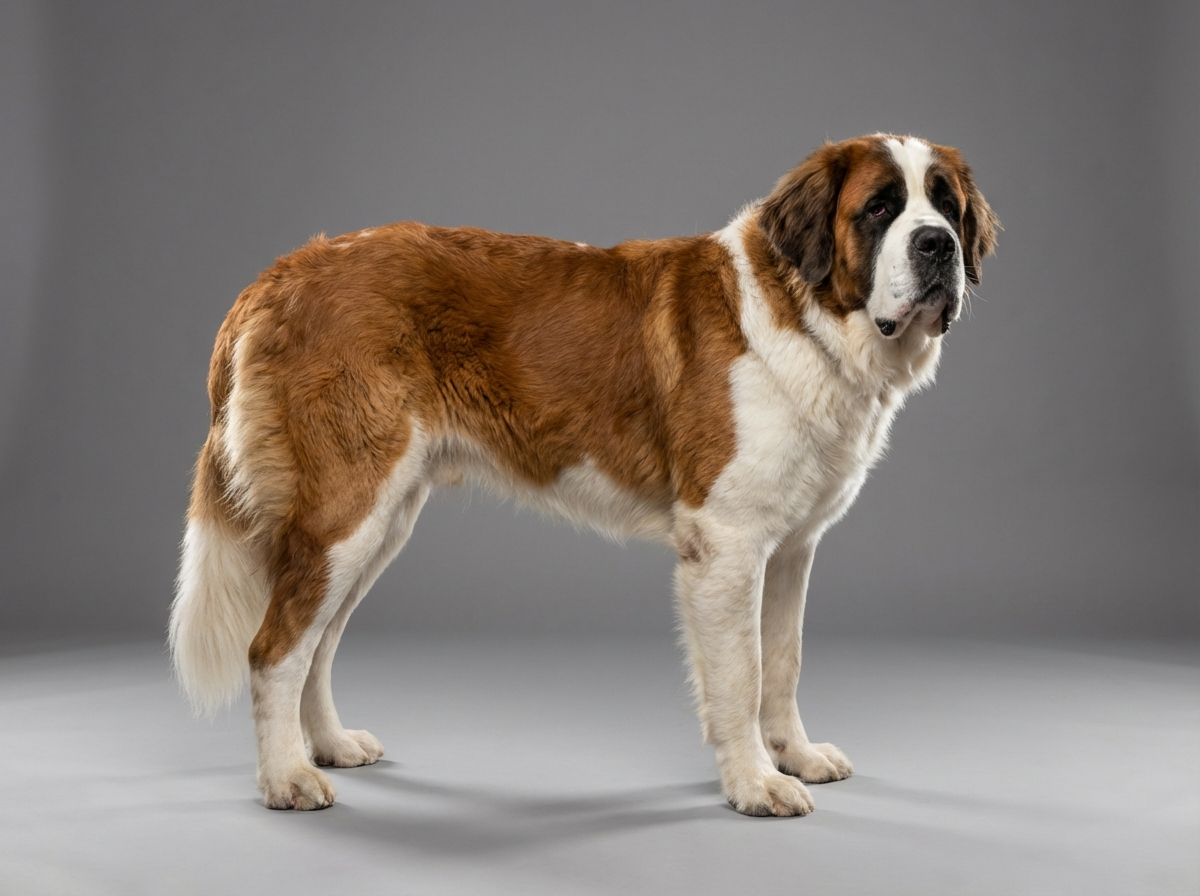
Health
Are Saint Bernards prone to hip dysplasia?
Yes, they are consistently reported among giant breeds with elevated hip dysplasia prevalence in screening data.

Quick answer
Are Saint Bernards prone to hip dysplasia?
Yes, they are consistently reported among giant breeds with elevated hip dysplasia prevalence in screening data.
Hip dysplasia prevalence data comes from screening registries where breeders voluntarily submit X-rays for evaluation, and Saint Bernards consistently rank among the giant breeds with the highest reported rates.
This is most relevant to prospective owners comparing breeds, and to current owners trying to understand whether their dog's diagnosis is unusual for the breed or fully expected.
This guide is not medical advice. If your dog shows pain, sudden behavior change, or worsening symptoms, consult a licensed veterinarian.
Some links may be affiliate links. We may earn a commission at no extra cost to you. We only suggest products we believe are helpful for dog owners.
We research and check what we publish, but we do not warrant that any figure, date, price, or statement is accurate, complete, or current, and we accept no liability for any loss, cost, injury, or other harm arising from the use of this site. Use it as one reference among several. You remain responsible for your own decisions and for your dog's care - confirm anything that matters with a licensed veterinarian or another qualified professional before you act on it. Full disclaimer.
Check this first
Prevalence data itself isn't a medical emergency topic, but understanding it wrong has real consequences: a family that assumes a low reported rate means safety can skip screening and unknowingly acquire a puppy with a high individual risk. On the other end, sudden inability to bear weight, crying out in pain, or collapse in a dog of any hip-score background is always urgent and needs same-day veterinary care, since population statistics say nothing about what's happening with an individual dog in front of you right now.
For day-to-day interpretation, the useful approach is to treat prevalence data as context, not diagnosis. A breed with high reported hip dysplasia prevalence is a signal to prioritize screening and ask breeders detailed questions, not a reason to assume every individual dog will be affected, and not a reason to skip the vet visit if a specific dog starts showing symptoms.
Owners of dogs already showing mobility symptoms shouldn't spend time debating whether their dog 'fits the statistics.' Gradual decline in mobility over months is expected disease progression and belongs in a vet appointment; a sudden, severe change in a leg's function is different and belongs in an urgent visit regardless of what any prevalence chart says.
If any of these apply, call your vet or an emergency clinic now. The rest of this page is for the cases that are not an emergency.
Prevalence data for hip dysplasia comes from orthopedic screening registries that evaluate submitted X-rays by breed, and Saint Bernards consistently show up among the giant breeds with higher reported rates. That context is useful for prospective owners comparing breeds and for current owners trying to understand how typical their dog's diagnosis is, but it's a population-level statistic rather than a prediction for any single dog.
Saint Bernards are frequently cited among the higher-prevalence giant breeds in hip dysplasia screening data, though exact figures vary by registry, region, and time period, and true population prevalence is likely underrepresented by voluntary reporting.
Hip dysplasia prevalence tracks closely with giant breed status across many breeds, and Saint Bernards carry both the genetic predisposition documented in registry data and the rapid growth pattern that compounds joint stress during development, which together explain their consistently elevated reported rates.
Reported prevalence is also shaped by non-biological factors: how many breeders in a given region participate in screening, how consistently evaluations are submitted regardless of outcome, and how veterinary access and awareness vary by country, all of which affect how complete or skewed the available data actually is.
Talk to your vet about hip evaluation timing and options regardless of what breed prevalence data suggests, especially once your dog reaches the age where a formal assessment becomes reliable. A sudden inability to bear weight, crying out in pain, or collapse are urgent regardless of statistics and need same-day care.
Prevalence statistics get misused in a few predictable ways that lead owners to the wrong conclusions.
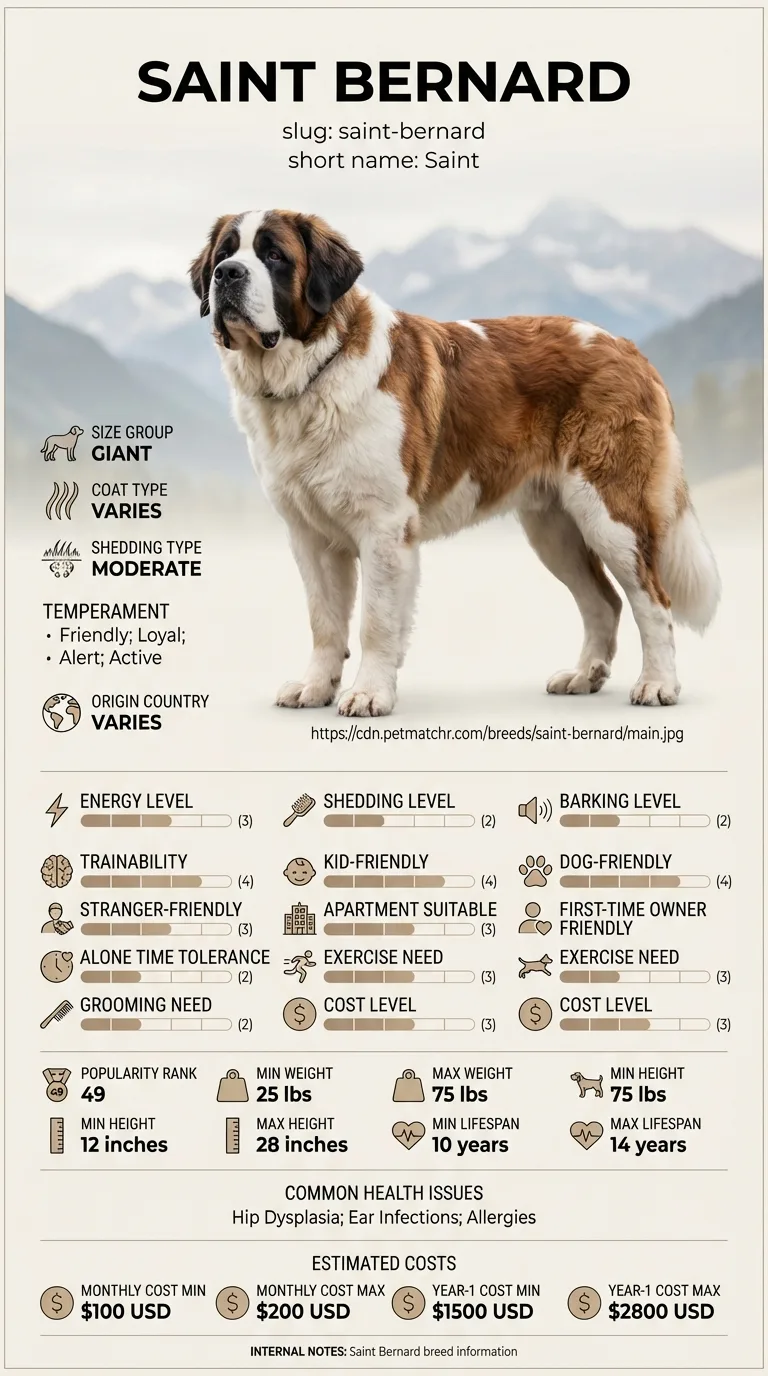
See all Saint Bernard health problems, which breeds are prone to hip dysplasia prevalence, or the full Saint Bernard breed guide for temperament, exercise needs and ownership costs.
Prevalence and screening context is most useful before or shortly after acquiring a puppy; individual hip health typically isn't reliably assessed until the dog reaches skeletal maturity around two years old.
Success looks like using prevalence data to make an informed decision, whether that's choosing a breeder with strong screening practices, budgeting for potential orthopedic costs, or simply understanding a diagnosis in proper context, rather than expecting the data to predict any one dog's outcome.
Before choosing a Saint Bernard puppy, Greg researched hip dysplasia prevalence across giant breeds and found the numbers high enough that he decided screening would be a non-negotiable part of choosing a breeder. He asked three breeders for parent hip scores; only one could provide documented results from a recognized registry. Greg went with that breeder and brought home Tank, whose parents both had good hip scores on file. Tank, now four, has had no signs of hip problems, though Greg's vet was clear that good parent scores reduce risk without eliminating it entirely.
Key takeaway: Breed-level prevalence data pointed Greg toward asking the right question of the right breeder, even though it couldn't guarantee Tank's individual outcome.
Saint Bernards are consistently reported among the giant breeds with higher hip dysplasia prevalence in screening registry data, alongside breeds like Newfoundlands and Bernese Mountain Dogs, though exact percentages vary by data source and time period.
Most commonly from orthopedic screening organizations that evaluate X-rays submitted voluntarily by breeders and owners, such as hip scoring registries used internationally, which track outcomes by breed over time.
Not entirely, since submission is voluntary and breeders more invested in health testing are more likely to submit results, which can skew reported numbers in either direction depending on who is and isn't participating.
No, prevalence is a population-level statistic. An individual dog's risk depends heavily on its specific parents' hip scores, its own growth management, and some amount of chance, not just its breed membership.
Yes, asking for both parents' hip evaluation scores is one of the most direct ways to use prevalence-style data at the level that actually matters for a specific puppy.
Most formal evaluations are done at or after two years old, once a dog reaches skeletal maturity, since earlier X-rays can miss developing laxity or, less commonly, look more concerning than the joint turns out to be later.
Selective breeding using screening data has shown measurable improvement in some lines over decades in several breeds, though giant breeds as a category remain higher-risk than smaller breeds regardless of individual breeder efforts.
Yes, they are consistently reported among giant breeds with elevated hip dysplasia prevalence in screening data.
Orthopedic screening registries publish breed-level statistics based on voluntarily submitted evaluations.
No, it's a population statistic; a specific dog's risk depends more on its parents' scores and growth management.
Yes, this is one of the most useful ways to apply prevalence data to an actual purchase decision.
It's useful but incomplete, since participation in screening registries is voluntary rather than universal.
A one-page prep sheet for this condition: the signs, the questions to ask, what to get priced. Unlocks here.
You get: Vet visit prep sheet
No spam. One-click unsubscribe. See our privacy policy.
Preview page 1 before you decide.