Health
What is a luxating patella?
A kneecap that slips out of its normal groove, causing an intermittent skip in the dog's gait.

Quick answer
What is a luxating patella?
A kneecap that slips out of its normal groove, causing an intermittent skip in the dog's gait.
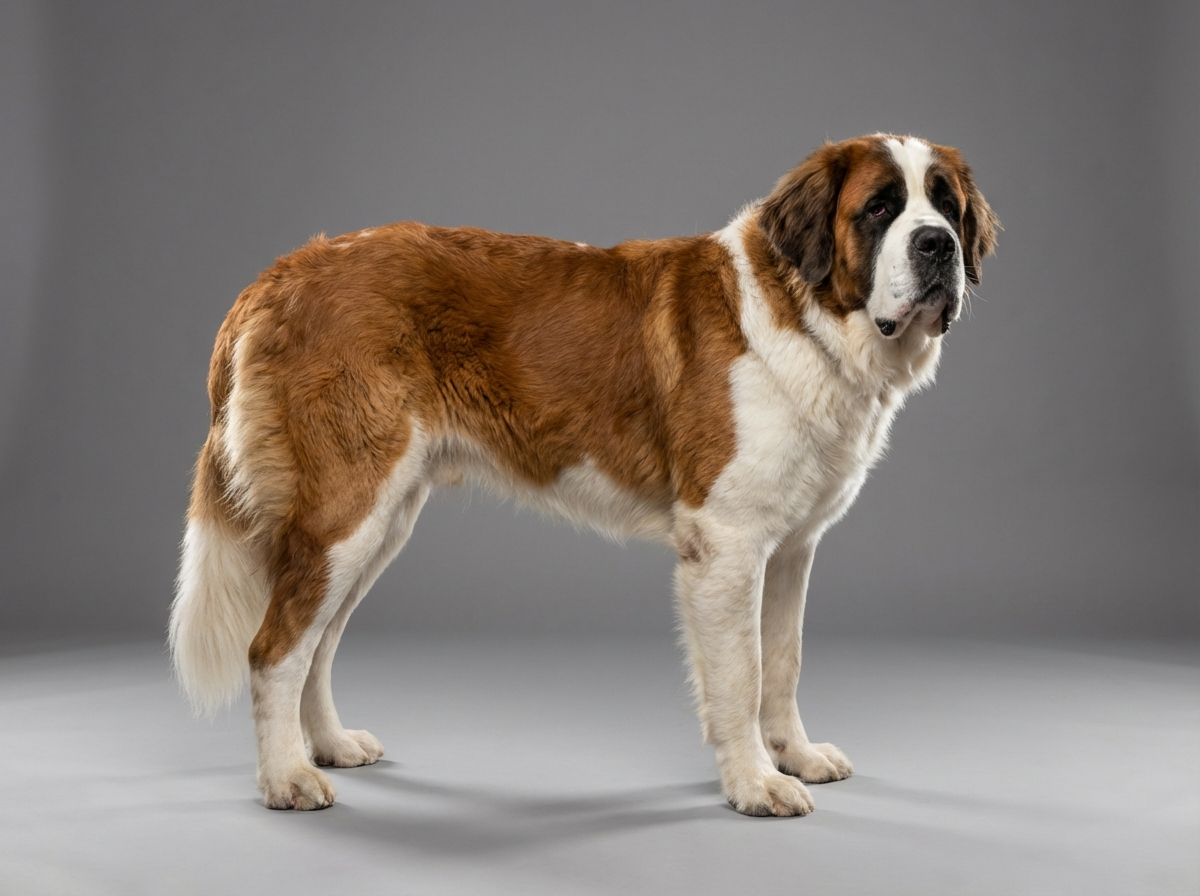
In a Saint Bernard, a kneecap that pops in and out is easy to miss at first, since it can look like an occasional odd skip in the stride rather than a joint problem.
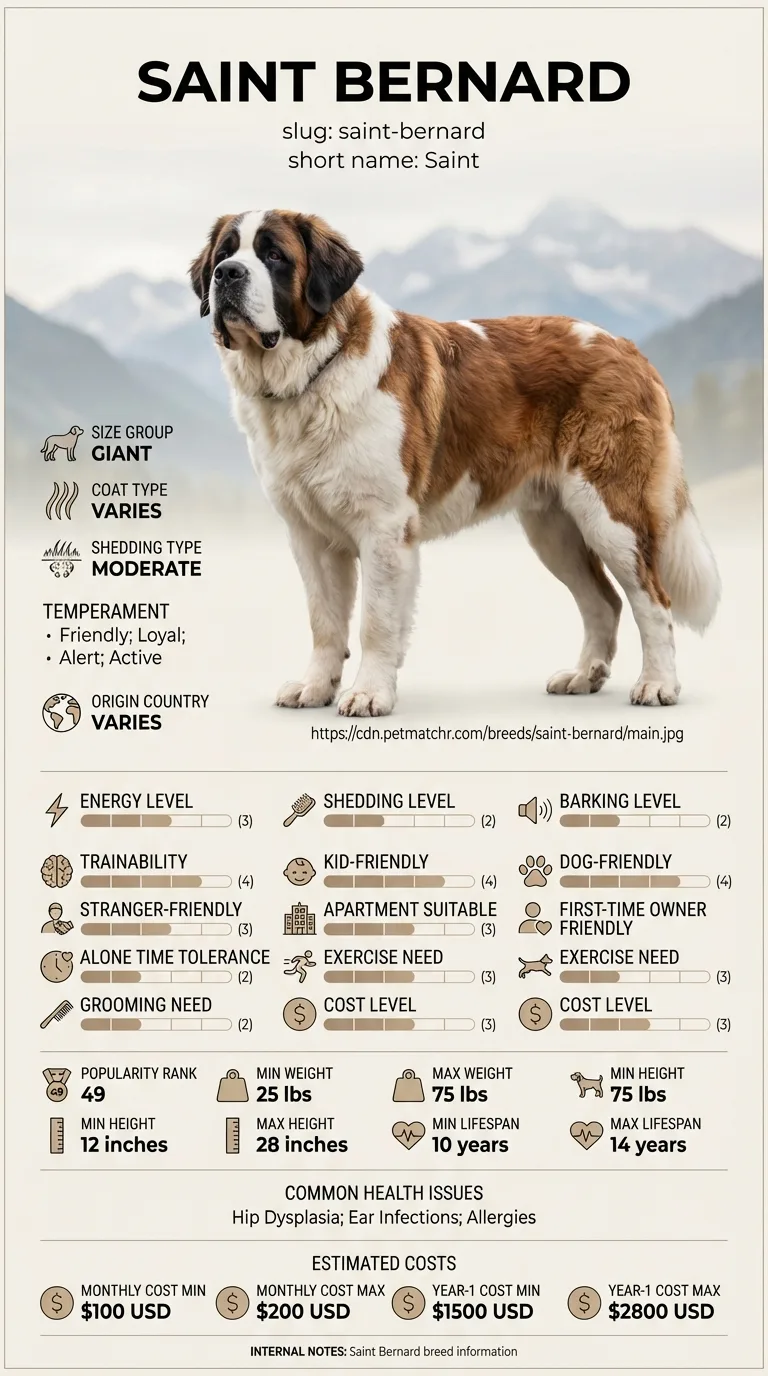
This is most relevant to owners of growing puppies, since conformational leg alignment issues that predispose a giant breed to this problem usually become noticeable during the fast-growth months rather than suddenly in adulthood.
This guide is not medical advice. If your dog shows pain, sudden behavior change, or worsening symptoms, consult a licensed veterinarian.
Some links may be affiliate links. We may earn a commission at no extra cost to you. We only suggest products we believe are helpful for dog owners.
We research and check what we publish, but we do not warrant that any figure, date, price, or statement is accurate, complete, or current, and we accept no liability for any loss, cost, injury, or other harm arising from the use of this site. Use it as one reference among several. You remain responsible for your own decisions and for your dog's care - confirm anything that matters with a licensed veterinarian or another qualified professional before you act on it. Full disclaimer.
Check this first
Patellar luxation on its own is rarely a true emergency; it's typically a chronic, gradually worsening condition. That said, a dog suddenly unable to bear weight at all, crying out in pain, or showing a leg held at an unusual angle needs a prompt vet visit, since this could indicate the kneecap is stuck out of place or that another injury, like a ligament tear, has occurred alongside it.
The more typical presentation is a skip-and-recover gait: the dog hops for a step or two on three legs, then resumes normal walking as the kneecap slides back into place on its own. This pattern is worth a vet visit but not an emergency, and grading the severity through a physical exam is what determines the right next step.
What's worth watching for over time is progression: a skip that happens once every few walks staying occasional is different from one that becomes more frequent or starts lasting longer before the kneecap resets itself. Increasing frequency or duration is a sign to move up the priority of that vet visit rather than continuing to watch and wait.
If any of these apply, call your vet or an emergency clinic now. The rest of this page is for the cases that are not an emergency.
A luxating patella is a kneecap that slips out of its normal position, causing an intermittent skip or hop in a dog's gait. While it's far more classically discussed as a small-breed genetic condition, Saint Bernards and other giant breeds can develop it too, usually connected to conformational leg alignment during rapid growth rather than the same isolated inherited trait seen in toy breeds, and it's easy for an early, mild case to be mistaken for an odd one-off stumble.
Patellar luxation is far less frequently documented in giant breeds than in small breeds, but it does occur in Saint Bernards, often as part of a broader picture of growth-related orthopedic issues rather than as an isolated condition.
In giant breeds like the Saint Bernard, patellar luxation is often connected to how the leg develops during the breed's rapid growth phase, sometimes influenced by other orthopedic conditions like hip dysplasia that affect overall limb alignment, rather than the more isolated genetic trait seen in small breeds where it occurs independently.
Excess body weight and high-impact activity during growth both add mechanical stress to a knee joint that may already have some degree of misalignment, making these two of the more directly manageable environmental factors for owners.
Talk to your vet about any recurring skip or hop in your dog's gait, even if it resolves quickly on its own. Sudden inability to bear weight, crying out in pain, or a leg held at an unusual angle are more urgent and should be seen promptly.
Catching a slipping kneecap early makes a real difference in how it's managed, and a few habits get in the way of that.
See all Saint Bernard health problems, which breeds are prone to luxating patellas, or the full Saint Bernard breed guide for temperament, exercise needs and ownership costs.
Signs often first appear during the puppy growth period, though mild cases can go unnoticed for a long time. Management, whether conservative or surgical, is generally an ongoing consideration throughout the dog's life rather than a single fixed treatment.
Success means a stable, comfortable gait with minimal or no lameness, achieved through weight control and activity management for milder cases, or through surgical correction and rehabilitation for more significant grades.
Wendy noticed her Saint Bernard puppy, Duchess, occasionally hopped on three legs for a step or two during play before returning to normal walking. She almost didn't mention it at Duchess's next checkup, assuming it was nothing, but brought it up anyway. Her vet's exam found a mild, grade I luxating patella, likely related to slight leg alignment as Duchess was still growing. With controlled exercise and a stable weight through her growth phase, Duchess's gait stayed consistent, and the skip never progressed to a more frequent or severe pattern.
Key takeaway: Mentioning a seemingly minor, easily-missed gait quirk is what let Wendy's vet catch a mild luxation early enough that conservative management was all that was needed.
It describes a kneecap that slips out of its normal groove at the front of the knee joint, which can cause an intermittent skip in the dog's gait as the kneecap moves in and out of place.
It's far more classically documented in small breeds, but giant breeds can develop it too, often connected to conformational leg alignment issues during growth rather than the same simple genetic pattern seen in toy breeds.
Vets use a grade I to IV scale based on how easily and how often the kneecap slips out of place, with grade I being occasional and easily correctable and grade IV being a permanently displaced kneecap.
Not always. Lower grades, especially without significant lameness, may be managed conservatively with weight control and activity modification, while higher grades or dogs with ongoing lameness often benefit from surgical correction.
In giant breeds, it's often related to how the leg bones and muscles align during rapid growth, sometimes alongside other orthopedic issues like hip dysplasia, rather than the isolated genetic trait more typical of small breeds.
Conservative management is relatively modest, while surgical correction represents a more significant cost, generally similar in range to other orthopedic surgeries in a dog this size.
It can't be fully prevented if conformational factors are involved, but controlled puppy growth and maintaining a lean weight throughout life reduce the mechanical stress that can worsen a mild case.
A kneecap that slips out of its normal groove, causing an intermittent skip in the dog's gait.
It's more common in small breeds, but giant breeds like Saint Bernards can develop it too, often tied to growth-related leg alignment.
An occasional hop or skip in the gait that resolves on its own after a step or two.
No, milder grades can sometimes be managed with weight control and activity adjustments.
Yes, surgical correction is a significant orthopedic expense, similar to other joint surgeries in a large dog.
A one-page prep sheet for this condition: the signs, the questions to ask, what to get priced. Unlocks here.
You get: Vet visit prep sheet
No spam. One-click unsubscribe. See our privacy policy.
Preview page 1 before you decide.