Health
Is this breed a true brachycephalic breed?
No — it has a moderately shortened muzzle but is not classified among extreme brachycephalic breeds like Bulldogs or Pugs.

Quick answer
Is this breed a true brachycephalic breed?
No — it has a moderately shortened muzzle but is not classified among extreme brachycephalic breeds like Bulldogs or Pugs.
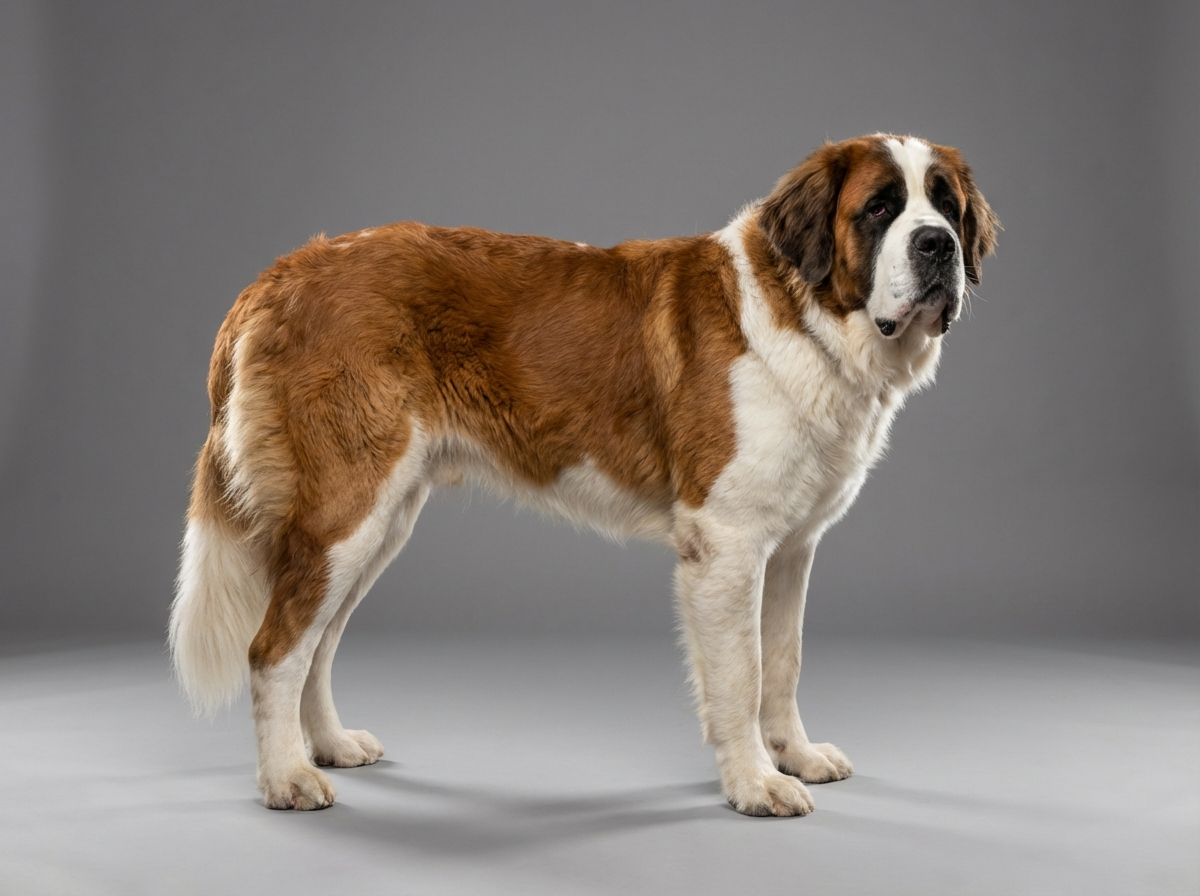
A Saint Bernard was bred to work in snow, not to cool itself efficiently in a hot parking lot. Its airway is not as compromised as a Bulldog's, but stack a moderately shortened muzzle onto a huge body built for cold, and heat becomes the genuine risk factor.
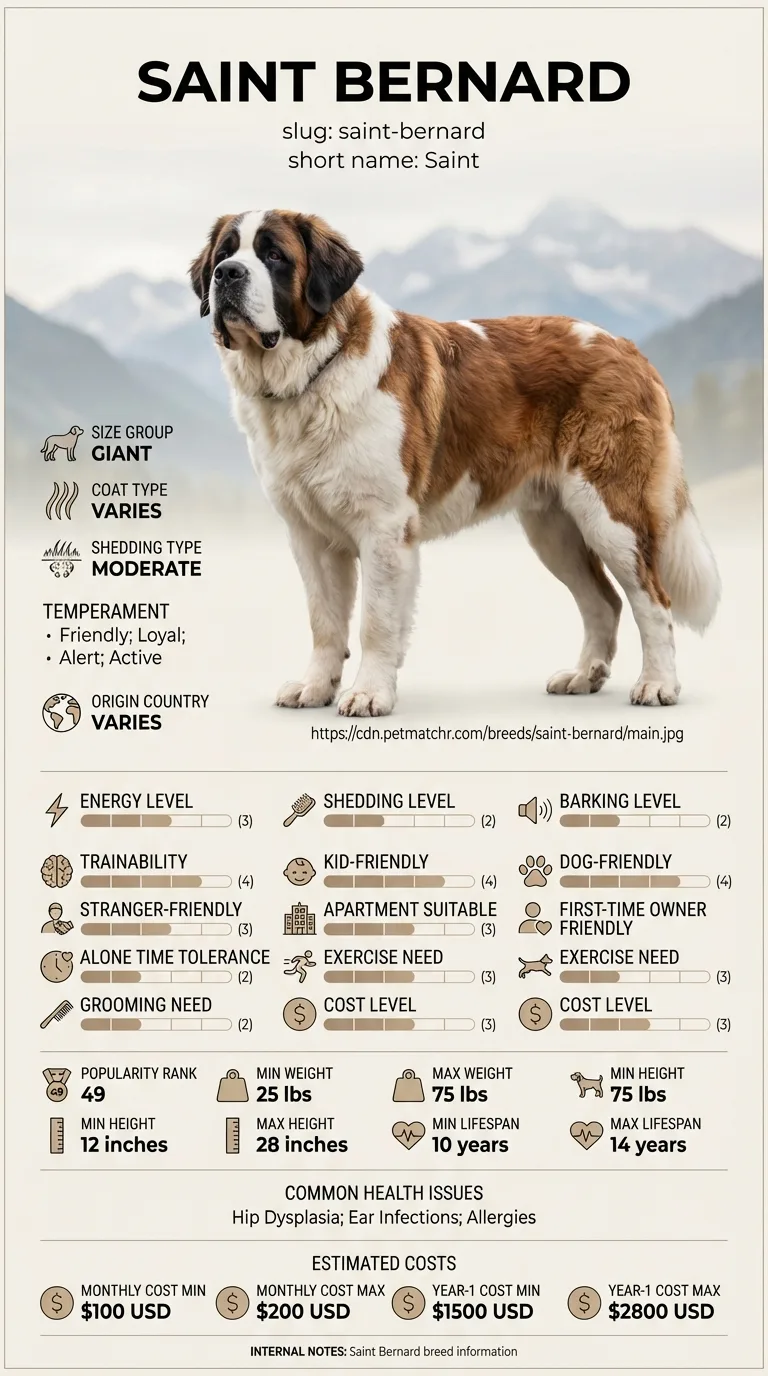
Owners who assume that because their dog isn't a classic 'flat-faced' breed, heat and exertion risk does not apply to them, and who push exercise or outdoor time on hot days the way they would with a longer-muzzled, more heat-tolerant breed.
This guide is not medical advice. If your dog shows pain, sudden behavior change, or worsening symptoms, consult a licensed veterinarian.
Some links may be affiliate links. We may earn a commission at no extra cost to you. We only suggest products we believe are helpful for dog owners.
We research and check what we publish, but we do not warrant that any figure, date, price, or statement is accurate, complete, or current, and we accept no liability for any loss, cost, injury, or other harm arising from the use of this site. Use it as one reference among several. You remain responsible for your own decisions and for your dog's care - confirm anything that matters with a licensed veterinarian or another qualified professional before you act on it. Full disclaimer.
Saint Bernards are not extreme brachycephalic dogs, but their moderately shortened muzzle, combined with an enormous body mass and a heavy double coat built for cold climates, makes heat and exertion the real airway-adjacent risk — far more than resting breathing difficulty, which is minimal to absent in most individuals of this breed.
Heat-related distress is a well-recognized seasonal risk for this breed given its build and coat, even though true resting airway obstruction, the hallmark of extreme brachycephalic breeds, is uncommon in Saint Bernards specifically.
The breed's moderately shortened, broad muzzle gives somewhat less surface area for panting-based cooling than a longer-muzzled dog has. Combined with an enormous body mass that generates substantial metabolic heat and a heavy double coat historically bred for cold alpine conditions, the breed carries a real heat-management disadvantage despite not having the severe resting airway obstruction seen in extreme brachycephalic breeds.
Hot, humid weather, vigorous exercise, direct sun exposure without shade, and being left in a warm vehicle are the main environmental triggers. Excess body weight compounds all of these by adding further heat load the body must manage.
Discuss heat-management planning proactively before summer arrives, especially for an older or overweight dog. Treat as a true emergency any wobbliness, collapse, bright red or purple gums, or vomiting during or after heat exposure — these signs mean stop activity, begin cooling, and go to an emergency vet immediately.
See all Saint Bernard health problems, which breeds are prone to brachycephalic airway syndrome boas, or the full Saint Bernard breed guide for temperament, exercise needs and ownership costs.
Adjusting exercise timing and routines to account for heat can be implemented immediately and should be treated as a permanent, seasonal habit rather than a temporary fix.
Success is a dog that stays active and engaged through cooler parts of the day and season, with heat exposure managed proactively so overheating episodes are avoided entirely rather than caught after they begin.
Dogs cool themselves mainly by panting, moving air across the tongue and airway to evaporate moisture and shed heat. A longer muzzle gives more surface area for that cooling airflow; a moderately shortened one, like this breed carries, gives somewhat less. On its own that would be a minor disadvantage. Combined with a huge body mass that generates more metabolic heat overall and has comparatively less skin surface relative to that mass to radiate it away, plus a heavy double coat built for snow rather than sun, the combination adds up to real heat vulnerability — even though the airway itself is far less obstructed than in a true extreme brachycephalic breed.
This is why a Saint Bernard can look perfectly comfortable breathing at rest in an air-conditioned house, yet struggle seriously within twenty minutes of moderate exercise on a warm, humid afternoon. The risk is exertional and heat-driven far more than it is a resting breathing problem.
None of these signs should be managed by simply waiting it out in the shade — active cooling and, for anything beyond mild panting, an emergency vet call are the appropriate response.

Bear, a six-year-old Saint Bernard, joined his family on a mid-morning summer hike that had felt manageable in the shaded early stretch. About forty minutes in, on an exposed, sunny section, Bear's panting became heavy and his gait slowed noticeably, though he had shown no breathing trouble at all back home or during cooler walks. His owners recognized the signs early, stopped immediately, moved him into available shade, and poured cool water over his body while offering small sips to drink. Bear's condition stabilized within fifteen minutes without needing emergency care, but the family cut the hike short and now restrict any real exertion to early mornings during summer months.
Key takeaway: Bear had no airway problem at rest — the risk only appeared once heat and exertion combined, which is exactly the pattern this breed's build makes possible even without classic brachycephalic breathing trouble.
No. Saint Bernards have a moderately shortened, broad muzzle but are not classified among the extreme brachycephalic breeds, and most do not have significant breathing obstruction at rest the way Bulldogs or Pugs can.
The moderate muzzle shortening reduces cooling efficiency somewhat, and that combines with a huge body mass generating more heat and a heavy coat built for cold climates, making exertional overheating the real risk rather than resting breathing difficulty.
There is no single universal number, but many owners of heat-sensitive giant breeds avoid vigorous exercise once temperatures climb into the 80s Fahrenheit, especially with any humidity, and shift activity to early morning or evening.
Yes — in cool, mild conditions most Saint Bernards handle moderate exercise without the heat-related risk that hot, humid weather introduces.
Yes, and it can escalate quickly. Wobbliness, collapse, vomiting or extreme distress during heat exposure should prompt an immediate emergency vet visit, with active cooling started on the way.
Yes — a coat built to trap heat in cold climates works against a dog trying to shed excess heat in warm weather, compounding the muzzle-related cooling disadvantage.
Not necessarily — shift exercise to cooler parts of the day, keep sessions shorter, provide water and shade, and watch closely for early signs of overheating rather than cutting out activity altogether.
No — it has a moderately shortened muzzle but is not classified among extreme brachycephalic breeds like Bulldogs or Pugs.
Overheating during exercise or hot weather, driven by moderate muzzle shortening combined with huge body mass and a heavy cold-climate coat.
During hot, humid weather, especially midday — shift activity to cooler morning or evening hours instead.
Wobbliness, collapse, bright red or purple gums, or vomiting during heat exposure are all emergencies requiring immediate veterinary care.
Yes — a coat built for cold climates traps heat, compounding the cooling disadvantage from the moderately shortened muzzle.
A one-page prep sheet for this condition: the signs, the questions to ask, what to get priced. Unlocks here.
You get: Vet visit prep sheet
No spam. One-click unsubscribe. See our privacy policy.
Preview page 1 before you decide.