Costs
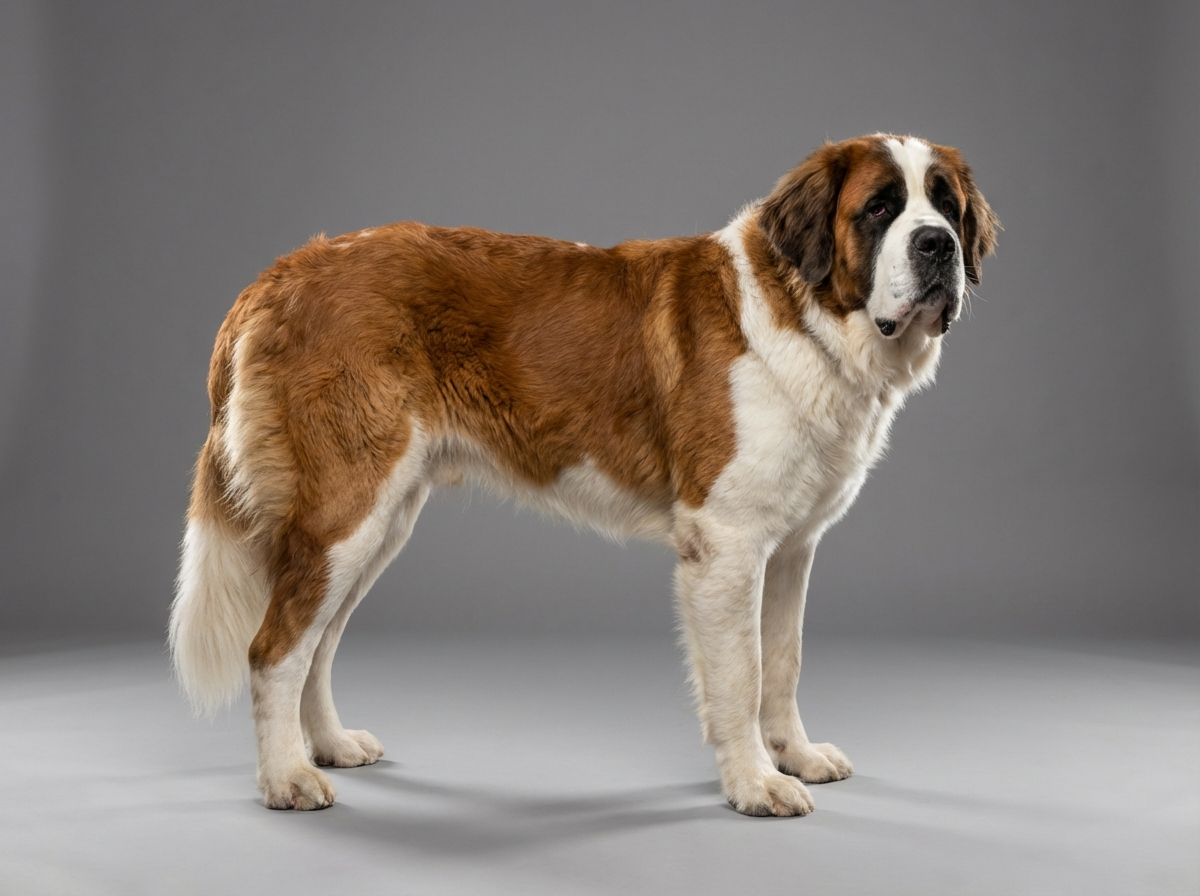
Saint Bernard cost in New York
Between $218 and $450 each month and $3,190 to $6,090 across the opening year, the top of this guide — with the local trade being extraordinary specialist access at extraordinary specialist prices.

See Saint Bernard price across all cities →
Quick answer
Saint Bernard cost in New York
Between $218 and $450 each month and $3,190 to $6,090 across the opening year, the top of this guide — with the local trade being extraordinary specialist access at extraordinary specialist prices.
Keeping a Saint Bernard in New York runs somewhere between $218 and $450 each month, and the opening year sits between $3,190 and $6,090 — the top of the range covered anywhere in this guide. New York's compensating advantage is that almost nothing is unavailable here. The city holds one of the densest concentrations of board-certified veterinary specialists in the world, including institutions like the Animal Medical Center that have operated for over a century.
Entropion sits on this breed's documented list alongside Hip Dysplasia, Elbow Dysplasia, Dilated Cardiomyopathy and Bloat. It is the least dramatic of the five and the one most likely to send an owner to a specialist, because surgical correction of an inward-rolling eyelid is delicate work usually done by a veterinary ophthalmologist rather than a general practice.
New York applies the highest multiplier in this guide to a breed already in the top keeping tier, with boarding as the harshest line and an eight-month prevention season as the one genuine relief.
Estimate · source: estimation · confidence: medium · updated 2026-10-06 · not a quote
| Item | Cost range |
|---|---|
One-time setup (giant crate, bed, first exam, spay/neuter) Equipment is a national price; the procedures in this line are what the city's multiplier lands on. | $760 - $1300 |
| Item | Cost range |
|---|---|
Food Large quantity meeting expensive retail, which is why this line runs higher here than anywhere else covered. | $104 - $186 |
Prevention (eight-month season) A bounded season is a real saving relative to the South, though the dosing weight keeps each unit in the top bracket. | $38 - $68 |
Each range starts from a national baseline for this breed's size class and is then adjusted for local cost of living and veterinary pricing. The baselines, and the source each one came from, are listed on our sources page (dataset 2026.09). Two inputs, the purchase price and the emergency reserve, have no published national figure we could verify, so we leave them to you rather than invent them.
These are planning estimates, not quotes. Your own numbers will move with the individual dog, your vet and your insurer. Build a budget with your own figures.
Where every procedure carries the country's steepest multiplier, insurance stops being a philosophical question and becomes an arithmetic one.
Buy while the dog is young and unmarked on paper. A specialist surgery here on a giant patient is among the largest single bills in this guide.
Realistically only for households able to absorb a five-figure specialist bill from savings without disruption.
You will not negotiate New York pricing, so the savings come from acting early and buying the right season.
Entropion is worth using as the example because it illustrates the pattern well. It is not an emergency. It is a structural problem where the eyelid rolls inward and lashes contact the cornea, causing irritation that gets steadily worse rather than resolving. Left long enough it damages the eye. Corrected surgically, it is usually a one-time fix.
In a smaller market that would mean a referral, a wait and a drive. In New York it means choosing between several qualified ophthalmology services, most of which can see the dog reasonably promptly. What you pay for that convenience is the city's multiplier applied to a specialist rate, on a patient who requires more anesthetic than the average dog because it weighs between 120 and 180 pounds.
The useful conclusion is that in the country's most expensive market, delay is the expensive option rather than the thrifty one. A cornea that has been irritated for eight months is a bigger problem than one that has been irritated for eight weeks, and the specialists able to sort out the second version are already down the street.
There is no way to make these numbers modest, so the sensible approach is to be clear-eyed about which lines are fixed and which are choices. Food is fixed and it is large, because the volume is set by the dog. Prevention runs an eight-month season here, which is one genuine saving relative to a southern city. Boarding is the line where New York pricing is most brutal, since a giant occupies the largest run in a market where space itself is the scarce commodity.
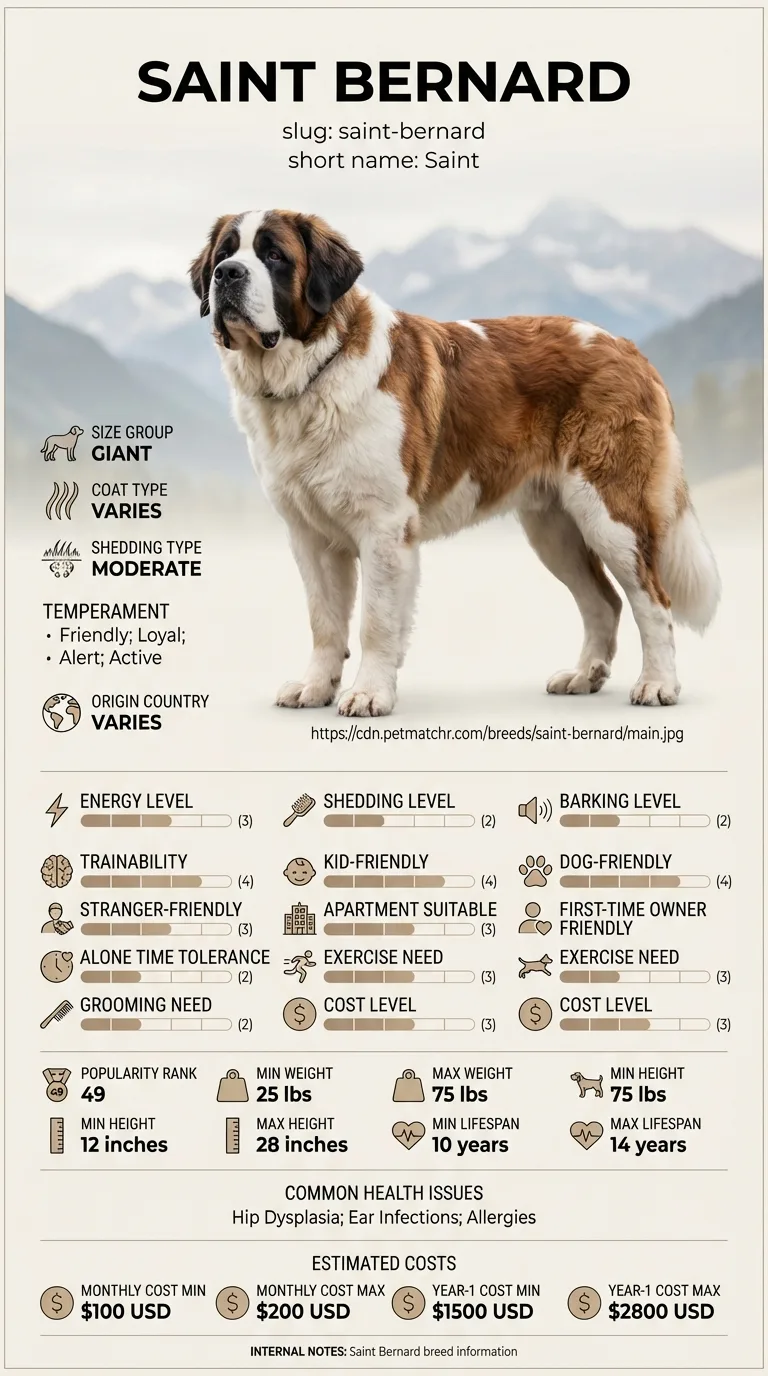
Against that, the breed brings real advantages to city life. Energy and exercise requirement are both documented at 2 out of 5, so the daily routine is modest. Barking is rated 2 out of 5, which matters enormously in a building with shared walls. Temperament is gentle and patient, rated 4 out of 5 with strangers, which is worth a great deal in a place where the dog meets several dozen of them before breakfast.
The unavoidable problem is space, because this breed carries the lowest apartment-suitability rating on the scale and the city's floor plans are what they are.

A New York owner assumed their Saint Bernard's persistently damp eye was just how the dog was made, mentioned it in passing at an annual visit, and was referred the same week to an ophthalmology service twenty minutes away. The eyelid was corrected surgically and the dog was comfortable within a fortnight. The specialist's observation stayed with them: nothing about the outcome would have differed had they come in the first month, except that the cornea would have had eight fewer months of irritation.
Key takeaway: In the market with the best specialist access in the country, the expensive mistake is not the referral. It is the eight months before it.
Between $218 and $450, the highest range in this guide, reflecting one of the most expensive metros in the country.
Between $3,190 and $6,090, once the initial exam, sterilisation and giant-sized equipment are added to the recurring costs.
Choice and speed. The city holds an unusual concentration of board-certified veterinary specialists, so referral is a decision between options rather than a search.
Because it is documented in this breed, it is not an emergency, and it is the condition most likely to send a general practice's client to a veterinary ophthalmologist for surgical correction.
Not with this one. A cornea irritated for months is a larger problem than one caught early, and the correction does not get cheaper for being postponed.
About $1,800, which is the highest figure in this guide and reflects both specialist pricing and a giant patient's consumption.
Between $218 and $450 each month and $3,190 to $6,090 across the opening year, the top of this guide — with the local trade being extraordinary specialist access at extraordinary specialist prices.
This guide is not medical advice. If your dog shows pain, sudden behavior change, or worsening symptoms, consult a licensed veterinarian.
Some links may be affiliate links. We may earn a commission at no extra cost to you. We only suggest products we believe are helpful for dog owners.
We research and check what we publish, but we do not warrant that any figure, date, price, or statement is accurate, complete, or current, and we accept no liability for any loss, cost, injury, or other harm arising from the use of this site. Use it as one reference among several. You remain responsible for your own decisions and for your dog's care - confirm anything that matters with a licensed veterinarian or another qualified professional before you act on it. Full disclaimer.
One sheet with every line item, the emergency fund and when insurance pays off - unlocks on this page.
You get: 12-month budget sheet
No spam. One-click unsubscribe. See our privacy policy.
See a sample page before you decide.