Health
What causes kidney disease in dogs?
It's most often age-related decline in kidney function, though it can also stem from infections, toxins, or other underlying conditions.

Quick answer
What causes kidney disease in dogs?
It's most often age-related decline in kidney function, though it can also stem from infections, toxins, or other underlying conditions.
By the time a Saint Bernard shows obvious signs like increased thirst or weight loss, the kidneys have often already lost a large share of their working capacity, which is why routine bloodwork matters more here than waiting for symptoms.
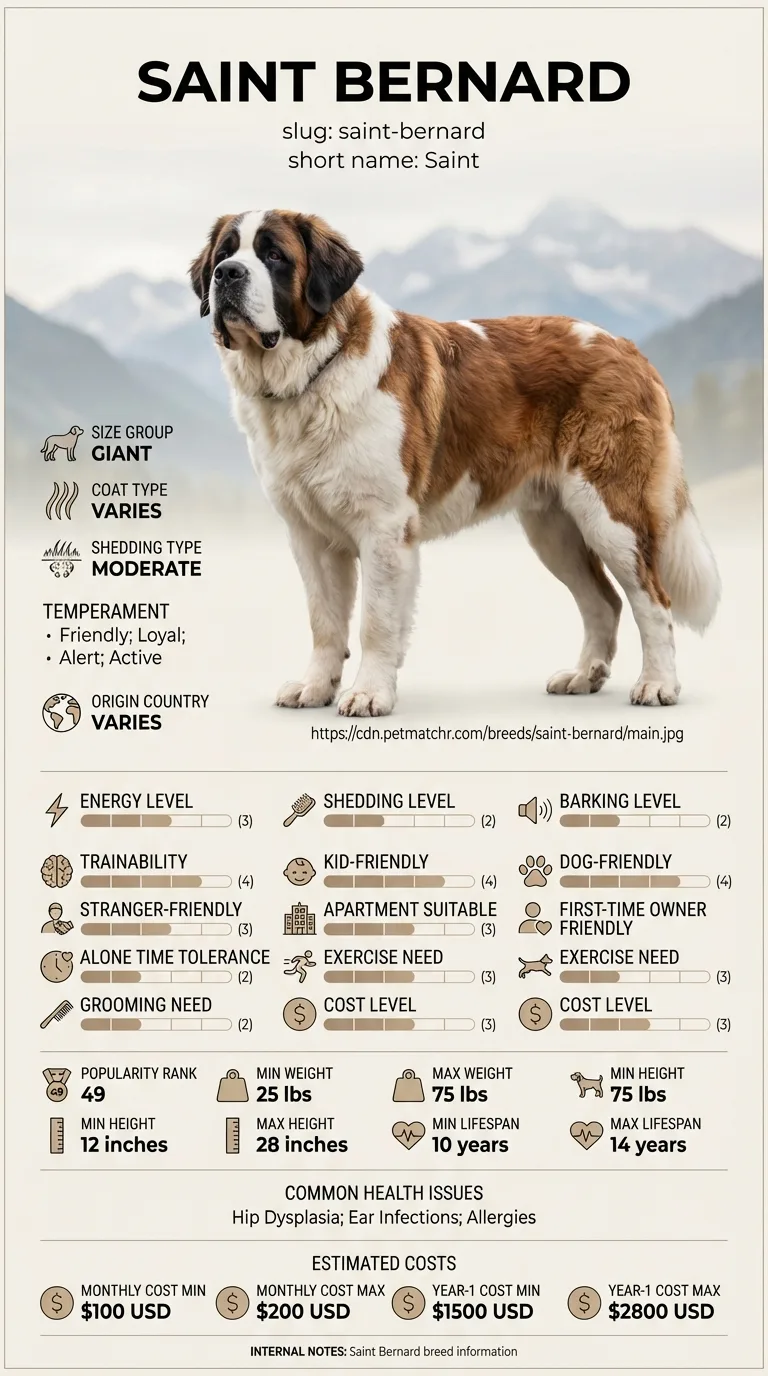
This is most relevant to owners of senior Saint Bernards, given the breed's shorter eight-to-ten-year typical lifespan means kidney disease, an age-related condition in most dogs, can appear earlier in a Saint Bernard's life stage than in longer-lived breeds.
This guide is not medical advice. If your dog shows pain, sudden behavior change, or worsening symptoms, consult a licensed veterinarian.
Some links may be affiliate links. We may earn a commission at no extra cost to you. We only suggest products we believe are helpful for dog owners.
We research and check what we publish, but we do not warrant that any figure, date, price, or statement is accurate, complete, or current, and we accept no liability for any loss, cost, injury, or other harm arising from the use of this site. Use it as one reference among several. You remain responsible for your own decisions and for your dog's care - confirm anything that matters with a licensed veterinarian or another qualified professional before you act on it. Full disclaimer.
Check this first
Sudden, severe vomiting, complete loss of appetite, extreme lethargy, or collapse in a dog with known or suspected kidney disease can indicate an acute crisis and needs emergency veterinary care right away, since these can signal a sudden worsening of kidney function or a related complication like severe dehydration or toxin buildup.
More typical early signs build gradually: increased thirst and urination, subtle weight loss despite normal appetite, and occasional mild vomiting. These are appointment-worthy rather than emergency-worthy, and are exactly the signs that routine senior bloodwork is designed to catch even earlier, before they're obvious enough for an owner to notice.
The practical distinction is trajectory and severity. A dog drinking somewhat more water than usual over several weeks is different from a dog that suddenly won't eat, is vomiting repeatedly, and seems profoundly weak within a day or two. The first calls for a vet visit soon; the second calls for immediate care.
If any of these apply, call your vet or an emergency clinic now. The rest of this page is for the cases that are not an emergency.
Chronic kidney disease is a gradual, usually irreversible decline in the kidneys' ability to filter waste and balance fluids in the body. In Saint Bernards, whose shorter typical lifespan means age-related conditions can appear earlier in the dog's life stage, kidney disease is often first detected through routine senior bloodwork rather than obvious symptoms, since a significant amount of kidney function can be lost before any signs appear.
Kidney disease is a commonly diagnosed condition in senior dogs generally, and given the Saint Bernard's shorter average lifespan, it's a relevant concern to start monitoring for earlier than in longer-lived breeds.
Kidney disease in Saint Bernards is largely tied to the same age-related decline seen across dog breeds, but because this breed's average lifespan is shorter, at eight to ten years, age-related conditions including kidney decline can show up at what would be considered a younger chronological age in a longer-lived breed.
Chronic dehydration, untreated dental disease contributing to systemic inflammation, unmonitored high blood pressure, and exposure to certain toxins or medications processed through the kidneys can all accelerate kidney damage on top of the underlying age-related decline.
Talk to your vet about increased thirst and urination, subtle weight loss, or changes in appetite, all of which warrant kidney function bloodwork. Sudden severe vomiting, complete loss of appetite, extreme lethargy, or collapse are emergencies requiring immediate veterinary care.
Kidney disease outcomes depend heavily on early detection and consistent management, and a few habits work directly against both.
See all Saint Bernard health problems, which breeds are prone to kidney disease, or the full Saint Bernard breed guide for temperament, exercise needs and ownership costs.
Kidney disease typically develops gradually over months to years before diagnosis, and once identified, management is ongoing rather than time-limited, with periodic bloodwork used to track how the disease is progressing.
Success means slowing disease progression and maintaining good quality of life for as long as possible through diet, monitoring, and management of complications, rather than reversing kidney damage, which isn't possible once kidney tissue has been lost.
Carol's eight-year-old Saint Bernard, Max, seemed completely normal at home, but his annual senior wellness bloodwork showed early changes in his kidney values. Carol's vet recommended a kidney-support diet and more frequent monitoring rather than immediate aggressive treatment, since the changes were caught early. Eighteen months later, Max's kidney values had remained relatively stable on the new diet, and he had shown no outward symptoms of illness at any point, something Carol credits directly to catching the change through bloodwork rather than waiting for visible signs.
Key takeaway: Max never showed a single symptom at home before his diagnosis, which is exactly why routine senior bloodwork, not symptom-watching alone, is what caught his kidney disease early enough to slow its progression.
It's a progressive, usually irreversible loss of kidney function over time, meaning the kidneys become less able to filter waste products and balance fluids and electrolytes in the body.
Increased thirst and urination, subtle weight loss, and mild changes in appetite are common early signs, though many dogs show no obvious symptoms until a significant portion of kidney function is already lost.
Bloodwork measuring kidney values along with a urine test assessing concentration and protein levels are the standard diagnostic tools, and newer blood markers can catch kidney changes earlier than older tests alone.
Chronic kidney disease is generally not curable, since damaged kidney tissue doesn't regenerate, but it can often be managed for a meaningful stretch of time with diet changes, medication, and monitoring.
Vets commonly recommend prescription kidney-support diets that are lower in phosphorus and adjusted in protein quality, which have been shown to help slow disease progression and manage symptoms in many dogs.
Ongoing costs include prescription diet, periodic bloodwork to monitor progression, and sometimes medication for blood pressure or other complications, making this a recurring, moderate lifetime cost once diagnosed.
This varies enormously based on the stage at diagnosis and how well the disease responds to management, ranging from many months to a few years of good quality life with appropriate care.
It's most often age-related decline in kidney function, though it can also stem from infections, toxins, or other underlying conditions.
Yes, given the breed's relatively short lifespan, kidney-related decline can appear in what would be considered late middle age for the breed.
Increased thirst and urination is often one of the first noticeable signs, even before other symptoms appear.
Yes, a prescription kidney-support diet is a standard and often significant part of managing the condition.
It's a recurring cost including special diet and monitoring bloodwork, making it a meaningful ongoing expense.
A one-page prep sheet for this condition: the signs, the questions to ask, what to get priced. Unlocks here.
You get: Vet visit prep sheet
No spam. One-click unsubscribe. See our privacy policy.
Preview page 1 before you decide.