Health
What causes IVDD?
Degeneration or displacement of spinal discs that then press on the spinal cord, causing pain or neurological symptoms.

Quick answer
What causes IVDD?
Degeneration or displacement of spinal discs that then press on the spinal cord, causing pain or neurological symptoms.
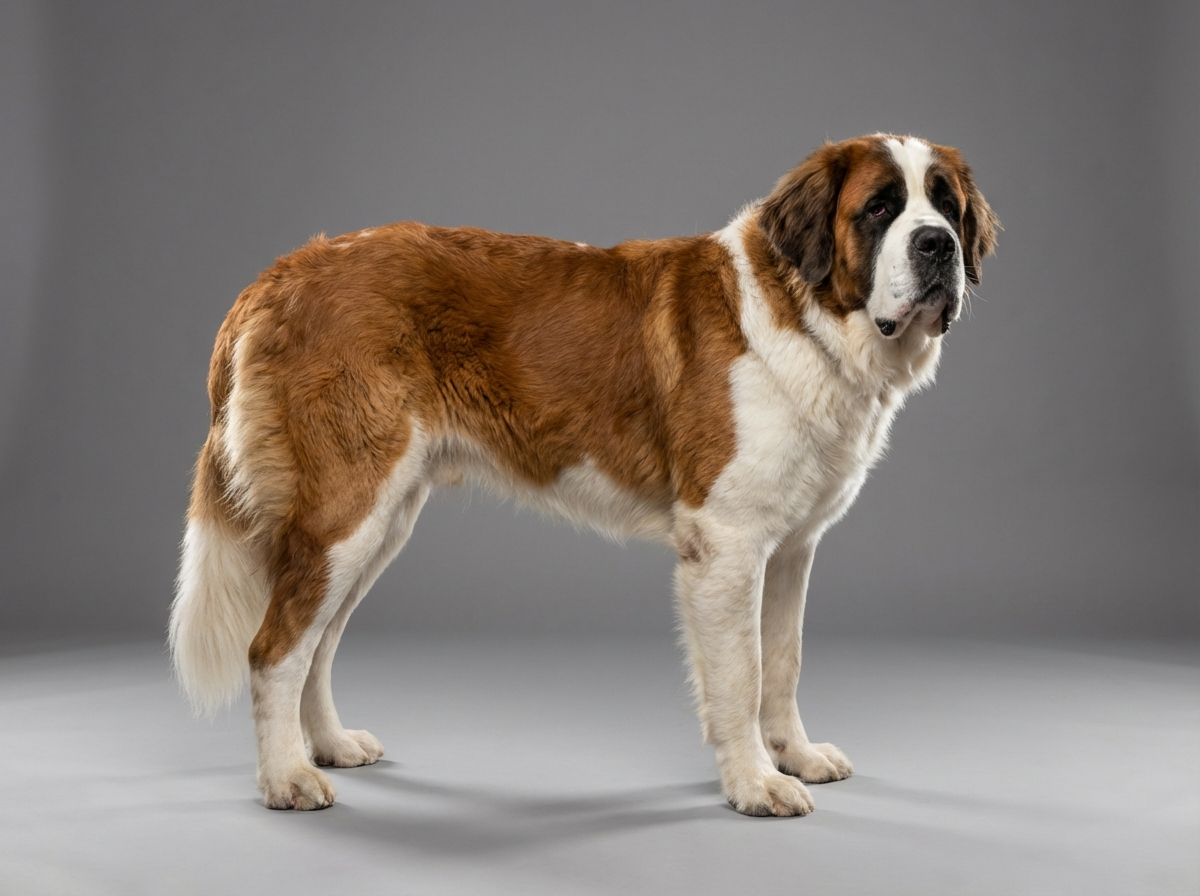
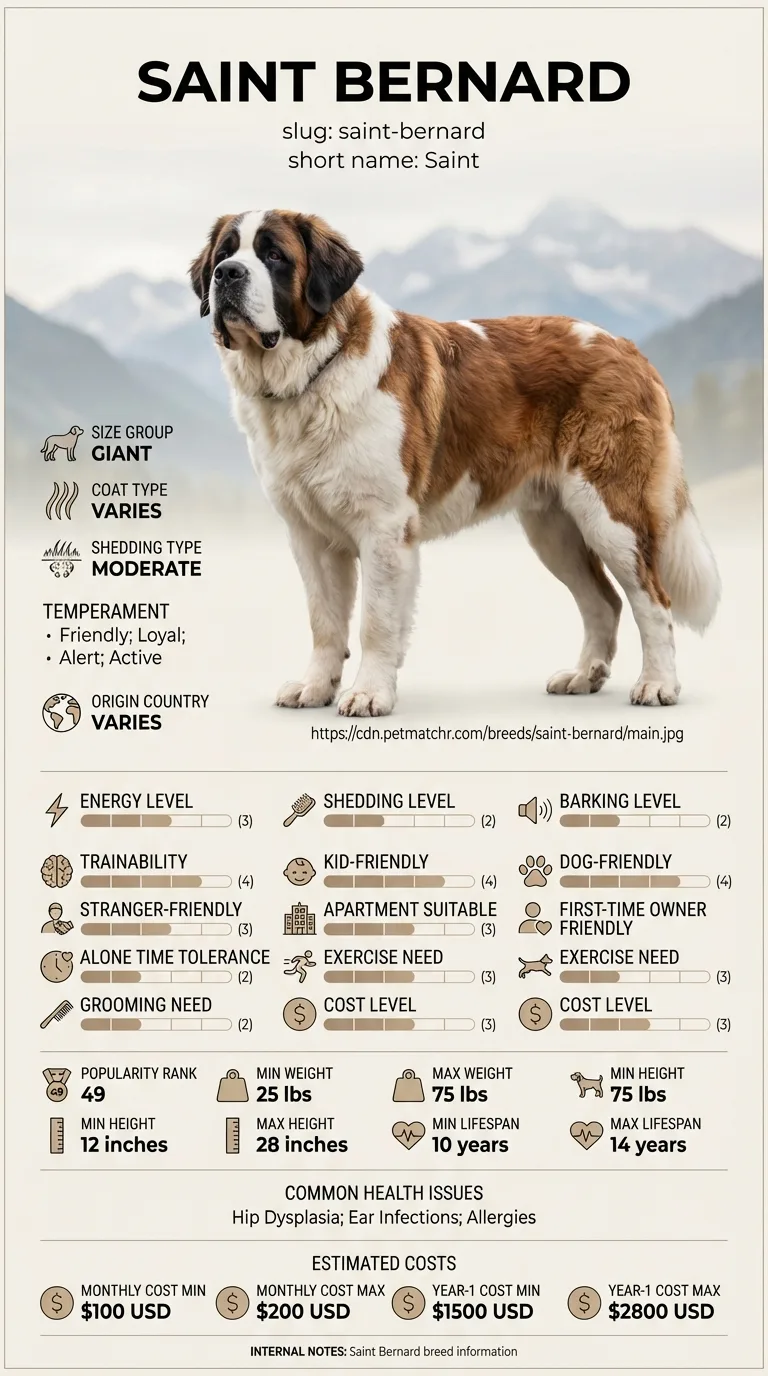
In a dog carrying as much weight as a Saint Bernard, the spine's discs are under more mechanical load throughout life than in most breeds, which is part of why disc disease is worth watching for even though it's more classically associated with long-backed small breeds.
This affects owners across the dog's life, from middle-aged dogs developing chronic back stiffness to owners facing a sudden, frightening episode of hind-leg weakness that needs immediate attention.
This guide is not medical advice. If your dog shows pain, sudden behavior change, or worsening symptoms, consult a licensed veterinarian.
Some links may be affiliate links. We may earn a commission at no extra cost to you. We only suggest products we believe are helpful for dog owners.
We research and check what we publish, but we do not warrant that any figure, date, price, or statement is accurate, complete, or current, and we accept no liability for any loss, cost, injury, or other harm arising from the use of this site. Use it as one reference among several. You remain responsible for your own decisions and for your dog's care - confirm anything that matters with a licensed veterinarian or another qualified professional before you act on it. Full disclaimer.
Check this first
Sudden hind-limb weakness, dragging of the back paws, loss of bladder or bowel control, crying out when touched or moved, or complete inability to stand are all signs of a potential disc emergency and need immediate veterinary attention, ideally within hours rather than days, since the window for the best recovery outcomes narrows quickly with spinal cord compression.
Milder, more chronic signs include reluctance to jump, a hunched posture, stiffness after rest, or reduced interest in stairs, all of which are appointment-worthy rather than emergency-worthy on their own, though they warrant a vet visit soon rather than being dismissed as simple aging.
The distinction that matters most is how sudden and severe the change is. Gradual stiffness over weeks fits a chronic disc degeneration pattern that can often be managed conservatively. A sudden inability to use the hind legs, especially alongside pain, points to acute disc herniation compressing the spinal cord, and that scenario is time-sensitive in a way chronic stiffness is not.
If any of these apply, call your vet or an emergency clinic now. The rest of this page is for the cases that are not an emergency.
Intervertebral disc disease develops when the cushioning discs between spinal vertebrae degenerate or shift, potentially pressing on the spinal cord and causing anything from mild back pain to serious neurological deficits. In a giant breed like the Saint Bernard, the disease pattern tends to be more gradual and age-related, driven by cumulative mechanical load on the spine, compared to the more sudden calcified disc ruptures seen in classic chondrodystrophic breeds.
IVDD is documented across many breeds, and while giant breeds are less frequently affected than classic chondrodystrophic breeds, the Saint Bernard's size and spinal load make disc degeneration a real, age-related risk worth monitoring.
The Saint Bernard's large body mass places continuous mechanical demand on the spine throughout life, which can accelerate normal age-related disc degeneration compared to smaller, lighter breeds. Unlike chondrodystrophic breeds with an early genetic tendency toward disc calcification, giant breed disc disease more often reflects gradual wear accumulating over years.
Excess body weight, repeated high-impact activities like jumping from furniture or vehicles, and sudden twisting movements during play or exercise all add stress to discs that are already working harder in a large-bodied dog than they would in a smaller one.
Talk to your vet about reluctance to jump, a hunched back, stiffness after rest, or reduced interest in stairs. Sudden hind-limb weakness, dragging of the back paws, loss of bladder or bowel control, or inability to stand are emergencies requiring immediate veterinary care.
IVDD outcomes depend heavily on how quickly and appropriately owners respond, and a few common habits make things worse.
See all Saint Bernard health problems, which breeds are prone to intervertebral disc disease ivdd, or the full Saint Bernard breed guide for temperament, exercise needs and ownership costs.
Chronic, age-related disc degeneration typically develops over months to years, while an acute herniation event can happen suddenly with no clear warning. Recovery from an acute episode, with prompt treatment, often takes weeks to a few months depending on severity.
Success generally means a dog managing chronic symptoms with reduced pain and maintained mobility through weight control and activity modification, or, after an acute event, a meaningful recovery of function through prompt treatment and rehabilitation, rather than a full return to a young, disease-free spine.
Hannah noticed her seven-year-old Saint Bernard, Gus, had started hesitating before jumping into the car and seemed stiffer than usual getting up from naps. Her vet's exam and imaging showed early disc degeneration in his lower back, without any current spinal cord compression. Hannah added a ramp for the car, switched Gus to a stricter weight-management plan, and started twice-weekly gentle rehabilitation exercises recommended by her vet. A year later, Gus's mobility had stayed stable, with no progression to a more serious herniation event.
Key takeaway: Treating early stiffness as a spine issue worth investigating, rather than ordinary aging, gave Hannah's family time to make changes that likely reduced the risk of a future acute episode.
It's a degeneration or displacement of the cushioning discs between spinal vertebrae, which can cause the disc material to press on the spinal cord, leading to pain, weakness, or paralysis depending on severity.
It's more classically associated with long-backed small breeds, but giant breeds can and do develop disc disease, often related to age-related degeneration and the mechanical load their large frame places on the spine over a lifetime.
A vet uses a neurological exam to assess reflexes and pain response, and typically recommends advanced imaging like an MRI or CT scan to pinpoint the exact location and severity of disc compression.
Not always. Milder cases with pain but no significant neurological deficit can sometimes be managed with strict rest, anti-inflammatory medication, and physical therapy. More severe cases with significant weakness or paralysis typically need surgical decompression for the best recovery chance.
Many dogs recover well, especially with prompt treatment, though the degree of recovery depends heavily on severity and how quickly treatment started. Dogs that have lost deep pain sensation before treatment have a more guarded prognosis.
Conservative management is more modest, while advanced imaging and surgical decompression can be a significant expense, often a substantial one-time cost given the specialized equipment and expertise involved.
It can't be fully prevented, but keeping a lean body weight, avoiding repeated jumping from height, and using ramps or steps for furniture and vehicle access all reduce mechanical strain on the spine over time.
Degeneration or displacement of spinal discs that then press on the spinal cord, causing pain or neurological symptoms.
Yes, though it's more classically discussed in small, long-backed breeds, giant breeds can develop it too.
Sudden hind-leg weakness or paralysis is an emergency requiring immediate veterinary care.
Yes, advanced imaging and spinal surgery represent a significant expense for most owners.
Mild cases without significant neurological loss can sometimes be managed with rest and medication.
A one-page prep sheet for this condition: the signs, the questions to ask, what to get priced. Unlocks here.
You get: Vet visit prep sheet
No spam. One-click unsubscribe. See our privacy policy.
Preview page 1 before you decide.