Health
What's the main reason purebred dogs show higher cancer rates?
Reduced genetic diversity within closed breeding populations, which can concentrate certain harmful genetic variants over generations.

Quick answer
What's the main reason purebred dogs show higher cancer rates?
Reduced genetic diversity within closed breeding populations, which can concentrate certain harmful genetic variants over generations.
A statistic like "purebred dogs are nearly twice as likely to develop cancer" sounds like a clear verdict until you ask what's actually driving that number, and whether it changes anything about a specific breed's other well-documented risks.
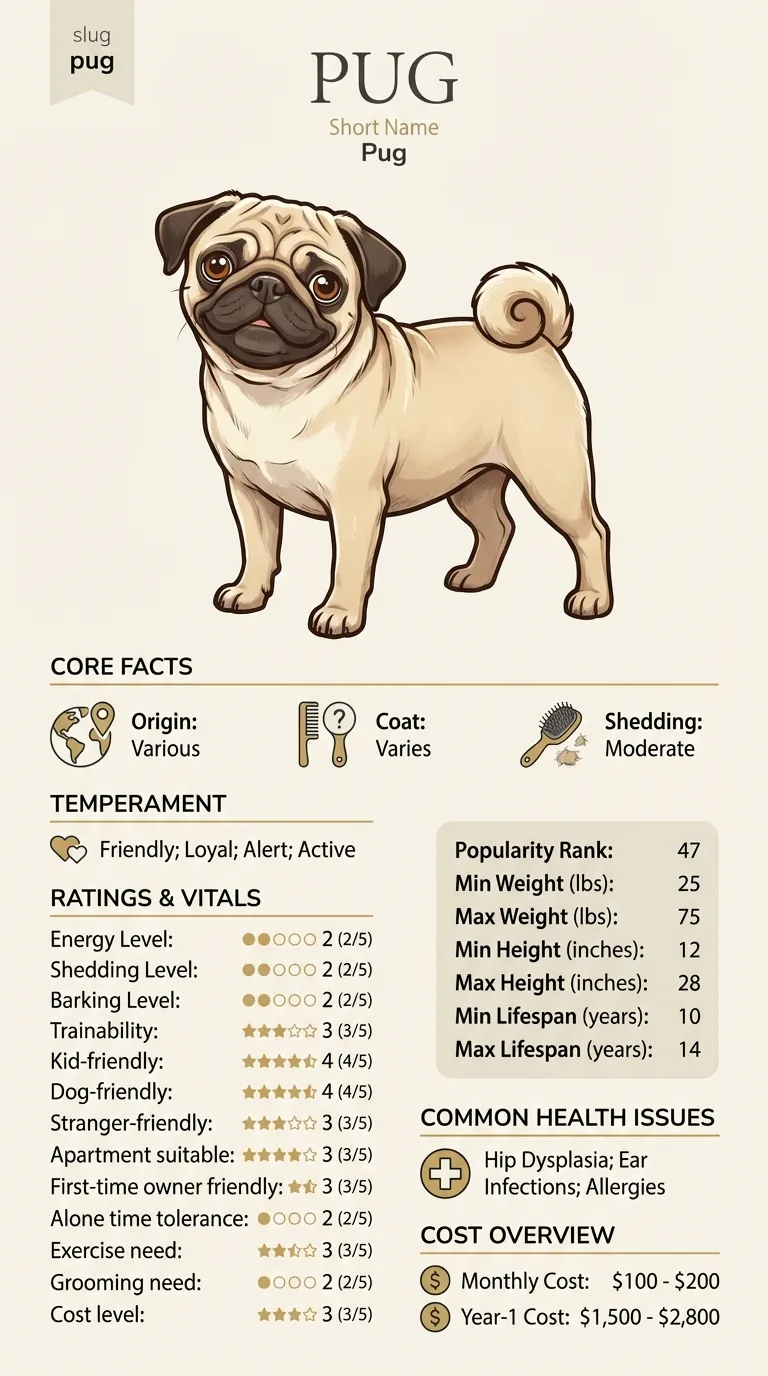
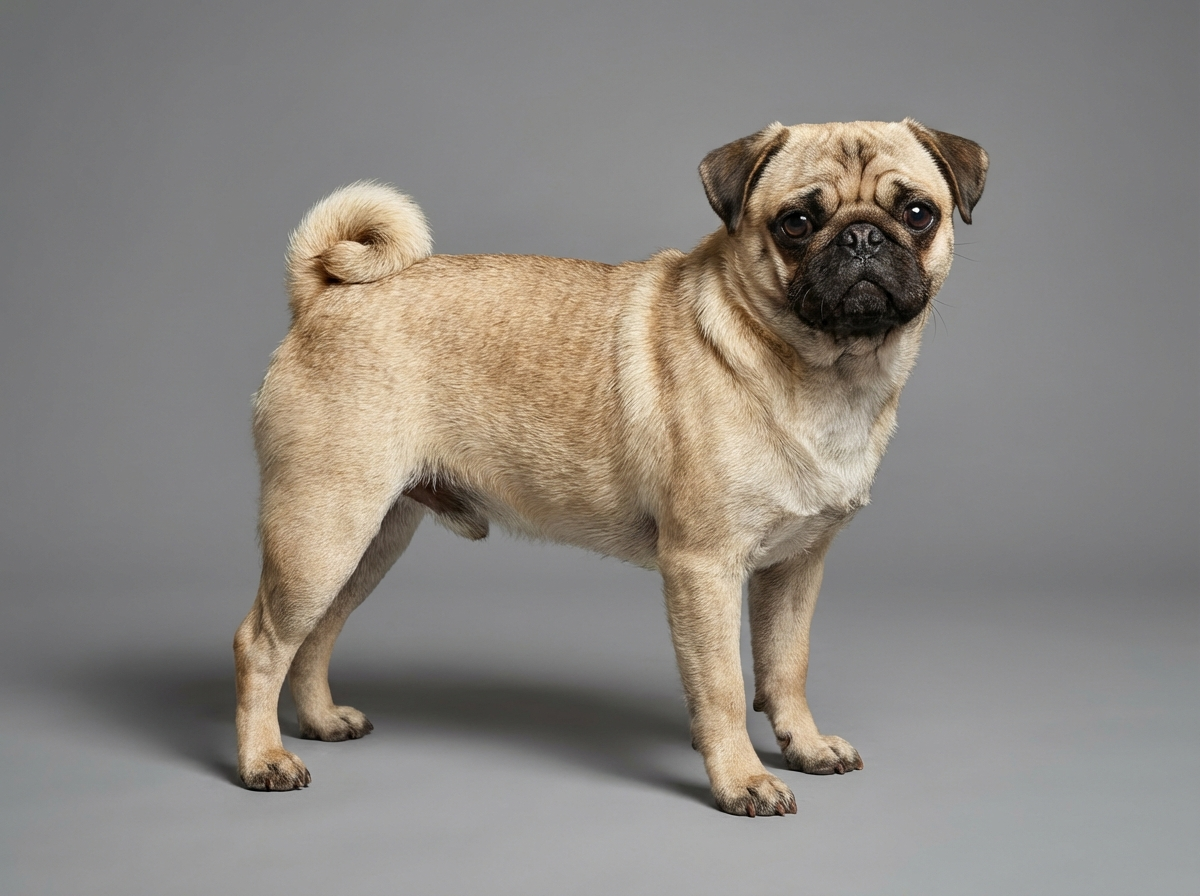
Prospective owners choosing between a purebred Pug and a Pug mix, trying to weigh general purebred health statistics against the specific, well-documented health profile of this particular breed.
This guide is not medical advice. If your dog shows pain, sudden behavior change, or worsening symptoms, consult a licensed veterinarian.
Some links may be affiliate links. We may earn a commission at no extra cost to you. We only suggest products we believe are helpful for dog owners.
We research and check what we publish, but we do not warrant that any figure, date, price, or statement is accurate, complete, or current, and we accept no liability for any loss, cost, injury, or other harm arising from the use of this site. Use it as one reference among several. You remain responsible for your own decisions and for your dog's care - confirm anything that matters with a licensed veterinarian or another qualified professional before you act on it. Full disclaimer.
Research has documented purebred dogs generally at higher cancer risk than mixed breeds, largely attributed to reduced genetic diversity within closed breeding populations. This population-level statistic is a useful data point, but it doesn't override or replace the specific, well-documented health profile of an individual breed like the Pug, which any prospective owner should weigh directly.
The purebred-versus-mixed cancer risk pattern is a well-documented general finding across dog breeds broadly, though its practical relevance to any individual Pug or Pug mix depends heavily on that dog's specific genetic background and inherited traits.
As a purebred, closed-gene-pool breed, Pugs carry the same general elevated-risk dynamic documented across purebred dogs broadly, driven by reduced genetic diversity concentrating certain harmful variants over generations. This general dynamic exists alongside, rather than instead of, the breed's other well-documented specific health risks tied to its distinctive physical conformation.
Breeding practices — including how carefully genetic diversity and known condition screening are managed within a breeding program — directly influence how concentrated certain risks become within a specific line, meaning outcomes can vary meaningfully between differently managed breeding programs even within the same breed.
Discuss your specific dog's individual risk profile with your vet once you've chosen a puppy, since an exam and history review can help identify which screenings and monitoring are actually relevant for that dog's inherited traits, purebred or mixed.
Start here: Pug Most Common Genetic Disorders: What to Screen For
See all PUG health problems, which breeds are prone to purebred vs mixed breeds, or the full PUG breed guide for temperament, exercise needs and ownership costs.
This is a pre-acquisition research consideration rather than an ongoing condition with its own timeline — the relevant window is before choosing and acquiring a puppy, when breeder and parentage research can still meaningfully inform the decision.
Success is making an informed choice that weighs both the general purebred-versus-mixed pattern and the specific, well-documented risks of the breed you're actually drawn to — not a decision that eliminates health risk entirely, since neither purebred nor mixed-breed status does that.
The elevated cancer rate documented in purebred dogs generally is largely attributed to reduced genetic diversity within closed breeding populations — when a breed's gene pool is limited to a defined set of ancestors, harmful genetic variants, including some associated with elevated cancer risk in specific breeds, can become more concentrated over generations than they would in a genetically mixed population. Mixed-breed dogs benefit from broader genetic diversity, which generally dilutes the concentration of any single breed's specific inherited vulnerabilities.
But this comparison operates at a general, population-wide level, and it doesn't erase or override the specific, well-documented health profile of an individual breed like the Pug. A Pug mix still inherits some portion of the Pug's specific traits — potentially including brachycephalic airway traits, if that parentage is prominent in the mix — while gaining some genetic diversity benefit from the other breed involved. The practical result is that a mixed-breed dog's actual risk profile depends heavily on which specific traits and how much of each parent breed's genetics it inherited, which varies enormously and isn't something a general "purebred versus mixed" statistic can predict for any individual dog.
Neither choice eliminates health risk entirely — the decision is really about which kind of predictability and uncertainty you're more prepared to plan around.

Before deciding between a purebred Pug and a Pug-mix puppy she'd seen at a rescue, Anita spent time reading about both the general purebred cancer statistics and the Pug's specific documented health profile. She realized the rescue's Pug mix had a Beagle parent, with visibly less extreme facial flattening than a typical purebred Pug. Anita's vet, consulted before the decision, pointed out that the mix's reduced brachycephalic features likely meant a real reduction in airway risk specifically, even though general cancer statistics couldn't predict that for her individually. She ultimately chose the mix, partly for that specific airway consideration rather than the general cancer statistic alone — a decision she felt was better informed by looking past a single headline number to the actual traits in front of her.
Key takeaway: A general purebred-versus-mixed health statistic is a useful starting point, but the specific traits an individual dog actually inherited matter more for real-world risk than any population-level average.
Research has documented this pattern at a population level, generally attributed to reduced genetic diversity within closed purebred populations that can concentrate certain harmful genetic variants over generations.
Not necessarily — a mixed-breed dog's actual health profile depends heavily on which traits it inherited from each parent breed, and a mix with prominent Pug-typical brachycephalic features can still carry meaningful breed-specific risk despite added genetic diversity.
Brachycephalic airway obstruction, documented eye conditions related to shallow eye sockets, and elevated cardiac and orthopedic risks are all specific, well-documented Pug traits that a general purebred-versus-mixed cancer statistic doesn't directly address.
Yes, to some degree — genetic testing for known specific mutations and careful selection of breeding pairs can help reduce the concentration of some inherited conditions, though it doesn't eliminate the underlying reduced-diversity dynamic of a closed breed population.
Generally yes — a well-bred purebred Pug's temperament and physical traits tend to be more consistent and predictable than a mixed-breed dog's, whose traits can vary considerably depending on parentage.
It's one relevant data point, but a complete decision should weigh the specific breed's documented health profile, predictability of temperament and traits, and your own preparedness for either a predictable purebred risk profile or a less predictable mixed-breed one.
It depends on which traits are prominent in the individual mix — a Pug mix with strong brachycephalic features would still benefit from the same airway and eye monitoring recommended for purebred Pugs, while a mix with less prominent Pug traits may need less breed-specific screening.
Reduced genetic diversity within closed breeding populations, which can concentrate certain harmful genetic variants over generations.
No — it depends on which traits the mix actually inherited, and a mix with prominent Pug features can still carry meaningful breed-specific risk.
Yes, for several specific known mutations, which responsible breeders increasingly use to inform breeding pair decisions.
Generally yes, since a well-bred purebred's traits tend to be more consistent than a mixed-breed dog's more variable inheritance.
It's worth weighing alongside the specific, well-documented health profile of the breed you're actually considering, not as a standalone deciding factor.
A one-page prep sheet for this condition: the signs, the questions to ask, what to get priced. Unlocks here.
You get: Vet visit prep sheet
No spam. One-click unsubscribe. See our privacy policy.
Preview page 1 before you decide.