Behavior
What are some Pug anxiety quick tips?
To help manage Pug anxiety, establish a routine, provide plenty of exercise, and create a cozy space for them to relax. Consistent training techniques can also be beneficial.

Quick answer
What are some Pug anxiety quick tips?
To help manage Pug anxiety, establish a routine, provide plenty of exercise, and create a cozy space for them to relax. Consistent training techniques can also be beneficial.
Pug anxiety can lead to stress for both you and your furry friend.
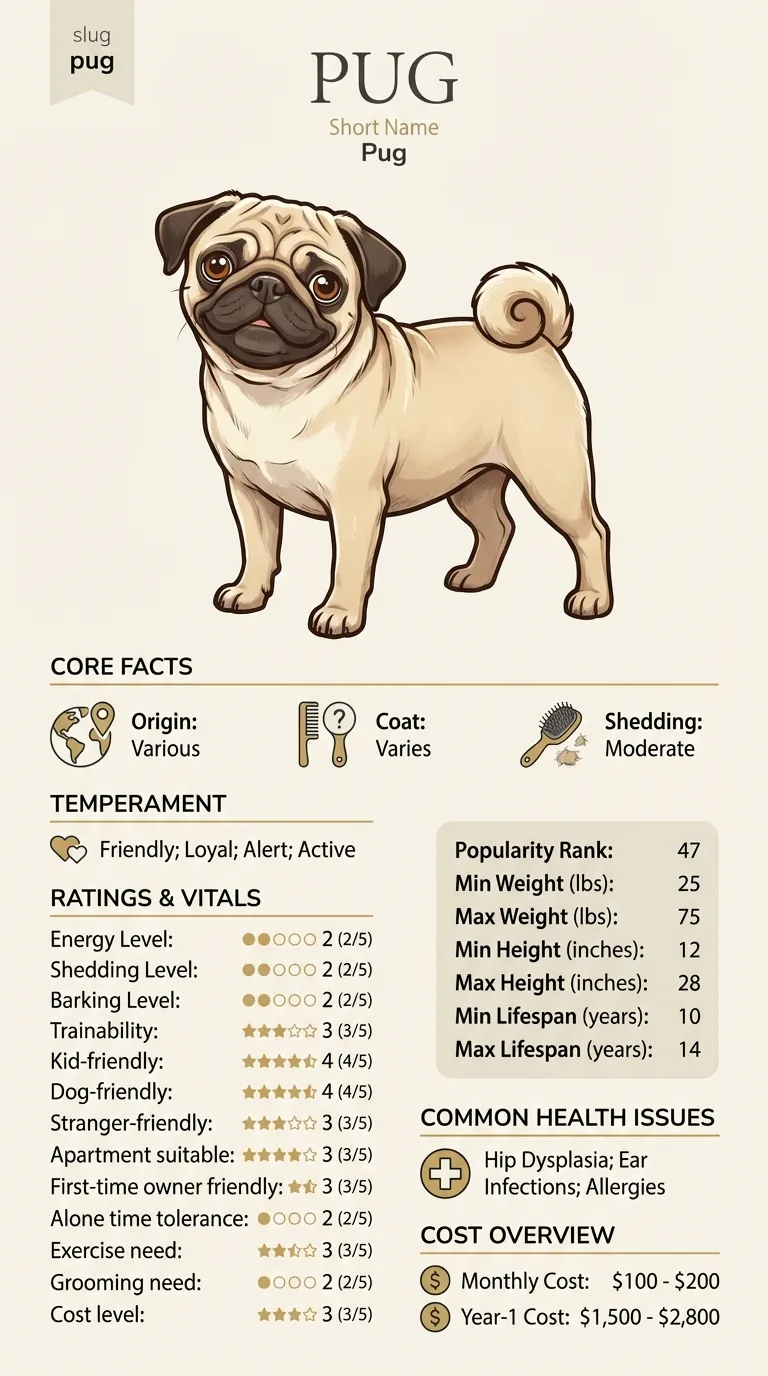
This guide is for Pug owners who notice signs of anxiety in their pets and want to learn how to help them feel more secure and relaxed.
Pug anxiety can present itself in various ways, often making daily life challenging for both the dog and the owner. These dogs may show signs of nervousness or distress, especially in new or stressful situations. Over time, this anxiety can lead to behavioral issues if not addressed properly.
If your Pug's anxiety persists despite your efforts, consider professional training to help change their emotional response.
Consult a vet or animal behaviorist if your Pug shows signs of severe anxiety, such as destructive behavior or excessive barking.
There are several tools and products available to help manage Pug anxiety effectively. These can assist in both calming your dog and training them to cope better with anxiety triggers.
Adjusting your daily routine can significantly help with Pug anxiety. Start by creating a consistent schedule for feeding, walks, and playtime. Pugs thrive on routine, and knowing what to expect can reduce their anxiety levels.
Exercise is crucial for Pugs, as it helps burn off excess energy and promotes a calmer demeanor. Aim for at least 30 minutes of moderate exercise each day. Incorporate activities like short walks, playtime, or even puzzle games to keep them engaged.
Consider their alone-time tolerance too. Pugs generally prefer not to be left alone for extended periods. Gradually train them to be comfortable with alone time by starting with short durations and gradually increasing it.
This helps them adjust without feeling abandoned.
Additionally, set up a safe space in your home where your Pug can retreat when feeling overwhelmed. This could be a cozy bed with their favorite toys. Lastly, try to minimize sudden changes in household routines.
For example, if you have guests over, prepare your Pug in advance and provide them a quiet escape. These small adjustments can lead to significant improvements in managing Pug anxiety.
Tracking Pug anxiety progress involves recognizing small victories and setbacks. Micro-wins can be subtle changes, like your Pug settling down faster during a storm, or being able to stay alone for a few minutes without panicking. Celebrate these small moments, as they indicate your training is working.

Setbacks are part of the process and can feel discouraging. If your Pug suddenly starts barking excessively or refuses to eat during stressful situations, it might mean they need more time or additional support. Recognizing these signals can help you adjust your training plan.

If you notice no improvement over a few weeks or if anxiety seems to increase, it may be time to escalate your approach. This could include consulting a trainer specialized in Pug anxiety or exploring other treatment options. Don't hesitate to seek help; your Pug's well-being is the priority.

Mia, a Pug owner from Atlanta, noticed her dog, Benny, was unusually nervous during thunderstorms. He would shake, hide under the couch, and even bark incessantly. At first, Mia tried calming him with treats and cuddles, but that didn't help. After realizing it wasn't working, she sought advice from a local trainer. They recommended desensitization techniques and creating a safe space for Benny during storms. Mia set up a cozy den with his favorite blanket and some toys, making it his go-to spot when the weather turned bad. Over time, Benny learned to associate the den with comfort. Now, while he still feels a bit uneasy during storms, he manages much better and even relaxes in his den instead of panicking.
Key takeaway: When dealing with Pug anxiety, creating a safe environment and seeking professional help can significantly improve your dog's comfort during stressful situations.
Pug anxiety can stem from various factors, including genetics, past experiences, or changes in their environment. These dogs are known for their sensitive nature, which can make them prone to anxiety. Identifying triggers in their surroundings can help you manage their stress.
Common signs of Pug anxiety include excessive barking, pacing, destructive behavior, and hiding. They may also show physical signs like trembling or changes in appetite. Paying attention to their behavior can help you spot anxiety early.
To manage Pug anxiety, start by creating a safe, calm environment. Training techniques, like positive reinforcement and gradual desensitization, can also help. Consistency and patience are key to helping your Pug feel secure.
Yes, Pug anxiety training is often necessary to help your dog cope with their fears. Professional training can provide you with tools and strategies tailored to your Pug's specific needs. This can lead to a happier, more relaxed pet.
In some cases, medication can be beneficial for Pugs with severe anxiety. It's essential to consult your veterinarian to discuss the best options for your dog. Medication can be used alongside training for a more comprehensive approach.
During a Pug anxiety episode, remain calm and avoid yelling or punishing them. Create a quiet space where they can retreat, and use soothing techniques like gentle petting or calming music. This can help them feel more at ease.
Managing Pug anxiety varies by individual dog and the severity of their anxiety. Some may show improvement within weeks, while others may take months. Patience and consistent training are crucial for long-term success.
Yes, older Pugs can develop anxiety, especially if they experience significant life changes. Changes like moving to a new home, the loss of a companion, or even health issues can trigger anxiety in senior dogs.
To help your Pug with anxiety during travel, create a comfortable space in the car with familiar items. Taking breaks and bringing along favorite toys can also help ease their stress.
Yes, Pugs are known to form strong bonds with their owners, making them prone to separation anxiety. If your Pug exhibits signs of distress when you leave, consider gradual training methods to help them cope.
Managing anxiety in a multi-dog household involves ensuring each dog has its own space and routine. Observing interactions and providing individual attention can help reduce competition and anxiety among your Pugs.
To help manage Pug anxiety, establish a routine, provide plenty of exercise, and create a cozy space for them to relax. Consistent training techniques can also be beneficial.
Gradually train your Pug to be alone for short periods and increase the time as they become comfortable. Providing toys or treats can help distract them during your absence.
Yes, some breeds, including Pugs, can be more prone to anxiety due to their temperament. Understanding your breed's characteristics can help you prepare and manage potential issues.
Anxiety and pain look alike from the outside. Get the prep sheet for this breed's separation-anxiety page and take it to the vet.
You get: Vet visit prep sheet
No spam. One-click unsubscribe. See our privacy policy.
Preview page 1 before you decide.
This guide is not medical advice. If your dog shows pain, sudden behavior change, or worsening symptoms, consult a licensed veterinarian.
Some links may be affiliate links. We may earn a commission at no extra cost to you. We only suggest products we believe are helpful for dog owners.
We research and check what we publish, but we do not warrant that any figure, date, price, or statement is accurate, complete, or current, and we accept no liability for any loss, cost, injury, or other harm arising from the use of this site. Use it as one reference among several. You remain responsible for your own decisions and for your dog's care - confirm anything that matters with a licensed veterinarian or another qualified professional before you act on it. Full disclaimer.
Not sure which breed is right for you? Take our 2-minute quiz to find out.
Take the quiz