Behavior
Is low stamina normal for this breed?
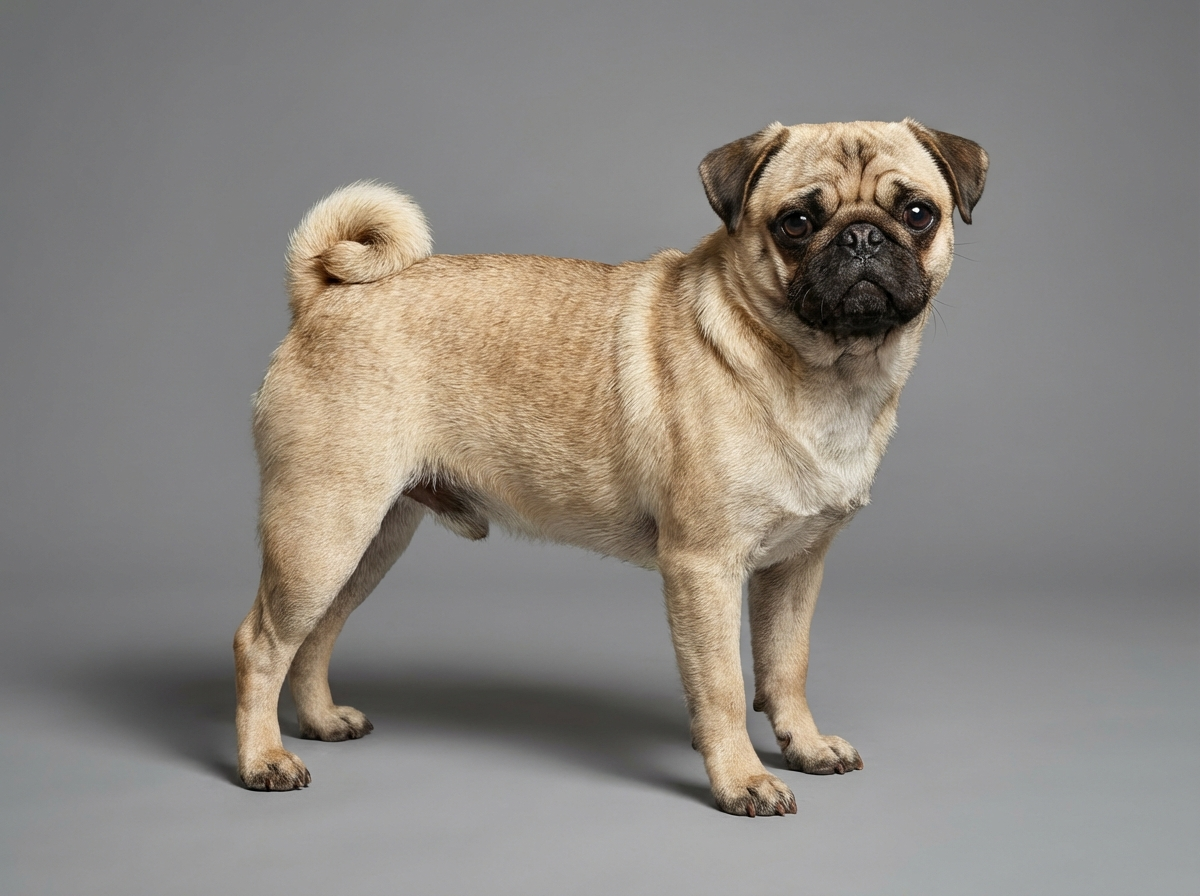
Yes, Pugs are documented as having relatively low energy and exercise needs compared to many breeds.

Quick answer
Is low stamina normal for this breed?
Yes, Pugs are documented as having relatively low energy and exercise needs compared to many breeds.
A Pug tiring quickly on a walk usually isn't a symptom to fix; it's closer to the factory setting.
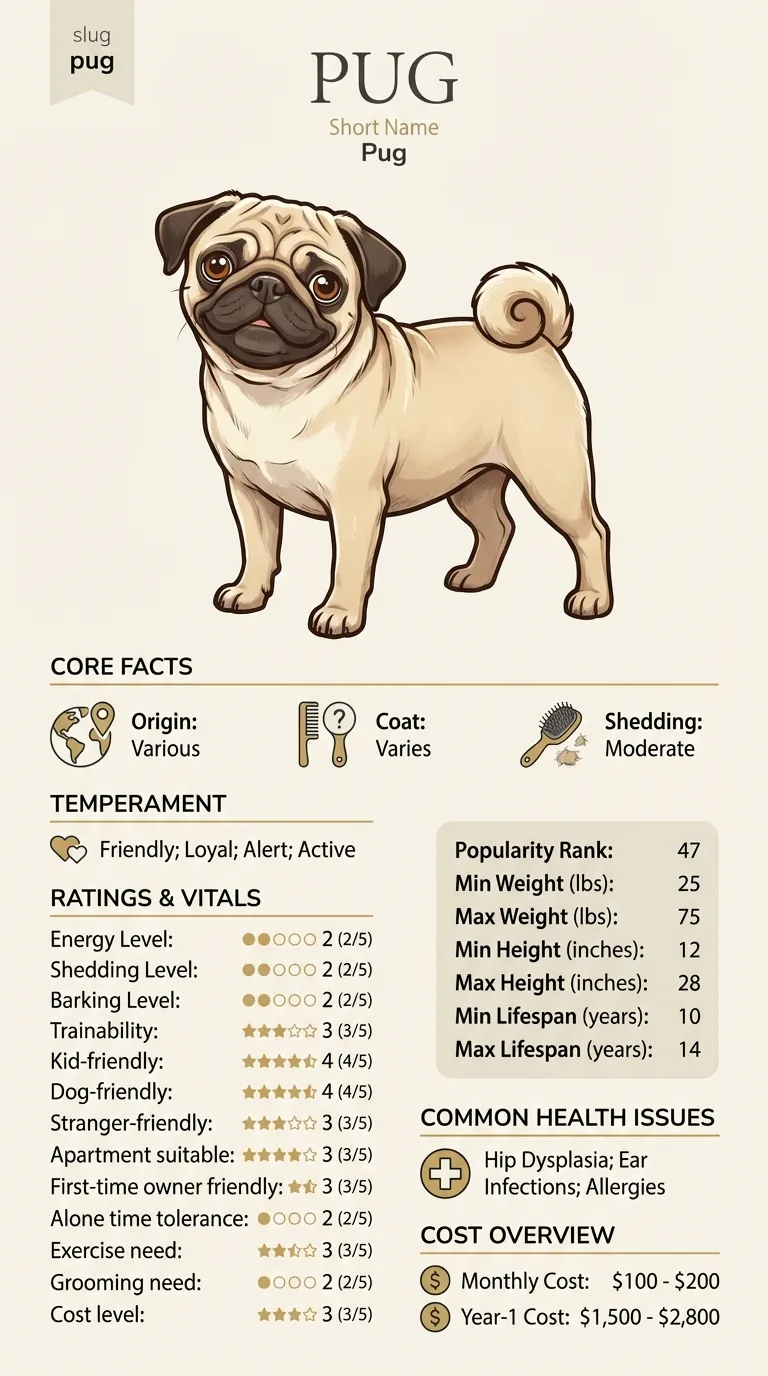
This is useful for every Pug owner, but especially new owners coming from a more athletic breed background who might otherwise misread normal low stamina as laziness or a health problem needing correction.
This guide is not medical advice. If your dog shows pain, sudden behavior change, or worsening symptoms, consult a licensed veterinarian.
Some links may be affiliate links. We may earn a commission at no extra cost to you. We only suggest products we believe are helpful for dog owners.
We research and check what we publish, but we do not warrant that any figure, date, price, or statement is accurate, complete, or current, and we accept no liability for any loss, cost, injury, or other harm arising from the use of this site. Use it as one reference among several. You remain responsible for your own decisions and for your dog's care - confirm anything that matters with a licensed veterinarian or another qualified professional before you act on it. Full disclaimer.
Exercise intolerance in Pugs largely reflects a documented baseline trait, low energy level and low exercise needs, combined with genuine airway limitations that make sustained exertion more effortful than in a longer-muzzled breed. It's typically normal rather than a symptom, and the useful comparison is a dog against their own baseline rather than a generic standard.
Some degree of limited exercise tolerance is close to universal in this breed and considered part of its normal profile rather than a widespread health concern, though individual dogs vary in exactly how much activity they comfortably handle.
This breed's temperament profile documents relatively low energy and exercise needs, and its airway anatomy independently limits how efficiently it can support sustained physical exertion, together producing a naturally lower baseline stamina than many other breeds.
Heat and excess weight both compound this breed's baseline limitations, meaning environment and lifestyle management can meaningfully affect how much activity an individual dog can comfortably handle day to day.
Talk to your vet if your dog's exercise tolerance changes noticeably from their own established baseline, whether tiring much faster than usual, needing much longer to recover, or showing signs like excessive coughing or blue-tinged gums during or after activity.
Start here: Pug Most Common Genetic Disorders: What to Screen For
See all PUG health problems, which breeds are prone to exercise intolerance, or the full PUG breed guide for temperament, exercise needs and ownership costs.
This is a lifelong baseline trait rather than something with a treatment timeline. What can change over weeks to months is a dog's fitness and weight, which can modestly improve exercise tolerance within the breed's natural limits.
Success means an exercise routine that fits your specific dog's comfortable capacity, providing enrichment and activity without pushing past their natural limits, rather than trying to build stamina beyond what this breed typically has.
This breed is consistently rated toward the lower end for both energy level and exercise need compared to many other breeds, a documented baseline temperament trait rather than a sign of poor health. Combined with airway limitations that make sustained exertion genuinely more effortful, a Pug's natural inclination toward shorter bursts of activity followed by rest reflects both temperament and physiology working together, not a dog failing to meet some universal canine fitness standard. Recognizing this helps owners set exercise expectations that fit the dog in front of them rather than a generic idea of how much a dog "should" want to move.
Normal exercise intolerance in this breed looks like a dog who enjoys a walk but is ready to stop and rest after a modest distance, pants noticeably during and after activity, and recovers within a reasonable time once resting. A concerning change looks different: a previously active dog suddenly tiring far faster than their own established baseline, needing much longer to recover than usual, or showing signs like excessive coughing, blue-tinged gums, or reluctance to do even mild activity they previously handled easily. The comparison that matters is a dog against their own normal pattern, not against a generic standard for dogs in general.

Coming from years of owning an active herding breed, new Pug owner Dana initially worried when her puppy Waffles seemed to tire after just ten minutes of walking, assuming something was wrong. A vet visit confirmed Waffles was perfectly healthy; this was simply normal for the breed. Dana adjusted her expectations, switching to three short walks a day instead of one long one, and added puzzle feeders for extra mental stimulation. Waffles has thrived on this routine, and Dana said learning to stop comparing him to her previous dog made a real difference in how she approached his care.
Key takeaway: Recognizing low exercise tolerance as a normal, documented trait of this breed, rather than a problem to solve, allows owners to build a routine that actually fits their dog instead of chasing an unrealistic activity level.
Yes, this breed is documented as having relatively low energy and exercise needs compared to many other breeds, so tiring after a modest distance and needing rest is typically normal rather than a symptom of a health problem.
Generally shorter, more frequent walks rather than long, vigorous outings, along with some indoor play and mental stimulation. Exact needs vary by individual dog, age, and weight, so working with your vet to establish a realistic baseline is useful.
Compare your dog against their own established baseline rather than a general standard. A sudden change, tiring much faster than usual or taking much longer to recover, is worth mentioning to your vet rather than assuming it's just typical Pug behavior.
Not on its own; it largely reflects this breed's normal temperament and airway anatomy. It becomes a health concern only when it represents a meaningful change from your specific dog's own normal pattern.
Yes, excess weight adds further strain on top of this breed's already-limited airway capacity, making weight management one of the more effective ways to support better exercise tolerance over time.
Yes, regular, appropriately-paced exercise supports weight management and overall health; the goal is matching intensity and duration to your dog's actual capacity rather than avoiding activity altogether.
Yes, Pugs are documented as having relatively low energy and exercise needs compared to many breeds.
Compare against your dog's own established baseline, not a general standard; a real change is worth a vet visit.
Yes, excess weight adds further strain on an already limited airway capacity.
Yes, shorter and more frequent activity matched to the dog's actual capacity supports overall health.
Several shorter walks and some indoor play typically suit this breed better than one long, intense outing.
A one-page prep sheet for this condition: the signs, the questions to ask, what to get priced. Unlocks here.
You get: Vet visit prep sheet
No spam. One-click unsubscribe. See our privacy policy.
Preview page 1 before you decide.